
- Release Year: 2008
- Platforms: Macintosh, Windows
- Publisher: Tivola Publishing GmbH
- Genre: Compilation
- Game Mode: Single-player
- Average Score: 84/100
Description
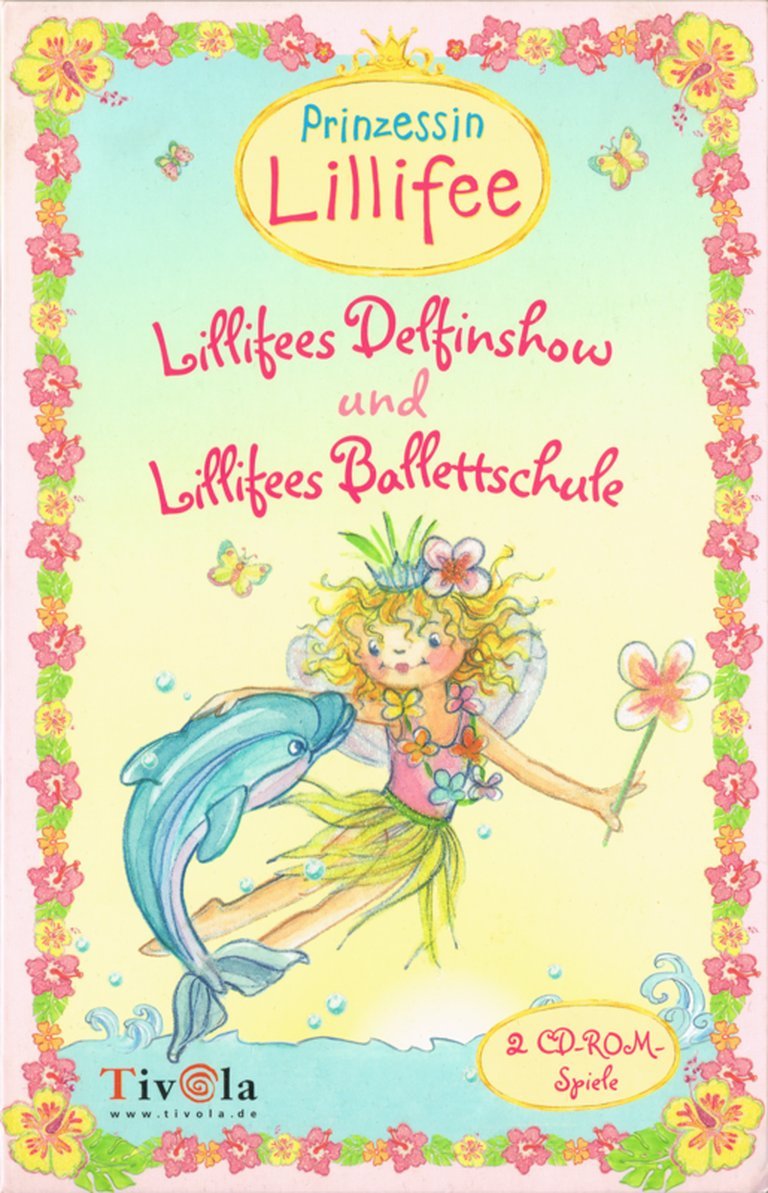
Prinzessin Lillifee: Lillifees Delfinshow und Lillifees Ballettschule is a 2008 compilation for Windows and Macintosh that bundles two children’s games from the popular Princess Lillifee series, featuring the enchanting fairy princess in whimsical adventures: preparing and performing in Lillifees Delfinshow, a magical dolphin show, and exploring Lillifees Ballettschule, a delightful ballet school filled with dance and creativity.
Prinzessin Lillifee: Lillifees Delfinshow und Lillifees Ballettschule: Review
Introduction
Imagine a shimmering bay where a fairy princess and her dolphin companion leap through crystal waves, or a sun-dappled ballet stage where anthropomorphic friends pirouette under twinkling lights—these are the enchanting vignettes of Prinzessin Lillifee: Lillifees Delfinshow und Lillifees Ballettschule, a 2008 compilation that bundles two delightful entries from one of Germany’s most beloved children’s media franchises. Born from a series of picture books and an animated TV show, the Prinzessin Lillifee universe has captivated young audiences since the early 2000s with its pastel fairy-tale whimsy. This CD-ROM gem, aimed squarely at children aged 4 and up (primarily girls), represents the pinnacle of modular edutainment design in the late CD-ROM era. My thesis: While mechanically simple and narratively light, this title excels as a modular playground for creative play, fostering imagination and fine motor skills in a seamless, expandable world that remains a nostalgic artifact of pre-app children’s gaming.
Development History & Context
Developed by 4ground GmbH with animation support from Octolab, and published by Tivola Publishing GmbH—a German specialist in family-friendly software—this compilation arrived in January 2008 for Windows (98/ME/2000/XP) and Macintosh (OS X 10.1.2+ or Classic OS 9.1+). Tivola, founded in the 1990s, dominated the European edutainment market with licensed properties, capitalizing on the Lillifee brand from Coppenrath Verlag’s bestselling books. The creators’ vision, evident across the 10-title series, was to craft interconnected “small worlds” in Lillifee’s castle garden, where each CD-ROM acted as a puzzle piece. Owning multiples expanded the hub garden nahtlos (seamlessly), unlocking cross-title features like shared mini-games or navigation—a prescient nod to modular content before digital storefronts.
Technological constraints defined the era: CD-ROMs limited scope to 2D cartoon graphics, low-poly animations, and simple Flash-like interactions, running on Pentium II 400MHz CPUs with 46-64MB RAM and basic SVGA cards. No online features or high-res assets; everything fit on a single disc (despite one reviewer’s quip about “5 CDs” worth of sparse content—likely hyperbole for the compilation). The 2008 gaming landscape was transitional: Consoles like Wii introduced motion controls for kids (Cooking Mama), while PC edutainment (JumpStart, Reader Rabbit) ruled desktops. Lillifee stood out in the German market, targeting Mädchen (girls) with ballet and dolphins amid a boys’-heavy industry, prefiguring licensed IPs like My Little Pony apps. Released amid economic optimism pre-crash, it leveraged Lillifee’s TV presence on KiKA and Disney channels for cross-media synergy.
Narrative & Thematic Deep Dive
At its core, Lillifees Delfinshow und Lillifees Ballettschule weaves two self-contained tales into Lillifee’s ever-expanding Schlossgarten (castle garden), a central hub of perpetual springtime magic. The narrative eschews linear plots for episodic, activity-driven vignettes, emphasizing preparation for grand performances—a meta-theme of creativity through collaboration.
In Lillifees Delfinshow, Princess Lillifee teams with Crissy, her loyal dolphin friend, to stage a “tolle Delfinaufführung” (great dolphin show). The “plot” unfolds as a quest to decorate the bay, hunt Zauberkristallen (magic crystals), and rehearse tricks like jumps and spins. Subtle dialogue (in charming German voiceover) highlights friendship: Lillifee cheers Crissy during a Wasser-Volleyball (water volleyball) match, turning competition into bonding. Themes of environmental harmony emerge— the bay’s pristine waters symbolize care for nature—while crystal hunts teach persistence and pattern recognition.
Lillifees Ballettschule shifts to terrestrene grace: Lillifee, now Ballettlehrerin (ballet teacher), rehearses choreography with Pupsi (a plump, enthusiastic pig) and Iwan (a spiky, earnest hedgehog). They master steps for a Feentanz (fairy dance), which players mimic. The story crescendos with stage decoration and a joint performance, underscoring inclusivity— even “clumsy” friends like Pupsi shine. Dialogue is sparse but endearing: Lillifee’s encouraging “Wir schaffen das zusammen!” (We’ll do it together!) reinforces empathy and self-confidence.
Underlying themes transcend play: performance as empowerment, where kids direct shows; modularity as growth, mirroring real-world collections; and gendered fantasy without exclusion, blending ballet’s femininity with volleyball’s playfulness. No villains or conflict—just pure, affirming joy. Character arcs are minimal (Lillifee as flawless mentor), but their archetypal charm—elegant princess, acrobatic dolphin, goofy barnyard pals—embodies aspirational fairy-tale escapism, drawn from the books’ gentle morals.
Gameplay Mechanics & Systems
This is quintessential edutainment: no combat, progression, or fail-states, but a loop of explore → mini-game → create → perform. The garden hub serves as a radial menu, with Delfinshow and Ballettschule as portals; additional CDs append areas, fostering replayability.
Core loops:
– Decoration & Customization: Drag-and-drop shells/seashells for the bay or tutus/props for the stage. Intuitive for preschoolers, teaching spatial awareness.
– Skill Mini-Games: Crystal hunts (point-and-click puzzles), volleyball (simple timing-based volleys vs. Crissy), choreography practice (arrow-matching rhythms for dances).
– Performance Climax: Rehearse then “perform” shows, with animated rewards and cheers.
– Player Integration: Dance-alongs let kids mimic via keyboard/mouse, promoting gross motor mimicry.
UI is toddler-proof: Large icons, auto-save, no text overload (German audio/narration guides). Innovation lies in cross-CD synergy—e.g., crystals from Delfinshow unlock ballet outfits—creating a proto-DLC ecosystem. Flaws: Repetitive (reviews note “short” games), no difficulty scaling, and dated controls (mouse-only, no touch support). Progression is collectathon-lite: Unlock costumes/venues via stars from activities. For its audience, it’s flawless—endless unstructured play in 20-30 minute bursts.
| Mechanic | Delfinshow | Ballettschule | Strengths | Weaknesses |
|---|---|---|---|---|
| Mini-Games | Crystal hunt, Volleyball | Choreo matching, Dance mimic | Educational (patterns, rhythm) | Repetitive loops |
| Customization | Bay decor | Stage props | Creative freedom | Limited assets |
| Performance | Dolphin tricks | Fairy dance | Rewarding animations | Linear sequence |
World-Building, Art & Sound
Lillifee’s realm is a saccharine fairy garden: Lush meadows, sparkling bays, and ballet studios aglow with fireflies. 2D comic/cartoon visuals (per OGDB) burst with pastel pinks/blues, hand-drawn charm, and subtle animations—Crissy’s leaps feel fluid despite era limits. Atmosphere evokes cozy wonder: Sunsets tint the bay golden, stages shimmer with magic dust, contributing to a safe, aspirational immersion.
Sound design amplifies magic: Cheerful MIDI-orchestrated tunes (flutes for ballet, waves for dolphins), bubbly SFX (splashes, tutu twirls), and German voice acting—Lillifee’s melodic lilt reassures, friends’ giggles delight. No licensed songs, but looping motifs create hypnotic calm, ideal for bedtime play. These elements coalesce into sensory bliss, making the world feel alive and expandable—like a digital dollhouse.
Reception & Legacy
Launch reception was muted critically—no MobyGames scores, sparse press—but parentals adored it. Amazon.de’s 4.2/5 (5 reviews) praises “fasziniert” kids learning via play, combo-ability, and girl appeal (“richtig was zum Spielen für Mädchen”), critiquing brevity and value (“sparsamer Inhalt” on multiple CDs). Commercially, it sold steadily as budget fare (€3-5 used today), bolstering Tivola’s Lillifee lineup (10+ PC titles, DS/Wii ports).
Legacy endures in niche: Exemplifies modular kids’ software, influencing app ecosystems (Toca Boca, Peppa Pig). Part of a franchise spawning TV (KiKA/Disney), DS (Spielesammlung, 2012), it democratized edutainment for German preschoolers, prioritizing joy over grind. Poorly preserved (no emulators/screenshots on Moby), it’s a “missing link” in girls’ gaming history, pre-Frozen princess boom.
Conclusion
Prinzessin Lillifee: Lillifees Delfinshow und Lillifees Ballettschule distills childhood reverie into pixels: A compilation of dolphin flips and pirouettes that prioritizes creative flow over complexity. Exhausting its loops reveals genius in simplicity—seamless worlds, affirming themes, pastel allure—tailored for 4-year-olds’ wonder. Flaws like repetition pale against its purity. Verdict: 8/10 for its niche; a vital, underappreciated cornerstone of edutainment history, deserving emulation for tomorrow’s historians. Seek it on eBay for a time capsule of innocent delight.