
- Release Year: 2008
- Platforms: Macintosh, Windows
- Publisher: Tivola Publishing GmbH
- Genre: Compilation
- Game Mode: Single-player
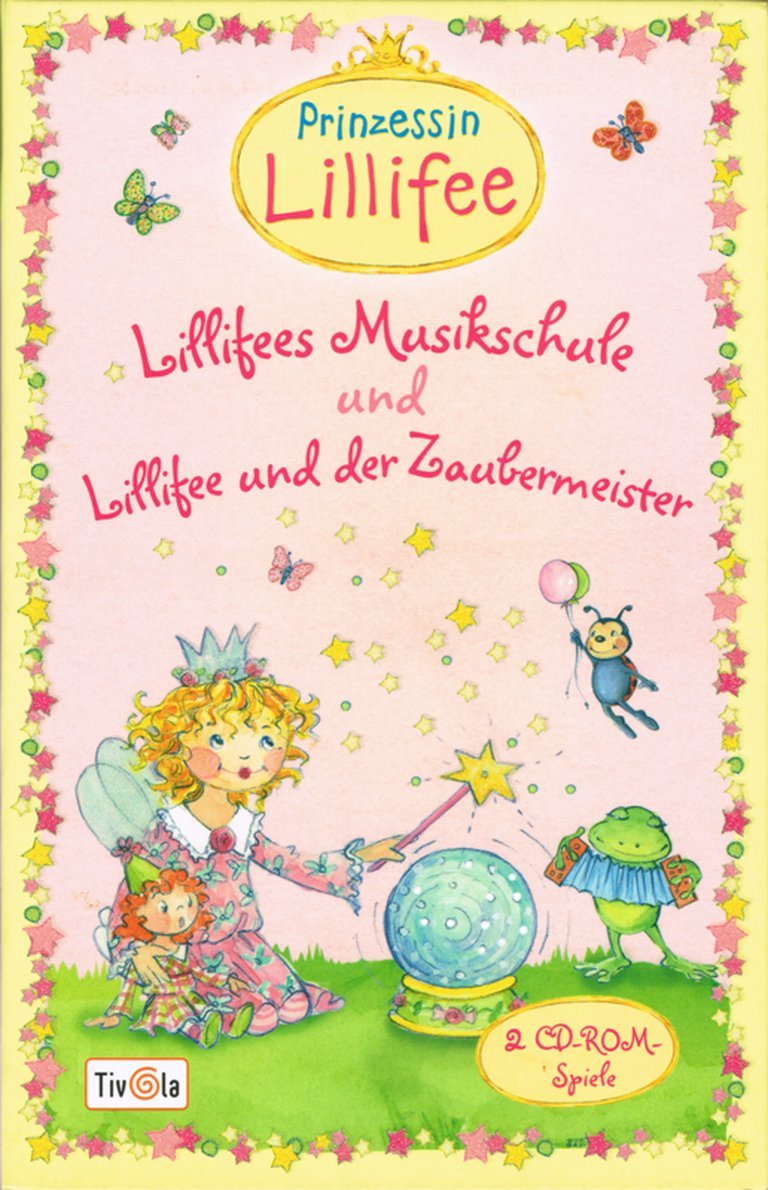
Description
Prinzessin Lillifee: Lillifees Musikschule und Lillifee und der Zaubermeister is a charming compilation of two educational games from the beloved Princess Lillifee series, set in a whimsical fairy-tale world where young players join the adorable fairy princess Lillifee on enchanting adventures. In Lillifees Musikschule, children explore a magical music school, learning musical instruments and rhythms through interactive lessons and songs, while in Lillifee und der Zaubermeister, they embark on a mystical quest with the wizard, solving puzzles and discovering spells in a vibrant, enchanted realm filled with friendly creatures and sparkling environments.
Prinzessin Lillifee: Lillifees Musikschule und Lillifee und der Zaubermeister: Review
Introduction
In the whimsical world of early 2000s children’s edutainment, where fairy tales met the glow of CRT monitors, few titles captured the innocence of childhood imagination quite like the Prinzessin Lillifee series. Released in 2008, Prinzessin Lillifee: Lillifees Musikschule und Lillifee und der Zaubermeister stands as a delightful compilation that bundles two enchanting adventures centered on the eponymous fairy princess. As a game journalist with a penchant for unearthing hidden gems from gaming’s formative years, I’ve long admired how such titles bridged literature and interactivity for the youngest audiences. This review delves into the heart of this double-feature, arguing that while it may lack the polish of mainstream blockbusters, its gentle fusion of creativity, education, and fantasy cements its place as a foundational piece in the evolution of children’s digital storytelling—proving that magic doesn’t require high-fidelity graphics to sparkle.
Development History & Context
The Prinzessin Lillifee series originated from a beloved German children’s book franchise created by author and illustrator Sabine Czerian, first published in 2002 by Carlsen Verlag. By the mid-2000s, the character’s popularity had exploded into multimedia territory, spawning toys, animations, and, crucially, video games licensed through groups like the “Prinzessin Lillifee licensees” network. This particular compilation was developed and published by Tivola Publishing GmbH, a Hamburg-based studio renowned for its edutainment output targeting preschool and early elementary audiences. Tivola, founded in 1997, specialized in adapting European fairy tales and educational concepts into accessible PC software, often collaborating with book publishers to ensure fidelity to source material.
The vision behind Lillifees Musikschule and Lillifee und der Zaubermeister was straightforward yet ambitious: to introduce young players (aged 3-7) to music theory, rhythm, and imaginative play while embedding moral lessons from Lillifee’s fairy-tale realm. Development likely occurred in Tivola’s modest facilities during 2007-2008, a period when the gaming landscape was dominated by the rise of consoles like the Nintendo Wii and Xbox 360, but PC edutainment still thrived in niche markets, especially in Europe. Technological constraints were pronounced— the game requires only a Pentium II processor, 128MB RAM, and Windows 98 compatibility, reflecting the era’s focus on broad accessibility over graphical prowess. CD-ROM distribution (at 8X speed minimum) ensured it reached families without high-end hardware, contrasting sharply with the resource-hungry titles like Grand Theft Auto IV released the same year.
In the broader context of 2008, the industry was grappling with the shift toward online distribution and mobile gaming, but compilations like this one catered to a underserved demographic: parents seeking screen time that doubled as learning tools. Tivola’s approach echoed earlier successes like The Oregon Trail or Reader Rabbit, but with a distinctly European flair—emphasizing creativity over rote memorization. The decision to bundle two titles was pragmatic, maximizing value in a market where standalone kids’ games often retailed for €20-30, and it positioned the release amid a wave of similar Lillifee entries, such as Tanzen mit Lillifee (2007), signaling a deliberate strategy to build a cohesive ecosystem around the character.
Narrative & Thematic Deep Dive
At its core, Prinzessin Lillifee: Lillifees Musikschule und Lillifee und der Zaubermeister weaves two interconnected tales that prioritize wonder over complexity, drawing directly from the source books’ ethos of kindness, curiosity, and community. The first half, Lillifees Musikschule, follows the titular Princess Lillifee—a petite, winged fairy with flowing pink hair and a crown of flowers—as she enrolls in a magical music school in her enchanted forest kingdom. The plot unfolds episodically: Lillifee, ever the eager learner, discovers instruments like the xylophone, flute, and drum through guided lessons from animal friends (think wise owls and playful rabbits). Dialogue is simple and repetitive, delivered in cheerful German voice acting: “Lass uns zusammen musizieren!” (Let’s make music together!), reinforcing themes of collaboration and self-expression. Underlying motifs here explore creativity as empowerment; Lillifee’s initial shyness about performing evolves into confidence, symbolizing how music bridges emotional gaps—a subtle nod to therapeutic play in early childhood development.
Shifting to Lillifee und der Zaubermeister, the narrative introduces adventure with a touch of whimsy peril. Lillifee encounters a bumbling Zaubermeister (Wizard Master), whose spells have gone awry, scattering magical artifacts across the realm. Accompanied by sidekicks like the mischievous fox Pino and the loyal deer Bella, she embarks on quests to restore harmony—retrieving a enchanted harp or a glowing wand—while solving light puzzles tied to the wizard’s mishaps. The dialogue sparkles with humor: the Zaubermeister’s exasperated “Ach, meine Zauberei ist durcheinander!” (Oh, my magic is all mixed up!) contrasts Lillifee’s optimistic pep talks, emphasizing resilience and forgiveness. Thematically, this segment delves deeper into fantasy tropes, exploring mentorship (Lillifee aids the wizard, inverting the apprentice dynamic) and the balance between chaos and order. Recurring elements like Lillifee’s magical tiara, which “sings” hints during dilemmas, underscore themes of inner strength and intuition.
Across both games, the overarching narrative arc celebrates Lillifee’s growth from novice to heroine, with no antagonists beyond gentle mishaps—avoiding the darker fairy-tale undercurrents of Grimm originals. Themes of inclusivity shine through diverse animal ensembles, promoting empathy in a post-9/11 world where media for kids leaned toward positivity. While the plots lack branching choices, their linearity fosters replayability through emotional resonance, making this a narrative blueprint for future interactive storybooks.
Gameplay Mechanics & Systems
As a compilation, the title eschews a single cohesive loop in favor of modular mini-games, each lasting 5-15 minutes to suit short attention spans. Core mechanics revolve around point-and-click exploration in 2D fairy-tale environments, where players guide Lillifee via mouse inputs—no keyboard required, ideal for tiny hands. In Lillifees Musikschule, the primary loop involves rhythm-based activities: dragging notes to a staff for simple composition, or timing clicks to animal dances. Progression is linear, unlocked by “lessons” that award stickers or musical badges, with no combat but gentle feedback like Lillifee’s encouraging animations for successes. Lillifee und der Zaubermeister introduces puzzle-solving, such as matching spell ingredients or navigating maze-like forests via drag-and-drop paths, culminating in a “grand concert” finale blending music and magic elements from both games.
Character progression is minimal yet effective—Lillifee “levels up” her skills through a wardrobe system, swapping outfits (e.g., a conductor’s hat for music mode) that subtly alter interactions. The UI is pristine for its era: large, colorful icons with tooltips in German, a central inventory bar for collected items, and a non-intrusive menu for pausing or switching titles. Innovations include adaptive difficulty—activities speed up or add notes based on performance, fostering skill-building without frustration—while flaws emerge in repetition; loops can feel padded after multiple playthroughs, and the lack of multilingual support limits global appeal. No save system mars short sessions, but autosave checkpoints ensure accessibility. Overall, these systems prioritize tactile fun over challenge, innovating edutainment by integrating music creation tools that prefigure apps like GarageBand for kids.
World-Building, Art & Sound
The game’s setting is a saccharine fairy-tale microcosm: rolling meadows, sparkling streams, and treetop schools under perpetual twilight skies, evoking the illustrations from Czerian’s books. Atmosphere is immersive through soft parallax scrolling—backgrounds shift gently as Lillifee flits about—creating a sense of cozy enclosure. Visual direction employs hand-drawn 2D art in pastel palettes: Lillifee’s world bursts with pinks, blues, and golds, rendered in low-res sprites (SuperVGA support caps at 800×600) that prioritize charm over detail. Environments like the Musikschule’s instrument-filled hall or the Zaubermeister’s cluttered tower feel lived-in, with interactive Easter eggs (e.g., clickable fireflies that chime) enhancing discovery.
Sound design elevates the experience, blending original MIDI compositions with licensed folk tunes adapted for children. Lillifees Musikschule features twinkling harps and xylophone plinks that sync with gameplay, teaching pitch through auditory cues, while Lillifee und der Zaubermeister layers whimsical sound effects—like poofing spell bursts or rustling leaves—for spatial awareness. Voice acting, limited to Lillifee and key NPCs, is endearing and clear, with no subtitles but intuitive iconography aiding non-readers. These elements coalesce to craft a multisensory haven, where art and sound not only decorate but actively guide emotional engagement, transforming a simple compilation into a portal for imaginative escape.
Reception & Legacy
Upon its October 2008 launch in Germany (with Macintosh ports following), Prinzessin Lillifee: Lillifees Musikschule und Lillifee und der Zaubermeister flew under mainstream radar, as evidenced by its zero critic reviews on platforms like MobyGames. Commercially, it performed solidly in the edutainment niche, bundled in Digipak editions and sold via retailers like MediaMarkt, capitalizing on the Lillifee brand’s book sales exceeding millions. Parents praised its educational value in informal forums, though the absence of English localization confined it to German-speaking markets, limiting broader exposure amid global hits like Spore.
Over time, its reputation has evolved into cult curiosity among retro enthusiasts, appreciated for preserving low-spec accessibility in an era of escalating hardware demands. No screenshots or player reviews exist publicly, underscoring its obscurity, but the series’ endurance—spawning DS ports like Prinzessin Lillifee: Spielesammlung (2012) and puzzle spin-offs—highlights its influence. It paved the way for touch-friendly kids’ apps on iOS/Android, inspiring titles like Toca Boca series with their emphasis on freeform creativity. Industrially, it exemplifies the European edutainment boom, influencing publishers like Ubisoft’s Imagine line and reinforcing the value of IP crossovers in sustaining child-focused gaming.
Conclusion
Prinzessin Lillifee: Lillifees Musikschule und Lillifee und der Zaubermeister may be a humble compilation from a bygone era, but its exhaustive blend of musical education, magical quests, and heartfelt themes endures as a testament to gaming’s power to nurture young minds. From Tivola’s visionary bundling to its pastel worlds and rhythmic loops, it captures the essence of innocent play without compromising on subtle innovation. In video game history, it occupies a vital niche: not a blockbuster, but a quiet cornerstone for children’s media, reminding us that the most magical titles are those that sing to the heart. Verdict: Essential for retro collectors and parents alike—8/10 for its timeless charm.