
- Release Year: 2007
- Platforms: Macintosh, Windows
- Publisher: Tivola Publishing GmbH
- Genre: Compilation
- Game Mode: Single-player
Description
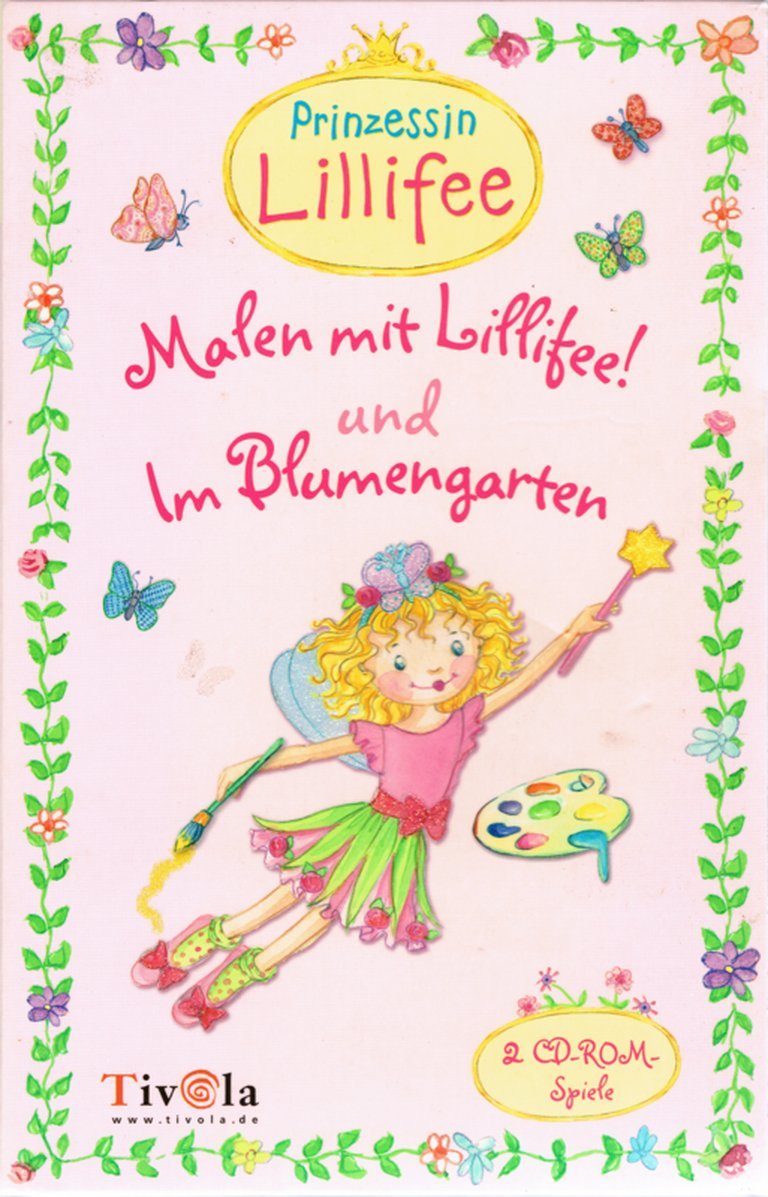
Prinzessin Lillifee: Malen mit Lillifee! und Im Blumengarten is a compilation of two games from the Princess Lillifee series, designed for young children. The first game, Malen mit Lillifee!, focuses on creative activities like coloring and drawing, while the second, Im Blumengarten, invites players to explore a magical flower garden filled with interactive elements and mini-games. Set in a whimsical, fairy-tale world, the games encourage imagination and fine motor skills through playful, child-friendly activities.
Prinzessin Lillifee: Malen mit Lillifee! und Im Blumengarten: A Whimsical Journey into Digital Creativity
Introduction: The Enchanting Legacy of a Fairy-Tale Compilation
In the annals of early 2000s children’s gaming, few franchises captured the imagination of young girls quite like Prinzessin Lillifee. A multimedia phenomenon originating from the illustrated books by Monika Finsterbusch, the brand expanded into a sprawling empire of merchandise, animated adaptations, and—most pertinently—interactive software. Among these digital offerings, Prinzessin Lillifee: Malen mit Lillifee! und Im Blumengarten (2007) stands as a fascinating artifact: a dual-game compilation that epitomizes the era’s approach to edutainment, blending creativity, simplicity, and the irresistible allure of fairy-tale escapism.
This review seeks to dissect the compilation’s dual components—Malen mit Lillifee! (Painting with Lillifee) and Im Blumengarten (In the Flower Garden)—within their historical, technical, and cultural contexts. Far from a mere “kids’ game,” this title reflects the ambitions of its publisher, Tivola, to craft immersive, gendered play experiences that prioritized artistic expression and nurturing gameplay over traditional challenge-based mechanics. Through an exhaustive analysis of its development, design, reception, and legacy, we will argue that Malen mit Lillifee! und Im Blumengarten is not only a product of its time but also a precursor to modern digital creativity tools, albeit one steeped in the pastel-hued nostalgia of early 2000s childhood.
Development History & Context: Tivola’s Vision in a Pre-App Era
The Rise of Tivola and the Lillifee Phenomenon
Founded in 1995, Tivola Publishing GmbH emerged as a key player in the German children’s software market, specializing in licensed properties and original educational titles. The company’s partnership with the Prinzessin Lillifee brand—itself a creation of the Coppenrath Verlag publishing house—proved to be a match made in commercial heaven. By the mid-2000s, Lillifee had transcended her origins as a book character to become a cultural icon, her image adorning everything from school supplies to bedding.
The decision to bundle Malen mit Lillifee! and Im Blumengarten into a single compilation was strategic. Both games had originally been released separately in 2006, but their thematic and mechanical synergy made them ideal candidates for a unified package. This approach was not uncommon in the era; publishers frequently repackaged older titles to extend their shelf life, especially in the children’s market where parents sought value-driven purchases.
Technological Constraints and Cross-Platform Ambitions
Released in August 2007 for Windows and Macintosh, the compilation was designed to run on modest hardware, reflecting the technological realities of its target audience. The minimum system requirements—a Pentium II 400 MHz processor, 64 MB of RAM, and Windows 98 or Mac OS 9.1—highlight a game built for accessibility rather than cutting-edge performance. This was a deliberate choice: Tivola’s titles were meant to be played on family computers, often hand-me-downs or budget models, rather than dedicated gaming rigs.
The use of CD-ROM as the distribution medium further underscores the pre-digital-download era in which the game existed. Unlike modern creativity apps that receive constant updates, Malen mit Lillifee! und Im Blumengarten was a self-contained experience, its content fixed at release. This static nature, while limiting, also lent the game a sense of permanence—a digital playground that remained unchanged, much like a physical coloring book.
The Gaming Landscape of 2007: A Niche for “Pink Software”
The late 2000s were a transitional period for children’s gaming. While consoles like the Nintendo DS and Wii were gaining traction, PC remained a dominant platform for educational and creativity-focused titles. However, the market was increasingly segmented by gender, with so-called “pink software” targeting young girls through themes of beauty, nurturing, and domestic play.
Prinzessin Lillifee fit squarely within this trend. Games like Barbie Fashion Designer (1996) and Disney Princess titles had already established the formula: pastel aesthetics, non-competitive gameplay, and activities centered around creativity and care. Tivola’s compilation followed this blueprint but infused it with a distinctly European fairy-tale charm, setting it apart from its more commercialized American counterparts.
Narrative & Thematic Deep Dive: The Fairy Princess as Creative Muse
The Absence of Plot and the Power of Implication
Unlike narrative-driven games, Malen mit Lillifee! und Im Blumengarten eschews traditional storytelling in favor of environmental storytelling and player-driven imagination. There is no overarching plot, no villains to defeat, and no goals to achieve beyond those set by the player. Instead, the games create a digital dollhouse—a slice of Lillifee’s enchanted garden where the player is free to explore, create, and interact at their own pace.
This design philosophy aligns with the Montessori-inspired approach to children’s software, which emphasizes self-directed play and open-ended creativity. By removing structured objectives, the games position the player as an active participant in Lillifee’s world, rather than a passive consumer of content.
Character and World: The Illusion of Agency
Prinzessin Lillifee herself serves as a silent guide, appearing occasionally to offer encouragement or demonstrate activities. Her role is deliberately minimal; she is less a character and more a symbol of creative potential. This design choice is crucial: it allows young players to project themselves onto Lillifee, imagining themselves as the fairy princess tending to her garden or painting masterpieces in her studio.
The world of the games—Lillifee’s castle garden—is rendered in soft watercolor-style graphics, evoking the illustrations from Finsterbusch’s original books. This visual consistency reinforced the brand’s identity and provided a familiar, comforting environment for young players. The garden is not just a setting but a character in its own right, one that responds to the player’s actions (e.g., flowers blooming when watered, paintings coming to life when colored).
Themes: Creativity, Nurturing, and the Feminine Ideal
At its core, the compilation explores themes of creativity, nurturing, and gentle femininity. Malen mit Lillifee! encourages artistic expression, while Im Blumengarten focuses on cultivation and care. These themes are not accidental; they reflect the gendered expectations of children’s media in the 2000s, where girls were often steered toward activities that emphasized beauty, domesticity, and emotional labor.
However, the games also subvert these expectations in subtle ways. The act of digital painting in Malen mit Lillifee! is not merely about coloring within the lines—it’s about experimentation with tools, colors, and effects. Similarly, Im Blumengarten frames gardening as a creative act, allowing players to design bouquets and arrange flowers in ways that reflect their personal aesthetic. In this sense, the games can be seen as early examples of digital crafting, a genre that would later flourish in titles like Animal Crossing and Stardew Valley.
Gameplay Mechanics & Systems: Deconstructing the Digital Playground
Malen mit Lillifee!: A Canvas of Possibilities
Core Gameplay Loop:
1. Select a Template: Players choose from a variety of pre-drawn outlines, including butterflies, stars, flowers, and Lillifee herself.
2. Choose Tools: A robust palette of digital art tools is available, including:
– Standard brushes and pencils.
– Special effect tools (e.g., glitter pens, color-inversion brushes, star trails).
– A color mixer for custom shades.
3. Create and Experiment: Players fill in the templates or draw freely, with no penalties for “mistakes.”
4. Save and Share: Finished artwork can be saved to the computer or emailed to friends and family.
Innovations and Limitations:
– The effect tools were particularly innovative for the time, offering young players a taste of digital artistry that went beyond simple coloring. The ability to create glitter effects or complementary color inversions added a layer of depth rarely seen in children’s software.
– However, the lack of layers or undo functionality (common in modern apps like Procreate) reflects the technological constraints of the era. Mistakes were permanent unless the player started over, which could be frustrating for perfectionist young artists.
– The UI was intuitive but limited, with no tutorials beyond Lillifee’s occasional demonstrations. This design assumed a level of digital literacy that not all young players possessed, potentially leading to confusion.
Im Blumengarten: Cultivating Digital Flora
Core Gameplay Loop:
1. Plant Seeds: Players select from a variety of flower seeds and plant them in virtual garden beds.
2. Water and Nurture: Using an on-screen watering can, players tend to their plants, watching them grow in real-time (albeit accelerated).
3. Harvest and Arrange: Once fully grown, flowers can be picked and arranged into bouquets, which can then be decorated with ribbons and other embellishments.
4. Decorate the Garden: Players can place their bouquets around the garden or use them to decorate Lillifee’s castle.
Innovations and Limitations:
– The real-time growth system was a standout feature, giving players a sense of responsibility and anticipation. Watching a seedling transform into a blooming flower provided a tangible reward for patience and care.
– The bouquet-arranging mechanic was surprisingly robust, allowing for a degree of creativity in how flowers were combined and presented. This feature foreshadowed the crafting systems of later games like Minecraft and The Sims.
– However, the lack of depth in the gardening mechanics is notable. There are no pests to manage, no weather effects, and no seasonal changes—factors that would have added complexity but also educational value.
Shared Features and Integration
One of the compilation’s most interesting aspects is how the two games interconnect. Players can take flowers from Im Blumengarten and use them as decorative elements in Malen mit Lillifee!, or incorporate their paintings into the garden scenery. This cross-game integration was ahead of its time, creating a unified creative ecosystem that encouraged players to switch between activities seamlessly.
The ability to email creations was another forward-thinking feature, leveraging the nascent internet culture of the late 2000s to foster social sharing. For many young players, this may have been their first experience with digital distribution—a precursor to the share buttons ubiquitous in modern apps.
World-Building, Art & Sound: Crafting a Fairy-Tale Atmosphere
Visual Design: A Watercolor Wonderland
The art style of Malen mit Lillifee! und Im Blumengarten is its most enduring legacy. Drawing heavily from Monika Finsterbusch’s original illustrations, the games employ a soft, hand-painted aesthetic that mimics watercolor and gouache. The color palette is dominated by pastel pinks, lavenders, and mint greens, reinforcing the feminine, dreamlike quality of the Lillifee brand.
Character Design:
– Prinzessin Lillifee is depicted with delicate features, flowing blonde hair, and a diaphanous gown, embodying the archetype of the “fairy princess.”
– Supporting characters, such as butterflies and woodland creatures, are rendered in a whimsical, slightly abstract style, making them appear friendly and non-threatening.
Environmental Design:
– The garden is a lush, idyllic space, filled with blooming flowers, sparkling streams, and twinkling fireflies. The absence of sharp edges or dark colors creates a safe, inviting atmosphere—a digital equivalent of a child’s playroom.
– The painting studio in Malen mit Lillifee! is designed to resemble a sunlit atelier, with easels, paintbrushes, and scattered art supplies reinforcing the theme of creativity.
Sound Design: The Symphony of a Fairy Garden
The audio experience in Malen mit Lillifee! und Im Blumengarten is subtle but effective, relying on ambient sounds and gentle melodies to enhance immersion.
- Background Music: Soft, orchestral compositions with harp and flute motifs play in the background, evoking a sense of magic and tranquility. The music is looping but unobtrusive, designed to fade into the background rather than demand attention.
- Sound Effects:
- In Malen mit Lillifee!, the sound of brushstrokes and pencil scratches provides tactile feedback, reinforcing the illusion of real painting.
- In Im Blumengarten, the sound of water pouring from the watering can and the rustling of leaves as flowers grow add a layer of realism to the digital gardening experience.
- Voice Acting: Lillifee’s voice, when present, is soft and melodic, delivering encouragement in a non-intrusive manner. Her dialogue is minimal, consisting mostly of phrases like “Das ist wunderschön!” (“That’s beautiful!”) or “Versuch es mit dieser Farbe!” (“Try this color!”).
Atmosphere: A Digital Safe Space
The combination of visual and auditory elements creates an atmosphere of warmth, safety, and wonder—a digital sanctuary where young players could escape the pressures of the real world. This emotional resonance was a key selling point for parents, who saw the games as a wholesome alternative to more violent or competitive titles.
However, the lack of dynamic elements—such as day-night cycles or interactive weather—means the world can feel static over time. Unlike modern sandbox games, which use environmental changes to maintain engagement, Malen mit Lillifee! und Im Blumengarten relies entirely on the player’s imagination to keep the experience fresh.
Reception & Legacy: The Quiet Influence of a Children’s Classic
Critical and Commercial Reception
Upon release, Prinzessin Lillifee: Malen mit Lillifee! und Im Blumengarten received little formal critical attention, a common fate for children’s software in the 2000s. Most coverage came from parenting magazines and educational reviews, which praised the games for their creative potential and ease of use.
- Parental Approval: The compilation was widely regarded as a safe, educational choice for young girls, aligning with the era’s emphasis on “screen time” as a tool for learning rather than mere entertainment.
- Commercial Success: While exact sales figures are unavailable, the game’s longevity in the secondhand market (as evidenced by eBay listings and Amazon resales) suggests it was a steady seller, particularly in German-speaking regions where the Lillifee brand was strongest.
Evolution of the Genre: From CD-ROM to App Store
The legacy of Malen mit Lillifee! und Im Blumengarten can be seen in the evolution of digital creativity tools for children:
- From Static to Dynamic: Modern apps like Toca Boca and Sago Mini build on the open-ended play of Lillifee but add interactive physics, animation, and multi-touch controls—features that were technologically infeasible in 2007.
- Social Sharing: The ability to email creations has evolved into instant sharing via social media or cloud storage, a feature now standard in apps like Procreate and Adobe Fresco.
- Cross-Platform Play: The compilation’s integration of two distinct activities foreshadowed the unified ecosystems of modern games, where progress and creations carry over between different modes or even different devices.
Cultural Impact: The Gendered Play Debate
The game’s unapologetically feminine design has made it a subject of debate in discussions about gendered toys and media. Critics argue that titles like Prinzessin Lillifee reinforce stereotypes by steering girls toward passive, beauty-focused activities. However, defenders point out that the games also empower creativity and independence, allowing young girls to express themselves in a space free from competition or judgment.
In retrospect, Malen mit Lillifee! und Im Blumengarten can be seen as a product of its time—a reflection of early 2000s attitudes toward gender and play. Yet it also contains the seeds of progressive design, offering a digital safe space where creativity, not conformity, is the ultimate goal.
Conclusion: A Digital Time Capsule of Creativity
Prinzessin Lillifee: Malen mit Lillifee! und Im Blumengarten is more than a relic of children’s gaming—it is a time capsule of an era when digital creativity was still in its infancy. While its mechanics may feel simplistic by modern standards, its commitment to open-ended play, artistic expression, and nurturing gameplay remains admirable.
Final Verdict:
– **For Historian