
- Release Year: 2003
- Platforms: Windows
- Publisher: Infogrames, Inc.
- Developer: Fireline Interactive, LLC
- Genre: Simulation, Sports
- Game Mode: Online PVP, Single-player
- Gameplay: Customization, Fishing, Tournament
- Setting: Real bass locations
Description
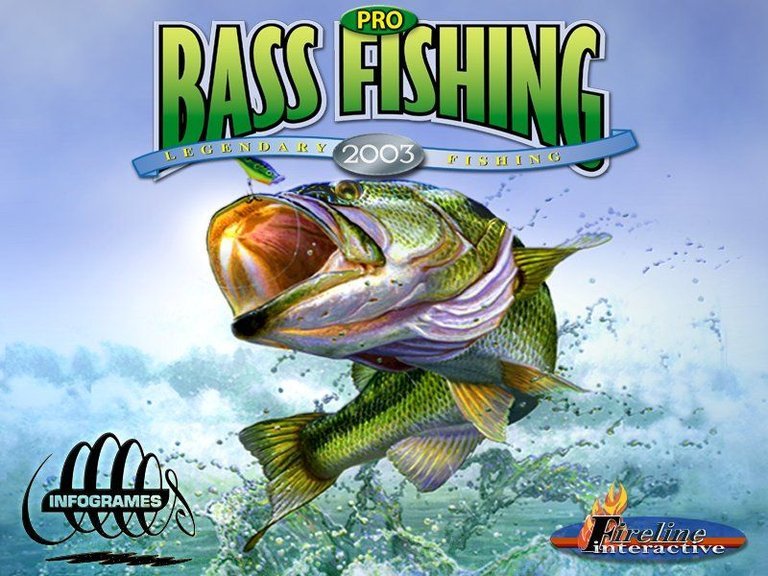
Pro Bass Fishing 2003 is a last-generation fishing simulator that immerses players in real bass fishing locations such as Dale Hollow. With up to 20 accurately recreated fish species including Catfish and Walleye, players can customize their tackle and rod setups, compete in career tournaments, and enjoy multiplayer modes.
Gameplay Videos
Pro Bass Fishing 2003 Free Download
Pro Bass Fishing 2003 Cracks & Fixes
Pro Bass Fishing 2003 Patches & Updates
Pro Bass Fishing 2003 Cheats & Codes
PC
Enter codes at the name entry prompt.
| Code | Effect |
|---|---|
| pbxray | Shows all fish in ‘fishing’ mode. |
| pbpowerpole | Line won’t break. |
| pbsuperbait | Fish can’t resist the bait. |
Pro Bass Fishing 2003: A Quiet Cast into the Deep
Introduction: The Stillness Before the Strike
In the vast ecosystem of early 2000s video games, dominated by first-person shooters, open-world epics, and sequels to established franchises, a quiet, unassuming title like Pro Bass Fishing 2003 risks becoming mere digital plankton. Yet, to dismiss it is to overlook a crucial, if understated, tributary in the river of simulation gaming. Released in the twilight of the PC’s dominance as a platform for accessible sports simulations, this game, developed by the small Fireline Interactive and published by the behemoth Infogrames, represents the last gasps of a specific era: the “last-generation” fishing sim designed for a keyboard-and-mouse audience before the genre fully coalesced around console motion controls and stylized arcade action. Its critical reception, a scattered 61% aggregate from a mere three professional reviews, tells a story ofpolarization—one reviewer saw a “nice, family friendly game” with tangible physical engagement, another a “well-done” niche title, and a third a “completely uncompetitive” failure. This review will argue that Pro Bass Fishing 2003 is not a forgotten masterpiece, but a significant and earnest artifact. It is a game that successfully translated the contemplative patience and technical minutiae of competitive bass fishing into a digital format, balancing a demanding simulation core with surprising accessibility, all while grappling with the technological and market constraints of its time. Its legacy is not one of blockbuster success, but of faithful preservation—a digital time capsule of a particular American pastime at a particular technological moment.
Development History & Context: Fireline’s Finch in Infogrames’ Coop
To understand Pro Bass Fishing 2003, one must first understand its creators and its corporate parentage. The developer, Fireline Interactive, LLC, was a small studio based in the United States, a fact crucial to the game’s authenticity. Unlike many Japanese-developed fishing games (e.g., Nushi Tsuri series) or Sega’s arcade-centric Bass Fishing, Fireline’s team were almost certainly anglers themselves. Their vision, as gleaned from the game’s meticulous recreation of locations and species behaviors, was not to create an arcade thrill-ride but a virtual angler’s toolkit. This was a project born from a passion for the sport, aiming to simulate the thought processes—reading water, selecting tackle, understanding seasonal patterns—as much as the physical act of casting and retrieving.
The publisher, Infogrames, Inc., provides the essential corporate context. By 2003, Infogrames was a sprawling French conglomerate on an aggressive acquisition spree in North America, having purchased the iconic Atari name and assets in 1998. It was a company known for licensing-driven games (Dragon Ball Z, Looney Tunes) and spreading its IPs thin. Pro Bass Fishing 2003 was part of a broader, less-heralded push into the “simulation” and “sports” space under the Infogrames banner, a portfolio that included titles like Paris-Dakar Rally and F1 Career Challenge. For Infogrames, this was likely a low-risk, low-budget proposition: leveraging a niche sports license for the PC market, which still had a dedicated audience for such simulations but was seeing declining retail shelf space. The title’s release as a CD-ROM commercial product, with no mention of digital distribution in its initial specs, places it firmly in the final era of physical PC game dominance before Steam’s rise.
Technologically, the game was a “last-generation” showcase, meaning it targeted the tail-end of the DirectX 7/8 era. The recommended specs of a Pentium II 400MHz and 16MB graphics card are telling. This was not a game pushing hardware limits; it was designed to run on the vast installed base of mid-to-late 90s PCs. This constraint forced focus on efficient 3D modeling of environments and fish rather than on texture resolution or draw distance. The “dynamic water reflections” and “swaying vegetation” praised in contemporary retrospectives were achievable tricks, not groundbreaking shader work. The gaming landscape of early 2003 was one where The Sims and Grand Theft Auto: Vice City reigned supreme. Pro Bass Fishing 2003 existed in the shadow of these juggernauts, carving out a tiny, dedicated lane for itself—a testament to the enduring, if shrinking, market for dedicated sports simulations on the PC.
Narrative & Thematic Deep Dive: The Story of the Catch
Fishing simulators are, by their nature, narratively sparse. There are no cutscenes with a tragic past or a villain to thwart. The “story” of Pro Bass Fishing 2003 is an emergent, player-driven narrative built on the twin pillars of progression and mastery.
The primary narrative thread is the Career Mode. This is not a story with dialogue or characters, but a classic sports game arc: the rise from unknown amateur to tournament champion. The player begins with basic gear and entry-level local tournaments. Each victory unlocks higher-stakes events, bigger prize pools, and access to more prestigious lakes like the famed Dale Hollow. The thematic underpinning here is American meritocracy—the idea that skill, knowledge, and perseverance are rewarded. You don’t start with a legendary rod; you earn it through performance. The “press photos” and “virtual sponsor deals” mentioned in retrospective reviews are the quiet celebration of this success, the digital equivalent of having your picture on the local sports page. The career is a sandbox of ambition, where your personal goal (catch a 10-pound largemouth, win the championship) becomes the game’s central plot.
A secondary, richer narrative is found in the systemic interactions. Each lake— Toledo Bend, Mille Lacs, and the others—is not just a map but a character with its own personality, dictated by time of day, season, and weather. The game’s fish AI dictates that catfish lurk near cover requiring heavy tackle, while walleye patrol rocky drop-offs at dawn and dusk. The player’s story becomes one of learning this language. The moment a meticulously chosen lure—a spinnerbait in murky shallows at dawn, a drop-shot rig in deep, clear water—finally triggers a violent strike is a personal narrative climax. The game provides the setting, the rules, and the verbs (cast, retrieve, set the hook, fight); the player supplies the plot through trial, error, and eventual triumph. The “underlying theme,” therefore, is respect for natural systems. Victory comes not from overpowering the environment, but from understanding and harmonizing with it—a profound thematic contrast to the domination fantasies prevalent in other genres of the era.
Gameplay Mechanics & Systems: The Physics of Patience
This is where Pro Bass Fishing 2003 stakes its claim to legitimacy. Its core gameplay loop is a delicate dance of simulation and accessibility.
1. The Cast: The act of casting, often the downfall of fishing games, is handled with a mouse-driven power and angle meter. While the “work to be done with the mouse” could lead to a sore hand, as noted by the KidZone reviewer, it introduced a tangible, skill-based input. It wasn’t a simple button press; distance and accuracy were a function of player control, a direct analog to the real-world action. This immediately separated it from more simplistic, arcade-oriented competitors.
2. The Tackle Box: The “perfect tackle, rod and reel set-up” is not flavor text; it is the game’s strategic core. The simulation depth lies in the interconnected variables: rod power (ultralight to heavy), action (fast to slow), reel gear ratio, line strength, and the myriad of lures and baits (crankbaits, soft plastics, topwater poppers). Each choice affects casting distance, lure action, and, most critically, the ability to set the hook and fight the fish. Using light line with a heavy rod on a big bass is a recipe for a broken line. This system transforms gear selection from a cosmetic choice into a practical puzzle. Do you use a fast-reeling, heavy-power rod to bully a large, aggressive bass out of weeds, or a slow, sensitive setup to finesse a wary walleye? The game answers through its physics engine.
3. The Fight: Once hooked, the game transitions to its most critical simulation: the fight. The player must manage a tension meter (or visual line strain), adjusting reel speed to tire the fish without snapping the line. The fish itself behaves according to species-specific patterns—making sudden dashes (“sprinting”), leaping, or bulldogging into cover. The physics, while not perfectly realistic by today’s standards, were commendable for 2003. The “weighty and responsive” feel, and the fact that the fight could be as engaging as an FPS, speaks to a well-tuned feedback loop. The “jittery camera” that follows the fish, as criticized on Squakenet, was a double-edged sword: it heightened tension but could cause motion discomfort, a notable flaw in an otherwise immersive system.
4. Progression & Economy: The career mode is married to a simple economy. Tournament winnings purchase new gear. This creates a meaningful progression curve. You don’t just get better; you get better-equipped, which in turn allows you to target bigger, smarter fish in new, harder locations. The emergent narrative of the “amateur to pro” is mechanically reinforced by your evolving tackle box.
5. Multiplayer: The inclusion of LAN and Internet play via GameSpy Arcade was a significant feature for 2003. It transformed the solitary, contemplative experience into a social competition. The “race to the five-bass limit” or a “late-game comeback” creates the kind of memorable, player-generated stories that define great multiplayer experiences. It was a direct challenge to the solitary nature of real fishing, offering a digital pier where friends could compete.
Flaws: The systems were not without faults. The AI, while species-aware, could at times feel formulaic. The user interface, though “clean and intuitive” in calm moments, could become cluttered during the frantic tension of a fight. And the “occasional pop-in” of fish models or environmental details broke the realism the game so carefully built.
World-Building, Art & Sound: The Authentic Lake
Pro Bass Fishing 2003 excelled in creating a believable, placid world. Its ten lakes are not fantasy realms but virtual equivalents of famous real locations, with Dale Hollow being the crown jewel. The art direction prioritized authenticity over spectacle. Shorelines had realistic curves and structure (points, coves, submerged timber). Vegetation swayed gently. Most importantly, the water itself was a character. It had depth, clarity variation, and reflective properties that changed with the dynamic weather system. A calm morning with glassy surface required different tactics than a choppy, windy afternoon.
The fish models were a standout achievement for the platform. With “impressive detail for the era,” each of the 20+ species had distinct scale textures, coloration, and body morphology. You could tell a fat, broad largemouth from a slender, torpedo-shaped walleye or a whiskered catfish at a glance, even in the heat of a catch. Their swimming animations—the lazy glide of a carp, the erratic dart of a pike—added to the sense of hunting distinct prey.
The sound design was minimalist but effective. The core audio experience was the splash of the lure, the whir of the reel, and the glorious, splashing, head-shaking commotion of a landed bass. Ambient sounds—gentle waves, distant birds—filled the silence between casts, enhancing the meditative quality. The lack of a bombastic soundtrack was a wise choice, keeping the player immersed in the natural soundscape of the lake.
The user interface was a masterclass in functional clarity. Icons for rods, lures, and maps were easily distinguishable. The screen real estate was used efficiently, putting essential information (tension, depth, fish species on the hook) directly in the player’s line of sight without obscuring the action. It was a HUD that felt like part of the fishing gear, not a game overlay.
Reception & Legacy: A Niche Cult Classic
At launch, Pro Bass Fishing 2003 was commercially available but quietly buried. Its critical reception was mixed and sparse, a mere three professional reviews averaging 61%. The spectrum is instructive:
* The positive (KidZone 80%, 7Wolf 73%) reviews praised its family-friendly accessibility, realistic options, and physical engagement. They saw a game that bridged the gap between casual and hardcore, a “well-done” experience for a break from violence.
* The negative (Absolute Games 30%) review, in stark contrast, called it “uncompetitive” and a game to play only “from hopelessness.” This likely reflects a reviewer expecting either a deeper simulation or a more polished arcade experience, finding the game’s middle ground unsatisfying.
Its commercial performance was almost certainly modest. With no Metacritic entry (or an unlisted one) and low visibility, it existed in the “long tail” of PC gaming, sold in bargain bins and through online retailers of the era. Its current status on abandonware sites and retro databases suggests it has achieved a cult, forgotten classic status among a tiny cohort of fishing sim enthusiasts.
Its legacy is two-fold:
1. As a Bridge: It represents the end of an era. It was one of the last major PC-exclusive, mouse-driven fishing simulations. The genre’s future, post-2003, would slowly migrate to consoles with Rapala titles and motion-control Bass Fishing ports, emphasizing visceral feedback over menu-driven tackle management. Pro Bass Fishing 2003 was the last, best effort to do it “the old way” with reasonable production values.
2. As a Baseline: For fans of the genre, it set a template for authenticity. Its focus on real locations, species-specific behaviors, and gear mechanics became the expected standard for serious fishing sims, even as presentation and control schemes evolved. The later Rapala: Pro Bass Fishing series, while more arcadey, still owes a debt to the baseline authenticity established by games like this.
Its influence on the broader industry is negligible outside its niche. It did not spawn a blockbuster franchise or revolutionize game design. But within its tiny, dedicated ecosystem, it is remembered as a competent, deep, and surprisingly fulfilling entry that understood its audience—the player who wanted to think like an angler, not just act like one.
Conclusion: The One That Got Away?
Pro Bass Fishing 2003 is not a forgotten gem. It is a forgotten tool. It is a well-calibrated, if physically cumbersome, instrument for a very specific hobby. Its value lies not in narrative brilliance or graphical prowess, but in its faithful, unpretentious simulation of a complex activity. It translated the quiet calculus of reading a lake, the tactile negotiation of a fighting fish, and the satisfying logic of gear selection into a language of menus, meters, and 3D models with remarkable success.
Its flaws are the flaws of its time and budget: dated visuals, a clunky camera, and a UI that sometimes fights the very immersion it creates. Its reception, split between appreciation and dismissal, is a perfect reflection of its position—too simulationist for the arcade crowd, too simplistic for the hardcore sim purist, but finding a narrow, appreciative channel in between.
In the grand museum of video game history, Pro Bass Fishing 2003 deserves a small, well-lit case. It is not a pillar of the medium, but it is a perfect exhibit of genre specificity. It demonstrates that a game can be profoundly successful within its own designed parameters—capturing the feel, the strategy, and the quiet joy of its subject—without achieving mainstream acclaim or critical consensus. It is a testament to the fact that the video game medium, in its vastness, has room not just for heroes and villains, but for the simple, honest recreation of a peaceful morning on a virtual lake, waiting for the telltale tug on the line. For that, it earns its place, not as a classic, but as a competent and authentic artifact of a quieter corner of our shared digital history.