
- Release Year: 2012
- Platforms: Windows
- Publisher: Focus Home Interactive SAS
- Developer: Cyanide S.A.
- Genre: Driving, Racing, Simulation, Sports
- Perspective: 3rd-person (Other)
- Game Mode: Online PVP, Single-player
- Gameplay: Bicycling, Bike, Business simulation, Managerial, Vehicular
- Setting: Country – France
- Average Score: 66/100
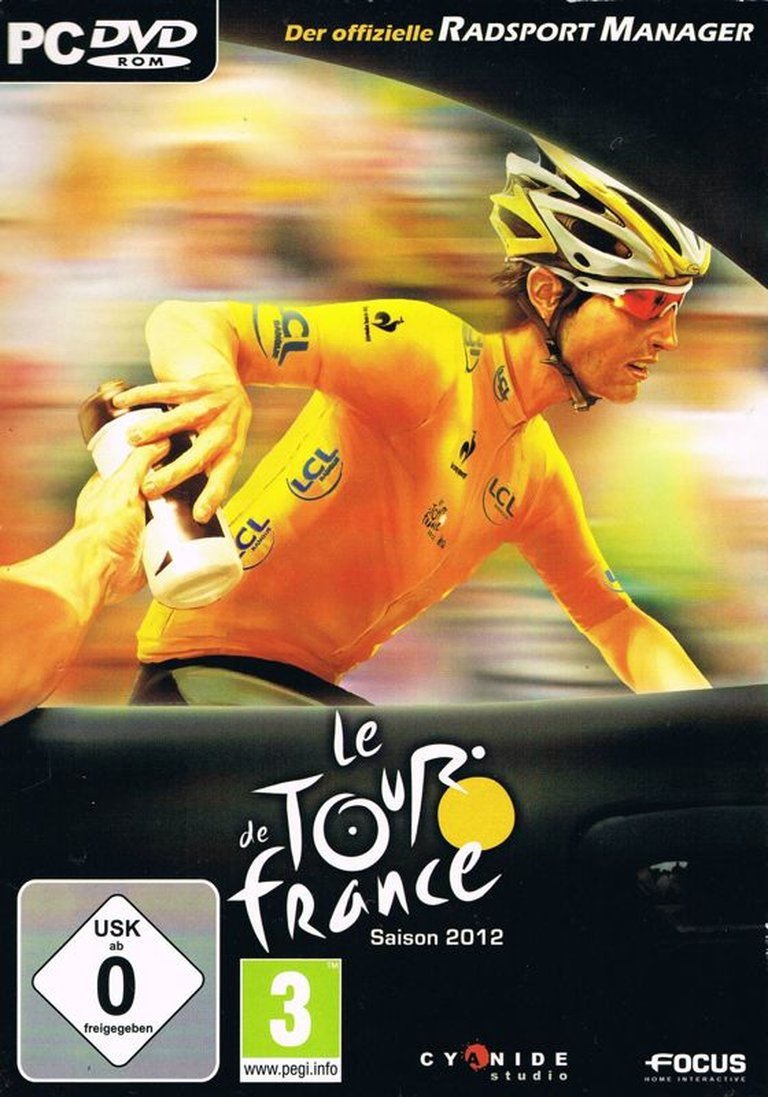
Description
Pro Cycling Manager: Season 2012 is a managerial simulation game where players take control of a professional cycling team, handling both athlete management (training, strategy, and role assignments) and financial aspects (signing riders and securing sponsors). The game features a career mode spanning multiple seasons, single races, and a new multiplayer mode called Armada, which allows players to build and compete with teams using trading cards. Races can be played in real-time or simulated, with players able to influence outcomes through tactical decisions. The game also includes a separate track racing mode where players control a single rider, managing energy and effort to win.
Gameplay Videos
Pro Cycling Manager: Season 2012 Cracks & Fixes
Pro Cycling Manager: Season 2012 Patches & Updates
Pro Cycling Manager: Season 2012 Guides & Walkthroughs
Pro Cycling Manager: Season 2012 Reviews & Reception
metacritic.com (68/100): A good cycling game, although a bit stagnated.
gamerant.com : The user interface will seem like a formidable foe for gamers new to the series.
theaveragegamer.com : No. Oh, for the love of Thor, no.
mobygames.com (65/100): A managerial simulation in which the player takes control over a cycling team.
Pro Cycling Manager: Season 2012 Cheats & Codes
PC
Enter one of the following last names to activate the cheats.
| Code | Effect |
|---|---|
| freire | 10 points on all manager stats |
| simulateisnotrace | Win all simulated races |
Pro Cycling Manager: Season 2012 – A Niche Masterpiece or a Cumbersome Chore?
Introduction
In the vast landscape of sports management simulations, few titles dare to tackle the intricate, often overlooked world of professional cycling. Pro Cycling Manager: Season 2012 (PCM 2012), developed by Cyanide Studio and published by Focus Home Interactive, is one such title—a game that boldly attempts to capture the essence of managing a cycling team through the grueling 2012 season. Released on June 22, 2012, PCM 2012 is the latest installment in a long-running series that has, for better or worse, carved out a niche for itself among cycling enthusiasts and management sim aficionados.
This review aims to dissect PCM 2012 in exhaustive detail, exploring its development history, gameplay mechanics, narrative depth (or lack thereof), artistic and auditory presentation, critical reception, and lasting legacy. The central thesis of this analysis is that Pro Cycling Manager: Season 2012 is a game of contradictions: a deeply complex and meticulously detailed simulation that simultaneously alienates casual players while rewarding the most dedicated cycling fans. It is a title that, despite its flaws, remains unparalleled in its ambition to replicate the nuances of professional cycling management.
Development History & Context
The Studio and Its Vision
Cyanide Studio, founded in 2000 by a group of former Ubisoft employees, has long been synonymous with niche sports simulations. The studio’s early work included titles like Blood Bowl, but it was the Cycling Manager series, launched in 2001, that established its reputation for tackling underrepresented sports. By 2005, the series had evolved into Pro Cycling Manager, a rebranding that signaled a shift toward greater realism and professional authenticity.
The vision behind Pro Cycling Manager was clear: to create a simulation that mirrored the complexities of real-world cycling management. This meant not only replicating the tactical intricacies of races like the Tour de France but also the behind-the-scenes logistics of team management—contract negotiations, sponsorship deals, training regimens, and financial planning. For Cyanide, the goal was to appeal to a very specific audience: cycling enthusiasts who craved a game that treated the sport with the same depth and respect as titles like Football Manager did for soccer.
Technological Constraints and Innovations
PCM 2012 was developed during a transitional period in gaming. The late 2000s and early 2010s saw a shift toward more immersive 3D graphics and online multiplayer experiences, but sports management simulations often lagged behind due to their reliance on complex databases and menu-driven interfaces. Cyanide’s challenge was to balance realism with accessibility, a task complicated by the niche appeal of cycling as a sport.
One of the most significant innovations in PCM 2012 was the introduction of the Armada multiplayer mode, a feature inspired by EA Sports’ FIFA Ultimate Team. Armada allowed players to build custom teams using trading cards, competing in scheduled online competitions. This mode was a bold attempt to modernize the series, introducing microtransactions and a persistent online world. However, it also replaced traditional multiplayer options, a decision that would later draw mixed reactions from the community.
Other notable improvements included:
– A refined AI system that better accounted for rider fatigue, race conditions, and tactical decisions.
– Licensed equipment and teams, adding a layer of authenticity to the experience.
– A season planner for career mode, giving players greater control over race scheduling and team preparation.
– Enhanced 3D visuals, though these were still limited by the technological constraints of the era.
The Gaming Landscape in 2012
The year 2012 was a competitive one for sports simulations. Titles like FIFA 13, NBA 2K13, and Football Manager 2012 dominated the market, each offering polished, accessible experiences with broad appeal. In contrast, Pro Cycling Manager occupied a narrow niche. Cycling, while popular in Europe, lacked the global mainstream appeal of soccer or basketball, and management simulations were already a hard sell to casual gamers.
PCM 2012’s release coincided with the 2012 Tour de France, a strategic move to capitalize on the heightened interest in the sport. However, the game’s steep learning curve and lack of mainstream marketing meant it remained largely unknown outside of its core audience. This was further compounded by the fact that the game was primarily a PC release, with console versions (Xbox 360 and PlayStation 3) offering a more streamlined, race-focused experience under the Le Tour de France 2012 banner.
Narrative & Thematic Deep Dive
The Absence of a Traditional Narrative
Unlike many sports games, Pro Cycling Manager: Season 2012 does not feature a traditional narrative. There are no scripted storylines, no dramatic cutscenes, and no character arcs. Instead, the game’s “story” emerges organically from the player’s decisions and the unfolding of the cycling season. This is not a criticism but rather a reflection of the game’s design philosophy: PCM 2012 is a simulation first and foremost, and its narrative is one of emergent gameplay.
That said, the game does attempt to create a sense of immersion through its career mode, where players take on the role of a team manager over multiple seasons. The career begins with the player selecting or creating a team, followed by the arduous task of managing every aspect of its operations—from signing riders to securing sponsors. The narrative, such as it is, is driven by the player’s ability to navigate the complexities of the sport, overcoming challenges like injuries, fatigue, and financial constraints.
Themes of Strategy and Perseverance
The overarching themes of PCM 2012 are strategy, perseverance, and adaptability. Cycling is a sport where success is rarely the result of brute force alone; it requires meticulous planning, tactical acumen, and the ability to adapt to ever-changing conditions. The game reflects this reality by forcing players to make difficult decisions:
– Do you push your riders to their limits in a high-stakes race, risking burnout and injury?
– Do you invest in expensive training camps to improve performance, or do you cut costs to secure better sponsorship deals?
– Do you focus on winning a single prestigious race, or do you spread your resources thin to compete in multiple events?
These themes are reinforced by the game’s real-time race simulation, where players must constantly adjust their strategies based on the peloton’s dynamics, weather conditions, and the physical state of their riders. The absence of a traditional narrative allows these themes to shine, as the player’s journey is shaped by their own choices rather than pre-scripted events.
Characters and Dialogue
PCM 2012’s approach to characters is functional rather than emotional. Riders are represented as statistical entities, with attributes like stamina, climbing ability, and sprinting power defining their roles within the team. There is little in the way of personality or backstory; riders are tools to be managed, not individuals to be empathized with.
Dialogue is similarly minimal. The game’s interface is dominated by menus, charts, and notifications, with occasional text updates during races. The commentary, while present, is repetitive and lacks the depth of more mainstream sports titles. This is not necessarily a flaw—PCM 2012 is not trying to be a storytelling experience—but it does contribute to the game’s dry, utilitarian feel.
Gameplay Mechanics & Systems
Core Gameplay Loops
At its heart, Pro Cycling Manager: Season 2012 is a managerial simulation with real-time tactical elements. The core gameplay loop revolves around three main activities:
1. Team Management: Handling finances, signing riders, negotiating sponsorships, and planning training regimens.
2. Race Preparation: Selecting riders for events, assigning roles (e.g., domestique, sprinter, climber), and setting tactical instructions.
3. Race Execution: Monitoring races in real-time, issuing orders to riders, and adjusting strategies on the fly.
The game offers multiple modes to engage with these loops:
– Career Mode: The primary experience, spanning multiple seasons and allowing for long-term team development.
– Single Races: One-off events, including full stages, single stages, or classic races.
– Track Racing: A separate mode focused on velodrome events, where players control a single rider in disciplines like sprint, keirin, and elimination races.
– Armada Multiplayer: A card-based online mode where players build custom teams and compete in scheduled competitions.
Team Management: The Backbone of the Game
Team management in PCM 2012 is a deep and often overwhelming experience. Players must juggle multiple responsibilities:
– Financial Management: Securing and maintaining sponsorships is crucial, as these deals provide the bulk of the team’s budget. Sponsors have specific objectives (e.g., winning certain races, signing high-profile riders) that must be met to retain their support.
– Rider Recruitment: Players can scout and sign new riders, balancing talent with budget constraints. Contract negotiations involve salary, contract length, and role assignments.
– Training and Development: Riders can be sent to training camps to improve specific attributes (e.g., climbing, sprinting, endurance). Younger riders can be developed in a dedicated under-23 team.
– Equipment and Logistics: Investing in better bikes, gear, and support staff can provide a competitive edge.
The depth of these systems is impressive, but the user interface (UI) is a significant hurdle. Navigating the myriad menus and submenus is cumbersome, especially for newcomers. The game assumes a high level of familiarity with cycling terminology and management concepts, which can be alienating for casual players.
Race Simulation: Tactics and Real-Time Decision-Making
The race simulation is where PCM 2012 truly shines. Players can choose between three levels of engagement:
1. Quick Simulation: The race is resolved automatically based on rider stats and pre-set tactics.
2. Detailed Simulation: A text-based play-by-play of the race, with occasional prompts for tactical adjustments.
3. 3D Race: A real-time, third-person view where players can issue orders to their riders, monitor energy levels, and react to the peloton’s movements.
The 3D race mode is the most immersive but also the most demanding. Players must manage their riders’ energy levels, positioning, and tactics in real-time. Key mechanics include:
– Drafting: Riders can conserve energy by staying in the slipstream of other cyclists.
– Breakaways: Players can order riders to attack, attempting to break away from the peloton.
– Sprint Trains: Coordinating riders to lead out a sprinter for the final dash to the finish line.
– Climbing Strategies: Adjusting effort levels on ascents to avoid burnout.
The AI in PCM 2012 is refined but not perfect. Opponent teams will react to the player’s moves, but their decision-making can sometimes feel predictable or illogical. The game’s physics engine also has its quirks, with riders occasionally clipping through each other or exhibiting unrealistic behavior.
Track Racing: A Separate Challenge
The track racing mode is a standalone experience that focuses on velodrome events. Unlike the management-heavy career mode, track racing is purely about real-time control of a single rider. Players must manage their rider’s effort levels, lane positioning, and energy conservation to outmaneuver opponents in disciplines like:
– Sprint: A best-of-five 1v1 matchup.
– Keirin: A six-rider pursuit with a pacer.
– Elimination: Riders are progressively eliminated every two laps.
– Points Race: Sprint-based scoring with bonuses for laps gained.
While track racing is a welcome addition, it feels disconnected from the rest of the game. There is no integration with the career mode, and the lack of depth in this mode makes it feel like an afterthought.
Multiplayer: Armada and Its Controversies
The Armada mode was PCM 2012’s most ambitious multiplayer feature. Inspired by FIFA Ultimate Team, Armada allowed players to build custom teams using trading cards. These cards could be earned through gameplay or purchased via microtransactions, a decision that drew criticism for its pay-to-win implications.
Armada replaced traditional multiplayer options, which was a contentious move. While the mode offered a fresh take on online competition, its reliance on microtransactions and the removal of LAN support alienated some fans. The mode’s success was mixed, with some players embracing the card-collecting aspect while others lamented the loss of more traditional multiplayer features.
World-Building, Art & Sound
Setting and Atmosphere
Pro Cycling Manager: Season 2012 is set in the real-world professional cycling circuit, with a focus on prestigious events like the Tour de France, Giro d’Italia, and Vuelta a España. The game’s world is a faithful recreation of these races, complete with licensed teams, riders, and equipment. The atmosphere is one of authenticity, with the game striving to replicate the look and feel of professional cycling.
However, the game’s world-building is functional rather than immersive. There are no dynamic weather effects, no crowd interactions, and no sense of a living, breathing world. The races take place in a vacuum, with little to no environmental storytelling. This is not necessarily a flaw—PCM 2012 is a management sim, not an open-world adventure—but it does contribute to the game’s clinical feel.
Visual Direction: A Mixed Bag
The visual presentation of PCM 2012 is a study in contrasts. On one hand, the 3D race mode features detailed rider models, realistic bike physics, and varied environments. The roads, landscapes, and cityscapes are rendered with a surprising level of detail, and the game does a decent job of capturing the scale of events like the Tour de France.
On the other hand, the menu interfaces are dull and outdated. The UI is a labyrinth of text-heavy screens, with little in the way of visual flair or intuitive design. The game’s aesthetic is utilitarian, prioritizing function over form. This is understandable given the complexity of the simulation, but it does little to enhance the player’s immersion.
The track racing mode fares slightly better, with its velodrome environments offering a more focused and visually coherent experience. However, the lack of integration with the rest of the game makes this mode feel like a separate entity rather than a cohesive part of the overall experience.
Sound Design: Repetitive and Underwhelming
The audio design in PCM 2012 is one of its weakest aspects. The game features a limited soundtrack of electronic tracks that loop endlessly, quickly becoming grating. The commentary, while present, is repetitive and lacks depth, with the same phrases being reused ad nauseam.
The sound effects are similarly underwhelming. The hum of bike tires, the cheers of the crowd, and the occasional shout from the peloton are all present, but they lack the dynamic range and immersion of more polished sports titles. The absence of ambient noise—such as wind, rain, or the rustling of trees—further detracts from the game’s atmosphere.
Reception & Legacy
Critical Reception: A Niche Title for a Niche Audience
Pro Cycling Manager: Season 2012 received mixed to average reviews from critics, with a Metacritic score of 68/100 based on 11 reviews. The game’s reception was largely polarized, with cycling enthusiasts praising its depth and realism while casual players and critics bemoaned its steep learning curve, outdated UI, and lack of accessibility.
Positive Aspects Highlighted by Critics:
– Depth of Simulation: Reviewers praised the game’s meticulous attention to detail, particularly in its race simulation and team management systems. The ability to micro-manage riders in real-time was seen as a standout feature.
– Authenticity: The inclusion of licensed teams, riders, and equipment added a layer of realism that appealed to cycling fans.
– Armada Mode: While controversial, the Armada multiplayer mode was seen as an innovative attempt to modernize the series.
Negative Aspects Highlighted by Critics:
– Steep Learning Curve: The game’s complexity and lack of tutorials made it inaccessible to newcomers. Critics noted that even experienced management sim players would struggle with the game’s convoluted menus and terminology.
– Outdated UI: The clunky, text-heavy interface was a frequent point of criticism. Many reviewers felt that the UI had not evolved significantly from previous iterations.
– Repetitive Audio: The limited soundtrack and repetitive commentary were widely panned.
– Performance Issues: Some critics reported long loading times and technical hiccups, particularly in the 3D race mode.
Notable Review Excerpts:
– PCActu (70/100): “Cyanide advances cautiously when it comes to innovating for its cycling management game. Pro Cycling Manager 2012 remains in line with its predecessors while offering some interesting innovations. In the end, it stands as the greatest advance in the series in recent years with its Armada mode, which only needs to be optimized for future years.”
– PC Games (Germany) (68/100): “The Tour de France: Season 2012 is a disturbingly detailed simulation of professional cycling. As in the annually released predecessors, every tiny detail has been thought of—the fun factor, however, remains far behind. The riders are impersonal collages of performance figures that the manager only sees as list entries.”
– The Average Gamer (67/100): “Terrible graphics, confusing menus, painfully long loading screens, crappy camera angles, hammer nails into your ears calibre music loops… I wouldn’t recommend this, unless it drops to £5 or something in a Steam sale.”
– GamingExcellence (50/100): “Pro Cycling Manager’s biggest downfall is accessibility. You need to be willing to sit down and learn how the game works to fully utilize what is offered. Even then, though, there isn’t much in the way of excitement however deep the game may be.”
Commercial Performance and Player Reception
PCM 2012’s commercial performance was modest, reflecting its niche appeal. The game sold primarily to dedicated cycling fans and management sim enthusiasts, with little crossover into the mainstream gaming market. The Steam user score of 6.9/10 (based on 23 ratings) suggests a divided player base, with some praising the game’s depth and others criticizing its accessibility issues.
The game’s multiplayer mode, Armada, was a point of contention. While some players enjoyed the card-collecting aspect, others felt that the microtransactions and removal of LAN support were steps backward. The mode’s success was limited, with many players preferring the single-player career mode.
Legacy and Influence
Pro Cycling Manager: Season 2012 occupies a unique place in gaming history as one of the few titles to tackle professional cycling management with such depth. Its legacy is one of niche appeal and dedicated fandom, with the series continuing to release annual iterations to this day.
The game’s influence on subsequent titles in the series is evident:
– Armada Mode: While controversial, the Armada mode set a precedent for future multiplayer innovations in the series.
– Refined AI and Graphics: Later iterations built upon PCM 2012’s improvements in AI behavior and visual fidelity.
– Continued Focus on Realism: The series has maintained its commitment to authenticity, with each new release updating rosters, routes, and licensing agreements.
However, the game’s accessibility issues have persisted. Later titles in the series have attempted to streamline the UI and add tutorials, but the core experience remains daunting for newcomers. The Pro Cycling Manager series continues to be a labor of love for cycling enthusiasts, but it has yet to achieve the mainstream success of titles like Football Manager or FIFA.
Conclusion: A Flawed but Unparalleled Simulation
Pro Cycling Manager: Season 2012 is a game of contradictions. It is a deep, meticulously detailed simulation that rewards dedication and strategic thinking, yet it is also a clunky, inaccessible experience that alienates all but the most hardcore cycling fans. Its real-time race simulation is a triumph of tactical depth, but its outdated UI and repetitive audio detract from the overall experience. The Armada multiplayer mode is an innovative attempt to modernize the series, but its pay-to-win mechanics and removal of LAN support left a bitter taste in the mouths of many players.
Despite these flaws, Pro Cycling Manager: Season 2012 remains unparalleled in its ambition. No other game has attempted to replicate the complexities of professional cycling management with such depth and authenticity. For cycling enthusiasts, it is a must-play experience, offering a level of detail and realism that is unmatched in the genre. For casual players, however, it is a daunting and often frustrating journey into a world that feels impenetrable.
Final Verdict:
– For Cycling Enthusiasts: ★★★★☆ (4/5) – A deeply rewarding simulation that captures the essence of professional cycling management.
– For Casual Gamers: ★★☆☆☆ (2/5) – A confusing, inaccessible experience that offers little in the way of mainstream appeal.
– For Management Sim Fans: ★★★☆☆ (3/5) – A solid but flawed entry in the genre, held back by its steep learning curve and outdated UI.
Pro Cycling Manager: Season 2012 is not a game for everyone, but for those who are willing to invest the time and effort, it offers a unique and deeply satisfying experience. It is a testament to the passion of its developers and the dedication of its fanbase, and it remains a landmark title in the niche world of cycling management simulations.