
- Release Year: 2015
- Platforms: PlayStation 4, Windows, Xbox One
- Publisher: ak tronic Software & Services GmbH, Bandai Namco Entertainment America Inc., Bandai Namco Entertainment Europe S.A.S., Bandai Namco Entertainment Inc.
- Developer: Slightly Mad Studios Limited
- Genre: Driving, Racing, Simulation
- Perspective: Third-person
- Game Mode: Online PVP, Single-player
- Gameplay: Career mode, Customization, Track racing, Weather simulation
- Setting: Motorsport, Racing circuits
- Average Score: 81/100
- VR Support: Yes
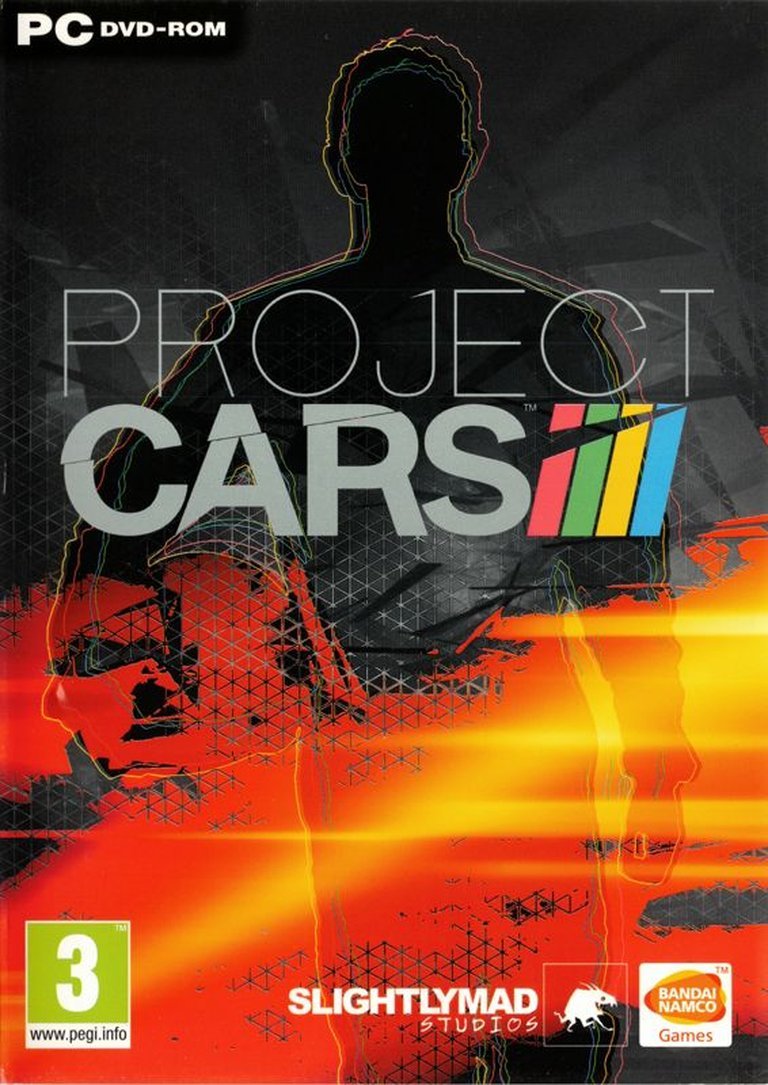
Description
Project CARS is a community-assisted racing simulator offering a comprehensive motorsport experience with all content unlocked from the start, featuring over 70 cars across diverse classes like open-wheel racers, GT cars, and Le Mans prototypes on real-world and fictional tracks. The game emphasizes deep customization, dynamic weather, a career mode with challenges such as winning championships, and both offline AI races and online multiplayer through curated playlists, all developed with significant community input and crowd-funding.
Gameplay Videos
Project CARS Free Download
Project CARS Cracks & Fixes
Project CARS Mods
Project CARS Guides & Walkthroughs
Project CARS Reviews & Reception
opencritic.com (80/100): Deep and demanding but incredibly user-friendly, Project CARS is real racing done right.
metacritic.com (83/100): Fantastically versatile Project CARS entertains both champions and festive drivers. It excites them with helpfulness, technology and dynamism, so only details could be reproached.
ign.com : Project CARS isn’t for everybody. It’s a serious, deep, and demanding racing simulation for people who like their motorsport pure.
theaureview.com : Project CARS is that rare sort of game that boasts a healthy ambition in the run up to its release and then actually manages to deliver on it.
imdb.com (80/100): Project CARS is the best sim racer on the market and a sandbox for sim racing fans.
Project CARS: Review
Introduction
In the pantheon of racing simulations, few titles have arrived with the ambitious, community-driven fervor of Project CARS. Released in May 2015, Slightly Mad Studios’ magnum opus was not merely a game but a manifesto—a bold declaration that motorsport could be both authentically simulated and democratically created. Its development, fueled by a groundbreaking $5 million crowd-funding initiative via the “World of Mass Development” (WMD) platform, invited players to become stakeholders in its creation. This radical approach birthed a title that eschewed traditional progression models in favor of unbridled freedom. Yet, Project CARS is more than a technical curiosity; it is a deeply rewarding, albeit demanding, racing simulator that redefined expectations for the genre. This review deconstructs its legacy—from its crowdfunded genesis to its lasting impact on sim racing—to argue that, despite imperfections, it stands as a watershed moment in interactive motorsport.
Development History & Context
Slightly Mad Studios, founded by veterans of Simbin’s revered GTR series, brought a pedigreed obsession with realism to Project CARS. Their vision was clear: create a “Community Assisted Racing Simulator” that bridged the gap between hardcore simulations like iRacing and accessibility-focused titles like Gran Turismo. Technologically, the game leveraged an upgraded “Madness Engine” (previously used in Need for Speed: Shift), enhanced with a dynamic tire model called SETA (Seta Tire Model). This replaced static lookup tables with real-time physics, simulating factors like tire wear, aquaplaning, and temperature—a leap forward for authenticity.
The development landscape was equally transformative. The 2010s saw indie developers leverage crowd-funding to challenge AAA giants, but Project CARS executed this uniquely. Over 100 pre-alpha builds were shared with WMD contributors, who provided feedback, QA testing, and even created assets. This participatory model raised €3.75 million from over 30,000 “Tool Pack” purchasers, who received dividends from sales—a first in gaming. The result was a game shaped by its community, not corporate mandates.
Narrative & Thematic Deep Dive
Project CARS dispenses with conventional narrative, instead centering the player’s journey as a race driver. The career mode, framed as “YOUR Ultimate Driver Journey,” offers open-ended progression: start in karts, leap into Formula 1, or remain in GT racing. This freedom is the game’s core theme—the rejection of linear grind in favor of player-defined ambition. Goals like “Zero to Hero” (ascending from karts to F1), “Triple Crown” (winning three distinct championships), and “Defending Champ” (undefeated seasons) serve as thematic anchors, rewarding dedication without coercion.
Dialogue is sparse but purposeful, led by The Stig (Ben Collins), Top Gear’s anonymous test driver, who delivers pit radio calls with grit. His voice—authoritative yet urgent—immerses players in the tension of pit strategy, transforming mechanical errors (e.g., dropped wheel nuts) into visceral drama. The absence of cutscenes or character arcs reinforces the game’s ethos: racing is the story.
Gameplay Mechanics & Systems
Project CARS’ gameplay is a masterclass in balancing simulation and accessibility. Its physics model prioritizes tactile feedback: weight transfer, brake lockup, and tire grip are rendered with nuance, especially with a steering wheel. The SETA model makes rain a dynamic adversary, forcing players to recalibrate their lines as rubber marbles accumulate off-racing lines. Yet, extensive assists—ABS, traction control, and even a “drifting mode”—cater to novices.
Career progression is revolutionary. Unlike Forza or Gran Turismo, it unlocks nothing; players access all 74 cars and 110+ tracks from the outset. Instead, progression is skill-based: team contracts are earned through performance, allowing players to specialize in endurance racing, open-wheel, or GT classes. The “Driver Network” tracks stats across disciplines, fostering a meta-narrative of growth.
Flaws emerge in AI behavior, which oscillates between unnervingly aggressive and passively oblivious. Pit stops, while atmospheric, occasionally suffer from physics bugs (e.g., invisible walls). The omission of a rewind feature alienates casual players, but this aligns with the game’s uncompromising ethos.
World-Building, Art & Sound
Project CARS’ world is a meticulous recreation of global motorsport. Over 30 locations—from Monaco’s sun-drenched streets to the misty Nürburgring—are rendered with photorealistic detail. Fictional circuits like Azur (Monaco’s stand-in) and Sakitto (Suzuka’s counterpart) honor their inspirations while offering unique challenges. Dynamic weather, a marquee feature, transforms races: sudden downpours turn Bathurst into a skating rink, while sunset at Le Mans paints the sky in fiery hues.
Art direction prioritizes authenticity over spectacle. Cars, built from 60,000 polygons on consoles, boast interior details visible via the first-person “helmet cam.” The sound design, composed by Stephen Baysted, blends engine roars with environmental ambience—screaming tires on tarmac, rain pattering on helmets, and distant crowd noise. The result is an atmosphere less of spectacle and more of immersion: the quiet hum of an LMP1 prototype in the pits feels as thrilling as a 200 mph straight.
Reception & Legacy
At launch, Project CARS earned critical acclaim (Metacritic: PC 83, PS4 83, Xbox One 81). IGN lauded it as “real racing done right,” praising its physics and customization, while PC Gamer called it “beautiful, bold, and varied.” Sales exceeded 2 million by October 2016, driven by its unique proposition. Yet, reviews noted flaws: GameSpot criticized AI inconsistency, and Destructoid lamented its lack of “unique game modes.”
Its legacy endures. The sequel (2017) expanded to 189 cars and 60 locations, adding rallycross, while Project CARS 3 (2020) pivoted toward accessibility. More profoundly, Project CARS democratized development, proving crowd-funding could rival AAA production. It influenced titles like Automobilista 2 and cemented Slightly Mad Studios as a sim-racing innovator—until its acquisition by Codemasters in 2019.
Conclusion
Project CARS is a flawed masterpiece—a testament to ambition over polish. Its crowdfunded genesis, open-ended career, and peerless physics redefined sim racing, proving that player agency could coexist with hardcore simulation. While AI quirks and technical hiccups temper its brilliance, its legacy is undeniable. For every racing purist who cherishes the thrill of a perfectly executed qualifying lap, Project CARS remains not just a game, but a revolution. It is the sound of a community-driven dream roaring onto the track—and for that, it deserves a permanent place on the podium.