
- Release Year: 2024
- Platforms: Quest, Windows
- Publisher: Fast Travel Games AB
- Developer: Omnifarious Studios LLC
- Genre: Action
- Perspective: 1st-person
- Game Mode: Single-player
- Gameplay: Open World, Sandbox
- VR Support: Yes
Description
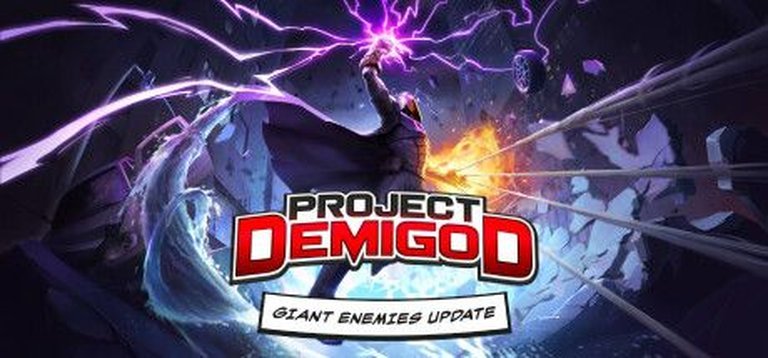
Project Demigod is a physics-driven superhero sandbox game designed for VR with motion controls, offering an immersive first-person experience in vast open-world environments ranging from cities to arenas. Players select from a variety of powers such as flight, super strength, and super speed to undertake missions, engage in combat with enemies and enormous bosses, and explore limitless possibilities, all while enjoying social multiplayer features for cooperative or competitive play.
Gameplay Videos
Where to Buy Project Demigod
PC
Project Demigod Guides & Walkthroughs
Project Demigod: Review – A Flawed But Ambitious Blueprint for the VR Superhero Dream
Introduction: The Promise of Godlike Power in a Virtual Sandbox
The fantasy of becoming a superhero—of soaring through skyscrapers, bending the elements to your will, and pummeling foes with impossible strength—has tantalized gamers for decades. Yet, translating that raw, limitless power into an interactive medium has always been a daunting design challenge. Enter Project Demigod, a VR-exclusive sandbox from solo developer Cory Robertson’s Omnifarious Studios, which emerged from Early Access in February 2024 under the publishing wing of Fast Travel Games. Its mission is audacious: to deliver a “physics-driven superhero simulator” where player creativity, not preset animations, dictates the chaos. This review will argue that Project Demigod is a landmark, if deeply imperfect, experiment in interactive empowerment. It captures the visceral, comic-book fantasy better than almost any game before it, but is consistently held back by technical roughness, a near-total lack of structured narrative, and visual presentation that fails to match its conceptual grandeur. Its true legacy may lie not in its polish, but in the blueprint it provides for a future where the “sandbox” in superhero games is truly, physically sanded by the player’s hands.
Development History & Context: A Solo Ascent in an Emerging Landscape
Project Demigod‘s origin story is as singular as its gameplay. According to an in-depth interview with UploadVR, creator Cory Robertson first conceptualized the project around 2017-2018 while at Columbia University, galvanized by the maturing consumer VR market. “As soon as I had seen that VR had finally become a thing, the thing we’d all been waiting for since we were kids, I jumped into it wholeheartedly,” he states. For years, this was a quintessential solo-dev endeavor—a “huge challenge” where Robertson wore every hat, navigating the “rapidly evolving” landscapes of VR software, plugins, and game engines (specifically Unity). The core design philosophy emerged from a frustration with the binary of combat systems: on one end, the physics chaos of Blade & Sorcery; on the other, the canned, repetitive animations of titles like World of Warcraft. Robertson sought a middle ground: stylized, physics-driven reactions that felt dynamic yet controllable, like a superhero’s purposeful impact.
The game’s public journey began with an Early Access launch on October 8, 2021, on Steam. The earliest versions were starkly minimal, offering “maybe 3 or 4 powers and very simple enemies.” Robertson admitted this was a strategic move to gauge player reaction. Progress was steady but slow, driven by one person’s learning curve. A pivotal moment came in August 2023, when established VR publisher Fast Travel Games AB took over publishing duties, providing resources that allowed Omnifarious to hire two full-time artists by October 2023. This partnership accelerated development toward the full 1.0 release on February 1, 2024, for both Windows (SteamVR) and Meta Quest platforms. The transition to full release was less about feature-completeness and more about establishing a “baseline” with a satisfactory “choice in powers, enemies and optimization,” though Robertson candidly noted he still had “about a thousand ideas” to implement. This context is crucial: Project Demigod is not a finished product from a big studio, but the maturation of a passionate indie vision within the specific, demanding constraints of VR development—where performance, motion comfort, and intuitive controls are non-negotiable.
Narrative & Thematic Deep Dive: The Story is You
A review of Project Demigod necessitates an unusual confession: there is almost no conventional narrative to analyze. The Steam store description and all promotional materials frame the game entirely as a sandbox simulator with phrases like “You decide what type of hero to be” and “Stage physics-driven comic book battles.” The UploadVR interviewer specifically probed about the “solo campaign with a storyline and progression” mentioned in the original Early Access FAQ, to which Robertson replied, “It is… that’s a bit up in the air. Right now, it’s purely a sandbox.” As of this writing, the game lacks any overarching plot, character arcs, or structured missions beyond wave-based enemy arenas and open-world exploration.
This absence, however, is itself thematically significant. The game’s core theme is radical agency and emergent authorship. Instead of a writer’s story, the narrative is the player’s personal mythology of power. The “plot” is whatever scenario you construct: aodes defending a city from drone armies, a solo quest to hurl a kaiju-sized boss into the stratosphere, or a multiplayer session where friends role-play as heroes and villains. The thematic underpinning is pure comic-book potentiality—the joy of Spider-Man isn’t just the story, but the moment-to-moment possibility of web-swinging, wall-crawling, and improvisational combat. Project Demigod strips away the script to focus exclusively on that kinetic, empowering moment. Its “story” is the physics logs of your most spectacular feats. This is both its genius and its greatest limitation; without narrative scaffolding or progression systems (like experience points, gear, or skill trees), long-term motivation must be intrinsically generated by the player’s own creative impulses, a demand that not all will meet.
Gameplay Mechanics & Systems: The Physics of Omnipotence
The heart of Project Demigod is its power system and physics engine. The game offers 10 distinct ability sets (with more planned), including staples like Strength, Flight, Speed, Fire, Energy, Earth, Water, Lightning, Webs, and Stretching. The revolutionary concept is the on-the-fly combination: players can equip any two abilities simultaneously, one per tracked hand (e.g., left hand: Energy Beam, right hand: Super Strength). This yields over 40 official combinations, but the true depth lies in emergent physics interactions. As Robertson described, firing a fireball at an enemy’s feet can launch them skyward; using webs to tether a car and then flinging it creates a makeshift projectile; combining super speed with melee weapons results in blurring, physics-propelled strikes. The combat is not a series of button-press combos, but a tactical application of environmental and bodily forces.
This system shines in the sandbox environments. The Steam store page mentions “massive locations from sprawling cities to massive arenas.” These are open spaces designed for verticality and large-scale physics—perfect for testing flight, tossing vehicles (a specific joy highlighted in promotional material), or battling “enormous bosses.” The addition of social multiplayer (a post-launch update) allows for cooperative or competitive chaos, though the interview noted “full enemy combat” in multiplayer is still forthcoming, with current focus on “Drone, Turret, and Attack Helicopter” battles and social hangouts.
However, the systems are undeniably rough:
* User Interface & Menus: The Gamer.se review bluntly states menus are “frustratingly unresponsive” and can even “cause motion sickness,” a critical flaw in VR. Navigating the power selection and settings is cited as a major friction point.
* Combat Depth & Enemy AI: While creative, combat can feel shallow. Enemies (robots, ninjas, dinosaurs) often lack sophisticated responses, leading to repetitive engagements. The promised “waves of enemies” may not provide the sustained challenge needed to justify experimentation.
* Lack of Core Loop: The biggest systemic void is a progression or meta-game. There are no levels, no unlocks beyond initial power access, no meaningful rewards for completing arena waves. The game is a pure playground with no playground monitor. This aligns with the sandbox focus but leaves many players asking, “What do I do?”
* Mod Support: A significant highlight is the built-in Mod.io integration and Demi-Mod SDK. This allows for community-created powers, skins, weapons, and maps, theoretically granting the game infinite longevity. In practice, mod quality and usability vary, and the Gamer.se review noted issues with mods “not functioning as intended.”
The gameplay, therefore, is a study in contrasts: intoxicating freedom hampered by basic usability concerns and a lack of traditional game structure to channel that freedom.
World-Building, Art & Sound: A Functional Canvas, Not an Immersive World
Project Demigod’s environments are best described as functional sandboxes. The “sprawling cities” are largely low-poly urban grids with some interactive elements (cars, rubble) and distinct “arenas” for combat. There is little environmental storytelling, atmospheric detail, or sense of a lived-in world. The setting serves one purpose: to be a physical stage for superhero physics. This aligns with the design philosophy but results in a world that feels empty and generic, more akin to a Unity demo than a cohesive universe.
The visual presentation is the game’s most consistent criticism. The Gamer.se review, while praising the concept, states the graphics are “flauw” (dull/flat) and “resemble more of a mobile game quality,” a sentiment echoed in other user reviews. Textures are basic, lighting is simple, and effects, while functional for VR performance, lack the polish and cinematic flair expected in a $19.99 title in 2024. This is a stark contrast to the “epic superhero battles” the game promises and is likely a direct result of the solo-dev (and later small-team) limitations within the demanding performance constraints of VR. The art direction prioritizes clear physics readability over aesthetic richness—you need to see a car to know you can throw it, even if that car looks like it’s from a 2015 mobile game.
Sound design receives scant mention in sources, suggesting it is serviceable but unremarkable—providing necessary feedback for impacts, powers, and environmental cues without standout musical identity or immersive audio landscaping. In VR, directional audio is crucial for spatial awareness during flight or combat, and while not criticized, it doesn’t appear to be a celebrated strength either.
The atmosphere, therefore, is generated almost entirely by the player’s actions and the potential of the space, not by crafted environmental or auditory artistry. It’s a blank, bureaucratic comic-book page waiting for the player’s ink.
Reception & Legacy: A Cultish Success with Cracks in the Foundation
Project Demigod arrived to a measured, divided reception. On MobyGames, the sole critic review (from Gameplay (Benelux)) awarded it 73/100, praising its core fantasy but noting it “tekortschiet” (falls short) in steering and story, and critically comparing it unfavorably to Blade & Sorcery in graphics and variety. On Steam, it holds a “Mostly Positive” rating with 71% positive reviews across 337 reviews as of early 2026 (Steambase data), with a Player Score of 72/100. The sales milestone of 100,000 units across Quest App Lab and Steam Early Access by December 2023, as reported by UploadVR, indicates a solid, if not explosive, commercial start for a niche VR title.
The critical and player consensus crystallizes around a few key points:
1. The Power Fantasy Works: Reviewers and players consistently agree that when the physics click—flying freely, combining powers creatively, achieving a Spider-Man-esque finisher—the game delivers an unmatched superhero simulation.
2. Technical Jank is a Barrier: Glitches, unresponsive menus, and rudimentary AI frequently pull players out of the fantasy. The graphics are a common point of criticism, seen as a generational step behind non-VR standards.
3. A Niche Comparison to Blade & Sorcery: It is almost universally benchmarked against Blade & Sorcery, the VR physics sandbox king. Project Demigod is seen as offering a more stylized, superhero-specific power set but losing in graphical fidelity and raw, systemic combat depth.
4. The “Wait and See” Verdict: Reviews like Gamer.se’s explicitly advise waiting for patches or sales, calling it a “mixed bag” best for “die-hard fans” who “can tolerate some bugs.”
Its legacy is still being written. It represents a significant milestone as one of the first VR games to attempt a dedicated, expansive superhero power fantasy outside of minor mechanics in larger titles. Its commitment to mod support via Mod.io/SDK is a forward-thinking move that could extend its lifespan dramatically, if the community engages. The announced future roadmap (giant-sized enemies, day/night cycles, power customization) and publisher hints at PSVR 2 and Pico ports show ambition for cross-platform growth. However, its small active player base (around 3 concurrent on Steam as per Steambase) and declining trend suggest it may remain a cult classic—a beloved tool for a dedicated subset of VR enthusiasts rather than a mainstream breakthrough. It proves the concept is viable but highlights the immense resource and polish gap between a solo/indie VR project and a blockbuster title.
Conclusion: A Foundational Blueprint, Not a Finished Monument
Project Demigod is not the flawless superhero simulator we dreamed of. It is buggy, visually underwhelming, and structurally thin, offering a vast playground with no reason to stay. Its menus can induce nausea, its enemies can be brainless, and its world is a hollow stage set. Yet, within these flaws burns an undeniable brilliance. The moment you combine flight with super speed to circle a soaring boss, or use a water tentacle to yank a foe into your energy blast, the game transcends its shortcomings and delivers a pure, unadulterated power fantasy that few games—VR or flat—have ever captured.
Its place in video game history is secure not as a masterpiece, but as a crucial prototype. It demonstrates that player-chosen, physics-based superpowers can work in VR, and that a mod-friendly sandbox can be the backbone of such an experience. For every player frustrated by its jank, another is documenting wild combo videos that will inspire future developers. Project Demigod is a testament to the power of a singular, sustained vision in a fledgling medium. It is the raw, unpolished ore from which a future titan might be forged. Buy it if you are a VR veteran hungry for creation over consumption, and are willing to forgive its sins for the sake of moments where you truly feel like a demigod. For everyone else, watch the videos, wait for the patches, and observe—this is a game whose most important battles are still ahead, in the files of its modders and the planning docs of larger studios taking notes.
Final Verdict: 7.5/10 – A revolutionary idea, imperfectly executed. A must-study for game design students, a frustrating joy for VR power fantasy fans, and a fascinating footnote in the ongoing quest to make us feel truly super.