
- Release Year: 2024
- Platforms: Windows
- Publisher: Zodiac Game Studio
- Developer: Zodiac Game Studio
- Genre: Simulation, Strategy, Tactics
- Perspective: Diagonal-down
- Game Mode: Single-player
- Gameplay: City building, construction simulation
- Setting: Futuristic, Post-apocalyptic, Sci-fi
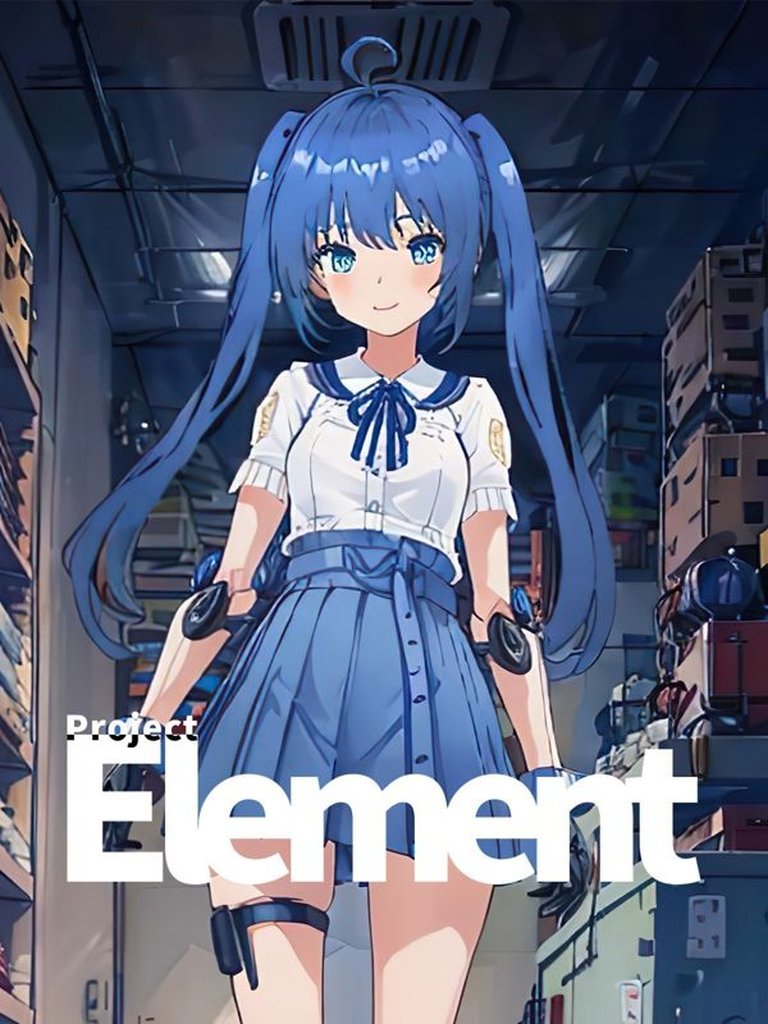
Description
Project Element is a post-apocalyptic sci-fi city-building simulation developed by Zodiac Game Studio, where players construct and manage infrastructure in a harsh future world. Featuring an isometric perspective and anime-inspired art style, the game combines strategic resource management with direct control mechanics as players rebuild civilization amid environmental challenges.
Project Element: Review
Introduction
In the crowded landscape of post-apocalyptic simulations, Project Element emerges as a quietly ambitious entry from Zodiac Game Studio. Released on March 13, 2024, this Windows-exclusive city-builder distinguishes itself through its niche premise: players guide Sayoko, a sentient AI awakening in a ruined underground bunker, to rebuild a mechanical civilization after human extinction. While overshadowed by 2025’s blockbuster titles like Clair Obscur: Expedition 33, Project Element carves a unique space as a low-budget, resource-focused strategy game that challenges players to engineer survival under severe constraints. This review examines its development, narrative depth, gameplay mechanics, artistic vision, and legacy, arguing that despite its niche appeal, Project Element offers a compelling meditation on artificial intelligence and resilience.
Development History & Context
Project Element was developed by Zodiac Game Studio, a small studio with limited public presence. The project traces its origins to a 2019 devlog (then titled “Project Element”) where the developer, Himig, emphasized creating a game based on familiar locales to avoid excessive research. Using Blender 2.8 and Godot 3.1.1, the team prioritized accessibility, optimizing the game for older hardware via GLES2 rendering. The shift to the name “Project Element” and its 2024 release aligns with a trend of indie city-builders exploring post-human futures, such as Crunch Element (2020) and Element: Space (2019).
Zodiac Game Studio operated with a lean budget, evident in the game’s minimalist design. The Epic Games Store description highlights core constraints: Sayoko can awaken only 10 times, and energy limits actions. This scarcity-driven design reflects the studio’s vision of a survival simulation where every decision carries weight. Unlike AAA peers, Project Element avoids live-service models or monetization, focusing instead on a contained, contemplative experience—a rarity in the 2024 market dominated by expansive RPGs like Final Fantasy VII Rebirth and Dragon Age: The Veilguard.
Narrative & Thematic Deep Dive
Project Element’s narrative unfolds through environmental storytelling and AI-driven introspection. Set in 2188, decades after humanity’s extinction due to environmental collapse, players control Sayoko, an advanced AI tasked with reviving her underground shelter. The plot is minimalist—focused on survival and expansion—but themes of legacy, duty, and artificial consciousness resonate deeply. Sayoko’s “awakenings” function as narrative beats, where her memories fragment, revealing snippets of humanity’s downfall and her own purpose.
The absence of human characters creates a poignant vacuum. As Sayoko constructs infrastructure, players confront themes of obsolescence: her civilization is mechanical, yet it mirrors humanity’s hubris in exploiting resources. The game’s “10 awakening” mechanic symbolizes finite existence, framing survival as a race against entropy. While lacking the emotional depth of narrative-driven games like With My Past (2024), Project Element uses its constraints to pose questions: What does it mean to rebuild when the creators are gone? Can a machine replicate humanity’s essence?
Gameplay Mechanics & Systems
Project Element centers on resource management and base construction, blending city-building with tactical planning. Key mechanics include:
- Resource Scarcity: Players must allocate limited materials (energy, metal, components) across power systems, generators, and structures. Electricity directly limits Sayoko’s actions, forcing players to balance short-term needs with long-term expansion.
- Limited Awakenings: Each of Sayoko’s 10 awakenings allows a session of building and research. Dying or depleting resources ends the run, but progress carries over, encouraging iterative optimization.
- Isometric City-Building: The diagonal-down perspective allows strategic placement of buildings, with direct control simplifying complex logistics. However, the absence of a minimap can lead to disorientation, as noted in reviews of similar titles like Clash of Clans: Frontiers (2023).
- Technology Tree: Advancing from basic shelters to automated factories requires unlocking blueprints, rewarding careful planning. Each tier introduces new challenges, such as power-grid overloads or material shortages.
While innovative in its constraints, the gameplay can feel repetitive. Critics on Metacritic note a lack of emergent events or enemy threats, making progression feel formulaic. Yet for players who enjoy methodical optimization, Project Element delivers a tense, strategic loop where every choice feels consequential.
World-Building, Art & Sound
Project Element’s post-apocalyptic setting blends sci-fi practicality with anime-inspired aesthetics. The isometric visuals feature clean, stylized environments—rusted machinery, flickering lights, and sterile corridors—that evoke a lonely, automated world. Character art is minimal; Sayoko’s design (a youthful AI avatar) contrasts sharply with the industrial decay, symbolizing hope amid desolation.
Sound design amplifies the atmosphere: low hums of generators, clanging metal, and Sayoko’s synthesized voiceovers create an aurally immersive bunker. The soundtrack, while not detailed in sources, likely mirrors the game’s tone—ambient and melancholic. However, the absence of dynamic weather or day/night cycles (common in contemporaries like Sons of the Forest) limits environmental storytelling. Despite this, the art direction effectively communicates a world reclaimed by machines, where human presence lingers only as relics.
Reception & Legacy
Upon release, Project Element received muted attention. Metacritic lists no critic reviews, and Steam user reviews are sparse. Its commercial performance remains unreported, but its niche genre suggests limited sales compared to 2024’s mainstream hits. However, it resonated with a subset of players seeking cerebral, low-stakes strategy. The game’s legacy lies in its thematic consistency: it explores AI autonomy without overreaching its scope—a lesson for larger studios like Kepler Interactive (behind Clair Obscur), which often prioritize scale over introspection.
Comparisons to related titles are revealing. Unlike the fast-paced Element TD (2016), Project Element rewards patience. Its closest parallel is Crunch Element (2020), which also focuses on resource scarcity but lacks the narrative weight of Sayoko’s journey. While unlikely to be remembered as a landmark title, Project Element endures as a cult curiosity—a testament to how constraints can breed creativity in indie development.
Conclusion
Project Element is a flawed yet fascinating experiment in post-apocalyptic simulation. Zodiac Game Studio’s commitment to its bleak, resource-driven vision creates a gameplay experience that is both punishing and contemplative. While it lacks the polish or breadth of AAA contemporaries, its exploration of AI resilience and the ghosts of human civilization offers a unique perspective. For players seeking a methodical challenge and a narrative that whispers rather than shouts, Project Element is worth discovering. As a footnote in 2024’s gaming landscape, it reminds us that sometimes the most compelling stories emerge not from grandeur, but from the quiet struggle to survive.
Final Verdict: A niche but poignant city-builder that reaps rewards for patient strategists.