
- Release Year: 2015
- Platforms: Windows
- Publisher: VGstudio
- Developer: VGstudio
- Genre: Action
- Perspective: 1st-person
- Game Mode: Single-player
- Gameplay: Shooter
- Setting: Futuristic, Sci-fi
- Average Score: 64/100
Description
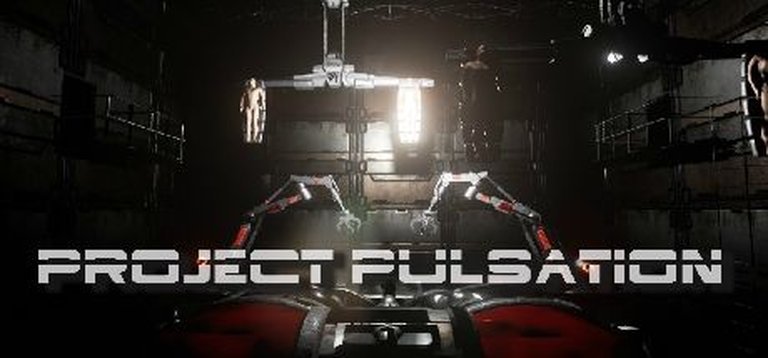
Set in a dystopian sci-fi universe, Project Pulsation is a first-person shooter blending horror and stealth elements. Players navigate the abandoned ‘Complex’ space station near asteroid Thanatos, once the site of catastrophic human-alien hybridization experiments. As a protagonist seeking a rare artifact, you must confront mutated creatures, evade deadly Shadows, and outsmart the station’s security systems. With scarce oxygen and ammunition, survival hinges on solving intricate puzzles, scavenging resources, and avoiding lethal anomalies in this atmospheric, tension-filled adventure.
Gameplay Videos
Where to Buy Project Pulsation
PC
Project Pulsation Patches & Updates
Project Pulsation Guides & Walkthroughs
Project Pulsation Reviews & Reception
steambase.io (71/100): Project Pulsation has achieved a Steambase Player Score of 71 / 100. This score is calculated from 376 total reviews on Steam — giving it a rating of Mostly Positive.
raijin.gg (71/100): Project Pulsation holds a 71.01% positive rating on Steam, based on 376 player reviews. This places the game in the mostly positive category, indicating generally favorable reception.
store.steampowered.com (51/100): All Reviews: Mixed (66) – 51% of the 66 user reviews for this game are positive.
mygametrics.com : Project Pulsation – a sci-fi first person shooter with elements of horror and stealth. The distant space station ‘Complex’ located nearby Thanatos Asteroid keeps a valuable Artifact. Fight your way through turrets, unknown creatures and mysterious ghosts, survive and try to get back.
Project Pulsation: An Ambitious Indie Experiment in Sci-Fi Horror
Introduction
The year is 2015. Alien: Isolation has redefined atmospheric horror, Dead Space’s shadow looms large, and the indie scene is exploding with experimental gems. Into this landscape arrives Project Pulsation, a sci-fi FPS-hybrid from Ukrainian developer VGstudio, promising a cocktail of survival horror, stealth, and labyrinthine puzzles aboard a derelict space station. A decade later, the game stands as a fascinating oddity—a flawed but fiercely ambitious project that dared to blend System Shock’s environmental storytelling with punishing resource management. This review unpacks its troubled legacy: a game equally defined by creative vision and technical compromise, whose failures reveal as much about indie development constraints as its fleeting triumphs.
Development History & Context
The Studio & Vision
VGstudio, a one-person operation led by Vitaly Gintsar, aimed to stitch together a AAA-inspired experience on a shoestring budget. Released on December 15, 2015, after a successful Steam Greenlight campaign, Project Pulsation emerged during a boom for indie horror. Its pitch—a “sci-fi FPS with horror and stealth elements”—capitalized on the zeitgeist of Amnesia: The Dark Descent and early Resident Evil remasters, but with a uniquely Soviet-flavored bleakness. Addressing comments on IndieDB, Gintsar revealed the game was built over two years using Unreal Engine 4, a bold choice for a solo dev given the engine’s steep learning curve.
Technological Constraints
UE4’s capabilities strained the game’s scope. While it allowed for dynamic lighting (a key horror tool), texture pop-in, simplistic geometry, and unstable physics betrayed its indie roots. Minimum specs (Core i3, GeForce 610M) targeted budget PCs, but optimization issues plagued mid-tier systems. The save system—relying on checkpoint booths and auto-saves—was a deliberate throwback to Resident Evil’s ink ribbons, yet players lamented its inconsistency (Steam forums note save-file corruption bugs at launch).
The 2015 Gaming Landscape
Project Pulsation entered a crowded field. SOMA had just redefined narrative horror, while indie darlings like Among the Sleep explored psychological terror. VGstudio’s niche? Brutalist survivalism: oxygen tanks depleting in real-time, permadeath-adjacent resource scarcity, and door codes scattered like breadcrumbs. It was a gamble—appealing to masochists but alienating casual players.
Narrative & Thematic Deep Dive
Plot & Characters: Minimalism as Atmosphere
The premise channels Lovecraftian corporate hubris: the Complex Corporation experimented on humans by merging them with aliens, triggering a catastrophe that left the Thanatos Asteroid station haunted by “Shadows”—psychic entities fatal on contact. As a nameless scavenger hunting a mythic artifact, you navigate claustrophobic corridors, unraveling logs and environmental clues.
Dialogue is sparse; worldbuilding thrives through decay. Terminal entries hint at ethical collapses (“Subject Gamma-7 exhibited telepathic resonance… termination advised”), while holographic ghosts replay final moments of scientists, their flickering forms dissolving if approached. The narrative’s strength lies in negative space—the absence of explicit exposition forces players to infer the catastrophe.
Themes: Entropy and Futility
Project Pulsation weaponizes hopelessness. Oxygen depletion isn’t just a mechanic—it’s thematic, mirroring the station’s suffocating isolation. The Shadows, invulnerable and omnipresent, embody the futility of fighting cosmic horrors. Even the artifact MacGuffin is never clearly defined, reducing your quest to existential farce. This nihilism resonated with a subset of players (IndieDB comments praise its “oppressive vibe”), but critics dismissed it as aimless.
Gameplay Mechanics & Systems
Core Loop: Survival as Punishment
The game’s heartbeat is scarcity:
– Oxygen Management: Tanks last 15 minutes, triggering frantic hunts for replacements. Running out means slow asphyxiation—no second chances.
– Ammo Economy: Pistol rounds are rare, forcing stealth or evasion. Combat is a last resort, with spongey enemies like “Rotfears” (skinless mutants) demanding precise headshots.
– Puzzle Tax: Doors require 4-digit codes found via environmental sleuthing (e.g., numbers scrawled on walls or split across terminals). One misstep could teleport you to a dead-end via “anomaly traps.”
Innovations & Flaws
- Dynamic Security Systems: Turrets and drones patrol key zones. Disabling them requires shooting weak points (e.g., red cubes on turrets), rewarding observation.
- Jank as Identity: The laser sight drifts unnervingly, mimicking your character’s deteriorating psyche. However, clunky hit detection and AI pathfinding (e.g., spiders glitching through walls) frustrated players.
- Save System: Phone-booth checkpoints triggered tension, but irregular placement led to unfair losses (noted in Steam reviews: “Lost 40 mins to a buggy elevator”).
UI/UX: Functional but Hostile
A minimalist HUD shows oxygen/ammo counts, but tooltips are nonexistent. The inventory—a radial menu—clashes with the panic of oxygen alerts. Despite patches, control rebinding remained limited (Steam forums: “No Y-axis invert?!”).
World-Building, Art & Sound
Visual Direction: Bleak Brutalism
The Complex station channels Soviet sci-fi austerity: concrete halls, flickering fluorescents, and grated walkways suspended in void. Textures are muddy, but clever lighting hides limitations—hard shadows elongate corridors, while pulsating red alerts create stroboscopic dread. Enemy designs blend body horror (Rotfears’ exposed musculature) and mechanical menace (spider drones with sparking circuits).
Sound Design: Silence as a Weapon
Ambient noise dominates: distant moans, skittering claws, and the hiss of oxygen tanks. Music emerges sparingly—a discordant synth sting during enemy encounters. This minimalism amplifies isolation, though critics panned weak voice acting in logs and repetitive monster roars.
Reception & Legacy
Launch & Critical Response
Reviews were polarized:
– Praise: Niche outlets lauded its “nerve-shredding tension” (IndieGames.com) and “ambitious systems” (Rock Paper Shotgun).
– Criticism: Mainstream sites like IGN called it “a tech demo stretched thin,” citing bugs and repetitive encounters.
Steam reviews settled at Mixed (51% positive at launch, later climbing to 71% post-patches), with players divided between “unfair mess” and “hidden gem.”
Commercial Performance & Bundling
Priced at $4.99 (now often discounted to $0.69), the game found life in bundles like the Supernova Cubic Bundle and VGstudio MEGA Edition. Lifetime sales are estimated at ~33,000 units (Raijin.gg data)—modest but sustainable for a solo project.
Industry Influence
While not a trendsetter, Project Pulsation’s oxygen mechanic echoed in later titles like Breathedge (2021). Its “underdog” status inspired indie devs: Ukrainian studio Frogwares cited it as a reference for their Sherlock Holmes series’ pivot to survival elements.
Conclusion
Project Pulsation is a time capsule of indie ambition—a game grappling with AAA aspirations while shackled by resource limits. Its systems oscillate between brilliance (oxygen-as-timer) and frustration (unforgiving checkpoints), its narrative between evocative and opaque. Yet, it endures as a cult curiosity: a reminder that even flawed experiments can carve niches in gaming’s collective memory. For historians, it exemplifies the mid-2010s indie boom’s “DIY ethos”; for players, it remains a divisive relic—best approached with patience, oxygen tanks in hand, and expectations tempered by time.
Final Verdict: A 5/10 title with 8/10 ideas—essential for horror archivists, optional for others.