
- Release Year: 2008
- Platforms: Windows
- Publisher: Russobit-M
- Developer: Red Ice
- Genre: Strategy, Tactics
- Perspective: Isometric
- Game Mode: Online PVP, Single-player
- Gameplay: Map editor, Real-time strategy, Unit command
- Setting: 2010s, Future now past
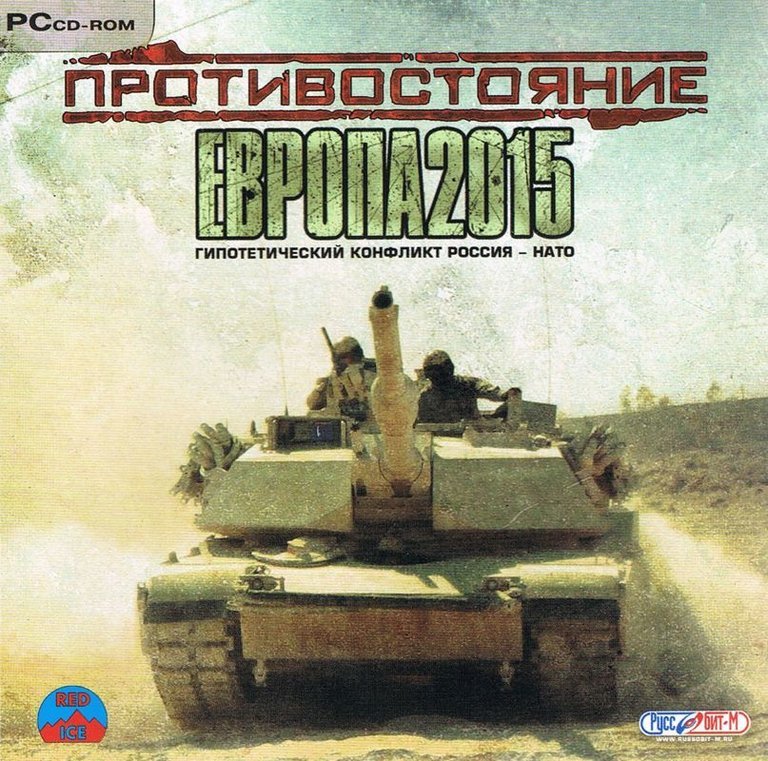
Description
Protivostojanie: Evropa 2015 is a real-time strategy game set in a modern hypothetical scenario where players engage in a conflict between Russia and NATO forces. Commanding hundreds of military units—including tanks, aircraft, and helicopters from nations like the USA, UK, Germany, and others—the game features two single-player campaigns (one per faction), various multiplayer maps, and a built-in editor for creating custom missions.
Protivostojanie: Evropa 2015: A Ghost in the Machine of Modern RTS History
Introduction: The Unseen Battlefield
In the vast, digital archives of gaming history, some titles stand as towering monoliths, their influence casting long shadows. Others exist as spectral presences—known to a few, remembered by fewer, their impact felt more in the silences they occupy than in the noise they made. Protivostojanie: Evropa 2015 (translated as “Confrontation: Europe 2015”) is one such specter. Released in April 2008 by the Russian developer Red Ice and published by Russobit-M, this real-time strategy (RTS) title occupies a fascinating, if obscure, nexus. It is a game born from a specific geopolitical anxieties, crafted with the technical constraints of its time, and ultimately lost to the vacuum of international localization and critical discourse. This review does not resurrect a classic; it undertakes an archaeological excavation of a title that represents a distinct, now largely vanished, strand of Eastern European game development—a modern military RTS that dared to imagine a direct, hot conflict between NATO and Russia on European soil, yet remains virtually unknown outside its native linguistic sphere. Its legacy is not one of critical acclaim or commercial blockbuster status, but of what it signifies: a failed bridge between a regional design philosophy and a globalized gaming market, and a poignant footnote in the genre’s evolution.
Development History & Context: Forging a Vision in the Post-Soviet Wilderness
To understand Evropa 2015, one must first understand its creator, Red Ice, and the ecosystem that birthed it. Red Ice was not a household name like Westwood or Relic; it was a small, dedicated studio operating within the vibrant, insular, and fiercely nationalistic Russian PC gaming scene of the 2000s. This was an era where Western publishers dominated globally, but local developers catered powerfully to domestic markets with genre preferences often diverging from Western trends. The RTS was king in Russia, but with a distinct character—often more hardcore, less streamlined, and frequently obsessed with historical and modern military simulation than the fantasy or sci-fi epics popular in the West.
The game’s conception sits firmly in the mid-2000s, a period of resurgent Russian nationalism and palpable East-West tension following NATO’s eastward expansion and the color revolutions. The premise—a hypothetical 2015 war between Russia and a coalition of NATO powers (USA, UK, Germany, Poland, France, and others)—was not far-fetched speculation but a direct reflection of prevalent military-political discourse in Russia at the time. It was a “what-if” scenario steeped in contemporary fears and propaganda, offering players a chance to command the forces of the “motherland” against a technologically superior coalition.
Technologically, Evropa 2015 was a product of its moment. Built for Windows, it utilized an isometric visual style common for RTS of the period (think Command & Conquer: Generals or earlier Blitzkrieg titles), but its graphical fidelity was middling even for 2008. The source material repeatedly notes its inclusion of “hundreds of different units” with “special characteristics,” a hallmark of the “hardcore” Eastern European military sim approach. This commitment to extensive unit rosters—from T-90 tanks to F-35 fighters—came at the cost of visual polish and engine sophistication. Development almost certainly faced the resource constraints typical of small studios: limited budgets, smaller teams, and the challenge of creating a compelling multiplayer framework without the infrastructure of Battle.net or Steam’s later services. The inclusion of a game editor for custom maps and missions was a crucial, almost mandatory feature for this scene, fostering a modding community that could extend a game’s lifespan in the absence of official DLC or robust official support.
The game was the third entry in the Protivostojanie series, following Bitva za chernoye zoloto (2005) and preceding Prinuzhdeniye k miru (2008). This series trajectory shows a focused, niche development path—each title exploring a different conflict theater (likely historical or alternate-history settings). Evropa 2015 represented the series’ boldest foray into the near-future, a speculative leap that would ultimately prove its commercial and cultural dead-end.
Narrative & Thematic Deep Dive: Propaganda, Simulation, and the Absence of Story
Here, the source material provides a stark, almost brutalist summary: “The game is about a hypothetical conflict between Russia and the NATO.” There is no mention of a plot, of characters, of dialogue. This narrative vacuum is not a bug; it is the defining feature.
The “story” of Evropa 2015 is the geopolitical premise itself. There are no protagonists with arcs, no cinematic cutscenes unfolding a dramatic tale. The narrative is the setting: a Europe in 2015, torn by war. It is presented as a pure, unadulterated military sandbox. The player is an abstract commander, a stand-in for the player’s own strategic mind, tasked with achieving victory conditions that are purely tactical: destroy the enemy base, secure key points, annihilate opposing forces.
The themes are therefore implicit, etched into the game’s very architecture:
1. Geopolitical Revenge Fantasy: The core theme is a reversal of post-Cold War realities. Russia, not NATO, is the aggrieved party, the defender (or initiator) of a necessary war against an encroaching alliance. It simulates a world where Russia can stand toe-to-toe with the combined might of the West on European terrain, a powerful fantasy for its target audience.
2. Technological Parity & National Pride: The unit roster is a testament to national technological prowess. Russian equipment (T-90s, Mi-28s, S-300 systems) is presented as equal, if not superior in certain niches, to its NATO counterparts (Abrams, Apache, Patriot). This is not an apolitical simulation; it is an exercise in national technological validation.
3. The Depersonalization of Modern War: The absence of a human story mirrors the dehumanizing scale of modern combined-arms warfare. Units are faceless sprites or models. Casualties are statistics. The “theater of war” is an isometric map of fields and towns. This reinforces a cold, calculated view of conflict where national will and technological superiority are the only variables.
The lack of traditional narrative is a profound statement. There is no moral ambiguity, no “fog of war” in a storytelling sense—only the literal fog of war mechanic. The moral position is a priori: the player’s side is justified by virtue of being Russia. This makes the game less a narrative experience and more a pure, ideological wargame. Its “lore exposition,” to borrow a term from the academic source provided, is not delivered through characters or plot but through the contextual weight of the unit types, the map names (likely depicting real European locales), and the very fact of the NATO-Russia pairing. It is a game that assumes its player shares its foundational worldview, requiring no explication of “why” the war is happening.
Gameplay Mechanics & Systems: Depth Without Dynamism
Evropa 2015 adheres to the classic RTS formula: gather resources, build a base, produce a military, and destroy the opponent. However, the source material points to its specific character within that formula.
Core Loop & Economy: The loop is standard: extract resources (likely ore and perhaps power), construct production buildings (barracks, factories, airfields), and research upgrades. The mention of “hundreds of different units” suggests a complex tech tree, possibly branching into different unit categories (infantry, armor, artillery, air, helicopter). The balance between unit quantity and quality, and the importance of combined-arms tactics, would be paramount. The economic model was likely straightforward, avoiding the macro-management complexity of titles like Supreme Commander.
Combat & Unit Design: This is the game’s purported heart. Units have “special characteristics,” implying a rock-paper-scissors or at least a situational balance system. Anti-tank infantry would be crucial against armor, helicopters against infantry, air superiority fighters against helicopters. The isometric view would have made precise unit control and formation management a challenge, favoring larger, more amorphous “blob” tactics or area-fire artillery. Control group limits, pathfinding issues, and the difficulty of micro-managing hundreds of units would have been significant gameplay hurdles, typical of the era and region.
Progression & Systems: Campaigns (one for each side) would serve as extended tutorials, slowly introducing unit types and mechanics on preset maps with scripted events (enemy attacks, reinforcement waves). The lack of mention of RPG elements or hero units suggests a purely tactical scale. The included map and mission editor was the game’s true longevity tool, allowing the community to create custom scenarios, potentially replicating historical battles or inventing new front lines, a vital feature for a niche title whose official multiplayer community would have been small and region-locked.
Innovation & Flaws: The game’s primary innovation was its bold, contemporary geopolitical premise for a Russian-developed title. Mechanically, it was likely derivative, synthesizing systems from Western RTS (resource gathering, base-building) with the Eastern European penchant for extensive unit rosters and a harder overall difficulty curve. Its fundamental flaws would have been endemic to its budget and origin: clunky user interface (UI) typical of Russian RTS of the period, mediocre pathfinding, lack of polish in effects and animations, and a single-player campaign that was little more than a series of skirmishes with introductory text. The multiplayer would have suffered from a small, Russia-centric player base, plagued by latency issues for international players and a definitive lack of matchmaking or ladder support.
World-Building, Art & Sound: A Gritty, Functional Aesthetic
The visual and auditory presentation of Evropa 2015 is a direct reflection of its development context. The isometric perspective, while functionally clear for gameplay, was already looking dated in 2008 compared to the fully 3D engines of Company of Heroes or World in Conflict. The art direction was utilitarian realism. Tanks look like tanks, planes like planes. There is no stylistic flair—no comic-book shading, no dramatic sci-fi designs. It is a world of green and brown terrain, grey concrete bases, and vehicles rendered with adequate, but not impressive, detail. The unit sprites/models prioritize recognizability over artistic merit. The atmosphere is one of functional, almost clinical simulation, not epic warfare.
Sound design followed the same pattern. Engine roars, gunfire, and explosions were likely sourced from libraries or created with middling fidelity. There was probably a martial, synth-orchestral score in the menus and campaign intro, but in-game audio was likely subdued, serving as tactile feedback rather than an emotional driver. The overall effect was not immersive in a sensory way, but informative—the soundscape told you what was happening (incoming artillery, jet strafing run) with functional accuracy.
Together, these elements created a world that felt like a digital sand table—a wargaming tool brought to life. The lack of cinematic spectacle or environmental storytelling reinforced the game’s core identity: a pure, unadorned simulation of a hypothetical military engagement. The “world” was the map and the units on it; its “atmosphere” was the cold logic of supply lines and tank engagements.
Reception & Legacy: Silence in the West, a Niche Cult Classic in the East
Critical Reception: Virtually non-existent in the West. The source material from MobyGames shows a single user rating of 1.0/5.0, with zero professional critic reviews. This is not an anomaly; it is the rule. The game received no coverage from major Western outlets (IGN, GameSpot, PC Gamer). It was invisible on the global stage, a ghost in the machine of 2008’s RTS landscape, which was dominated by Company of Heroes, World in Conflict, and Command & Conquer: Red Alert 3.
Commercial Performance: Unknown, but logically poor. It was published by Russobit-M, a major Russian distributor but not an international powerhouse. Its release was likely confined to the CIS (Commonwealth of Independent States) market. The niche subject matter and lack of localization (the title remained in Russian) guaranteed minimal sales outside that region.
Evolution of Reputation: Its reputation has not evolved so much as persisted in a state of suspended animation. Within the small, insular world of Russian military RTS enthusiasts, the Protivostojanie series is remembered, perhaps fondly, as part of a genre lineage. For scholars and historians, it is a primary source artifact. It exemplifies:
* The geopolitical rhetoric embedded in Eastern European game design.
* The technical and design limitations of small-studio RTS development in the late 2000s.
* The profound fragmentation of the global games market before ubiquitous digital distribution and translation tools.
Influence on the Industry: Negligible to nil. It left no discernible mark on Western RTS design. Its ideas—a modern NATO vs. Russia conflict—would later be explored with vastly greater resources and polish by Western studios in games like Wargame: European Escalation (2012) and the Call of Duty: Modern Warfare series, but these were distinct productions with different design philosophies. Evropa 2015‘s influence is not in mechanics copied, but in its existence as a proof of concept for a very specific, regionally-specific fantasy that Western developers would later commercialize for a global audience.
Conclusion: A Monument to a Specific Moment, and a Warning
Protivostojanie: Evropa 2015 is not a good game by any conventional critical metric. It is almost certainly clunky, visually unimpressive, narratively vacant, and accessible only to Russian speakers with a specific interest in hardcore military RTS. Its Moby score of “n/a” and single 1.0 rating are not injustices; they are accurate reflections of its standing in the wider world.
Yet, to dismiss it entirely is to miss its historical value. It is a perfectly preserved artifact of a time and place. It captures the martial confidence and geopolitical anxieties of mid-2000s Russia, translating them into the universal language of game mechanics. It demonstrates the capability and the severe constraints of a small, regional studio operating with a clear, political vision but limited means.
Its true legacy is as a curio and a case study. It shows what happens when a game’s design is entirely in service to a ideological premise, without the balancing forces of broad market appeal, high production values, or narrative sophistication. It is the RTS equivalent of a Soviet-era “technical”—functional, robust in its own way, but hopelessly outclassed by the mainstream. Evropa 2015 is a ghost, a what-if not of warfare, but of what Russian game development might have been had it found a larger, more connected audience. It remains, in the end, a fascinating and silent testament to a conflict—both in-game and in the industry—that never truly materialized on a global scale. Its final verdict is not a score, but a place in the catalog: essential for historians of Eastern European gaming, utterly skippable for everyone else.