
- Release Year: 2008
- Platforms: Browser, Macintosh, Windows
- Publisher: Cactus Software
- Developer: Cactus Software
- Genre: Puzzle
- Perspective: Side view
- Game Mode: Single-player
- Gameplay: Experimental, Platform, Puzzle
- Setting: Abstract, Dream, Surreal
- Average Score: 74/100
Description
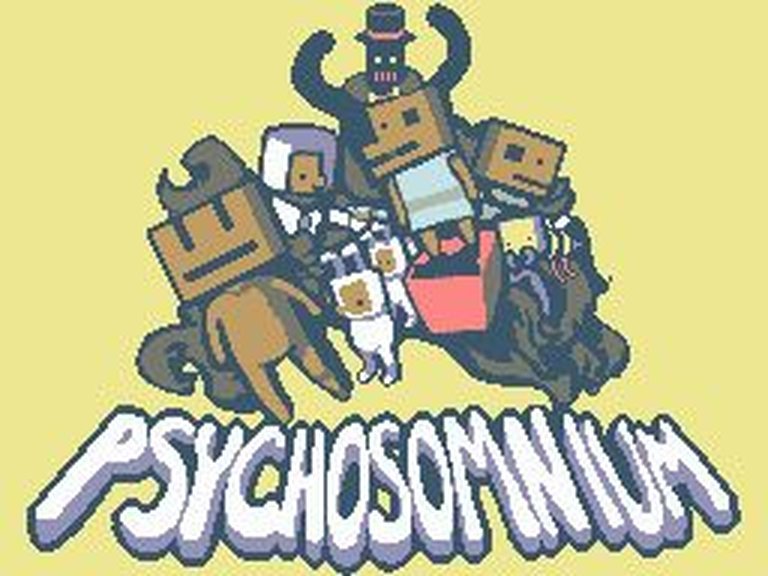
Psychosomnium is a surreal puzzle-platform game that immerses players in a dreamlike world governed by illogical rules and dream logic. Set in a colorful, pastel-colored environment filled with strange characters and mysterious challenges, players must navigate approximately 20 screens to reach an obscure goal. The game encourages experimentation, allowing players to perform unusual actions, take unreasonable risks, and even face deadly peril to solve puzzles. With its meditative pacing and unique approach to problem-solving, Psychosomnium offers a short yet thought-provoking experience that challenges conventional thinking and rewards exploration of seemingly impossible solutions.
Gameplay Videos
Psychosomnium Free Download
Psychosomnium Guides & Walkthroughs
Psychosomnium Reviews & Reception
mobygames.com (74/100): A weird and sweet little dream I had…
Psychosomnium Cheats & Codes
PC
| Code | Effect |
|---|---|
| [F11] | Removes spikes from the level |
Psychosomnium: A Surreal Masterpiece in Dream Logic
Introduction
Psychosomnium, a freeware puzzle-platformer by indie developer Cactus (Jonatan Söderström), is not merely a game but a meticulously crafted dream. Debuting in 2008, it exists outside traditional gaming paradigms, challenging players to navigate a world governed by illogic and subconscious whimsy. Its legacy endures as a cult phenomenon—a brief, beguiling journey that redefined experimental game design. This review dissects its ethereal mechanics, haunting atmosphere, and enduring influence, arguing that Psychosomnium remains a vital artifact in the canon of artistic video games: a compact, profound exploration of dreamscapes that transcends its brevity to leave an indelible mark on players and developers alike.
Development History & Context
Crafted by Jonatan Söderström (later famed for Hotline Miami) in a mere three days, Psychosomnium emerged as a bold experiment in “dream world logic,” as its official description proclaims. The game was developed under Cactus Software, Söderström’s solo venture, with music by chiptune artist Zabutom and a splash screen by Cow. Its technological constraints were minimal: a Windows release in January 2008, later ported to Mac (2010) and Flash (2011). The Flash iteration, by Miroslav Malesevic, introduced visual tweaks—softer palettes and adjusted controls—though the core design remained intact.
Released during the indie renaissance of the late 2000s, Psychosomnium capitalized on the burgeoning scene for experimental titles on platforms like Newgrounds. It stood in contrast to mainstream games, prioritizing surrealism over polish. Söderström’s vision was unapologetically niche: to create a “short experience” where puzzles defied rationality, forcing players to abandon conventional problem-solving. This ethos aligned with the era’s fascination with art games, positioning Psychosomnium as a proto-avant-garde work predating titles like Braid and LIMBO in their use of death as narrative.
Narrative & Thematic Deep Dive
Psychosomnium’s narrative is an impressionistic tapestry woven from dream logic, not conventional storytelling. The plot follows Jimmy, the dreamer, as he navigates a subconscious realm where death is not an endpoint but a transformative catalyst. The game opens with Jimmy falling from a pipe into a pastel world, guided by a butterfly that declares, “This is your dream.” Jimmy’s initial demise—exploding into “beautiful blobby” after falling into a pit—triggers a cycle of rebirths. Players then embody other characters: the stranger Tom, the three-footed Shirley, the hulking Mitch, the bee McBee, and a paranoid gunman. Each shift reframes the goal: find Jimmt (Jimmy’s doppelgänger) and unravel the dream’s mysteries.
Dialogue is sparse yet revelatory. Shirley’s plea, “Where is Jimmt? He is dead,” and Mitch’s confession, “I am afraid of the spikes,” hint at existential dread and fractured identities. The bunnies’ demand for “carrots” that “do not exist” epitomizes the game’s thematic core: the futility of seeking coherence in chaos. The climax—a castle that reveals itself as the Magician via a Gen L twist (“I AM THE MAGICIAN!”)—underscores the dream’s autonomy. The narrative isn’t linear; it’s a recursive loop, mirroring the way dreams evade rational deconstruction. Themes of mortality, self-discovery, and the ephemeral nature of consciousness permeate every screen, transforming the game into a metaphor for confronting the subconscious.
Gameplay Mechanics & Systems
Psychosomnium’s gameplay is a masterclass in controlled chaos. Comprising roughly 20 screens, it fuses platforming with puzzle-solving, where “death” is the primary key progression. Players move with arrow keys and interact via the Z button (X in Flash), but simplicity masks complexity. The initial “death loop”—falling repeatedly until passing a pit—teaches players to embrace failure as a solution. This mechanic recurs with the bunnies: their impossible carrot demand forces players to die, allowing Mitch to punch them to death. Such “Misère Game” design reframes death as empowerment.
Character switching is the game’s innovative spine. Each persona offers unique abilities: Mitch’s strength bypasses obstacles, McBee’s flight navigates spike-laden corridors, and the gunman’s gun triggers the finale. These shifts demand meta-thinking; for instance, telling McBee to “find the Magician” is nonsensical, yet it initiates the bee segment. Puzzles resist traditional logic, requiring players to exploit environmental absurdities—walking through walls, dying intentionally, or defying physics. Controls, however, can be unforgiving. The bee’s flight demands pixel-perfect tapping in the Flash port, frustrating players like JayisGames commenter “Kate,” who noted the segment was “ridiculous.” Yet this friction is intentional: it mirrors the frustration of deciphering dreams.
World-Building, Art & Sound
Psychosomnium’s world is a pastel dreamscape, rendered with deliberate minimalism. Environments feature flat, candy-colored backdrops—soft pinks, blues, and greens—contrasted with stark red brick platforms and deadly spikes. Character designs evoke childlike doodles: Shirley’s three feet, Mitch’s disproportionate limbs, and McBee’s bulbous form. This “Graphics-Induced Super-Deformed” style, as TVTropes notes, amplifies the uncanny, making grotesque figures feel endearing. The Flash port’s softer visuals, compared to the original’s sharper pixels, enhance the dreamlike haze.
Sound design is equally atmospheric. Zabutom’s chiptune soundtrack, described by MobyGames reviewer chirinea as “sweet and calm,” uses gentle melodies and ambient hums to evoke nostalgia. The music persists even after death, except when McBee is shot—its sudden silence amplifies the gunman’s “allergic to bees” absurdity. This auditory cohesion binds the world: the visuals and music feel like fragments of a half-remembered dream, where sensory details linger long after the experience ends.
Reception & Legacy
Psychosomnium’s reception at launch was polar yet admiring. Player reviews on MobyGames average 3.7/5, with chirinea praising its “beautiful and pleasant dream” but lamenting its brevity. The bee segment drew ire, with JayisGames commenters like “Carny Asada” decrying its “fiddly” difficulty. Critics lauded its originality: Shifting Bits awarded it 85/100, calling it “a delightful rabbit hole” for puzzle fans, while Retro Replay highlighted its “compact yet memorable” design.
Over time, its reputation evolved. TVTropes cemented it as a template for surreal puzzle design, noting its influence on titles like Yume Nikki. Its legacy lies in popularizing “dream logic” as a gameplay framework, predating Braid’s time-manipulation puzzles. Söderström’s later success with Hotline Miami introduced Psychosomnium to a wider audience, cementing it as a progenitor of narrative-driven indies. Today, it’s studied for its economy: a 20-screen experience that rivals longer games in thematic depth, inspiring a generation of developers to embrace abstraction over realism.
Conclusion
Psychosomnium is a paradox: a game that feels both ephemeral and eternal. Its short runtime belies its profound impact, offering a microcosm of dream logic that challenges players to find beauty in chaos. While its controls and difficulty curve may frustrate, these flaws are inseparable from its identity—they are the friction of confronting the subconscious. As chirinea wrote, it’s a dream one “regrets waking up from,” a sentiment echoed by its enduring cult following.
In the pantheon of video games, Psychosomnium stands as a testament to the power of brevity and experimentation. It proves that artistry lies not in scale, but in intention—a 20-minute journey that lingers like a half-remembered dream. For players willing to surrender logic, it remains an essential, haunting masterpiece: a blueprint for interactive surrealism that continues to inspire and bewindle. Its legacy is not just in its mechanics, but in its question: What if a game could be a dream? Psychosomnium dares to answer.