
- Release Year: 2016
- Platforms: Windows
- Genre: Simulation
- Perspective: 1st-person
- Game Mode: Single-player
- Gameplay: Dating simulation, Multiple endings
- Setting: Comedy, Romance
- Adult Content: Yes
Description
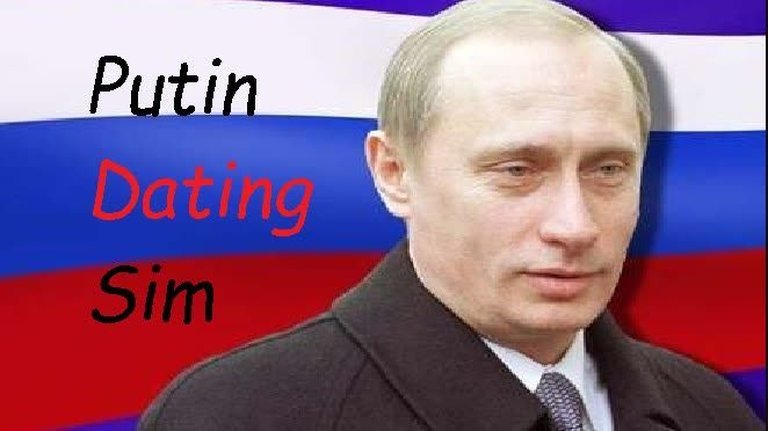
Putin Dating Simulator is a comedic dating simulation game where players navigate a romantic relationship with Vladimir Putin. Released in 2016 for Windows, the game features a first-person perspective with a point-and-select interface, offering multiple endings based on the player’s choices. The narrative blends humor and romance, presenting a satirical take on dating a famous politician.
Gameplay Videos
Putin Dating Simulator Reviews & Reception
beanstalk.io : A charming blend of romance and school life, allowing players to build relationships with various characters.
ranker.com : A heartwarming story about love and acceptance, as you navigate the relationships of disabled high school students.
Putin Dating Simulator: A Satirical Romance with the Iron Fist
Introduction: Love in the Time of Autocracy
In the vast, often bizarre landscape of indie gaming, few titles dare to tread the line between political satire and romantic comedy as boldly as Putin Dating Simulator. Released in 2016, this freeware dating sim thrusts players into the absurd premise of wooing none other than Vladimir Putin, the enigmatic and polarizing leader of Russia. At first glance, the game appears to be a crude joke—a novelty title capitalizing on internet meme culture. Yet, beneath its simplistic facade lies a fascinating artifact of its time, a game that reflects the global fascination (and frustration) with Putin’s persona, the rise of satirical indie games, and the evolving landscape of political commentary in video games.
Putin Dating Simulator is not just a game; it is a cultural time capsule. It emerged during a period when Putin’s influence loomed large over global politics, from the annexation of Crimea to allegations of election interference. The game’s existence speaks to the power of indie developers to weaponize humor and absurdity as tools for critique, offering players a chance to engage with a real-world figure in a context so ridiculous it borders on surreal. But does it succeed as a game, or is it merely a one-note gag? This review will dissect Putin Dating Simulator in exhaustive detail, exploring its development, narrative, gameplay, and legacy to determine its place in the pantheon of dating sims and political satire.
Development History & Context: The Birth of a Meme
The Studio and the Vision
Putin Dating Simulator was developed by an anonymous or pseudonymous creator (or collective) and released on November 6, 2016, a date that coincidentally aligns with the anniversary of the October Revolution—a nod, perhaps, to the game’s irreverent take on Russian politics. The game was distributed for free on platforms like Game Jolt, embodying the DIY ethos of indie game development. Little is known about the developers, which adds to the game’s mystique. Unlike mainstream titles with lavish budgets and marketing campaigns, Putin Dating Simulator thrives in obscurity, its very existence a testament to the democratization of game creation tools and the internet’s appetite for the absurd.
The game’s development likely stemmed from the broader trend of “meme games” that proliferated in the mid-2010s. Titles like Flappy Bird, Goat Simulator, and Surgeon Simulator demonstrated that games didn’t need AAA polish to capture the public’s imagination—sometimes, all they needed was a ridiculous premise and a dash of viral potential. Putin Dating Simulator fits squarely into this tradition, leveraging the cultural ubiquity of Putin as a meme-worthy figure. By 2016, Putin had already been immortalized in countless internet jokes, from “Putin Riding a Bear” to “Putin as a Shirtless Action Hero.” The game’s premise—dating the man himself—was a natural extension of this memeification.
Technological Constraints and Design Choices
From a technical standpoint, Putin Dating Simulator is a minimalist affair. The game employs a first-person perspective with a fixed/flip-screen visual style, a common approach in early dating sims and visual novels. The interface is straightforward: players navigate through dialogue trees using a point-and-select mechanic, a design choice that harkens back to classic Japanese dating sims like Tokimeki Memorial. The game’s simplicity is both a strength and a limitation. On one hand, it ensures accessibility—anyone with a Windows PC can download and play it without hassle. On the other, it lacks the polish and depth of more ambitious indie titles.
The game’s art style is equally sparse. Character portraits are static, and backgrounds are minimal, often resembling a generic dating sim template. This aesthetic choice aligns with the game’s freeware nature but also underscores its status as a quick, tongue-in-cheek project rather than a labor of love. The sound design is similarly barebones, with no voice acting and only the most basic of sound effects. Yet, these limitations do not detract from the game’s appeal. If anything, they enhance its charm, reinforcing the idea that Putin Dating Simulator is less a “game” in the traditional sense and more a interactive joke—a digital equivalent of a Saturday Night Live sketch.
The Gaming Landscape of 2016
To understand Putin Dating Simulator, one must consider the gaming landscape of 2016. This was a year marked by the rise of indie darlings like Stardew Valley and Undertale, games that proved small teams could craft experiences as emotionally resonant as any AAA blockbuster. It was also a year of political upheaval, with Brexit and the U.S. presidential election dominating headlines. Against this backdrop, Putin Dating Simulator emerged as a piece of political satire, albeit one that eschewed subtlety in favor of outright absurdity.
The game’s release also coincided with a surge in “weird” or “surreal” indie games. Titles like Pony Island and The Stanley Parable played with meta-narratives and fourth-wall breaks, challenging players’ expectations of what a game could be. Putin Dating Simulator fits into this tradition, albeit in a more straightforward manner. It doesn’t deconstruct the dating sim genre so much as it repurposes it for comedic effect. In this sense, it is less a revolutionary title and more a footnote in the broader history of indie gaming—a curious oddity that reflects the anything-goes spirit of the era.
Narrative & Thematic Deep Dive: Courting the Tsar
Plot Overview: A Date with Destiny (or Dictatorship)
Putin Dating Simulator wastes no time in establishing its premise. The player assumes the role of an unnamed protagonist who, for reasons never explained, finds themselves on a date with Vladimir Putin. The game’s narrative is barebones, consisting of a series of dialogue choices that lead to one of several endings. There is no overarching story, no character development, and no real stakes—just the player and Putin, engaged in a series of increasingly absurd conversations.
The game’s structure is linear in the sense that each choice presents the player with two options, and the ending is determined by the cumulative effect of these choices. There are no stats to manage, no schedules to keep, and no side characters to interact with. This simplicity is deliberate, stripping the dating sim genre down to its most basic elements: dialogue and consequence. The lack of complexity allows the game’s humor to take center stage, unencumbered by the trappings of more traditional dating sims.
Character Analysis: Putin as the Ultimate Love Interest
At the heart of Putin Dating Simulator is its titular character: Vladimir Putin. The game’s portrayal of Putin is a caricature, drawing from the myriad memes and stereotypes that have defined his public image. He is depicted as a stern, no-nonsense figure, prone to making cryptic statements and exuding an aura of unshakable confidence. The dialogue options reflect this, with Putin’s responses ranging from deadpan seriousness to outright absurdity.
What makes Putin an intriguing “love interest” is the cognitive dissonance inherent in the premise. Dating sims typically feature characters who are, if not conventionally attractive, at least romantically viable. Putin, by contrast, is a real-world political figure with a contentious legacy. The game leans into this dissonance, presenting Putin as both a romantic prospect and a figure of authority. The result is a surreal experience that oscillates between humor and unease. Are players supposed to laugh at the absurdity of dating Putin, or are they meant to reflect on the cult of personality that surrounds him?
The game’s writing does little to humanize Putin. He remains an enigma throughout, his motivations and personality obscured by the game’s comedic tone. This is not a flaw but a deliberate choice. Putin Dating Simulator is not interested in exploring the man behind the myth; it is content to treat him as a symbol, a meme to be exploited for laughs. In this sense, the game is less a character study and more a commentary on how public figures are reduced to caricatures in the digital age.
Themes: Power, Absurdity, and the Banality of Evil
Beneath its comedic exterior, Putin Dating Simulator grapples with several themes, albeit in a superficial manner. The most obvious is the theme of power. Putin, as a real-world leader, embodies authority, and the game’s premise—dating him—is a subversion of traditional power dynamics. In most dating sims, the player is the pursuer, the one seeking affection. Here, the roles are reversed, or at least complicated. The player is not just dating a powerful figure; they are engaging with the idea of power itself.
The game also explores the theme of absurdity. The very notion of dating Putin is ridiculous, and the game leans into this, presenting scenarios that are equal parts humorous and unsettling. This absurdity serves a dual purpose: it makes the game entertaining, but it also underscores the surreal nature of modern politics. In an era where reality often feels stranger than fiction, Putin Dating Simulator holds up a mirror to the absurdity of the times.
Finally, the game touches on the theme of the banality of evil. This is most evident in the game’s multiple endings, some of which are darkly comedic. The player’s choices can lead to outcomes that are trivial, romantic, or even sinister, reflecting the idea that power can be wielded in ways that are both mundane and monstrous. The game does not delve deeply into this theme, but it is present nonetheless, lurking beneath the surface of the humor.
Dialogue and Writing: The Art of the One-Liner
The writing in Putin Dating Simulator is minimalist, consisting largely of short, punchy dialogue exchanges. The game’s humor relies on the contrast between the mundane and the absurd. For example, Putin might respond to a romantic overture with a deadpan remark about geopolitics, or he might suddenly shift from flirtation to a discussion of economic policy. These non sequiturs are the game’s bread and butter, generating laughs through their sheer unpredictability.
The dialogue options themselves are equally straightforward. Players are typically given two choices, each representing a different tone or approach. One option might be flirtatious, while the other is serious or even confrontational. The lack of nuance in these choices is intentional, reinforcing the game’s status as a comedic experience rather than a deep narrative one. The writing is not sophisticated, but it doesn’t need to be. The game’s strength lies in its ability to deliver quick, sharp jokes that land with the force of a well-timed meme.
Gameplay Mechanics & Systems: Dating as a Binary Choice
Core Gameplay Loop: Point, Click, and Pray
Putin Dating Simulator adheres to the most basic tenets of the dating sim genre. The gameplay consists of a series of dialogue trees, with the player selecting one of two responses at each juncture. There are no stats to manage, no mini-games to play, and no side activities to engage in. The entire experience is distilled into a series of binary choices, each leading the player closer to one of the game’s multiple endings.
This simplicity is both the game’s greatest strength and its most glaring weakness. On one hand, it makes the game incredibly accessible. Players can jump in, make a few choices, and see an ending in a matter of minutes. There is no learning curve, no complex mechanics to master. On the other hand, the lack of depth means that the game offers little in the way of replayability. Once a player has seen all the endings, there is little reason to return. The game is a novelty, a quick laugh rather than a lasting experience.
Multiple Endings: The Illusion of Choice
The game’s claim to fame is its multiple endings, a feature it shares with many dating sims. Depending on the player’s choices, they can unlock a variety of outcomes, ranging from the romantic to the ridiculous. Some endings are straightforward, with the player and Putin entering into a relationship. Others are more absurd, with Putin revealing a hidden side of himself or the date taking a sudden, unexpected turn.
The multiple endings are a clever way to encourage replayability, but they also highlight the game’s limitations. Because the gameplay is so simplistic, the endings feel less like the culmination of a meaningful journey and more like a series of punchlines. The player’s choices do not so much shape the narrative as they do trigger pre-written scenarios. This is not necessarily a flaw—many dating sims operate on a similar principle—but it does mean that Putin Dating Simulator lacks the emotional weight of more narrative-driven titles.
User Interface and Accessibility
The game’s user interface is functional but unremarkable. The dialogue is presented in a straightforward text box, with the player’s choices displayed as clickable options. There are no animations, no voice acting, and no visual flourishes. The UI is designed to be as unobtrusive as possible, allowing the player to focus on the dialogue and the humor.
This minimalist approach extends to the game’s accessibility. Because the gameplay is so simple, the game is easy to pick up and play, even for those unfamiliar with the dating sim genre. There are no complex controls to learn, no intricate systems to navigate. The game is, in essence, a choose-your-own-adventure story with a political twist.
Innovation and Flaws: A Game of Limited Ambition
Putin Dating Simulator is not an innovative game in the traditional sense. It does not introduce new mechanics, nor does it push the boundaries of the dating sim genre. What it does do, however, is repurpose an existing formula for comedic effect. The game’s innovation lies in its premise—the idea of dating Vladimir Putin is so absurd that it feels fresh, even if the mechanics are not.
That said, the game is not without its flaws. The most obvious is its lack of depth. The binary choice system, while effective for a quick laugh, does not allow for the kind of nuanced storytelling that defines the best dating sims. The characters are one-dimensional, the dialogue is hit-or-miss, and the endings, while amusing, lack emotional resonance. The game is a joke, and like all jokes, it is best enjoyed in small doses.
Another flaw is the game’s reliance on its premise. Putin Dating Simulator is funny because the idea of dating Putin is inherently ridiculous. But once the novelty wears off, there is little left to sustain the player’s interest. The game does not evolve, nor does it offer any surprises beyond its initial conceit. It is a one-trick pony, and while that trick is entertaining, it is not enough to carry the game beyond its initial appeal.
World-Building, Art & Sound: The Aesthetics of Absurdity
Setting and Atmosphere: A Date in a Void
Putin Dating Simulator takes place in a nondescript setting, with little in the way of world-building. The game’s backgrounds are generic, often resembling a blank canvas onto which the dialogue is projected. There is no sense of place, no immersive environment to explore. This is by design—the game is not interested in creating a believable world. Instead, it exists in a kind of limbo, a surreal space where the only thing that matters is the interaction between the player and Putin.
The lack of setting is not a flaw but a deliberate choice. By stripping away the trappings of a traditional dating sim, the game forces the player to focus on the absurdity of the premise. There are no distractions, no side quests, no world to explore. There is only the date, and the date is all that matters.
Visual Design: Minimalism as a Statement
The game’s visual design is minimalist to the point of austerity. Character portraits are static, and the backgrounds are sparse. The art style is functional rather than artistic, serving the game’s comedic purposes without drawing attention to itself. This minimalism is in keeping with the game’s freeware nature, but it also reinforces the idea that Putin Dating Simulator is less a “game” and more a digital joke.
The visual design does have one notable strength: it is instantly recognizable. The game’s aesthetic, or lack thereof, is part of its charm. It does not try to be something it is not. It is a simple, straightforward experience, and its visuals reflect that.
Sound Design: Silence as a Punchline
The game’s sound design is equally minimalist. There is no voice acting, no background music, and no ambient noise. The only sounds are the occasional click of a mouse and the occasional chime to indicate a choice has been made. This silence is, in its own way, a comedic device. It underscores the absurdity of the premise, creating a sense of unease that complements the game’s humor.
The lack of sound also serves a practical purpose. Because the game is freeware, the developers likely did not have the resources to commission original music or voice acting. The silence, then, is a necessity as much as it is a stylistic choice. But it works, reinforcing the game’s status as a quick, disposable experience.
Reception & Legacy: From Obscurity to Cult Curiosity
Critical Reception: A Game Too Weird to Ignore
Putin Dating Simulator received little in the way of formal critical reception upon its release. As a freeware title with no marketing budget, it relied on word-of-mouth and internet buzz to find an audience. Reviews, where they exist, are sparse and often dismissive. Critics who did engage with the game tended to view it as a novelty—a quick laugh rather than a serious contender in the dating sim genre.
That said, the game did find a niche audience. Players who appreciated its absurd premise and quick, comedic gameplay praised it for its boldness and simplicity. On platforms like Game Jolt and itch.io, the game garnered a modest following, with players sharing their favorite endings and laughing at the game’s most ridiculous moments. The lack of mainstream attention did not deter these fans, who saw Putin Dating Simulator as a hidden gem in the vast sea of indie games.
Commercial Performance: Free to Play, Free to Laugh
As a freeware title, Putin Dating Simulator did not generate any revenue. Its success, then, cannot be measured in sales figures but in downloads and cultural impact. The game’s true value lies in its status as a meme—a piece of internet ephemera that captures a moment in time. It is not a game that will be remembered for its gameplay or its narrative, but for its sheer audacity.
Cultural Impact: A Mirror to the Meme Age
Putin Dating Simulator is, above all else, a product of its time. It emerged during a period when internet culture was increasingly dominated by memes, and political figures like Putin were fair game for satire. The game’s existence is a testament to the power of the internet to transform real-world figures into digital punchlines, and its legacy is tied to the broader trend of meme-driven humor.
The game also reflects the growing intersection between politics and gaming. In an era where video games are increasingly used as tools for political commentary, Putin Dating Simulator stands as an early example of how games can engage with real-world issues in a way that is both humorous and thought-provoking. It is not a deep or nuanced critique of Putin or Russian politics, but it does offer a glimpse into how games can be used to reflect and refract the political zeitgeist.
Influence on Subsequent Games: The Rise of the Satirical Dating Sim
While Putin Dating Simulator did not spawn a direct sequel or a wave of imitators, it did contribute to the broader trend of satirical dating sims. Games like Hatoful Boyfriend (a dating sim about pigeons) and Dream Daddy (a dating sim about dating dads) demonstrated that the genre could be used for comedic effect, and Putin Dating Simulator fits squarely into this tradition. It is part of a larger movement that seeks to subvert the expectations of the dating sim genre, using humor and absurdity to create experiences that are as entertaining as they are unexpected.
The game’s influence can also be seen in the rise of “weird” or “surreal” indie games. Titles like Pony Island and The Stanley Parable play with meta-narratives and fourth-wall breaks, challenging players’ expectations of what a game can be. Putin Dating Simulator is not as ambitious as these titles, but it shares their spirit of experimentation and subversion. It is a game that refuses to take itself seriously, and in doing so, it invites players to do the same.
Conclusion: A Date to Remember (or Forget)
Putin Dating Simulator is not a great game. It is not even a particularly good one. What it is, however, is a fascinating artifact—a snapshot of a moment in internet culture when anything, no matter how absurd, could be turned into a game. Its premise is ridiculous, its gameplay is simplistic, and its humor is hit-or-miss. And yet, there is something undeniably charming about it. The game’s sheer audacity, its willingness to embrace the absurd, makes it a memorable experience, even if that experience is fleeting.
In the grand tapestry of video game history, Putin Dating Simulator will likely be remembered as a footnote, a curious oddity that reflects the anything-goes spirit of indie gaming in the mid-2010s. It is not a game that will change the way we think about dating sims, nor is it a game that will be studied for its narrative depth or mechanical innovation. But it is a game that will make you laugh, if only for a moment. And in a world as serious and contentious as ours, sometimes that’s enough.
Final Verdict: 6/10 – A silly, forgettable, but undeniably entertaining novelty that captures the absurdity of its time.