
- Release Year: 2010
- Platforms: Nintendo DS, Windows
- Publisher: MumboJumbo, LLC, Top3Line s.r.o.
- Developer: MumboJumbo, LLC, Top3Line s.r.o.
- Genre: Puzzle
- Perspective: Side view
- Game Mode: Single-player
- Gameplay: Platform
- Average Score: 72/100
Description
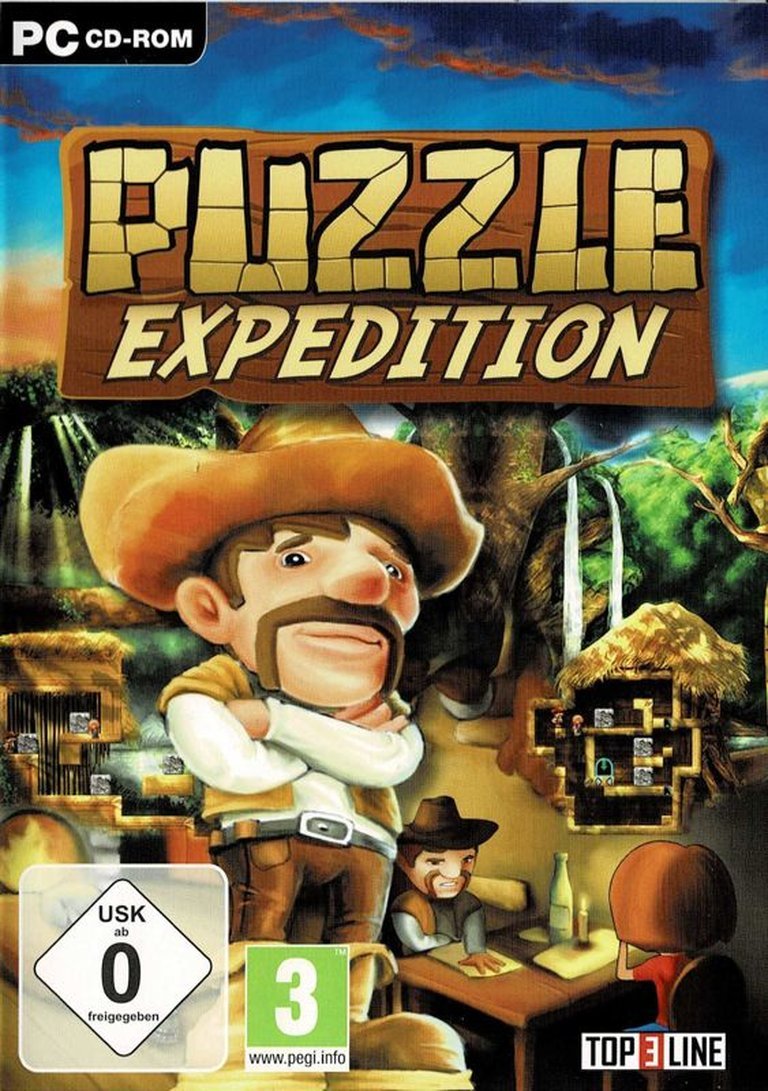
Puzzle Expedition: The Quest for the Tear of God is a relaxing puzzle-platformer where players control two cooperative characters, Anna and Ben, who must work together to navigate intricate labyrinths across diverse environments like jungles, Alaska, Egypt, and a secret final location, using mechanisms such as blocks, lifts, magnets, and teleports to solve over 100 challenging levels without time limits or lives.
Puzzle Expedition: The Quest for the Tear of God Reviews & Reception
metacritic.com (71/100): MumboJumbo delivers another impressive PC-to-DS translation with Puzzle Expedition: The Quest for the Tear of God. Anyone thinking there are not enough challenging puzzle titles on Nintendo’s humble dual-screen portable should definitely track this down for some highly engaging block-moving adventure fun.
cubed3.com (80/100): MumboJumbo delivers another impressive PC-to-DS translation with Puzzle Expedition: The Quest for the Tear of God. Anyone thinking there are not enough challenging puzzle titles on Nintendo’s humble dual-screen portable should definitely track this down for some highly engaging block-moving adventure fun.
pocketgamer.com : Puzzle Expedition’s difficulty curve may be off-kilter, but it’s equally hard to deny that the puzzles are very clever.
nintendolife.com (70/100): Worth the climb.
Puzzle Expedition: The Quest for the Tear of God: Review
Introduction
In the vast, dual-screen wilderness of the Nintendo DS library, where puzzle titans like Professor Layton dazzled with narrative flair and touch-screen wizardry, few titles dared to blend cooperative block-pushing with an expeditionary tale of lost fathers and ancient artifacts. Released in 2010, Puzzle Expedition: The Quest for the Tear of God—often shortened to Puzzle Expedition—emerged as a quiet PC port from Slovak developer Top3Line s.r.o., published by MumboJumbo. This unassuming gem, with its side-view labyrinths and dual-character teamwork, flew under the radar, earning a modest Metacritic average of 71 while captivating puzzle purists. Its legacy endures not as a blockbuster, but as a testament to raw, unforgiving logic design in an era of casual gaming excess. My thesis: Puzzle Expedition stands as an underrated pinnacle of cooperative puzzle-platforming, rewarding patient minds with dozens of hours of cerebral satisfaction, even if its steep difficulty and repetitive core reveal the constraints of its low-budget origins.
Development History & Context
Top3Line s.r.o., a small Slovak studio, crafted Puzzle Expedition as an evolution of the classic logic game Quadrax, infusing it with adventure elements to appeal to the burgeoning casual PC market of the late 2000s. Originally positioned as a “Premium Casual Game,” it launched on PC in 2011 (with Steam availability persisting today at a budget $7.99), but its Nintendo DS debut on November 9, 2010, marked MumboJumbo’s key porting effort—the same publisher behind hidden-object adventures like Samantha Swift and the Hidden Roses of Athena. MumboJumbo specialized in translating PC casual fare to handhelds, leveraging the DS’s portability for bite-sized puzzling amid the twilight of the DS era.
The 2010 gaming landscape was puzzle-saturated: Nintendo’s own Professor Layton and the Diabolical Box (2009) emphasized story-driven brainteasers, while match-3 clones and hidden-object hunts dominated digital distribution. Technological constraints shaped Puzzle Expedition profoundly—the DS’s dual screens enabled sprawling side-view levels split across top and bottom displays in some variants, but controls stuck to D-pad movement and X-button character switching, eschewing stylus innovation to preserve precision. Top3Line’s vision prioritized relaxation without pressure (no timers, infinite retries), contrasting the era’s live-based ordeals like Dr. Kawashima’s Brain Training. Budget limitations meant simple 2D cartoon visuals and minimal voice work, yet this austerity birthed 100 ingeniously variable levels across global biomes. Ports to iOS (2011) and Windows followed, but the DS version cemented its handheld identity, arriving as a US-exclusive curiosity amid whispers of a hoped-for European release that never materialized.
Narrative & Thematic Deep Dive
At its heart, Puzzle Expedition weaves a straightforward yet evocative tale of familial redemption and exploratory peril, framed as Anna’s desperate hunt for her missing father, a globetrotting adventurer whose final expedition vanished into obscurity. Enlisting rugged guide Ben, Anna traverses labyrinthine ruins in pursuit of the mythical “Tear of God”—an artifact implied to hold the key to her father’s fate. Interspersed after clusters of levels (cleared or skipped via limited credit tokens), brief cutscenes flesh out their bond: Anna’s youthful determination clashes with Ben’s pragmatic caution, revealing snippets of her father’s journal-like clues amid ancient stones.
Thematically, the game explores cooperation as survival, mirroring real expedition dynamics where solo efforts falter. Anna and Ben’s interdependence—neither can progress without the other’s positioning—symbolizes trust amid isolation, echoing Indiana Jones-esque archaeology tropes but grounded in Slovak folklore hints via Quadrax roots. Dialogue is sparse and functional (“Let’s move this block!” or “Watch the one-way platform!”), delivered in text with multilingual support (English, German, French, Spanish, Italian), prioritizing puzzle rhythm over verbosity. Two endings reward full completion: one triumphant reunion, another shrouded in mystery, tying into themes of anticipation and revelation. Critics like GameZone noted the story’s lack of engagement, but this minimalism amplifies the puzzles’ role as narrative drivers—each solution unveils environmental lore, from Cambodian jungles symbolizing untamed peril to Egyptian tombs evoking eternal enigma. Atlantis and a secret finale escalate to mythical hubris, culminating in a “growing sense of anticipation” per Steam’s blurb. Flaws persist: characters’ bland designs (Pocket Gamer quipped they were “thwacked with the ugly stick”) and abrupt scenes undermine emotional depth, yet the plot’s restraint fosters immersion, making logical triumphs feel like plot advancements.
Gameplay Mechanics & Systems
Puzzle Expedition‘s core loop revolves around dual-character cooperation in side-view platform puzzles, demanding players orchestrate Anna and Ben’s movements to escort both to exits without stranding either. Switch seamlessly via X on DS (or equivalent on ports), using D-pad for navigation—no stylus, ensuring tactile precision. Early levels teach basics: push movable blocks to bridge gaps, climb ledges (Ben’s strength implied for heavier tasks), and drop from platforms. Progression introduces layered mechanics:
Core Systems
- Blocks and Environmental Interaction: Push/pull stones to form paths; mispositioning traps characters, necessitating restarts (infinite retries mitigate rage-quits).
- Switches and Dynamic Elements: Pressure-sensitive toggles activate lifts, doors, or one-way platforms (arrow-marked for up-only jumps or down-drops), demanding precise sequencing.
- Advanced Gadgets: Magnets pull blocks, teleports swap positions, expanding combinatorial depth—Steam highlights these for “unique puzzles.”
- Level Structure: 90 core + 10 bonus levels across worlds (jungle/Cambodia, Alaska’s icy mazes, Egypt’s traps, Atlantis, secret endgame), escalating from simple paths to “maddeningly difficult” multi-step orchestrations (Nintendo Life).
No timers or lives promote experimentation; limited skip credits (one per tough spot) encourage persistence. UI is clean—dual-screen DS layout displays full mazes, with quicksave/quickload on iOS for error correction (though Pocket Gamer criticized its fiddliness, lacking a true undo). Character progression is absent; challenge ramps organically, yielding a steep curve that stuns post-level 6 (Pocket Gamer: “suddenly hard-as-nails”).
Innovations: True co-op without split-screen—players mentally juggle both perspectives, prefiguring games like Snipperclips. Flaws: Repetitiveness breeds tedium (block-pushing dominates), and deviousness borders frustration (GameZone: “too devious”). Yet, 100+ hours of variability reward mastery, with no scoring beyond prideful completion.
World-Building, Art & Sound
The game’s side-view 2D worlds pulse with thematic variety, transforming sterile puzzles into vivid expeditions. Settings span biomes for atmospheric progression:
– Jungle/Cambodia: Lush greens, vine-draped ruins evoke humid peril.
– Alaska: Frosty blues, slippery ice amplify positioning risks.
– Egypt: Sandy tombs with hieroglyphs nod to archaeology.
– Atlantis & Secret: Sunken aquatics and ethereal voids build mythic climax.
Art direction employs simple cartoon aesthetics—bold outlines, vibrant palettes—suited to DS’s resolution, with ruins yielding “clues” as collectibles advancing lore. Low-budget tells: static sprites, no animations beyond pushes/jumps, yet parallax scrolling on dual screens enhances depth.
Sound design is understated: mellow ambient tracks (jungle chirps, Egyptian flutes) foster relaxation, punctuated by satisfying clunks for block moves and chimes for solves. No voice acting keeps focus puzzle-ward; SFX reinforce mechanics (teleport whooshes, switch clicks). Collectively, these forge a contemplative atmosphere—worlds feel lived-in backdrops to logic, not spectacles, amplifying isolation and triumph.
Reception & Legacy
Launch reception was solidly middling: Metacritic’s 71 aggregated praise for challenge (Cubed3: 80/100, “highly engaging block-moving adventure”) against gripes of repetition and flashlessness (GameZone: 65, “far from flashy”). Nintendo Life (70) lauded 100 “ingeniously designed” levels as “rewarding, long-lasting,” while Thunderbolt (70) hailed its rare story. Player reviews scarce; MobyGames notes only two collectors, underscoring obscurity.
Commercially, it underperformed—US DS-only, cheap eBay carts ($10 used), no EU push despite pleas. iOS port (2011) echoed DS praise but lamented fewer levels (50 vs. 90). Reputation evolved into cult curiosity: a “hidden gem” for DS puzzle fans amid Layton dominance, influencing niche co-op puzzlers (echoes in SpaceChem‘s logic chains or Gorogoa‘s sequencing). No direct successors, but Top3Line’s Quadrax roots tie to enduring sokoban-likes. In history, it exemplifies 2010s casual ports bridging PC experimentation to handhelds, a low-fi antidote to bloat.
Conclusion
Puzzle Expedition: The Quest for the Tear of God distills puzzle design to its essence: pure, cooperative logic amid evocative wilds, unmarred by timers or gimmicks. Top3Line’s 100 levels, from block basics to teleport wizardry, deliver exhaustive challenge, bolstered by a serviceable expedition yarn and serene presentation. Repetition, steep curves, and budget visuals temper its shine, but for aficionados, it’s a backpack essential—proof that small studios could outwit giants. In video game history, it claims a niche as the DS’s unsung sokoban successor, a 8/10 masterpiece demanding rediscovery. Pack your patience; this expedition endures.