
- Release Year: 2011
- Platforms: Android, BlackBerry, iPad, iPhone, Windows, Xbox 360
- Publisher: Pixel Elephant Pty Ltd
- Developer: Pixel Elephant Pty Ltd
- Genre: Puzzle
- Perspective: 3rd-person
- Game Mode: Single-player
- Gameplay: Sokoban, Turn-based
- Setting: Fantasy
- Average Score: 80/100
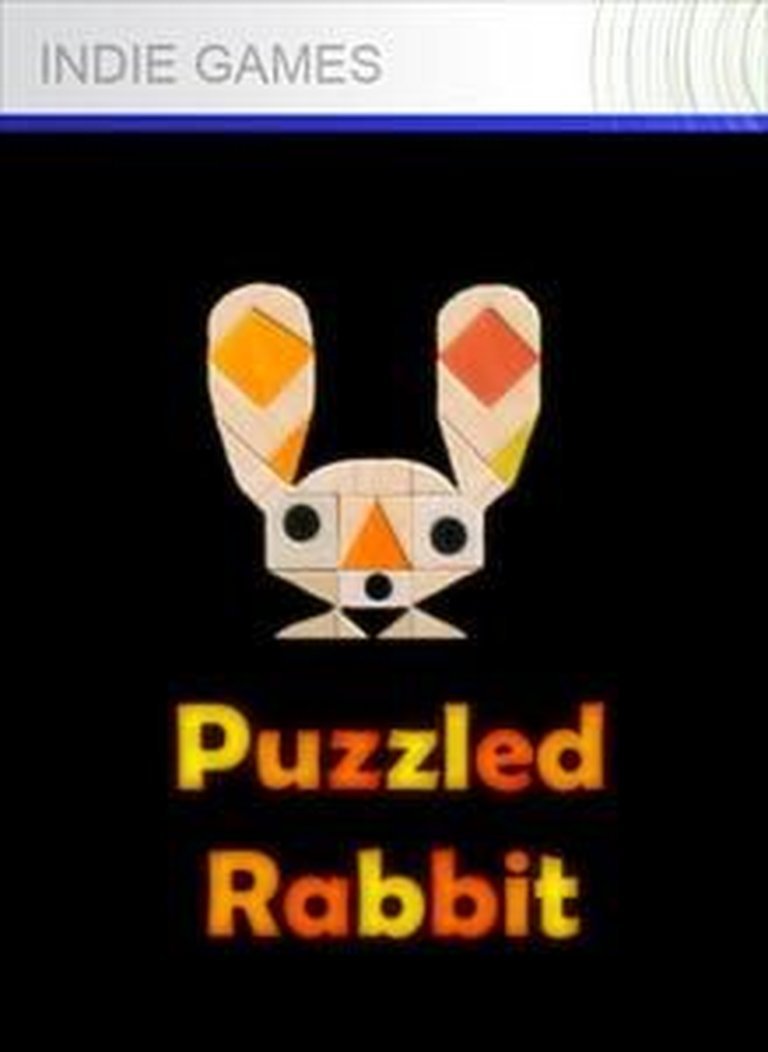
Description
Puzzled Rabbit is a puzzle game inspired by the classic sokoban concept, featuring nearly 200 levels where players must push red boxes onto green spots. Available on multiple platforms, it offers online leaderboards, undo/redo options, and two control modes, making it a challenging and engaging experience for puzzle enthusiasts.
Puzzled Rabbit Mods
Puzzled Rabbit Reviews & Reception
mobygames.com (80/100): Puzzled Rabbit is a puzzle game based on the popular sokoban concept.
vgchartz.com : Puzzled Rabbit is a charming little game for anyone who enjoys solving puzzles.
ifanzine.com : A content-rich and addictive slide puzzle game perfect for fans of logistical challenge.
Puzzled Rabbit: A Masterclass in Minimalist Puzzle Design
Introduction
In an era defined by sprawling open worlds and cinematic narratives, Puzzled Rabbit (2011) emerges as a quiet triumph of pure, unadulterated puzzle design. Developed by Australian indie studio Pixel Elephant Pty Ltd, this deceptively simple sokoban variant strips gameplay to its essence, challenging players to push boxes to designated goals with nothing but spatial logic and perseverance. Its legacy lies not in narrative depth or technological innovation, but in its flawless execution of a timeless formula. This review argues that Puzzled Rabbit represents a paragon of accessibility and challenge, offering a deeply satisfying experience for puzzle connoisseurs while remaining approachable to newcomers—despite its minimalistic approach to storytelling.
Development History & Context
Pixel Elephant Pty Ltd operated as a lean, three-person team: programmer and artist Maciej Sawitus spearheaded development, with Aymeric du Peloux and David W. Skinner crafting the level designs. Their vision was clear: to reimagine the classic sokoban paradigm for modern platforms, prioritizing intuitive controls and substantial content. The 2011 release landscape was pivotal; mobile gaming was exploding (fueled by titles like Angry Birds), while Xbox Live Arcade and digital PC distribution democratized indie game access. Puzzled Rabbit embraced this cross-platform ethos, launching simultaneously on BlackBerry, Xbox 360, Windows, iOS, iPad, and Android—a remarkable feat for a small studio. Technologically, the game’s “Smart” control system (detailed later) addressed mobile’s tactile limitations, while its fixed-screen interface accommodated console and PC inputs. This era’s gaming climate rewarded polished, accessible experiences, positioning Puzzled Rabbit as a niche but well-curated offering in the burgeoning puzzle genre revival.
Narrative & Thematic Deep Dive
Puzzled Rabbit eschews traditional narrative entirely, opting for a “pure puzzle” philosophy. The game’s fantasy setting—a whimsical backdrop of green meadows and wooden platforms—serves only to contextualize the mechanical challenges. The protagonist, a wide-eyed, silent rabbit, embodies purpose without personality; its motivation is reduced to a single, universal drive: to push boxes. This deliberate omission of dialogue, character arcs, or plot threads creates a meditative experience focused solely on problem-solving. Thematically, the game champions perseverance and incremental progress. Levels are structured as increasingly complex logistical problems, rewarding players with famous philosophical quotes upon completion—transforming each solved puzzle into a moment of quiet triumph. This minimalism aligns with the sokoban genre’s roots, where the “story” is written by the player’s own ingenuity. While lacking the layered lore of contemporaries like Elden Ring or NieR: Automata, Puzzled Rabbit succeeds by making its absence a strength: every element serves the core puzzle.
Gameplay Mechanics & Systems
The gameplay is a meticulous refinement of the sokoban formula. Players must navigate a grid-based world, pushing red boxes onto green target zones. Crucially, boxes can only be pushed (not pulled), and movement is restricted to one axis at a time, creating intricate spatial puzzles. The game excels through three key systems:
-
Control Schemes:
- “Simple” Mode: Direct character movement via directional swipes (on mobile) or analog sticks (on console/PC). Intuitive but prone to errors in tight spaces.
- “Smart” Mode: The game’s innovation. Tapping a box highlights valid push destinations, enabling players to plan moves without trial-and-error. This mode is essential for navigating later levels and drastically reduces frustration.
-
Progression & Content:
- 186 levels across 10 sets, with difficulty escalating gradually. Players can tackle levels out of order or unlock new sets early, accommodating diverse playstyles.
- Undo/Redo System: Unlimited reversals let players experiment without penalty, a critical feature for complex puzzles.
- Leaderboards: iOS/Android versions track completion times and moves, fostering replayability through competition.
-
UI & Accessibility:
- Clean, minimalist interface with clear visual feedback. The fixed-screen perspective ensures no camera issues, while the point-and-select interface suits all platforms.
- Flaws: The tutorial focuses on controls rather than sokoban’s core rules, leaving novices initially adrift. Additionally, the absence of a difficulty curve indicator may overwhelm new players.
World-Building, Art & Sound
Puzzled Rabbit’s world is abstract and functional, prioritizing clarity over immersion. Levels are diorama-like scenes—pastel-colored gardens, stone courtyards, or wooden docks—designed to highlight puzzle mechanics without distraction. The rabbit protagonist is a study in charm: its large, expressive eyes and waddling gait inject personality into the minimalist aesthetic. Environments are static but purposeful; obstacles like walls or immovable crates create logistical challenges without visual clutter.
Sound design is sparse yet effective. A single, looping piano melody provides ambiance, though its simplicity wears during long sessions. Sound effects (e.g., box pushes or level completions) are subtle, reinforcing the game’s meditative tone. While external music support is technically possible, its implementation is clunky (requiring manual toggling), a minor oversight in an otherwise polished package. The art and sound collectively create a “brain-teaser” atmosphere—cozy, focused, and devoid of unnecessary frills.
Reception & Legacy
Upon release, Puzzled Rabbit garnered modest praise. The lone critical review from iFanzine awarded it 80%, calling it “a content-rich and addictive slide puzzle game perfect for fans of logistical challenge,” though noting a “learning curve” for sokoban newcomers. Mobile players appreciated the free promotional offers (e.g., via DailyAppDream), driving downloads despite negligible commercial data (VGChartz lists 0 sales for Xbox 360). Its legacy is defined by its role as a polished sokoban adaptation. Influenced by classics like Sokoban (1984), it refined the genre for modern audiences through its “Smart” controls and cross-platform accessibility. While it didn’t spawn sequels or imitators, it remains a benchmark for pure puzzle design—comparable to Antichamber (2013) in its commitment to mechanics-first gameplay. Its true impact lies in demonstrating that compelling games can thrive without narrative or spectacle, a philosophy echoed in later indie titles like Unpacking (2021).
Conclusion
Puzzled Rabbit stands as a testament to the enduring power of minimalist design. By stripping away narrative excess and focusing solely on spatial logic, Pixel Elephant crafted a puzzle experience both accessible and profound. Its 186 levels offer near-endless challenge, the “Smart” control system revolutionizes sokoban for modern inputs, and its charming aesthetic provides warmth to the cerebral gameplay. Flaws in tutorial design and audio repetition are minor blemishes on an otherwise flawless execution. As a historical artifact, it bridges the gap between arcade-era puzzles and today’s indie renaissance, proving that innovation can arise not from reinvention, but from perfecting the fundamentals. For puzzle enthusiasts, Puzzled Rabbit is not merely a game—it’s a masterclass in elegant, timeless design. Its place in video game history is secure: as a quiet, unassuming gem that celebrates the pure joy of problem-solving.