
- Release Year: 1999
- Platforms: DOS, Windows
- Publisher: Onet.pl S.A., Optimus Pascal Multimedia
- Developer: Optimus Nexus
- Genre: Action
- Perspective: 1st-person
- Game Mode: Single-player
- Gameplay: Puzzle, Shooter, Stealth
- Setting: Futuristic, Sci-fi
- Average Score: 66/100
Description
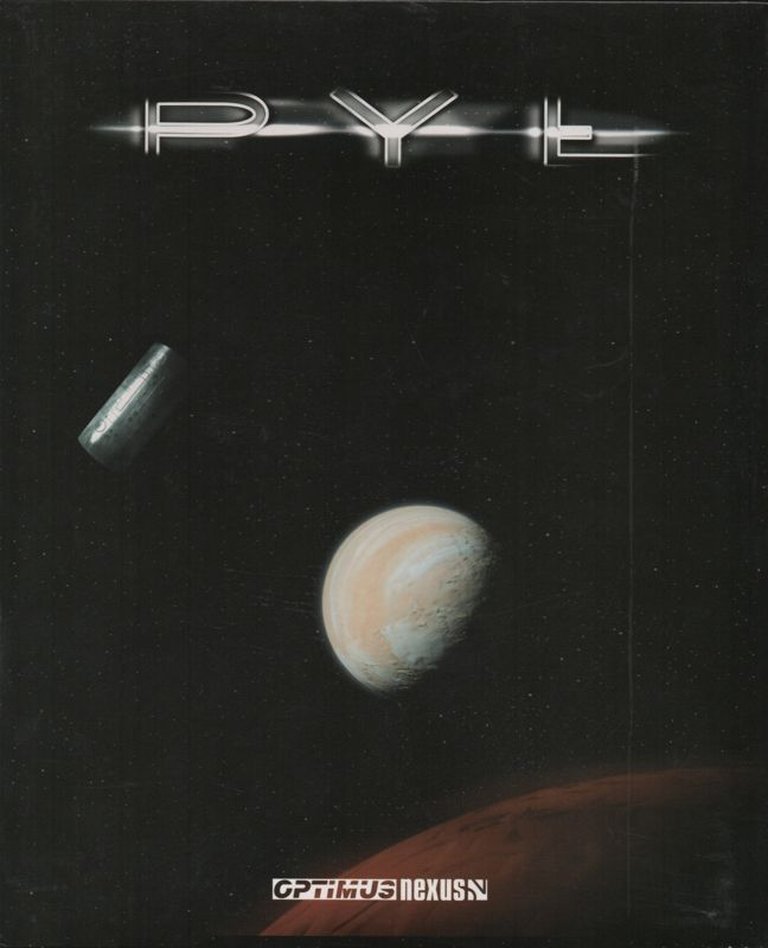
Pył (Dust) is a tactical 3D first-person shooter set in a sci-fi future on the desert moon Arena, a former interstellar battlefield turned imperial exile planet. Players control one of two army deserters, Jafo or Sope, who scavenge ancient war artifacts for survival and profit while solving logic puzzles, using advanced optics for stealthy reconnaissance, and collecting weapons amid vast, ruined structures.
Pył Free Download
PC
Pył Patches & Updates
Pył Reviews & Reception
collectionchamber.blogspot.com : Pył is a shooter that was way ahead of its time.
Pył: Review
Introduction
In the late 1990s, as the FPS genre exploded with titans like Half-Life, Unreal, and Thief: The Dark Project, a small Polish team dared to craft something uniquely unforgiving: Pył (English: Dust), a 1998/1999 gem that thrust players into a brutal sci-fi wasteland where every bullet counts and survival demands cunning over carnage. Developed by the obscure Optimus Nexus (also credited as e-people), this first-person shooter transcends mere gunplay, weaving stealth, puzzles, and atmospheric immersion into a tapestry of scarcity and desperation. Lost to Western audiences due to its Poland-exclusive release, Pył has lingered as a cult curiosity, revived by fan translations and emulators. My thesis: Pył stands as a visionary “slavjank” FPS—a raw, tactical masterpiece that prefigured immersive sims like System Shock 2, cementing its place as Poland’s unsung answer to the genre’s evolution, flawed yet profoundly influential.
Development History & Context
Pył emerged from Poland’s nascent game dev scene in the late ’90s, a time when Eastern European studios were bootstrapping amid economic upheaval post-communism. Optimus Nexus, a tiny outfit from Silesia, poured heart into this project under production coordinators Mirek Wąsowicz and Tomek Włodarek. Programmers Jarek “Hobbit” Świerczek and Włodarek built a custom 3D engine (internally dubbed “Chlast” per some sources), optimized for DOS4GW and Windows 95/98, with full Glide 2.4 support for 3dfx Voodoo cards—the era’s hot hardware for hardware-accelerated glory.
The game’s environments drew direct inspiration from the derelict Bobrek Ironworks in Bytom, Poland, capturing gritty industrial decay through photos that informed textures and layouts (as documented on developer blogs like Świerczek’s). This mirrored the global FPS boom: 1998 saw narrative-driven shooters like Half-Life ditch cutscenes for seamless storytelling, while Thief popularized light/shadow stealth. Pył blended these, but technological constraints shaped its soul—Pentium 133 MHz minimum, 32MB RAM—enforcing ammo scarcity via performance limits, not design fiat. A planned grander scope (adventure-shooter hybrid) was trimmed to 17 levels across 5 scenarios, released on CD-ROM by Optimus Pascal Multimedia and Onet.pl S.A. in 1999 (DOS/Windows ports overlapped 1998-99).
Świerczek later attempted a modern port in 2012, stalled by 2018, leaving fans to rely on DOSBox wrappers, nGlide, or QEMU for playability. In Poland’s landscape—dominated by pirated Western hits—Pył was dubbed “Polish Quake,” but its tactical pivot reflected local ingenuity: resource-poor devs maximizing immersion without blockbuster budgets.
Narrative & Thematic Deep Dive
Pył‘s story unfolds in 2798 amid a decaying interstellar Empire, where endless wars ravage planets until federations exile conflicts to Arena—a barren desert moon orbiting “Big Brother,” a gas giant whose gravity traps exiles forever. Once a neutral battleground policed by Imperial forces, Arena devolved into a scavenger hell: meth-heads, thugs, and deserters sift sands for lost tech artifacts, bartering for survival.
Players control Sope (or Sole; sources vary), an elite Imperial Light Cavalry deserter betrayed by corrupt commanders during a famine war on an ag-world—defeated not by armies, but pitchfork-wielding farmers. Stranded on Arena after hitching dubious rides, Sope scavenges battle relics while hunting the Valkyrie, a buried starship offering escape. Parallel tales of fellow deserter Jafo interweave via environmental storytelling, emphasizing dual survival arcs. Supporting cast shines: rescue fiery athlete Karla from a cannibal brute (game over if failed), interact with emaciated prisoners on Gideon’s “Goleb” station, or navigate neutral workers/gas-welders who turn hostile if provoked.
Themes probe war’s futility—humanity exports violence to a dustball, losing tech across generations—and exile’s despair. Scarcity mirrors post-apoc entropy: rusted hulks drip water, mutants skitter in shadows, u-ra-gans bury history. Dialogue is sparse (Polish voiceovers by talents like Izabela Bujniewicz), delivered via prompts and logs, evoking Half-Life‘s subtlety. Puzzles demand piecing lore—decoding systems from scraps—reinforcing isolation. No hand-holding; failure (e.g., alerting patrols) strands you ammo-less, thematizing Arena’s merciless Darwinism. It’s a tale of fragile hope amid imperial rot, where escape tantalizes but Arena devours.
Gameplay Mechanics & Systems
Pył deconstructs the FPS loop into tense resource management, punishing run-and-gun idiocy. Core: stealth-shooter hybrid across 17 non-linear levels (tight corridors to open canyons), blending combat, puzzles, and exploration. Ammo/health scarcity forces sniper headshots; enemies’ armor demands precision.
Weapons & Combat:
– Assault Rifle (Kalashnikov-247, 9mm): Staple, 25-round mag. Burst/single fire; sniper scope (Backspace) with zoom/IR vision for dark scouting/headshots. Underbarrel: frag grenades (3s fuse, AoE) or rare gas grenades (lethal clouds for silent kills).
– Shock Lance: Locks-on electric beam stuns/drains health; ammo-sparse, boss-saver.
– Rocket Launcher: Late-game insta-kill blasts, nuclear “nyuks” for flashbang spectacle; ammo mythical.
– Utilities: Proximity/timer mines (break walls, trap chasers); flares (LMB throw/handheld RMB) illuminate pink-hued paths, mark explored areas.
Health: Fragile hero—low HP blurs vision, slows movement, shakes aim, adds pained audio (coughs, screams). Pickups sparse: biostimulants (max 6, full heal), beer bottles (minor boost near foes). UI minimalist: bar graphs for ammo/health (green-to-red light), no HUD clutter.
Progression & Puzzles: No levels/XP; linear-ish campaigns with backtracking. Logic puzzles—weight-sensitive elevators (destroy barrels), memory banks, trapped rooms, code hunts—borrow adventure games. Stealth: shoot lights for darkness; scripted spawns demand save-scumming. NPCs: neutrals ignore if quiet; save Karla for co-op defense segments. Controls: Keyboard/mouse (remappable, but clunky—hex-edit menu.set for reload key); WASD viable. Cheats (Ctrl+E-PEOPLE): godmode/ammo ease mastery.
Flaws: Scope UI (left-side duplicate view) disorients; wooden aiming/recoil. Strengths: emergent tactics—gas nades for crowds, mines for pursuits—innovate amid scarcity.
World-Building, Art & Sound
Arena’s post-apoc dystopia—rusted vents, dripping pipes, sand-choked ruins—inspires dread, blending Bobrek’s industrial blight with sci-fi grandeur (Valkyrie’s sleek reactor). 17 levels span underground bunkers, canyons, ships; dynamic skies peek through grates. Glide mode dazzles: lens flares, dynamic lights/shadows, smoke/sparks, animated textures. Software fallback solid (MMX recommended), but fog/textures scale for perf.
Art direction: Polygons coarse early (rats/thugs), refine later (clones/robots). Mutants (mantis beasts, acrobats), wildlife (rats, spiders) amplify squalor. UI: Sparse prompts guide sans hand-holding.
Sound elevates: Tomasz Jachowicz’s ambient techno swells to dynamic beats in combat; Adam Szymański’s guitar riffs add grit. Piotr Suchomski/T. Włodarek’s FX—doppler echoes, reverbs, skitters—spatialize via 3D audio. Voicework sparse but evocative; hero’s injury gasps immerse. Music shifts: majestic canyons, tense tech-no corridors. Surround nails Arena’s oppressive echo.
Reception & Legacy
Launch reception polarized: Critics averaged 66% (Świat Gier Komputerowych: 94%—”first noteworthy Polish FPS, Mad Max fans rejoice”; CD-Action: 80%—”best Polish unconventional FPS”; Gambler: 58%—”good idea, poor execution”; Secret Service: 30%—”rushed, middling vs. West”). Players: 3.6/5 (MobyGames). Praised innovation/atmosphere, critiqued engine jank/FPS dips.
Commercially niche (Poland-only), Pył faded, but blogs (Collection Chamber) hail it “way ahead,” akin Half-Life/Thief. Fan efforts: English/Russian translations (robertmo, Old-Games.Ru), DOSBox installers. Reddit/VOGONS buzz as “first Polish slavjank FPS.” Influences: Pioneered ammo-stealth in Eastern FPS; echoes in STALKER‘s scarcity. Remake stalled, but preservations (PCGamingWiki) ensure survival. Cult status grows—obscure no more.
Conclusion
Pył is a defiant artifact: raw, punishing, atmospheric—a Polish fever dream where Arena’s dust chokes bravado, rewarding patience with profound immersion. Its bespoke engine, tactical depth, and thematic grit outshine flaws (clunky controls, perf issues), rivaling 1998 peers while forging unique identity. In video game history, it claims pioneer status for resource-driven FPS hybrids, a testament to underdog ingenuity. Verdict: Essential hidden gem—9/10. Boot DOSBox, hoard flares, and escape Arena; history awaits rediscovery.