
- Release Year: 2014
- Platforms: Windows, Xbox One, Xbox Series
- Publisher: GameArt Studio GmbH
- Developer: GameArt Studio GmbH
- Genre: Action, Sports
- Perspective: 3rd-person Behind view
- Game Mode: Single-player
- Gameplay: Racing, Vehicular
- Setting: Futuristic, Sci-fi
- Average Score: 55/100
Description
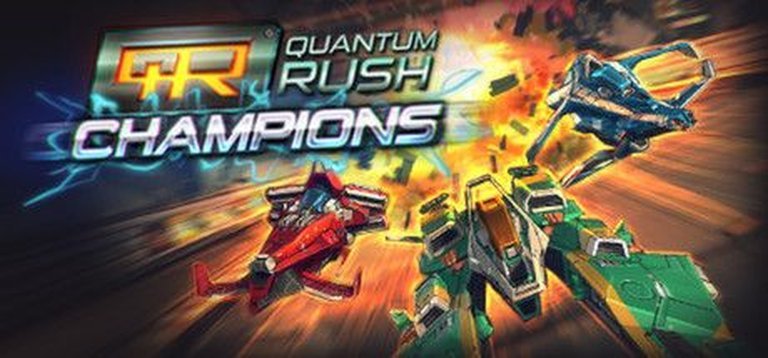
Quantum Rush Champions is a sci-fi futuristic racing game where players pilot high-speed hovercrafts across dynamic tracks in competitive single-player events. Developed by GameArt Studio GmbH and released across Windows, Xbox One, and Xbox Series platforms, it combines third-person perspectives with vehicular action sports gameplay. Despite offering extensive content, solid controls, and well-designed courses, the game has faced criticism for technical inconsistencies, race imbalances, and underdeveloped game modes.
Gameplay Videos
Where to Buy Quantum Rush Champions
PC
Quantum Rush Champions Guides & Walkthroughs
Quantum Rush Champions Reviews & Reception
metacritic.com (54/100): Quantum Rush brings the futuristic racer genre to Xbox One, something we craved long but it fails to satisfy due to overly high and frustrating difficulty.
steambase.io (56/100): Quantum Rush Champions has earned a Player Score of 56 / 100, indicating a mixed reception.
Quantum Rush Champions: A Defiant Yet Flawed Entry in the Futuristic Racing Pantheon
1. Introduction
In the pantheon of high-octane, anti-gravity racing games, dominated by titans like Wipeout and F-Zero, the genre experienced a notable lull in the early 2010s. It was into this void that Quantum Rush Champions (QRC), developed by German studio GameArt Studio GmbH, boldly strode in late 2014. Promising a return to the breakneck speed, weaponized combat, and futuristic spectacle that defined the genre’s golden age, QRC arrived with a clear mission: to reignite the passion for futuristic racing on PC and later Xbox One. However, while it possessed glimmers of ambition and the core DNA of its predecessors, QRC ultimately emerged as a deeply frustrating experience, a testament to the razor-thin margin separating a cult classic from a forgotten footnote. This review delves into the intricate tapestry of QRC’s development, its ambitious yet flawed design, its critical and player reception, and its ultimately bittersweet legacy within the annals of video game history. The thesis is clear: Quantum Rush Champions is a game of compelling ambition undone by systemic flaws, a fascinating if ultimately flawed artifact that highlights the immense difficulty of perfecting the demanding fusion of speed, combat, and precision that defines the futuristic racing genre.
2. Development History & Context
Quantum Rush Champions emerged from the crucible of GameArt Studio GmbH, a German developer with a focus on niche racing and action titles. Crucially, QRC was not the studio’s first foray into the futuristic racing space. Its predecessor, Quantum Rush Online (QRO), launched on Steam in July 2014 as a free-to-play (F2P) multiplayer experience. QRO aimed to capture the competitive spirit of online futur racing, featuring randomly generated tracks, technological progression, and weapon-based combat. However, according to discussions on the Steam community hub, the developer made a pivotal and contentious decision: abandoning the QRO project entirely to pivot towards a standalone, commercial, single-player product. This shift, justified by the desire to reach a global market (QRO was initially Europe-only), offer distinct game modes unsuitable for PvP, and implement a faster, more direct upgrade progression system, fundamentally altered the game’s trajectory.
The technological constraints of the era were evident. Running on DirectX 9.0c with modest minimum specs (2-3.4 GHz Dual Core CPU, 4GB RAM, 512MB VRAM), QRC targeted mid-range systems, prioritizing accessibility over graphical fidelity. The gaming landscape in late 2014 saw the resurgence of indie darlings and the tail end of the previous console generation. While the futuristic racing genre had seen recent entries like Redout (2016, but in development) and Fast Racing Neo (2015), it was still considered underserved. QRC positioned itself explicitly as filling this niche, its Steam ad blurb declaring, “This special genre had been neglected for far too long. Now, Quantum Rush takes over!” This sense of mission, coupled with the developer’s pivot from F2P to premium, set the stage for a title burdened with both expectation and the baggage of an abrupt transformation.
3. Narrative & Thematic Deep Dive
Quantum Rush Champions offers a narrative experience that is, by design, secondary to the core racing action. The story, as presented through the campaign structure and lore snippets, is minimalistic and serves primarily as a framework for the gameplay challenges. Players apparently engage in a series of high-stakes racing championships hosted by powerful corporate sponsors. The core theme revolves around corporate competition, technological advancement, and the pursuit of glory within a hyper-competitive, near-future setting. The lore mentions “manufacturer-dependent perks” for different racers, suggesting a world where vehicle design is intrinsically linked to corporate identity and technological philosophy.
Characters, however, are almost entirely absent beyond the player’s avatar and the formidable “boss” racers encountered at the end of each tier. The 21 “hard bosses” function purely as gameplay obstacles – significantly faster, more durable, and often possessing unique abilities compared to standard AI opponents. Dialogue is similarly scarce, confined to brief pre-race messages or mission briefings that outline the challenge ahead (e.g., “Destroy the target,” “Secure the fastest lap”). There’s no meaningful character development or intricate plot twists; the narrative is functional, designed to motivate progression through increasingly difficult challenges across three independent campaigns. This stark minimalism reflects the genre’s focus on pure competition but leaves the world feeling somewhat sterile and devoid of personality, a missed opportunity given the potential for a richer cyberpunk or corporate dystopia backdrop hinted at by the sci-fi setting and weaponized combat.
4. Gameplay Mechanics & Systems
The core gameplay loop of Quantum Rush Champions revolves around mastering high-speed hovercraft racing across diverse tracks while engaging in vehicular combat. However, the execution of these systems is where QRC reveals its deepest flaws.
- Core Racing: The sensation of speed is frequently cited as a positive, especially on well-designed tracks. The game features 14 distinct race tracks set on Earth (e.g., Airport) and in space, incorporating loops, tunnels, and multiple path choices. Hovercraft control feels floaty and lacking in satisfying inertia, often described as feeling “like they have no inertia” (Steam Community). Drifting, a staple of the genre, is notably absent or poorly implemented. The AI is criticized for being inconsistent – sometimes challenging, sometimes frustratingly unfair, and often predictable in its path choices, frequently sticking to the main route.
- Combat: Weapon-based combat is a key differentiator but suffers from severe balance and implementation issues. Racers feature “mounted cannons” alongside “special pick-up weapons” found on the track. The core problem highlighted by reviewers and players alike is the poor weapon design and effectiveness:
- Useless Weapons: The “gravity shockwave” is repeatedly cited as being non-functional 95% of the time, merely taking up space that could house a useful item.
- Lack of Impact: Weapons are generally described as feeling weak, “dull,” and lacking satisfying feedback (“like you shot a bottle rocket or a bb gun at someone” – Steam Community).
- Poor Placement: Weapon placement is uniform across all game modes, failing to adapt to specific challenges like “Target Enemy” missions where most pickups on the track are irrelevant for the task (The Mad Welshman).
- Character Progression & Upgrade System: This is perhaps the most contentious system. Progression is tied to earning medals (Gold, Silver, Bronze) across the 8 different challenge types (race modes). However, the rewards are deeply unsatisfying:
- Medal-Based Unlock: Upgrades (performance boosts like armor, speed, handling) and customization options (skins, patterns) are unlocked by earning medals, not purchased with currency earned from races.
- Scarcity & Repetition: Even at higher tiers, upgrades are scarce. Customization options, particularly patterns, must be re-unlocked for each new “Tier” of racer, creating a tedious grind. Players report needing “something like 12 medals” just for basic patterns and colors (The Mad Welshman).
- Loss Between Tiers: A critical flaw highlighted by players is that upgrades earned in one Tier are not available for use in subsequent Tiers. Players effectively start over with a baseline vehicle after progressing, nullifying the sense of earned progression and causing significant frustration (“disheartening to loose the upgrades I have struggled so hard to get” – Steam Community).
- Contrast with QRO: This system stood in stark contrast to the abandoned F2P model (QRO), where upgrades were purchased with race earnings, offering a more direct sense of improvement.
- Challenge & Boss Battles: The difficulty curve is erratic and punishing. Time Trials, in particular, are criticized for requiring “an almost perfect racing line to get gold” even in early tiers, locking players out of content. The 21 “boss” battles exacerbate this problem. These encounters pit the player against a significantly overpowered opponent (often a vehicle from the next tier up) with unique abilities (shield draining, burning trails) within a strict time limit (e.g., 1 minute 30 seconds for Silver on a Tier 1 boss). The combination of the boss’s power, the strict timer, and the inadequate weapon loadout makes these encounters feel unfair and trial-and-error rather than skill-based.
- UI & Presentation: The user interface receives significant criticism for being “extremely confusing” (Steam Community). Navigating menus, understanding upgrade paths, and configuring challenges in Arcade Mode is reportedly cumbersome. The overall presentation is described as “mediocre,” “bieder” (mediocre/unremarkable), and lacking the visual flair of genre leaders.
5. World-Building, Art & Sound
Quantum Rush Champions presents a serviceable if uninspired sci-fi/futuristic setting. The tracks, while varied between Earth locales (airports, industrial zones) and space environments, primarily serve as racing circuits rather than deeply fleshed-out locations. The world-building is functional but minimal; the lore exists in fragments tied to the corporate sponsors and racer manufacturers, failing to create a compelling or immersive universe. Visual direction is a mixed bag:
* Visuals: The graphics, while meeting the modest tech specs of the time, are generally considered competent but unremarkable. Tracks feature futuristic elements but lack the cohesive, high-budget polish of Wipeout HD or Redout. Visuals are often described as “bieder” and lacking the “oomph” needed to compete visually with contemporaries. The hovercraft designs, while numerous (21 racers), suffer from a reliance on gunmetal grey and “dull” aesthetics, especially at higher tiers, reminiscent of criticism leveled at Wipeout Fusion.
* Sound Design: The audio experience receives lukewarm reception. Sound effects for weapons and impacts are frequently cited as “mediocre at best” and lacking punch. The music is described as “forgettable,” failing to provide the driving, high-energy electronic soundscapes that define the genre’s atmosphere. While technically functional, the soundscape fails to elevate the experience or create a strong sense of place or intensity. The overall atmosphere is one of competent functionality rather than immersive spectacle, contributing to the game’s sense of being a “solid” but ultimately passionless experience.
6. Reception & Legacy
Quantum Rush Champions launched on PC in December 2014 and later arrived on Xbox One in June 2015. Its reception, both critically and from players, was predominantly mixed to negative, reflecting the deep-seated issues outlined above.
- Critical Reception:
- Metacritic (Xbox One): Holds a “Mixed or Average” score of 54/100 based on 4 critic reviews.
- Specific Reviews: Gamer’s Palace (Xbox One) gave it 63%, acknowledging its “solid controls” and “cool tracks” but criticizing unfair races and technical issues. Pure Xbox (Xbox One) was harsher at 40%, calling it a “disappointing performance” marred by technical problems, poorly-executed modes, and lack of balance. ZTGD (60%) found it lacking “oomph,” while Brash Games (50%) saw potential but concluded it “could do better.” MondoXbox (65%) specifically cited “overly high and frustrating difficulty” as a major failing. The overall critical consensus was that QRC had interesting elements and a respectable amount of content (3 campaigns, 8 modes, 21 bosses, 14 tracks, 21 racers), but was consistently undermined by technical flaws, poor balance, punishing difficulty, and unsatisfying progression.
- Player Reception:
- Steam: Holds a “Mixed” rating of 47% based on 91 reviews (as per the provided Steambase data, totaling 171 reviews with 95 positive/76 negative). Common player complaints mirror critics: extreme difficulty (“WAAAAAAAAAY too difficult!” – Steam Community), useless weapons, floaty controls, progression frustrations (upgrades disappearing between tiers), confusing UI, and the sheer frustration of boss battles. Positive reviews often acknowledge the core racing can be “fun” at times and praise the sense of speed, but these are frequently drowned out by the negatives. The global achievement stats (showing very low completion rates for later tiers) serve as a stark warning sign of player abandonment due to difficulty and grind.
- Legacy: Quantum Rush Champions is largely remembered as a flawed but ambitious attempt to revive the futuristic racing genre. Its legacy is defined by what it could have been versus what it delivered. It stands as a cautionary tale about the dangers of radical design pivots (abandoning F2P for a flawed SP model), the critical importance of weapon balance and progression feedback, and the fine line between challenging and unfair difficulty. While it didn’t reach the heights of Wipeout or inspire significant direct imitations, it remains a subject of discussion among futur racing enthusiasts as a game that captured the spirit of high-speed hovercraft combat but failed to capture the execution. Its port to Xbox Series (2020) passed largely unnoticed, cementing its status as a niche, time-capsule title rather than a live-service success. It occupies a peculiar space: a game that fills a specific niche for some but ultimately failed to overcome its significant design hurdles, leaving the genre’s revival to be achieved by others.
7. Conclusion
Quantum Rush Champions emerges from the annals of video game history as a fascinating, deeply flawed artifact of the mid-2010s futur racing scene. Born from a developer’s bold pivot away from its F2P roots, it arrived with an undeniable ambition: to deliver the speed, combat, and spectacle fans of Wipeout and *F-Zero craved. The studio succeeded in crafting a game with a solid core loop – high-speed hovercraft racing across diverse tracks with weaponized combat – and commendable ambition in terms of content volume (multiple campaigns, modes, racers, tracks).
However, this core ambition was systematically undermined by a cascade of design and execution failures. The progression system, tied to medal unlocks and rendering upgrades temporary between tiers, created a frustrating, unrewarding grind that actively discouraged continued play. Weapon balance was abysmal, with key items like the gravity shockwave being non-functional and the overall combat lacking impact and satisfaction. The difficulty curve was erratic and punishing, particularly in Time Trials and boss battles, which relied on unfair AI advantages and strict timers rather than player skill. The floaty controls, lack of satisfying inertia, and confusing UI further detracted from the experience, while the art direction and sound design, while technically competent, failed to capture the high-energy spectacle of the genre’s best.
The critical and player reception, hovering around the 50% mark, accurately reflects this dichotomy: moments of exhilarating speed and potential were consistently overshadowed by systemic flaws, technical quirks, and design choices that prioritized artificial difficulty over rewarding mastery. Its legacy is one of a valiant, almost quixotic effort that serves as a stark reminder of the immense complexity involved in perfecting the fusion of speed, precision, and dynamic combat that defines the pinnacle of futuristic racing. While it offered a fleeting glimpse of what could have been, Quantum Rush Champions ultimately remains a cautionary tale and a curio – a game that dared to dream big but couldn’t quite master the intricate mechanics required to turn that dream into a lasting reality. It is, definitively, an interesting failure, a historical footnote that underscores the enduring challenge of capturing lightning in a bottle within one of gaming’s most demanding genres.