
- Release Year: 2016
- Platforms: Linux, Macintosh, Windows
- Publisher: Aqualuft Games
- Developer: Aqualuft Games
- Genre: Adventure
- Perspective: Side view
- Game Mode: Single-player
- Gameplay: Visual novel
- Setting: Fantasy
- Average Score: 85/100
Description
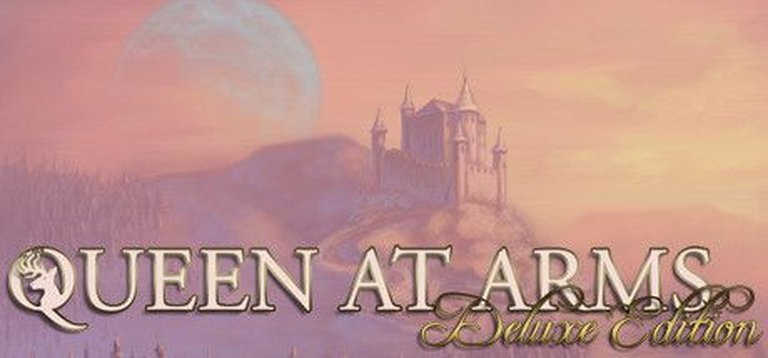
Queen At Arms is a fantasy visual novel set in a medieval world where the player controls Marcus Cordale, a young woman secretly raised as a boy to hide her identity as the last surviving heir to the overthrown throne of Orthera. After joining the military following her adoptive father’s death, Marcus rapidly ascends the ranks amid a brewing war between Orthera and Sylgard, navigating battlefield leadership, political intrigue, and revelations about her royal heritage. The game features branching narrative paths with romance options, moral choices, and multiple endings influenced by the player’s decisions throughout the wartime campaign.
Gameplay Videos
Where to Buy Queen At Arms
PC
Queen At Arms Guides & Walkthroughs
Queen At Arms: A Review of War, Identity, and Royal Reckoning
Introduction
In an era where visual novels often flirt with genre boundaries, Queen At Arms (2016) by Aqualuft Games stands as a bold experiment in blending wartime strategy, LGBTQ+ narratives, and royal intrigue. This fantasy visual novel follows Marcus Cordale, a cross-dressing soldier thrust into leadership amid a brutal civil war, all while concealing her true identity as the orphaned heir to a usurped throne. While its title hints at its grand reveal, the game’s true legacy lies in its ambitious marriage of character-driven storytelling and tactical decision-making—a rare feat in a genre often criticized for passive narratives. This review argues that Queen At Arms is a flawed but essential work, one that pushed the boundaries of player agency and thematic depth in indie visual novels, even as it stumbled under the weight of its own ambitions.
Development History & Context
Queen At Arms emerged from Aqualuft Games, a small studio leveraging the accessible Ren’Py engine to craft a narrative-heavy experience. Released initially in 2015 and expanded in 2016 as the Deluxe Edition, the game arrived during a renaissance for visual novels in Western markets, alongside titles like Doki Doki Literature Club and Hatoful Boyfriend. Yet unlike its peers, Queen At Arms eschewed pure romance or horror for a politically charged war drama, inspired by medieval fantasy tropes and Shakespearean twists.
The developers—primarily Rosstin Murphy (producer) and Diana Taylor (writer)—faced constraints typical of indie projects: limited art assets, reliance on static sprites, and minimal voice acting (later addressed in the Deluxe Edition). Despite these hurdles, the team crafted a sprawling 10+ hour narrative with multiple endings, a testament to their commitment to player-driven storytelling. The game’s focus on gender identity and queer relationships also reflected a growing demand for inclusive narratives in gaming, positioning it alongside contemporaries like Dream Daddy.
Narrative & Thematic Deep Dive
At its core, Queen At Arms is a story about masks—both literal and metaphorical. Players control Marcus, a young woman raised as a boy to evade political assassination following a coup in her homeland of Orthera. After her adoptive father’s death, she enlists in the army to find her brother Nick, only to ascend the ranks due to wartime chaos. The narrative unravels her repressed memories, revealing her true identity as Princess Callista, the rightful heir to Orthera’s throne—a twist foreshadowed by the game’s title but no less impactful in execution.
Key Themes:
- Gender Identity & Performance: Marcus’ cross-dressing is both survival tactic and identity exploration. Early dialogue choices let players define her comfort with masculinity—whether she resents the charade or finds empowerment in it. Relationships with characters like Rubus (a secretly knowing mage) or Alastor (a prince drawn to her disguise) interrogate societal expectations of gender and sexuality.
- The Cost of Leadership: Marcus’ rise to command forces players into morally gray decisions. Sacrificing soldiers for strategic gains or sparing enemies for mercy shapes her reputation, echoing The Banner Saga’s “chains of commanding.”
- Legacy vs. Self-Determination: The cursed Ortheran crown—an Artifact of Doom that drives wearers to tyranny—symbolizes the burden of birthright. Players must choose between reclaiming Marcus’ throne or forging a new path.
Character Arcs:
- Alastor Granteau: The prince’s arc subverts the “noble ally” trope. His descent into paranoia, fueled by the cursed crown, forces Marcus into a Friend-or-Idol Decision: kill him or betray her army.
- Rubus Súrion: The archmagus’ romance path delves into sibling rivalry (with antagonist Adamus) and his quiet awareness of Marcus’ secret, offering rare emotional nuance.
- Assistant-Commander Berin: A Hyper-Competent Sidekick whose death by Eye Scream underscores war’s brutality, his mentorship anchors the story’s emotional core.
While the plot occasionally veers into melodrama (e.g., forced army losses regardless of player strategy), its willingness to tackle trauma, loyalty, and self-discovery remains compelling.
Gameplay Mechanics & Systems
As a visual novel, Queen At Arms lives and dies by its choices. The Deluxe Edition boasts 12 endings tied to relationship stats, battle outcomes, and pivotal decisions like exposing Marcus’ gender or siding with Queen Charlotte.
Core Systems:
- Timed Decisions: Battles and tense dialogues demand quick choices, heightening immersion. A late-game siege forces players to allocate limited resources, with failure leading to mass casualties.
- Skill Preparation: Before skirmishes, players train in swordplay, medicine, or magic. Investing in magic unlocks pacifist routes, while combat skills enable decisive victories—a clever nod to RPG-lite customization.
- Relationship Building: Bonds with allies aren’t mere stat checks. Snubbing one character to aid another can lock out entire subplots, as seen in Nick’s Secret-Keeper role, which only unravels if trust is maintained.
Flaws:
- Repetitive UI: The Ren’Py framework limits visual flair, with dialogue boxes and menus feeling utilitarian.
- Pacing Issues: Chapter 3’s contrived “40% losses” scenario undermines player agency, while the final chapter rushes to tie up loose ends.
World-Building, Art & Sound
Orthera and Sylgard are steeped in mythic grandeur, from their reindeer cavalry (Horse of a Different Color) to the antlered goddess Althea. Snow-blanketed battlefields and candlelit war councils evoke a grim, wintry atmosphere, though limited CGs (only added expansively in the Deluxe Edition) leave some dramatic moments feeling static.
The score by Andrew Morgan Smith blends mournful strings and martial drums, accentuating the story’s emotional beats. Partial voice acting in the Deluxe Edition elevates key scenes, particularly Berin’s gruff warmth and Rubus’ sardonic wit.
Reception & Legacy
Queen At Arms garnered a “Positive” 83% rating on Steam, praised for its narrative ambition and LGBTQ+ representation. Critics like JayIsGames lauded its “meaty” storytelling but critiqued uneven pacing and underdeveloped themes. While not a commercial blockbuster, it influenced later visual novels (Hellish Quart, The Eagle’s Heir) that merged tactical gameplay with character-driven plots.
Its legacy endures in indie circles as a trailblazer for queer narratives, proving that stories about gender identity and war could coexist without sacrificing depth.
Conclusion
Queen At Arms is a paradox: a game that triumphs in its thematic boldness yet falters in mechanical polish. Its exploration of identity, leadership, and sacrifice remains resonant, even if its execution occasionally buckles under narrative bloat. For fans of visual novels, it’s a must-play—a flawed gem that dared to ask players not just to read a story, but to live the weight of a crown. In the pantheon of indie darlings, Queen At Arms earns its place as a flawed but fiercely memorable entry, proving that even small teams can wage wars worth fighting.
Final Verdict: 7.5/10 – A ambitious, uneven triumph of narrative ambition over technical limitations.