
- Release Year: 2001
- Platforms: PlayStation, Windows
- Publisher: Eon Digital Entertainment, Halifax S.R.L.
- Developer: Einstein Multimedia s.r.l, Warthog Plc
- Genre: Strategy, Tactics
- Game Mode: Hotseat, Single-player
- Gameplay: Game show, quiz, trivia
Description
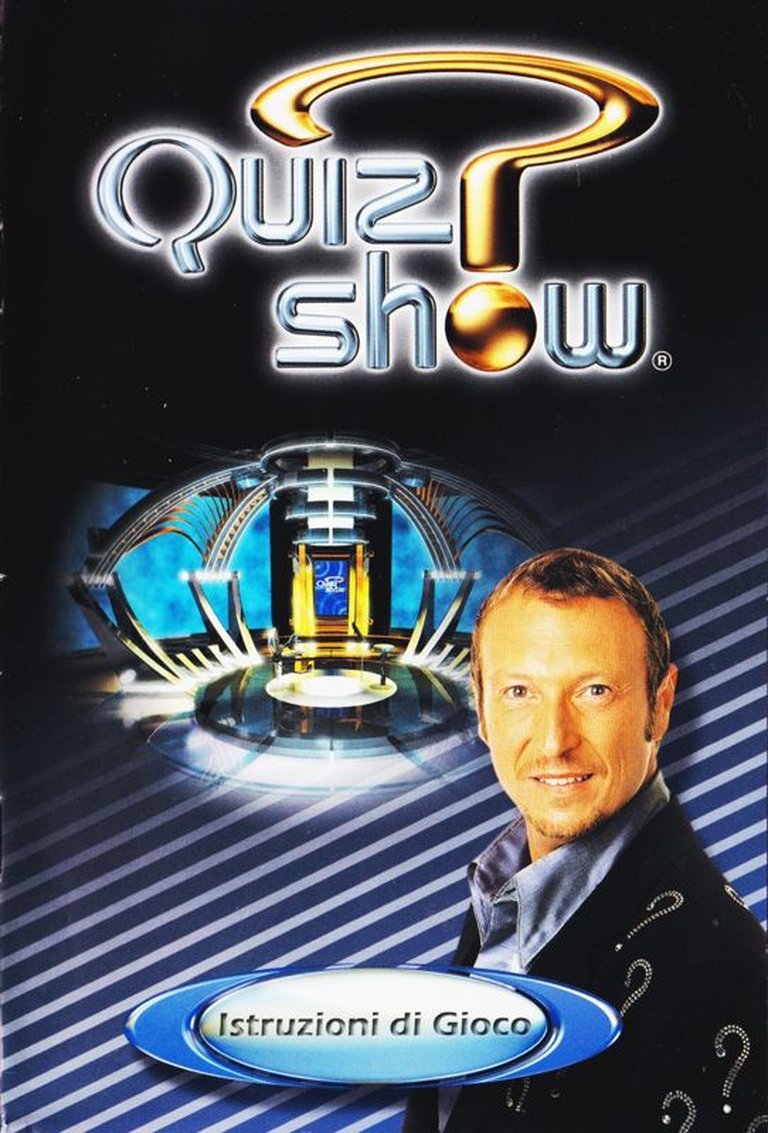
Quiz Show is a 2001 video game adaptation of the popular Italian TV game show ‘Quiz Show: il grande gioco di Rai Uno,’ available on Windows and PlayStation, where players compete against charismatic host Amadeus in trivia challenges to win up to 512 million virtual Lira. The game immerses players with authentic audio and video clips featuring hosts Amadeus and Donna Fortuna, plus a backstage area offering glimpses into the hosts’ dressing rooms and excerpts from the real television program.
Where to Buy Quiz Show
PC
Quiz Show Cracks & Fixes
Quiz Show: Review
Introduction
Imagine stepping onto the glittering stage of Italy’s most electrifying primetime spectacle, the spotlight hot on your face, as charismatic host Amadeus grins and challenges you to conquer ten grueling questions for a jackpot of 512 million virtual lire. Quiz Show (2001), the digital adaptation of Rai Uno’s hit television program Quiz Show: il grande gioco di Rai Uno, promised exactly that—a faithful recreation of the high-stakes quiz frenzy that captivated Italian audiences from 2000 to 2002. In an era when video games were exploding into 3D worlds and online multiplayer, this unassuming trivia title carved a niche as a licensed TV tie-in, blending real celebrity footage with interactive quizzing. Its legacy? A forgotten gem of regional entertainment software, emblematic of early 2000s efforts to bridge broadcast TV and home gaming. My thesis: While mechanically solid for casual play, Quiz Show‘s hyper-localized Italian focus and lack of innovation relegate it to obscurity, yet it endures as a cultural artifact preserving a slice of millennial TV nostalgia amid the quiz genre’s evolution.
Development History & Context
Quiz Show emerged from a collaboration between British developer Warthog Plc—known for licensed fare like Disney’s The Emperor’s New Groove—and Italian studio Einstein Multimedia s.r.l., with publishing handled by Eon Digital Entertainment and Halifax S.R.L. Released on November 30, 2001, for Windows (and simultaneously for PlayStation in Italy), it rode the wave of TV adaptations during the twilight of the PS1 era. The PlayStation lifecycle was winding down, with Sony’s PS2 launching in 2000 and dominating by 2001; meanwhile, PC gaming was pivoting toward MMOs and RTS giants like Diablo II and Warcraft III. Quiz games weren’t mainstream yet—titles like Who Wants to Be a Millionaire? adaptations existed, but the genre awaited the motion-controlled party boom of Buzz! (2005) and Wii Party.
Technological constraints shaped its modest ambitions: CD-ROM delivery on PS1 (with a second disc for backstage content) and Windows via keyboard/mouse input. Warthog’s vision mirrored the source material—a 512-second gauntlet of escalating trivia, drawn from the real Rai Uno show hosted by Amadeus (Amedeo Sebastiani), inspired by formats like Who Wants to Be a Millionaire? but localized with Italian flair. Development likely prioritized authenticity: licensing real audio/video clips of Amadeus and co-host Donna Fortuna, plus backstage peeks into dressing rooms. In Italy’s gaming landscape, dominated by imports amid a nascent local scene, this was a bold push for culturally resonant content. Globally, it coincided with trivia’s arcade roots (e.g., the unrelated 1976 Quiz Show by Kee Games/Atari, using 8-track tapes for questions), but Quiz Show (2001) reflected CD-ROM’s multimedia potential, squeezing video assets onto spinning discs in an age before streaming.
Narrative & Thematic Deep Dive
At its core, Quiz Show eschews traditional plots for the episodic rhythm of its TV progenitor: you, the contestant, face Amadeus in a pressure-cooker quiz bowl. The “narrative” unfolds across ten questions of mounting difficulty, each worth escalating lire prizes up to 512 million—mirroring the show’s real mechanics, where 512 seconds ticked down amid swelling tension. Themes revolve around knowledge as power, the thrill of the gamble, and celebrity charisma; Amadeus isn’t just a host but a digital antagonist, his quips and reactions (via licensed clips) personifying the show’s glitzy allure.
Characters shine through authenticity: Amadeus, the smooth-talking maestro with his signature suits and banter, embodies aspirational fame; Donna Fortuna adds glamour as the prize presenter, her video cameos evoking the live audience’s cheers. Dialogue, pulled directly from the broadcast, crackles with Italian wit—phrases like rapid-fire trivia prompts and victory taunts immerse players in Rai Uno’s bombast. Backstage unlocks peel back the curtain: dressing room tours and archival clips humanize the stars, theming around “behind-the-fame” voyeurism. Subtly, it explores trivia’s democratizing force—anyone with smarts could claim the jackpot—contrasting 2001’s elite gaming narratives (Grand Theft Auto III, Halo). Flaws emerge in repetition: no branching stories or player agency beyond answers, making it feel like interactive TV rather than a game world. Yet, this fidelity cements its thematic triumph: a love letter to Italian pop culture, where intellect trumps reflexes.
Gameplay Mechanics & Systems
Quiz Show‘s loop is pure quiz distillation: select a category pool, compete solo or with 1-3 friends (up to 4 on PS1), and buzz in via buttons to answer multiple-choice queries. Core progression ladders through ten tiers, with time pressure (512 seconds total) and point bonuses for speed. Wrong answers deduct lire, heightening risk; lifelines? Absent here, unlike Millionaire, forcing raw recall. UI is clean—bold fonts, studio lights flashing, host reactions syncing to inputs—but PS1-era clunkiness shows: load times for video clips stutter, and mouse/keyboard on PC feels precise yet unpolished.
Innovations are sparse but charming: a “backstage” hub rewards high scores with unlocks—clips, photos, host trivia—adding metaprogression. Multiplayer shines for parties, pitting friends against Amadeus in hot-seat rounds. Flaws abound: question banks (likely thousands, per TV format) repeat in short sessions; no online leaderboards (pre-Xbox Live ubiquity); and strategy/tactics genre tag feels aspirational—it’s trivia, not chess. Combat? Metaphorical, via verbal duels. Progression halts at jackpot or bust, looping endlessly. Compared to kin like Jeopardy! (2010), it’s rigid; yet, for 1-2 players (per specs), it nails casual replayability, evoking arcade quizzes’ simplicity.
| Mechanic | Strengths | Weaknesses |
|---|---|---|
| Quiz Loop | Tense escalation, real host FMV | Repetitive questions |
| Multiplayer | Up to 4 players, hot-seat fun | No async or online |
| Unlocks | Backstage media rewards | Linear, shallow depth |
| Controls/UI | Intuitive KB/mouse | Clip load lag on PS1 |
World-Building, Art & Sound
The “world” is Rai Uno’s studio: neon podiums, cheering crowds (stock footage), and jackpot boards pulsing like a casino. Visuals leverage PS1/Windows limits—2D sprites, pre-rendered FMV clips of Amadeus smirking or Fortuna unveiling prizes—creating immersive verisimilitude. Backstage expands this: virtual dressing rooms with interactive clips feel like a DVD extra, blending game and documentary. Atmosphere? Pure TV adrenaline—spotlights flare, timers beep ominously, crowds roar via sampled audio.
Art direction prioritizes fidelity over flair: static studio renders lack dynamism, but licensed assets elevate it beyond generic quizzes. Sound design steals the show: Amadeus’s velvety Italian voiceovers, Fortuna’s melodic intros, and orchestral stings sync perfectly, immersing Italians in nostalgia. Ambient cheers and tension-builders amplify stakes, contributing to a “you are there” vibe. Drawbacks: low-res FMV ages poorly, and non-Italian speakers miss nuance. Collectively, these forge an atmospheric time capsule, where art/sound aren’t revolutionary but evoke the era’s TV-gaming crossover dreams.
Reception & Legacy
Launch reception? Muted. No critic reviews on MobyGames; one player rates it 1.6/5, decrying shallowness amid 2001 heavyweights (GTA III, Devil May Cry). Commercially, Italy-only focus (no English localization) doomed exports—collected by mere 3-4 enthusiasts today. Reputation evolved minimally: preserved on MobyGames/LaunchBox as trivia obscura, it whispers influence on later TV quizzes (Buzz! The Big Quiz, 2006; Family Quiz, 2010). Broader impact? Trivial—quiz genre bloomed post-2005 with motion controls, but Quiz Show prefigures licensed multimedia (e.g., The 1UP Show). Ties to 1976 arcade Quiz Show (Kee Games’ tape-driven trivia) underscore genre persistence, yet 2001’s version fades as regional footnote. Cult status? Among Italian retro fans, yes—backstage content preserves Rai history.
Conclusion
Quiz Show distills Rai Uno’s electric quiz frenzy into playable form, excelling in authentic host cameos, tense trivia loops, and cultural snapshot—but stumbles on repetition, localization limits, and era-bound tech. In video game history, it occupies a liminal space: not innovative like Pong (1972) or profound like The Sims (2000), but a vital relic of TV-gaming synergy amid PS1’s end. Verdict: 7/10 for nostalgia hounds; essential for Italian historians, skippable otherwise. Unearth it for a 512-second nostalgia hit—proof trivia’s timeless, even if this entry stays virtually bankrupt in legacy.