
- Release Year: 2006
- Platforms: Windows
- Publisher: TERMINAL Studio
- Developer: TERMINAL Studio
- Genre: Driving, Racing
- Perspective: Diagonal-down
- Game Mode: Single-player
- Gameplay: 3D graphics, Power-ups, Race Selection, Speed Modifiers
- Setting: 3D environment, Race tracks
- Average Score: 62/100
Description
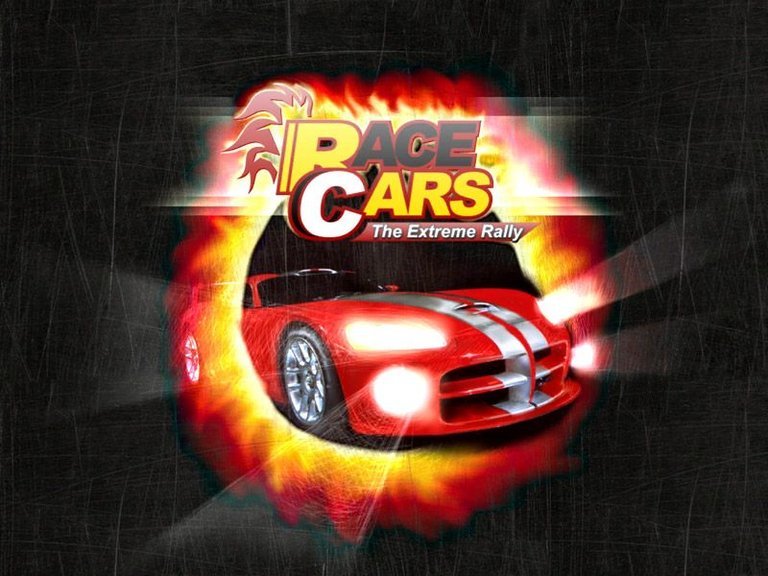
Race Cars: The Extreme Rally is a 2006 racing game that offers players a selection of 12 different cars and 15 unique tracks, all rendered in 3D graphics. The game features a variety of power-ups, including acceleration boosts, slow-down effects, ghost car mode, and slow motion for opponents. Players can choose between quick match and tournament modes, with the latter involving competitive racing for points. The game is controlled using the arrow keys and includes features to help players stay on track, making it a straightforward yet engaging racing experience.
Gameplay Videos
Race Cars: The Extreme Rally Free Download
Race Cars: The Extreme Rally Guides & Walkthroughs
Race Cars: The Extreme Rally Reviews & Reception
giveawayoftheday.com (62.5/100): It’s pretty mediocre, a fact exacerbated by the availability of many freeware and abandonware alternatives.
Race Cars: The Extreme Rally: A Forgotten Arcade Relic Worth Revisiting?
Introduction
In the mid-2000s, the racing genre was dominated by high-budget franchises like Need for Speed and Burnout, leaving smaller developers to carve out niches with experimental or arcade-style offerings. Among these, Race Cars: The Extreme Rally (2006) stands as a curious anomaly—a shareware title from TERMINAL Studio (later rebranded as Playrix) that combined straightforward mechanics with idiosyncratic design choices. This review argues that while the game lacks polish and ambition, its simplicity and nostalgic charm offer a window into the era’s indie racing experiments—for better or worse.
Development History & Context
A Small Studio’s Ambition
Developed by Russia-based TERMINAL Studio—a team of just five credited members, including project lead Evgeniy Solyanov—Race Cars: The Extreme Rally emerged during a transitional period for racing games. By 2006, titles like FlatOut 2 and TrackMania Nations were pushing physics and multiplayer innovation, but TERMINAL Studio opted for a minimalist approach. The game was distributed as shareware, a fading model that prioritized accessibility over complexity, reflecting the team’s limited resources.
Technical Constraints
Built for Windows PCs, the game’s 3D graphics were functional but unremarkable, leveraging basic lighting and textures to render its 15 tracks. The studio’s prior experience with smaller projects (Sergey Gusev, a 3D modeler, had worked on 12 other games) likely influenced the decision to focus on pick-up-and-play mechanics rather than realism.
Narrative & Thematic Deep Dive
A Barebones Racing Fantasy
Race Cars: The Extreme Rally eschews storytelling entirely, positioning players as unnamed drivers competing in a loosely defined global circuit. The lack of narrative is offset by a subtle underdog arc embedded in its progression system: players start with low-tier cars and basic tracks, gradually unlocking faster vehicles like the pseudo-Lamborghini Diablo (“Devil”) and challenging courses through tournament victories.
Rivalry Without Character
The game’s AI opponents lack personalities, though forum reviews note that recurring racers adopt identifiable tactics—one might aggressively ram the player, while another slows down to deploy power-ups. This creates a vague sense of rivalry, albeit one devoid of dialogue or cutscenes.
Gameplay Mechanics & Systems
Arcade Simplicity, Flawed Execution
The core loop revolves around two modes:
– Quick Match: Instant races on unlocked tracks.
– Tournament: A series of races where points determine unlockables.
Controls are rudimentary (arrow keys for movement, C for camera adjustments, R for resetting crashed cars), but players criticized the “floaty” physics and disorienting fixed camera angles. Steering oscillates between overly stiff (“rail-like” on Easy mode) and uncontrollably slippery on harder difficulties, leading to frequent spinouts.
Power-Ups as Strategic Crutches
Four power-ups appear randomly on tracks:
1. Acceleration: Temporarily boosts speed.
2. Slow Down: Reduces rivals’ pace.
3. Ghost Car: Enables phasing through obstacles.
4. Slow Motion: Slows all opponents.
While these add tactical depth, their placement often feels arbitrary, with Slow Motion proving disproportionately impactful in final laps.
Progression Grind
Unlocking all 12 cars and 15 tracks requires grinding tournaments—a design choice lambasted in player reviews as repetitive. The “8-lap races” in later events exacerbate this issue, testing patience more than skill.
World-Building, Art & Sound
Aesthetic highs and Lows
The game’s tracks span deserts, forests, and coastal roads, with passable 3D models for landmarks like windmills and cacti. However, low-poly cars and reused assets (e.g., generic “urban” tunnels) undermine immersion. Lighting effects—sun glare on dunes, mist over alpine roads—hint at unfulfilled ambition.
Sound Design: A Missed Opportunity
The soundtrack consists of forgettable techno loops, described by one reviewer as “noisy” and “sample-heavy.” Players can replace these tracks with custom .ogg files, a rare concession to customization. Engine sounds are equally generic, with no distinction between vehicle types.
Reception & Legacy
Mixed Reviews, Limited Impact
At launch, Race Cars: The Extreme Rally garnered little critical attention, likely due to its shareware status and budget presentation. User reviews on forums like Giveaway of the Day paint a divided picture:
– Praise: Accessible fun for casual players; nostalgic “bird’s-eye view” reminiscent of DOS-era racers.
– Criticism: “Messed-up” controls, repetitive unlocks, and a lack of depth compared to contemporaries like TORCS.
A Fading Legacy
The game’s influence on subsequent titles is negligible, though it remains a cult curiosity among abandonware enthusiasts. Its auto-reset mechanic—forcibly keeping players on-track—foreshadowed modern arcade racers’ aversion to open exploration.
Conclusion
Race Cars: The Extreme Rally is neither a hidden gem nor a catastrophic misfire. It is, instead, a relic of mid-2000s indie experimentation—a game constrained by its budget yet unintentionally revealing of the era’s design trends. While its clunky physics and repetitive structure frustrate, there’s charm in its unpretentious focus on speed and simplicity. For retro racing fans, it’s worth a brief nostalgic detour; for others, it serves as a historical footnote in the evolution of arcade driving games. 5.5/10