
- Release Year: 2018
- Platforms: Nintendo Switch, PlayStation 4, Windows, Xbox One
- Publisher: Handy-Games GmbH, THQ Nordic GmbH, Worker Bee Inc.
- Developer: Slipgate Studios ApS
- Genre: Action
- Perspective: Side view
- Game Mode: Co-op, Single-player
- Gameplay: Platform
- Average Score: 65/100
Description
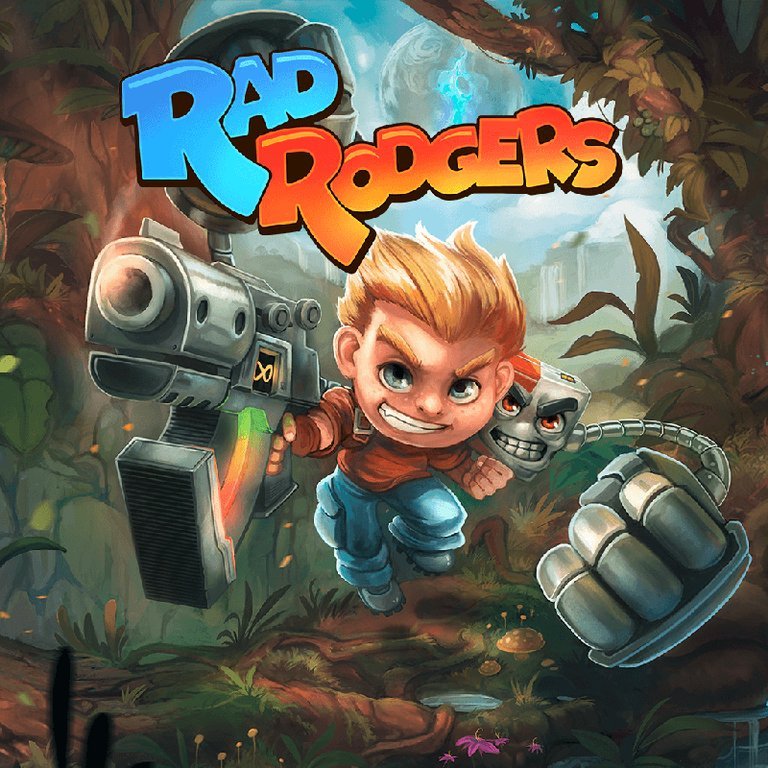
Rad Rodgers is a 2D side-scrolling platformer that channels the spirit of 1990s classics, featuring direct-control action gameplay where players guide the young hero Rad through vibrant levels filled with platforming challenges, enemies, and interactive elements, accompanied by his sentient Xbox console companion Dusty in a nostalgic, pixel-art infused adventure across multiple worlds.
Gameplay Videos
Where to Buy Rad Rodgers
Rad Rodgers Free Download
Rad Rodgers Cracks & Fixes
Rad Rodgers Guides & Walkthroughs
Rad Rodgers Reviews & Reception
metacritic.com (66/100): Old-school gameplay with new-school graphics and a lot of (rude) humour… Sign us up!
thirdcoastreview.com : less of a nostalgic trip, and more of a grating slog.
opencritic.com (64/100): Rad Rodgers is a familiar yet satisfying platformer that doesn’t always hit all the high notes, but it does so often enough to feel like a hit.
waytoomany.games : still a very good time, but it’s short and could use more enemy variety.
bigredbarrel.com : Although it makes a good first impression, Rad Rodgers suffers from diminishing returns.
Rad Rodgers: Review
Introduction
Imagine a pixelated vortex swirling on your dusty old console screen, sucking you—kick, scream, and all—into a neon-drenched jungle where your gaming rig sprouts arms, grabs a gun, and starts trash-talking like a chain-smoking uncle from the ’90s. This is the gonzo premise of Rad Rodgers, a 2.5D platformer that blasts players back to the era of Commander Keen, Jazz Jackrabbit, and shareware demos, but with a modern Unreal Engine 4 polish and enough crude humor to make Conker blush. Originally crowdfunded on Kickstarter as Rad Rodgers: World One in 2016, it emerged in full “Radical Edition” glory in 2018 across PC, PlayStation 4, Xbox One, and later Nintendo Switch. As a game historian, I see Rad Rodgers as a spirited, if flawed, love letter to Apogee Software’s golden age of PC platformers—a title that captures the chaotic joy of ’90s gaming while stumbling over its own platforming pitfalls. My thesis: Rad Rodgers nails the nostalgic highs of retro run-and-gun action but crashes into repetition, imprecise controls, and juvenile gags, cementing it as a cult curio rather than a genre revival.
Development History & Context
Slipgate Studios ApS, a Danish outfit with roots in the Rise of the Triad remaster and ties to 3D Realms (the Duke Nukem and Apogee legends), helmed Rad Rodgers under game director Frederik Schreiber. Associate producers like Cliff Bleszinski (Gears of War) and Mark Rein (Epic Games) lent heavyweight cred, signaling ambitions to blend old-school id Tech vibes with Unreal Engine 4’s visual flair. Funded via Kickstarter in October 2016, the project evolved from a barebones Early Access “World One” (November 2016) into the 2018 Radical Edition, published by THQ Nordic GmbH alongside HandyGames and Worker Bee Inc.
The vision was pure retro revival: resurrect ’90s PC platformers like Commander Keen (with protagonist Rad channeling Keen’s helmeted boy-genius) and Jazz Jackrabbit‘s blistering pace, but amp up the edge with gore, swearing, and fourth-wall breaks. Technological constraints were minimal thanks to UE4, enabling intricate 2.5D levels, dynamic backgrounds, and features like photo mode and completion tracking—luxuries absent in the DOS era. Yet, echoes of shareware limitations persist: short runtime (4-6 hours), non-cumulative collectibles, and no mid-level warps.
Launched amid a platformer renaissance (Celeste, Dead Cells, Shovel Knight), Rad Rodgers targeted nostalgic millennials craving ’90s excess in a market flooded with precise indies. Priced affordably ($19.99 at launch, now ~$2 on Steam), it rode THQ Nordic’s wave of remasters (Wreckfest, Spice and Wolf), but early Access bugs and sequel teases (World Two never materialized) underscored indie pitfalls in a post-Kickstarter landscape wary of unfulfilled promises.
Narrative & Thematic Deep Dive
Rad Rodgers kicks off with archetypal ’90s kid rebellion: Rad Ricardo Rodriguez, a foul-mouthed gamer brat, defies Mom’s bedtime edict, only to get vortexed into his TV alongside “Dusty,” his anthropomorphic console (voiced by Jon St. John, channeling Duke Nukem’s gravelly swagger). Dusty—gruff, boozy, ex-wife-joking robot—arms Rad for a quest to purge a viral corruption blighting the jungle realm and its Elder Tree. Plot beats are sparse: eight main levels, mid-bosses, pogo-stick chases, and a final showdown, framed as a “game-within-a-game” meta-fable.
Characters shine through banter. Rad’s “Radical!” yelps and pop-culture quips (“I have the power!” on grabbing a spiky bat) evoke Bart Simpson meets Keen, while Dusty’s crass asides (“You’re a psychopath in the makin’, kid!” or “So this is what 3.5 inches tastes like” at floppy-disk checkpoints) deliver immature edge. Hidden NPCs spew toilet humor (butt-plugs, child-selling jabs), underscoring themes of arrested adolescence—Rad’s eternal gamer kid trapped in pixel purgatory, Dusty as jaded adult surrogate. Fourth-wall breaks (Dusty griping about “lazy developers”) satirize gaming tropes, from glitchy code to unskippable dialogues.
Thematically, it’s Trapped in TV Land with Conker-esque vulgarity: nostalgia as double-edged sword, celebrating ’90s excess (gore, MIDI chiptunes) while lampooning repetition (recycled lines grate by level three). Kid-mode toggles blood/swears, nodding inclusivity, but uncensored it’s a teen’s “edgy” fantasy—funny initially, exhausting later. No deep lore, but Easter eggs (Dopefish cameo) reward historians, positioning it as self-aware homage over epic saga.
Gameplay Mechanics & Systems
Core loop: side-scroll left-to-right (with verticality), collect four exit shards, slaughter foes, hunt gems/hats/secrets amid traps (spikes, lasers, TNT). Combat blends run-and-gun (Jazz Jackrabbit) with platforming (Ruff ‘n’ Tumble): seven weapons (machine gun, grenades, phoenix flamethrower, Excali-bat invincibility) pack punchy feedback, best with gamepad/keyboard. Dusty aids via climbs (arm-pulling Rad) or Pixelverse dives—top-down mazes where Dusty punches enemies, dodges electrified walls, and “fixes” glitches (replacing platforms, nuking barriers). Checkpoints (floppy disks) and three-heart/lives system evoke era authenticity, with infinite-lives easy mode for accessibility.
Progression: hats unlock via secrets (cosmetics only), leaderboards track completion, 1-2P local co-op adds replay. UI is clean—direct control, percentage trackers—but flaws abound: imprecise jumps (slippery physics, wonky hitboxes), dumb AI (foes loop aimlessly or glitch-stuck), non-cumulative 100% runs force restarts. Pixelverse feels tacked-on (health-draining mazes, pointless tedium), pogo levels gimmicky padding. No skill trees, just power-ups. Innovative? Meta-glitches add flavor, but execution falters—frustrating ramps demand retries, controls lack twin-stick polish (jump on face buttons, spotty lock-on).
| Mechanic | Strengths | Weaknesses |
|---|---|---|
| Platforming | Varied secrets, loop-back design minimizes backtracking | Imprecise, slow acceleration; rope swings glitchy |
| Combat | Satisfying weapons, gore impact | Poor AI, tanky foes, repetitive enemies (4 types dominate) |
| Pixelverse | Novel meta-puzzle change-up | Frustrating mazes, rapid health drain, immersion-breaking |
| Progression/UI | Hats, photo mode, kid-mode toggle | No partial saves, unskippable dialogues, crashes (early reports) |
Overall, solid ’90s mimicry undermined by modern expectations of tightness.
World-Building, Art & Sound
Settings corrupt a vibrant jungle: foregrounds bustle with Pixar-esque detail (animated foliage, parallax scrolls), but busy visuals obscure enemies/items—foreground vines block jumps, low-res backgrounds jar. Atmosphere nails ’90s weirdness: glitch rifts, viral decay (berserk wildlife), secret huts with quipping NPCs. Levels distinguish via biomes (ruins, forests), unfolding dynamically (backgrounds approach as you progress).
Art direction: 2.5D UE4 splendor—bold colors, particle effects (on max settings)—blends 16-bit pixel homage with 3D depth. Soundtrack by Andrew Hulshult (MIDI-synth rock, ’90s cartoon pulse) amps adrenaline; SFX crisp (gory splats, weapon booms). Voicework steals: St. John’s Dusty drips sleaze, Rad’s kid squeals charm. Repetition dulls (overused lines), but immersion holds—until Pixelverse’s retro filter clashes.
These elevate experience: visuals/score evoke Saturday-morning binges, but clutter hampers precision.
Reception & Legacy
Critically middling (MobyGames 66%, Metacritic 62-73%), Rad Rodgers split reviewers. Highs (WayTooManyGames 80%, Darkstation 80%): “solid throwback,” “vibrant art, taut pacing.” Lows (GameSpew 50%, Destructoid 3.5/10): “repetitive, frustrating platforming,” “cringe humor wears thin.” Players averaged 2.4/5 (few reviews), griping bugs/shortness. Commercial? Modest—31 MobyGames collectors, Steam sales via deep discounts; no blockbuster, but Radical Edition fixes buoyed ports (Switch 59%).
Reputation evolved: Early Access flak (bugs, brevity) softened post-2018 patches (new levels, bosses). Influences minimal—niche homage in crowded field (Cuphead, Shovel Knight dominated). Legacy: Bridges Apogee/3D Realms eras, inspires minor retro shooters, but no sequels/industry ripple. Cult status for Duke fans, ’90s vets; forgettable for precision purists.
Conclusion
Rad Rodgers masterfully bottles ’90s platformer essence—brash hero, meta gags, blistering action—in a Radical Edition polishing rough edges, yet imprecise controls, rote AI, grating repetition, and Pixelverse drudgery capsize its potential. Vibrant art, killer soundtrack, and St. John’s Dusty deliver nostalgic kicks, but it fizzles as short, silly romp. In gaming history, it’s a footnote: spirited Apogee spiritual successor, evoking shareware joy sans transcendence. Verdict: 7/10—grab on sale for retro binges, skip for modern mastery. Radical… ish.