
- Release Year: 2007
- Platforms: Windows
- Publisher: Electronic Arts, Inc.
- Developer: Kuju Entertainment
- Genre: Simulation
- Perspective: 1st-person
- Game Mode: Single-player
- Gameplay: Customization, Driving, Editor, Management, Mission-based
- Setting: Real-world
- Average Score: 73/100
Description
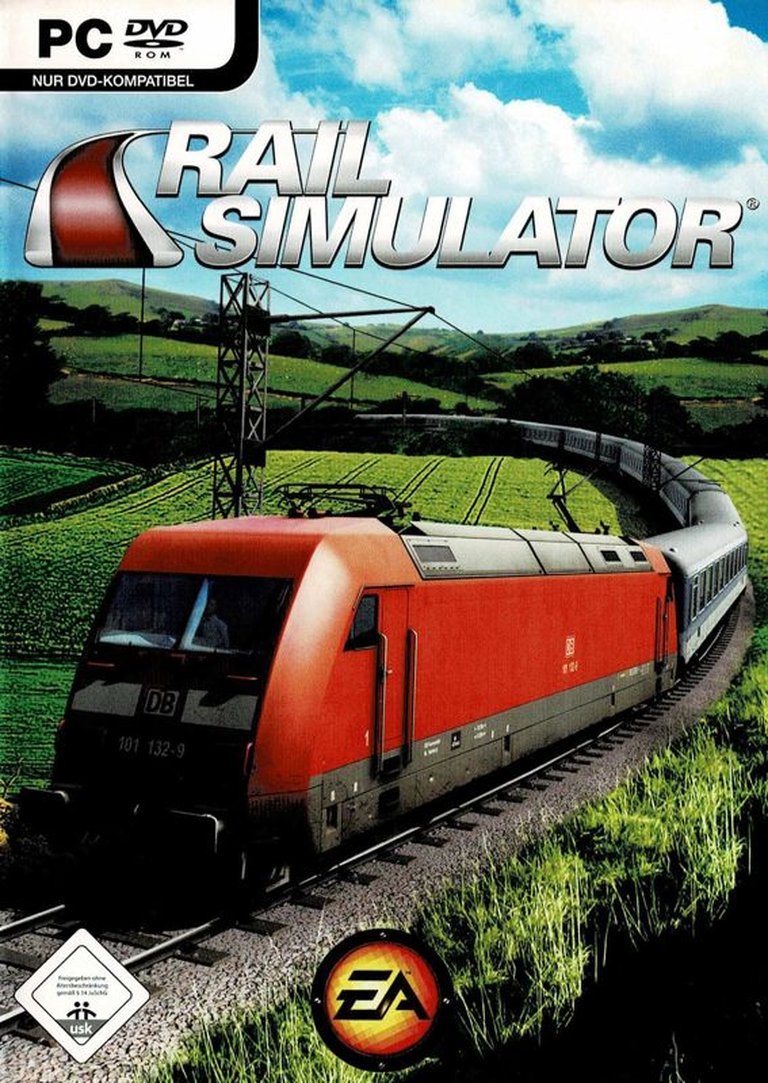
Rail Simulator is a detailed train simulation game released in 2007 where players control trains across historically accurate routes including Oxford-Paddington, Bath Green Park-Templecomb, Newcastle-York, and Hagen-Siegen. Offering three difficulty levels, the game allows novices to manage basic speed controls while professionals manually operate intricate levers and switches using mouse or keyboard input. Players can choose from various diesel, electric, and steam trains in free play mode or complete 15 diverse missions involving traditional tasks like cargo transport and unique challenges such as ferrying soccer fans.
Gameplay Videos
Where to Buy Rail Simulator
PC
Rail Simulator Free Download
Rail Simulator Cracks & Fixes
Rail Simulator Patches & Updates
Rail Simulator Mods
Rail Simulator Reviews & Reception
metacritic.com (72/100): More of a step forward than a revolution, Rail Simulator is still undoubtedly improvement over the previous generation of train simulation.
eurogamer.net : The layout of the driver guide panel doesn’t help matters.
ign.com (70/100): It simulates trains, too.
Rail Simulator: Review
Introduction
The rhythmic chuff of a steam locomotive, the distant cry of a station announcer, the weight of responsibility in your hands as you command a hundred tons of steel—few experiences capture the romance and precision of railroads like a truly authentic train simulation. Rail Simulator, released in October 2007 by Electronic Arts and developed by Kuju Entertainment, arrived with the ambitious promise of redefining the genre. Building upon the legacy of Microsoft Train Simulator (2001), it aimed to deliver unparalleled realism through advanced physics, detailed cab controls, and robust editing tools. Yet, this digital odyssey would become a study in contrasts: a triumph for rail enthusiasts and a cautionary tale for mainstream gamers. This review deconstructs Rail Simulator not merely as a game, but as a cultural artifact that bridged the gap between hardcore simulation and the burgeoning digital railway community, ultimately leaving an indelible mark on the genre’s evolution.
Development History & Context
Rail Simulator emerged from the fertile soil of Kuju Entertainment’s simulation expertise. The UK-based studio, veterans of Microsoft Train Simulator’s million-selling success, sought to create a spiritual successor that leveraged their decade of railway knowledge. Announced in 2005 with Electronic Arts as European publisher, the project emphasized cutting-edge realism: a proprietary engine powered by Ageia PhysX (later NVIDIA PhysX) for nuanced wheel-rail adhesion and pantograph dynamics, alongside support for NASA’s DEM data for terrain mapping. This was a deliberate bid to outpace competitors like Trainz, which relied on more accessible but less physics-driven approaches.
The development team, including luminaries like Jonathan Newth (Managing Director) and Tim Gatland (later CEO of RailSimulator.com Ltd.), faced significant challenges. Balancing simulation depth with accessibility proved contentious. While keyboard/mouse controls simplified entry, the absence of specialized peripherals like throttle controllers alienated some purists. Budget constraints dictated a launch with four routes totaling 1,900 km and eight locomotives—modest by later standards but ambitious for 2007.
The gaming landscape was ripe for disruption. Microsoft Train Simulator’s modding ecosystem demonstrated immense enthusiast demand, but its dated graphics limited its longevity. Rail Simulator positioned itself as the “next generation,” though EA’s delayed North American release (January 2008) and initial technical flaws undermined its momentum. Critically, Kuju disbanded the post-launch team, handing stewardship to Rail Simulator Developments Ltd (RSDL)—a spin-off formed by core developers. This shift ensured the game’s longevity through community support, setting the stage for its sequel, RailWorks (2009).
Narrative & Thematic Deep Dive
As a simulation, Rail Simulator eschews traditional narratives in favor of experiential storytelling. Its “plot” unfolds through scenarios that mirror real-world rail operations: the tension of hauling freight uphill, the rhythm of commuter schedules, and the whimsy of transporting British soccer fans to a cup final. These missions—15 in total—serve as micro-narratives, each demanding adherence to timetables, speed limits, and safety protocols.
The underlying themes are rooted in authenticity and responsibility. Players experience the mundane yet critical tasks of a train driver: managing boiler pressure in a steam locomotive, coordinating with AI signalmen at junctions, or navigating dynamic weather that reduces traction. The game’s “no tutorial” ethos reinforces a theme of mastery: novices control speed alone, while experts manage 30+ cab controls, fostering a sense of progression from simple operator to virtuoso conductor.
Even free-roam mode carries thematic weight. The absence of scripted goals emphasizes the contemplative beauty of rail travel—watching landscapes blur past at dusk, listening to the Doppler effect of distant trains. This duality between structured tasks and open-ended exploration captures the soul of railways: a blend of precision and poetry. However, the absence of characters or dialogue limits deeper narrative engagement, reducing the experience to a solo journey through steel and scenery.
Gameplay Mechanics & Systems
Rail Simulator’s core loop revolves around locomotive control across three difficulty tiers. In “Simple,” novices manage speed alone; “Standard” introduces basic brakes and signals; “Expert” demands mastery of reversers, sanders, and dynamic braking. This tiered approach accommodates all skill levels, though the steep learning curve—exacerbated by minimal tutorials—frustrated newcomers.
Physics simulation is the game’s crown jewel. Kuju modeled wheel-rail adhesion, where excessive throttle causes slippage on gradients. Electrics feature pantograph arcing during crosswinds, while steam locomotives require diligent boiler management. Braking systems vary by load and grade, making stops feel weighty and realistic. Dynamic weather further complicates operations: rain reduces friction, demanding proactive sanding.
Gameplay modes split between scenario-driven challenges and free-roam exploration. Missions include freight hauls (Newcastle–York), commuter runs (Oxford–Paddington), and quirky tasks like ferrying soccer fans. Success hinges on punctuality and safety, with performance tracked via timetables. Free-roam, however, suffers from predictability: AI traffic and signals remain static, limiting replay value.
Innovation lies in the editing suite. The World Editor allows terrain modeling via NASA DEM imports, while spline-based tracklaying enables complex junctions. The Scenario Editor scripts events like derailments, and the Blueprint Editor imports custom assets. These tools democratized content creation, though their complexity required external guides. Critically, multiplayer and AI pathing bugs marred launch stability—signalmen often failed to set points, causing collisions.
World-Building, Art & Sound
Rail Simulator’s world is a meticulously crafted tapestry of real-world routes. The European edition features four 150 km journeys: the Bath Templecombe line (1950s Somerset & Dorset Railway), the Thames Valley (2000s), Newcastle–York (1970s), and Hagen–Siegen (1990s Germany). The American version added the Barstow–San Bernardino Cajon Pass route, replete with Union Pacific freight. Each route captures distinct eras—from steam-era rural England to electrified German commuter lines—fostering a sense of historical immersion.
Visual fidelity is a mixed legacy. Cab interiors are breathtaking: dials glow, levers clatter, and warning stickers include phonetic alphabet charts. Exterior models boast grime and weathering, though foliage often penetrates windshields—a jarring technical flaw. Landscapes, while expansive, suffer from repetitive tree models and “tunnel rain.” Dynamic lighting and day/night cycles enhance atmosphere, but low-resolution textures on distant objects break immersion.
Sound design elevates the experience. The chuff of steam engines syncs with piston movements, diesel engines roar authentically, and ambient sounds—birdsong, station announcements—paint vivid sonic landscapes. Yet urban areas feel underdeveloped, lacking crowd noise or announcements. This auditory richness compensates for visual shortcomings, making the game a rare audio-visual triumph for rail buffs.
Reception & Legacy
Upon release, Rail Simulator received mixed reviews, reflecting its niche appeal. Metacritic scored it 72/100, with IGN praising its realism but criticizing its “dated graphics” and “steep learning curve.” Eurogamer lamented the lack of dynamic traffic, while Cheat Code celebrated its “strangely satisfying” mechanics. Enthusiasts lauded the editing tools, but newcomers found the “no tutorial” approach alienating. Commercial success was moderate: strong in Europe but hampered in North America by EA’s delayed release and launch bugs.
The game’s true legacy lies in its community. RSDL’s patches (Mk1 and Mk2) fixed critical issues, while official expansions added routes and locomotives. Crucially, the modding scene exploded: platforms like UKTrainSim hosted 20,+ user-generated routes, preserving the game for over a decade. This grassroots innovation directly influenced RailWorks (2009) and the long-running Train Simulator series, which evolved into Dovetail Games’ flagship franchise. By 2025, Rail Simulator remains playable as Train Simulator Classic on Steam, a testament to its enduring appeal among modders.
Ironically, its flaws—poor AI, technical bugs—sparked the community-driven support that defined its legacy. As Eurogamer noted, its success hinged on “what tools the developer delivers and what the community creates.” Rail Simulator thus became a blueprint for simulation games that thrive on player creativity.
Conclusion
Rail Simulator is a flawed masterpiece—an ambitious technical achievement that prioritized authenticity over accessibility. Its physics simulation and editing tools remain benchmarks for the genre, while its world-building captures the soul of rail travel. Yet, the absence of tutorials and launch bugs alienated mainstream audiences, relegating it to a niche experience.
In retrospect, Rail Simulator’s greatest legacy is not its commercial performance, but its role as a catalyst for community-driven simulation. By empowering players to create and share content, it transformed a niche hobby into a living, breathing digital railway network. Its evolution into Train Simulator Classic underscores its enduring impact: a testament to the power of realism and the passion of rail enthusiasts. For purists, it remains the definitive digital conductor’s seat; for historians, a pivotal moment in simulation gaming. Though it may never achieve mainstream acclaim, Rail Simulator chugs onward—a steel testament to the enduring romance of the rails.