
- Release Year: 2011
- Platforms: Windows
- Publisher: FreshGames, LLC, Intenium GmbH
- Developer: FreshGames, LLC
- Genre: Action, Farming, Simulation, Strategy, Tactics
- Perspective: Diagonal-down
- Game Mode: Single-player
- Gameplay: Point and select, Time management
- Setting: Fantasy
Description
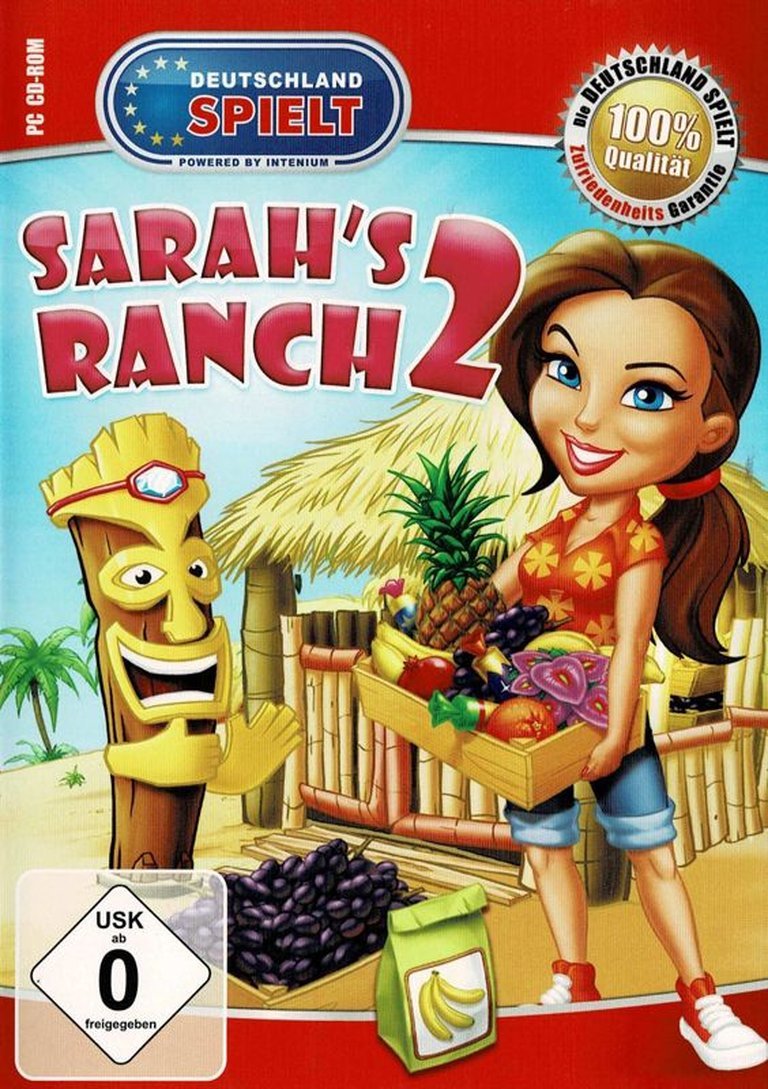
In Ranch Rush 2: Sara’s Island Experiment, players join Sara and her new friend Coco on a tropical adventure. Manage crops, animals, and machines in fast-paced time management gameplay while facing surprises and possible villainous interference. Collect coins through fishing and other activities to upgrade the ranch and decorate it. Meet daily goals to expand Sara’s exotic farming enterprise.
Gameplay Videos
Ranch Rush 2: Sara’s Island Experiment Free Download
Ranch Rush 2: Sara’s Island Experiment: Review
Introduction
In the sun-drenched golden age of casual gaming, few genres captured the escapist spirit quite like time management simulations. Among its brightest stars, Ranch Rush 2: Sara’s Island Experiment emerges not merely as a sequel, but as a vibrant tropical odyssey that expands upon its predecessor’s foundational charm. Released by FreshGames, LLC in 2010-2011 across Windows, Mac, iOS, and Flash platforms, this title transports players to an azure paradise where farming ambition meets island mystique. While it adheres to the genre’s established rhythms of planting, harvesting, and customer service, Ranch Rush 2 distinguishes itself through meticulous environmental storytelling, innovative mechanics, and a personality-infused narrative centered on its indomitable protagonist, Sara. This review will argue that Ranch Rush 2 represents a masterful refinement of the time management formula—a polished, accessible experience whose tropical allure and thoughtful gameplay loops cement its legacy as a quintessential entry in the casual gaming canon.
Development History & Context
FreshGames, LLC, the creative studio behind the original Ranch Rush (2008), embarked on Ranch Rush 2 with a clear vision: to evolve their signature gameplay by transplanting it from a rustic farm to an exotic island. This shift wasn’t merely aesthetic; it demanded systemic innovation to accommodate tropical crops, exotic fauna, and maritime activities. The era’s technological constraints—modest system requirements (1.0 GHz processor, 512 MB RAM) and reliance on Flash for web versions—shaped the game’s approachable, colorful art style and responsive point-and-click interface.
Released during the genre’s peak (2010-2011), Ranch Rush 2 navigated a crowded market dominated by titles like Farm Frenzy and Virtual Villagers. FreshGames differentiated their product through three key strategic decisions:
1. Platform Agnosticism: Launching on PC, Mac, iOS, and Flash maximized accessibility, adapting to both desktop gamers and mobile audiences.
2. Collector’s Edition Premiums: Exclusive modes like “Freeplay” and unlockable trophies (18 in total, per MobyGames) incentivized premium purchases.
3. Cross-Media Synergy: Integration with Apple Game Center on iOS (49 achievements, leaderboards) leveraged emerging social gaming trends.
The game’s distribution through portals like Big Fish Games and GameHouse further cemented its presence in the casual gaming ecosystem, while its inclusion in the German anthology Die Grosse Klick-Management Kollektion (2012) signaled lasting regional appeal.
Narrative & Thematic Deep Dive
At its core, Ranch Rush 2 spins a tale of entrepreneurial ambition against a tropical backdrop. Sara, the spunky protagonist from the original game, trades her rural roots for an island vacation where she encounters “plenty of surprises, and maybe even a villain” (MobyGames). This setup introduces thematic duality: the idyllic promise of paradise versus the pragmatic challenges of building an agricultural empire. The narrative unfolds through light-hearted, spoken dialogue (a rarity for the genre), with Sara’s witty remarks and occasional exasperation (“Oh no, the goat stole my flowers!”) humanizing her as a character.
Supporting characters enrich this world: Coco, her new friend, acts as a foil to Sara’s relentless energy, while mischievous monkeys add comedic chaos by demanding banana bribes for coconut retrieval. The “villain,” though ambiguously defined in the sources, likely represents the encroachment of modernity or environmental challenges—a subtle nod to sustainability themes. Overarching motifs include resourcefulness (upgrading equipment with “Zikar Tokens”), community (interacting with animal neighbors), and escapism (decorating the farm with coins from fishing). The nine-week structure, punctuated by Sunday fishing trips, mirrors real-world rhythms of work and leisure, grounding the fantastical setting in relatable aspiration.
Gameplay Mechanics & Systems
Ranch Rush 2 excels in its layered, time-pressured gameplay, blending familiar farming mechanics with tropical novelties. The core loop revolves around three interconnected systems:
1. Crop & Animal Husbandry: Players cultivate exotic produce (pineapples, pomegranates) and tend to five unique animals (llamas, peacocks, goats). Each requires distinct care—goats “sneak into her pen to steal her milk” (Genki’s Game Gab), demanding vigilance.
2. Production & Logistics: Machines like juicers and ice cream creamers transform raw materials into value-added products, chaining tasks to fulfill customer orders. Stacking commands (e.g., pre-clicking multiple harvests) optimizes efficiency.
3. Fishing Mini-Game: A standout feature where Sara casts lines for progressively larger fish. Avoiding stingrays (“They’ll give Sara a shock!”) and securing treasure chests adds risk-reward tension, with lures unlocking as smaller fish are caught.
Progression unfolds across 165+ levels (iOS) or 120+ (PC), with difficulty escalating via faster customer demands and multitasking needs (e.g., watering crops while milking goats). Upgrades—eight in total—streamline operations, from faster planters to decorative farm elements. The Collector’s Edition extends longevity with Freeplay mode and trophies, rewarding completionists. Critically, the game balances accessibility (Casual mode) with challenge (Expert), ensuring broad appeal. Yet, the early-game pacing can feel sluggish, with the “juicer” and goat unlocking only in later weeks—a potential friction point for impatient players.
World-Building, Art & Sound
The tropical island setting is rendered with meticulous charm, establishing an immersive atmosphere through its vibrant art direction. Environments burst with saturated blues, greens, and yellows, evoking a sense of paradise without veering into cartoonish excess. Character designs—Sara in her practical overalls, mischievous monkeys with oversized grins—prioritize readability while retaining personality. The diagonal-down perspective (per MobyGames) offers a clear, god-like view of the ranch, essential for managing spatial chaos.
Sound design similarly enhances immersion. Cheery, ukulele-infused music underscores the tropical theme, while sound effects—squawking chickens, bubbling juicers—ground actions in reality. Notably, the fishing mini-game shifts to ambient ocean waves, creating auditory contrast. These elements collectively foster a world that feels both fantastical and tactile, where the “wonderful tropical atmosphere” (Big Fish Games) isn’t just backdrop but a character driving Sara’s journey.
Reception & Legacy
Upon release, Ranch Rush 2 was praised for its refined mechanics and engaging presentation. GameZebo awarded it a rare 5-star review, declaring it “a perfect example of a time management game done right,” particularly lauding the fishing mini-game. Players on platforms like Genki’s Game Gab commended its “decent length” and “nice tropical feel,” noting the spoken dialogue as a standout feature. Commercial success stemmed from its multi-platform reach, with iOS versions leveraging Apple Game Center to foster competitive play. However, critical analysis was scarce on MobyGames, where the game remains described only via publisher blurbs—a testament to its casual, mass-market appeal.
Its legacy endures through three avenues:
1. Genre Influence: It popularized the “exotic farming” subgenre, inspiring titles like Gourmet Ranch (2010) and Farm Up by demonstrating how setting novelty could reinvigorate familiar mechanics.
2. Franchise Evolution: As a direct sequel, it expanded the Ranch Rush universe, paving the way for potential future entries while solidifying Sara as an enduring casual icon.
3. Accessibility Advocacy: Its Flash and mobile ports preserved the game’s accessibility for modern audiences, with the Flash Museum version ensuring retro preservation.
Though it never achieved the cultural saturation of FarmVille, Ranch Rush 2 remains a beloved touchstone for time management enthusiasts, valued for its polish and thematic cohesion.
Conclusion
Ranch Rush 2: Sara’s Island Experiment stands as a paragon of time management design—a game where tropical allure meets meticulous gameplay. By refining the original’s formula with exotic crops, a compelling fishing mini-game, and a charismatic protagonist, FreshGames crafted an experience that is both effortlessly engaging and surprisingly deep. While its narrative never reaches profound depth and its innovation is iterative, not revolutionary, the game’s strengths lie in its cohesion: every element, from the vibrant art to the strategic livestock management, reinforces its central theme of paradise-as-playground.
For its era, it was a triumph of accessibility and polish, demonstrating that even in a crowded genre, a fresh setting and player-centric design could create enduring appeal. Today, Ranch Rush 2 is more than a relic of casual gaming’s heyday; it is a masterclass in joyful, low-stakes strategy—a testament to the timeless allure of building a dream farm, one pineapple at a time. Verdict: An essential, sun-soaked chapter in the history of time management games.