
- Release Year: 2024
- Platforms: Nintendo Switch, Windows
- Publisher: the Good Evil GmbH
- Developer: the Good Evil GmbH
- Genre: Adventure, Educational
- Perspective: 3rd-person
- Game Mode: Co-op, Single-player
- Gameplay: Platforming, Puzzle elements
- Setting: Europe, Fantasy
- Average Score: 70/100
Description
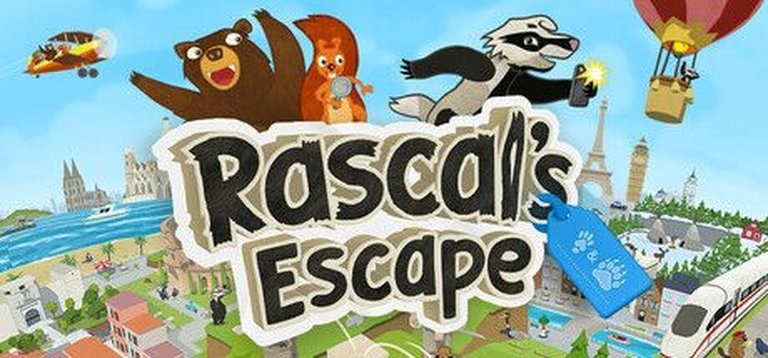
Rascal’s Escape is a charming co-op adventure game where players join a nimble Squirrel and a strong Bear on a journey across colorful European cities, following the clues of a mischievous badger named Rascal. Combining light platforming, cooperative puzzles, and educational elements focused on European culture and geography, the game offers a wholesome, family-friendly experience designed for relaxed exploration and learning. With its vibrant art style, gentle gameplay, and emphasis on teamwork, it’s perfect for younger players or anyone seeking a delightful, low-pressure adventure.
Gameplay Videos
Where to Buy Rascal’s Escape
PC
Rascal’s Escape Guides & Walkthroughs
Rascal’s Escape Reviews & Reception
ladiesgamers.com : A charming, easy-to-play adventure game designed for younger audiences but enjoyable for all.
monstercritic.com (80/100): Rascal’s Escape is an impressive educational adventure that blends light platforming, cooperative puzzles, and a feel-good atmosphere with a strong focus on European culture and language.
nindiespotlight.com (60/100): Obviously aiming for families with younger children, it is gentle enough for that crowd but likely too dull for everyone else.
Rascal’s Escape: A Wholesome Journey Through Europe’s Heart and Soul
Introduction: A Cozy Adventure for the Curious and Young at Heart
Rascal’s Escape is a rare gem in the modern gaming landscape—a title that unapologetically prioritizes warmth, education, and cooperative joy over adrenaline-fueled challenges. Developed by the Cologne-based indie studio the Good Evil GmbH, this 2024 release is a love letter to European culture, wrapped in the guise of a charming, low-stakes adventure. At its core, it’s a game about connection: between players, between generations, and between the curious and the world they’re exploring.
The premise is deceptively simple: Rascal, a mischievous young badger, has embarked on an impromptu hot-air balloon journey across Europe, leaving behind a trail of selfies (or “Badgergrams”) and clues. Players take on the roles of Squirrel and Bear, two endearing friends from the fictional Leaf Island, as they chase Rascal’s footsteps through 10 vibrant European cities. But the real magic lies not in the pursuit itself, but in the journey—the sights, sounds, and lessons absorbed along the way.
Rascal’s Escape is a game that defies conventional metrics of success. It doesn’t aim to be a technical marvel or a narrative masterpiece. Instead, it carves out a niche as a shared experience, a digital storybook designed to be enjoyed side-by-side with a child, a partner, or a friend. In an industry often obsessed with spectacle and difficulty, Rascal’s Escape is a quiet rebellion—a celebration of slowness, curiosity, and the joy of discovery.
Development History & Context: A Decade of Pedagogical Passion
The Studio’s Mission: Games That “Make the World a Better Place”
the Good Evil GmbH is not your typical indie studio. Founded in 2013 by Linda Kruse, the team has long been driven by a singular, almost utopian mission: to create games that educate, inspire, and unite. Their debut title, Squirrel & Bär (2014), was a mobile adventure designed to teach English to children aged 3–9, and it garnered accolades like the German Developer Award for “Best Children’s Game.” A decade later, Rascal’s Escape emerges as a spiritual successor, expanding the scope from language learning to a broader celebration of European cultural diversity.
The studio’s ethos is embedded in every pixel of Rascal’s Escape. This isn’t a game that happened to include educational elements; it’s a game built around them. The development was supported by prestigious European funds, including Creative Europe, the Film und Medien Stiftung NRW, and Germany’s Federal Ministry for Economic Affairs and Climate Action—a testament to the project’s cultural and pedagogical ambitions.
Technological and Design Constraints: Simplicity as a Virtue
Built in Unity, Rascal’s Escape is a study in intentional simplicity. The game’s 3D environments are colorful but not hyper-detailed, its mechanics are straightforward but not shallow, and its pacing is deliberate but never sluggish. This was a conscious choice: the team prioritized accessibility, ensuring that even the youngest players (or those new to gaming) could navigate the world without frustration.
The game’s local co-op design is another deliberate constraint. In an era where online multiplayer dominates, the Good Evil doubled down on shared-screen play, fostering physical proximity and collaboration. The absence of online features isn’t a limitation—it’s a philosophy.
The Gaming Landscape: A Niche Within a Niche
Rascal’s Escape arrived in a market saturated with high-octane action and competitive multiplayer experiences. Yet, it also entered a burgeoning space for wholesome games—titles like A Short Hike, Unpacking, and Animal Crossing that prioritize relaxation and emotional resonance. Within this niche, Rascal’s Escape stands out for its educational focus, a rarity even among family-friendly titles.
Its closest kin might be games like Captain Toad: Treasure Tracker (for its puzzle-platforming) or Yonder: The Cloud Catcher Chronicles (for its emphasis on exploration and discovery). But where those games lean into fantasy, Rascal’s Escape grounds itself in the real world, using its European setting not just as a backdrop, but as a curriculum.
Narrative & Thematic Deep Dive: A Scavenger Hunt with Soul
Plot: The Chase as a Framework for Discovery
The narrative of Rascal’s Escape is minimalist by design. Rascal’s disappearance is less a problem to solve and more an excuse to explore. The badger’s “Badgergrams” serve as breadcrumbs, guiding players from one city to the next, but the real story unfolds in the interactions with the game’s 60+ animal NPCs.
Each city—from London’s Tower Bridge to Rome’s Colosseum—presents a micro-narrative. In Paris, you might help a mouse curator at the Louvre; in Budapest, you could assist a duck in preparing for a festival. These vignettes are slice-of-life in the truest sense, emphasizing kindness, cooperation, and cultural exchange.
Characters: Archetypes with Heart
- Squirrel: The agile, curious explorer. Her abilities (jumping, climbing, riding on Bear’s back) make her the physical bridge between player and world.
- Bear: The strong, cautious traveler. His ground-pounding and object-carrying skills make him the logistical anchor of the duo.
- Rascal: The unseen catalyst. His mischief is never malicious—just a playful nudge toward adventure.
- The Bees: Polyglot translators who teach players basic phrases in 10 European languages, reinforcing the game’s educational core.
The characters’ designs are deliberately archetypal, eschewing complex backstories for immediate relatability. This isn’t a game about who they are, but about what they do together.
Themes: Wanderlust, Cultural Exchange, and Environmental Stewardship
- The Joy of Travel: The game’s most potent theme is wanderlust—not as a fleeting desire, but as a practice. Each city is a postcard, inviting players to linger, observe, and engage.
- Cultural Appreciation: Rascal’s Escape avoids tourism clichés by focusing on everyday cultural practices: recycling in Germany, festivals in Hungary, or culinary traditions in Italy.
- Environmentalism: The game’s trash-collection mechanic isn’t just a gameplay loop—it’s a values statement. Recycling trash unlocks new outfits, tying environmentalism to personal reward.
- Intergenerational Play: The game’s gentle difficulty and co-op design make it a rare title that parents and children can enjoy together, fostering shared memories.
Dialogue and Localization: A Multilingual Masterclass
One of the game’s most ambitious features is its language system. NPCs speak in their native tongues (French in Paris, Hungarian in Budapest, etc.), while Squirrel and Bear translate for the player. Optional “bee lessons” teach basic phrases, with native speakers providing voice acting—a level of authenticity rarely seen in games of this scale.
The dialogue is functional rather than poetic, but that’s by design. The goal isn’t to tell a gripping story, but to immerse players in the sounds and rhythms of European languages.
Gameplay Mechanics & Systems: Cooperative Simplicity
Core Gameplay Loop: Explore, Solve, Collect
Rascal’s Escape is a puzzle-platformer at its core, but one that prioritizes collaboration over challenge. The loop is as follows:
1. Arrive in a new city (via train, boat, or hot-air balloon).
2. Follow Rascal’s clues (Badgergrams, environmental hints).
3. Complete tasks (fetching items, solving simple puzzles, helping NPCs).
4. Collect souvenirs, food, and outfits (often tied to cultural themes).
5. Move to the next city, repeating the cycle.
The game’s 10-hour runtime is padded with optional activities, ensuring that players who want to linger can do so without pressure.
Character Abilities and Co-Op Dynamics
- Squirrel:
- Jump (access high platforms).
- Climb trees (reach hidden areas).
- Ride on Bear’s back (a charming mobility option).
- Bear:
- Ground pound (reveal secrets, activate switches).
- Carry objects (move obstacles, transport items).
- Stomp through mud/snow (clear paths).
The game’s puzzles are built around combining these abilities. For example:
– Bear might stomp a switch to lower a bridge, allowing Squirrel to cross and fetch a key.
– Squirrel could climb a tree to drop fruit for Bear to carry to an NPC.
In single-player, switching between characters is seamless, but the game shines in co-op, where communication and teamwork become organic.
Puzzle Design: Gentle but Clever
The puzzles are never punishing, but they’re not mindless either. They follow a few key principles:
– Environmental Logic: Solutions are always visible if you observe carefully.
– No Time Pressure: Players can take their time, reducing frustration.
– Co-Op Synergy: Most puzzles require both characters’ skills, reinforcing collaboration.
Progression and Rewards: The Joy of Collection
Progression is tied to exploration and collection:
– Souvenirs: Cultural artifacts (e.g., a mini Eiffel Tower, a Venetian mask).
– Food: Local delicacies (e.g., croissants in Paris, goulash in Budapest).
– Outfits: Costumes unlocked by recycling trash (e.g., a beret for Bear, a dirndl for Squirrel).
These rewards serve a dual purpose:
1. Gameplay Incentive: They give players a reason to explore thoroughly.
2. Educational Reinforcement: They tie directly to the cultures being represented.
UI and Accessibility: Designed for All Ages
The UI is minimalist and intuitive:
– Icon-based prompts (no reading required for basic actions).
– Large, clear text (for younger players).
– Optional subtitles (in English, German, and Spanish).
– No fail states (players can’t get “stuck” permanently).
The game’s difficulty is adjustable not through settings, but through design—tasks are simple enough for children but engaging enough to hold adults’ interest in short bursts.
World-Building, Art & Sound: A Storybook Europe
Setting: A Postcard-Perfect Continent
Rascal’s Escape doesn’t aim for realism—it aims for charm. Its Europe is a storybook version of the continent, where:
– London is all red buses and Tower Bridge.
– Paris is a pastel dream of cafés and the Louvre.
– Rome is a sun-drenched playground of ancient ruins.
Each city is a self-contained diorama, dense with interactable elements but small enough to avoid overwhelm. The game’s scale is perfect for its audience: big enough to explore, small enough to feel cozy.
Art Direction: Warm, Bright, and Inviting
The visual style is handcrafted and whimsical:
– Characters: Round, expressive, and huggable (Bear’s animations are particularly endearing).
– Environments: Soft edges, vibrant colors, and tactile details (e.g., crunchy leaves, fluffy snow).
– Lighting: Warm and golden, evoking a perpetual late afternoon.
The art isn’t technically impressive—it doesn’t need to be. Its strength lies in its emotional resonance, making the world feel like a place you’d want to live in, not just visit.
Sound Design: A Symphony of Whimsy
The audio design is subtle but effective:
– Music: A light orchestral score by Thomas Höhl, blending folk instruments with playful melodies. Each city has its own musical identity (e.g., accordions in Paris, violins in Budapest).
– Ambient Sounds: The crunch of leaves, the splash of fountains, the chatter of NPCs in their native languages.
– Voice Acting: Warm, expressive, and authentic (thanks to native speakers).
The sound design’s greatest achievement is its restraint—it never overpowers the experience, instead acting as a gentle guide through the world.
Atmosphere: The Game’s Greatest Strength
Rascal’s Escape’s atmosphere is its secret weapon. It’s a game that feels like:
– A Sunday afternoon spent exploring a new city.
– A children’s book come to life.
– A shared adventure between friends or family.
This isn’t a game you beat—it’s a game you inhabit.
Reception & Legacy: A Quiet Triumph
Critical Reception: Praise for Charm, Criticism for Pace
The game’s reception has been positive but measured:
– LadiesGamers (80%): Praised its educational value and charm, calling it “bursting with warmth.”
– Nindie Spotlight (60%): Noted its slow pace and simplistic platforming, suggesting it’s best suited for very young players.
The divide in scores reflects the game’s niche appeal—it’s not for everyone, but for its intended audience, it’s a masterpiece.
Commercial Performance: A Slow Burn
As a small indie title from a German studio, Rascal’s Escape hasn’t set sales records. But its long tail potential is strong, thanks to:
– Word-of-mouth among parents and educators.
– Awards and nominations (e.g., Golden Sparrow Award for Interactive Storytelling, TOMMI German Children’s Software Award).
– Steam Deck compatibility, making it a portable family game.
Legacy: A Blueprint for Educational Gaming
Rascal’s Escape’s greatest legacy may be its proof of concept—it demonstrates that:
1. Educational games don’t have to be boring.
2. Co-op can be a tool for bonding, not just competition.
3. Cultural appreciation can be fun—not a chore.
Its influence may be seen in future titles that blend travel, education, and cooperative play—a genre that Rascal’s Escape has helped define.
Conclusion: A Game to Savor, Not Rush
Rascal’s Escape is a rare game—a title that prioritizes heart over hype, curiosity over challenge, and shared joy over solitary triumph. It’s not a game that will dominate “Best of the Year” lists, nor will it appeal to players seeking adrenaline or complexity. But for those who value its gentle pace, its educational warmth, and its celebration of European culture, it’s nothing short of magical.
Final Verdict: 8.5/10 – “A Wholesome Masterpiece for the Young and Young-at-Heart”
- For Families: A must-play—a digital vacation that teaches as much as it delights.
- For Educators: A tool for introducing geography, languages, and cultural appreciation.
- For Casual Gamers: A palate cleanser—a reminder that games can be relaxing and meaningful.
- For Hardcore Gamers: A curio—worth experiencing for its charm, but unlikely to hold attention for long.
Rascal’s Escape isn’t just a game—it’s an invitation. An invitation to slow down, to explore, to learn, and to share. In a world that often feels too fast, it’s a gentle rebellion—and one that’s well worth joining.
Where to Buy:
– Steam ($29.99)
– Nintendo Switch ($29.99)
– iOS/Android ($19.99)
Final Thought: If you’ve ever dreamed of a game that feels like a hug from a well-traveled friend, Rascal’s Escape is it. Pack your bags—Europe awaits. 🌍✨