
- Release Year: 2010
- Platforms: Macintosh, Windows
- Publisher: Sandlot Games
- Developer: Sandlot Games
- Genre: Adventure
- Perspective: 1st-person
- Game Mode: Single-player
- Gameplay: Hidden object, Puzzle elements
- Average Score: 50/100
Description
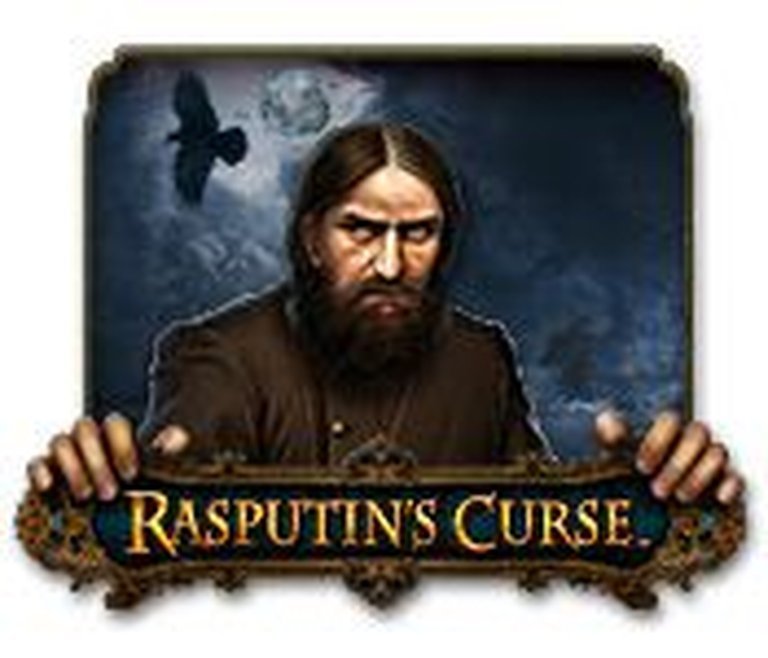
Rasputin’s Curse is a hidden object adventure game set in St. Petersburg, where Lora, a woman of Russian descent, travels to uncover her family’s past while grappling with eerie visions of the infamous mystic Rasputin. After discovering her husband’s infidelity, she embarks on a solo journey to Europe, solving puzzles and navigating haunting hallucinations. The game blends traditional hidden object gameplay with mini-games, requiring players to find items, solve puzzles, and piece together fragmented clues to unravel the mystery behind Rasputin’s ghostly influence.
Rasputin’s Curse Free Download
Rasputin’s Curse Guides & Walkthroughs
Rasputin’s Curse Reviews & Reception
mobygames.com (50/100): The story is mildly interesting but not half as interesting as the actual historical accounts of Rasputin’s colorful life.
gamezebo.com (50/100): Sadly, much like another recent hidden object game based on a historical figure, Rasputin’s Curse just isn’t terribly interesting or fun to play, and its famous subject matter isn’t enough to save it.
Rasputin’s Curse: A Hidden Object Adventure Lost in the Shadows of History
Introduction: The Allure of the Mad Monk
Few historical figures loom as large in myth and infamy as Grigori Rasputin, the enigmatic “Mad Monk” whose influence over the Russian royal family remains a subject of fascination over a century later. Rasputin’s Curse (2010), developed by Sandlot Games, attempts to weave this historical intrigue into a modern-day hidden object adventure, blending personal drama with supernatural mystery. Yet, despite its ambitious premise, the game struggles to transcend the limitations of its genre, offering a fleeting, if forgettable, journey into the past.
At its core, Rasputin’s Curse is a tale of self-discovery and ancestral haunting. Lora, a Russian-American woman grappling with marital strife, embarks on a solo trip to St. Petersburg to uncover her family’s ties to Rasputin. Her journey is framed by hallucinations, betrayal, and a creeping sense of dread as the specter of the monk’s curse tightens its grip. The game’s narrative promises a blend of historical fiction and psychological horror, but its execution is hampered by a lack of depth in both storytelling and gameplay innovation.
This review will dissect Rasputin’s Curse across its development context, narrative ambitions, mechanical design, and lasting legacy. Was it a bold experiment in blending history with hidden object gameplay, or merely another casual title lost in the early 2010s flood of similar games? Let’s unravel the curse.
Development History & Context: Sandlot Games and the Casual Boom
The Studio Behind the Curse
Sandlot Games, the developer and publisher of Rasputin’s Curse, was a prominent player in the casual gaming market of the late 2000s and early 2010s. Founded in 2002, the studio carved a niche in accessible, downloadable titles, particularly in the hidden object and time management genres. Games like Cake Mania and Tradewinds established their reputation for polished, if formulaic, experiences. By 2010, Sandlot had expanded its operations globally, with a St. Petersburg studio (led by Vitali A. Vostrikov) contributing to Rasputin’s Curse—a fitting locale given the game’s setting.
The team behind Rasputin’s Curse was a mix of veterans and local talent. Daniel Bernstein, serving as both CEO and composer, was a prolific figure in Sandlot’s output, while writer Matthaeus Szumanski crafted the game’s narrative. The art direction, led by Sergey Vakulenko, aimed to evoke a sense of Russian authenticity, though budget constraints and the casual market’s expectations would ultimately limit its ambition.
Technological and Market Constraints
Released on January 25, 2010, Rasputin’s Curse arrived during the peak of the hidden object game (HOG) boom. The genre, popularized by titles like Mystery Case Files: Huntsville (2005), had become a staple of digital distribution platforms like Big Fish Games and WildTangent. These games thrived on simplicity, short playtimes, and low system requirements—Rasputin’s Curse was no exception, with its modest specs (Pentium III 750MHz, 256MB RAM) ensuring broad accessibility.
However, the market was already showing signs of saturation. Players craved innovation, yet developers often recycled mechanics to meet tight production schedules. Rasputin’s Curse attempted to differentiate itself with a historical hook and light adventure elements, but its core design remained firmly rooted in the HOG formula: find objects, solve puzzles, progress the story.
The Gaming Landscape of 2010
2010 was a transitional year for gaming. While AAA titles like Mass Effect 2 and Red Dead Redemption dominated headlines, the casual market continued to thrive, fueled by digital storefronts and the rise of mobile gaming. Hidden object games were a safe bet for publishers, but they faced increasing competition from more dynamic genres like match-3 and time management.
Rasputin’s Curse entered this landscape as a mid-tier offering, lacking the polish of Big Fish’s premium titles or the narrative depth of Artogon’s Dark Parables series. Its release on Windows and Macintosh (with a later inclusion in the German compilation Die große Wimmelbild-Abenteuer-Sammlung) suggests an attempt to capitalize on multiple markets, but its reception would prove lukewarm at best.
Narrative & Thematic Deep Dive: A Tale of Betrayal and Ancestral Haunting
Plot Summary: From Marital Strife to Supernatural Horror
The game opens with Lora, a woman of Russian descent, preparing for a trip to St. Petersburg with her estranged husband, Mark. Their marriage is crumbling, and Lora hopes the journey will rekindle their bond while allowing her to explore her family’s past. The premise is relatable, grounding the supernatural elements in personal drama.
However, Lora’s plans unravel when she discovers Mark’s infidelity. Heartbroken, she embarks alone, only to be plagued by visions of Rasputin—a figure she initially dismisses as a hallucination. As she delves deeper into her ancestry, she uncovers a dark connection: her great-grandmother was entangled with the Mad Monk, and his curse now threatens her son, Alex.
The narrative unfolds through a series of hidden object scenes and mini-games, with Lora’s journal serving as a narrative device. The story’s pacing is uneven, with long stretches of item-hunting punctuated by abrupt plot developments. The climax, involving a time-bending confrontation with Rasputin, feels rushed, undermining the game’s potential for psychological horror.
Characters: Thinly Drawn Archetypes
- Lora Jamerson: The protagonist is a sympathetic but underdeveloped figure. Her motivations—saving her marriage, uncovering her past—are clear, but her emotional arc is superficial. The game misses opportunities to explore her trauma, instead reducing her to a vessel for the player’s actions.
- Mark: The cheating husband is a one-dimensional antagonist, serving little purpose beyond inciting Lora’s journey. His betrayal lacks nuance, making it difficult to invest in their relationship.
- Rasputin: The game’s namesake is its most compelling yet underutilized character. Portrayed as a manipulative specter, his presence is felt more through environmental storytelling (e.g., eerie voiceovers, historical artifacts) than direct interaction. The game’s failure to delve into his mythos—beyond surface-level references to his influence over the Romanovs—is a missed opportunity.
Themes: Identity, Legacy, and the Weight of History
Rasputin’s Curse grapples with themes of ancestral legacy and the inescapability of the past. Lora’s journey mirrors a broader human fear: that our ancestors’ sins may haunt us. The game’s use of Rasputin as a metaphor for inherited trauma is intriguing, but it’s never fully explored. Instead, the curse serves as a macguffin, driving the plot without deeper thematic resonance.
The game also touches on cultural identity, with Lora’s Russian heritage playing a central role. Scenes set in St. Petersburg and rural villages attempt to immerse players in Russian culture, from samovars to traditional clothing. However, these elements often feel like set dressing rather than integral to the narrative.
Dialogue and Presentation: A Missed Opportunity
The game’s storytelling is hampered by its reliance on static, black-and-white illustrations for cutscenes. These sketches, while atmospheric, lack the polish of contemporary visual novels or even other HOGs like Dark Parables. The dialogue is functional but unremarkable, with little voice acting to bring characters to life.
The journal entries, meant to provide context, are often overly expositional, leaving little room for player interpretation. The game’s most effective storytelling comes from its environmental details—e.g., torn manuscripts, old photographs—but these moments are fleeting.
Gameplay Mechanics & Systems: The Hidden Object Grind
Core Gameplay Loop: Find, Click, Repeat
Rasputin’s Curse adheres closely to the hidden object formula:
1. Object Hunting: Players scan cluttered scenes for items listed on the right-hand side of the screen. Some scenes use silhouettes instead of text, adding a minor twist.
2. Inventory Management: Found objects are stored in a tray at the bottom of the screen, to be used in later puzzles (e.g., using a key to open a lock).
3. Mini-Games: Punctuating the object-hunting are 12 mini-games, ranging from lock-picking to jigsaw puzzles. These are skippable after a short delay, a mercy given their repetitive nature.
The game’s hint system is generous, with unlimited hints that recharge over time. While this ensures players are never stuck, it also removes any sense of challenge. The lack of scoring or penalties further diminishes replayability.
Combat and Progression: Nonexistent
As a pure hidden object game, Rasputin’s Curse lacks traditional combat or character progression. The closest it comes to “progression” is the unfolding narrative, but even this is linear and unbranched. Players move from scene to scene with no meaningful choices, reducing the experience to a series of disconnected puzzles.
UI and Accessibility: Functional but Uninspired
The user interface is straightforward:
– Cursor Changes: The cursor turns green when hovering over interactive objects (e.g., drawers, doors), a common HOG convention.
– Inventory System: Dragging and dropping items is intuitive, though the lack of feedback when an item is used incorrectly can be frustrating.
– Journal: Serves as a narrative log and occasional puzzle aid, but its utility is limited.
The game’s biggest usability flaw is its reliance on pixel-hunting. Some objects are frustratingly small or blend into the background, a common critique of the genre. The hint system mitigates this, but it doesn’t excuse the lazy design.
Innovation and Flaws: A Step Backward
Rasputin’s Curse attempts to blend hidden object gameplay with light adventure elements, but these feel tacked on. For example:
– Environmental Interaction: Some scenes require players to “find a way” to access hidden areas (e.g., using a hammer to break a cabinet). However, the lack of clear visual cues makes these moments more confusing than engaging.
– Mini-Games: While varied, the mini-games are simplistic and often unrelated to the narrative. A lock-picking puzzle in a hotel lobby, for instance, feels arbitrary.
The game’s most glaring flaw is its repetition. Players frequently revisit the same locations, a cost-cutting measure that saps immersion. The lack of a map or fast-travel system exacerbates this, making backtracking a chore.
World-Building, Art & Sound: A Superficial Glimpse of Russia
Setting and Atmosphere: A Postcard Tour of Russia
Rasputin’s Curse takes players on a whirlwind tour of Russian locales:
– St. Petersburg: The game’s early scenes capture the city’s grandeur, with ornate hotels and museums. However, these settings are static, lacking the bustle of a living city.
– Rural Villages: Later levels attempt to evoke the Russian countryside, complete with wooden huts and Orthodox churches. These scenes are more atmospheric but still feel like staged dioramas.
– Historical Flashbacks: The game’s climax shifts to early 20th-century Russia, with a ballroom scene featuring Tsar Nicholas II. These moments are visually distinct but brief.
The game’s world-building is superficial. While it name-drops historical figures and landmarks, it fails to convey the cultural depth of its setting. The Russia of Rasputin’s Curse is a tourist’s fantasy, not a lived-in world.
Art Direction: A Mixed Bag
The art style is a blend of hand-drawn illustrations and photographed textures, a common approach in HOGs of the era. The hidden object scenes are detailed but cluttered, with some objects (e.g., a single pear in a busy market) nearly impossible to spot without hints.
The game’s strongest visual moments come from its historical artifacts—e.g., torn manuscripts, old photographs—which add a sense of authenticity. However, the character portraits and cutscenes are rudimentary, resembling unfinished sketches.
Sound Design: A Haunting but Repetitive Score
The audio design is minimal but effective in places:
– Music: Composed by Daniel Bernstein, the soundtrack leans heavily on piano melodies, evoking a sense of melancholy. While fitting for the game’s themes, the music becomes repetitive over the 2-3 hour runtime.
– Ambient Sounds: Environmental audio (e.g., bustling markets, creaking doors) is sparse but adds atmosphere.
– Voice Acting: Notably absent. The game’s reliance on text and still images makes its world feel silent and lifeless.
The lack of voice acting is a significant drawback. Even a few lines of dialogue could have brought Lora and Rasputin to life, but the game’s budget constraints likely precluded this.
Reception & Legacy: A Forgotten Footnote
Critical Reception: A 50% Effort
Rasputin’s Curse received a single professional review from GameZebo, which awarded it a 50/100, criticizing its lack of innovation and underwhelming presentation. The reviewer, Erin Bell, noted:
“Sadly, much like another recent hidden object game based on a historical figure, Real Crimes: Jack the Ripper, Rasputin’s Curse just isn’t terribly interesting or fun to play, and its famous subject matter isn’t enough to save it.”
The game’s Metacritic page lists no critic reviews, and user reviews are nonexistent—a telling sign of its obscurity. On platforms like WildTangent, it holds a 3/5 rating based on a handful of player scores, suggesting a lukewarm reception.
Commercial Performance: Lost in the Crowd
As a shareware title, Rasputin’s Curse likely sold modestly through digital storefronts like Big Fish Games and Sandlot’s own platform. Its inclusion in the 2011 German compilation Die große Wimmelbild-Abenteuer-Sammlung suggests an attempt to extend its shelf life, but it failed to leave a lasting mark.
Legacy: A Cautionary Tale for Historical HOGs
Rasputin’s Curse is a textbook example of how a compelling historical hook cannot salvage mediocre gameplay. Its failure to innovate within the HOG genre—combined with its thin narrative and repetitive design—ensured it would be quickly forgotten.
However, the game’s ambition is noteworthy. Few HOGs of the era attempted to weave real historical figures into their narratives, and Rasputin’s Curse’s focus on ancestral trauma was ahead of its time. Later games like The Dark Parables series would refine this approach, blending folklore with hidden object gameplay to greater effect.
Influence on Later Games
While Rasputin’s Curse had no direct sequels or spiritual successors, its themes of historical curses and personal hauntings would recur in later HOGs:
– Dark Parables Series (2010–Present): Blue Tea Games’ series explores fairy tales and folklore with a similar blend of hidden object gameplay and narrative depth.
– Grim Legends Series (2012–Present): Artogon’s games often feature ancestral curses and supernatural mysteries, echoing Rasputin’s Curse’s premise but with superior execution.
Conclusion: A Curse of Missed Potential
Rasputin’s Curse is a game of squandered opportunities. Its premise—a modern woman unraveling her family’s dark ties to one of history’s most infamous figures—is rich with potential. Yet, the execution is hamstrung by the limitations of its genre, a rushed narrative, and a lack of mechanical innovation.
The Good
- Intriguing Premise: The blend of personal drama and historical horror is compelling on paper.
- Atmospheric Moments: The game’s use of Russian culture and Rasputin’s mythos creates occasional chills.
- Accessible Design: The hint system and skippable mini-games ensure a frustration-free experience.
The Bad
- Repetitive Gameplay: The hidden object formula grows stale quickly, with little variation.
- Underdeveloped Story: Characters lack depth, and the plot resolves too abruptly.
- Lack of Polish: The art, sound, and UI feel rushed, lacking the refinement of top-tier HOGs.
Final Verdict: 5/10 – A Forgettable Journey
Rasputin’s Curse is neither a disaster nor a masterpiece. It’s a competent but unremarkable hidden object game that fails to capitalize on its fascinating subject matter. For fans of the genre, it offers a few hours of mild entertainment, but it’s unlikely to linger in the memory.
In the pantheon of Rasputin-inspired media—from films like Rasputin and the Empress (1932) to games like Assassin’s Creed: Chronicles (2016)—Rasputin’s Curse ranks as a footnote. It’s a reminder that even the most compelling historical figures cannot save a game from the curse of mediocrity.
For History Buffs: Play for the Rasputin lore, but temper expectations.
For HOG Fans: Only if you’ve exhausted better options like Mystery Case Files or Dark Parables.
For Everyone Else: Skip it—this curse isn’t worth breaking.