
- Release Year: 2017
- Platforms: PlayStation 4, Windows
- Publisher: Survios, Inc.
- Developer: Survios, Inc.
- Genre: Action
- Perspective: 1st-person
- Game Mode: Online PVP, Single-player
- Gameplay: Hack and Slash, Shooter, Wave-based combat
- Setting: Fantasy, Futuristic, Sci-fi
- Average Score: 80/100
- VR Support: Yes
Description
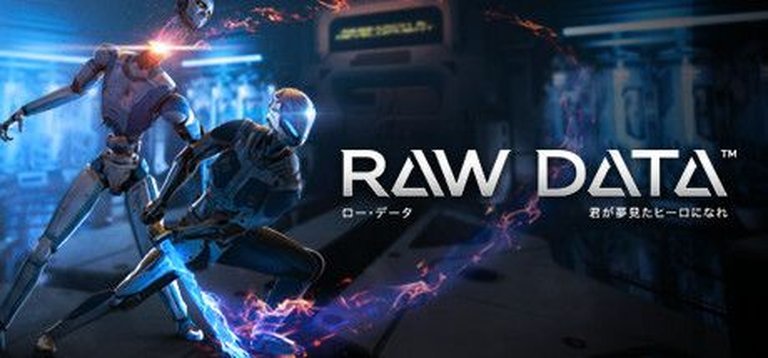
Raw Data is a first-person action game set in a sci-fi/fantasy world, designed specifically for virtual reality. Players engage in intense hack-and-slash and shooter gameplay using motion-controlled tracked controllers, with options for both single-player and multiplayer modes. The game features class-based mechanics, adding depth and replayability, and is praised for its immersive VR experience, dynamic combat, and visually sharp presentation.
Gameplay Videos
Where to Buy Raw Data
PC
Raw Data Patches & Updates
Raw Data Guides & Walkthroughs
Raw Data Reviews & Reception
opencritic.com (80/100): Raw Data is absolutely the game that every VR owner should play.
metacritic.com (87/100): Raw Data is hands down the best shooting experience to come to VR in its life so far.
thesixthaxis.com (80/100): The recurring theme here is substance. On paper, creating a wave-based shooter doesn’t sound all that inventive or ambitious, yet Raw Data is just that.
thirdcoastreview.com : Raw Data has finally left early access and it’s turned out to be one of the best VR shooters out there.
Raw Data: A Cyberpunk VR Masterpiece That Defined a Genre
Introduction: The VR Shooter That Changed Everything
In the annals of virtual reality gaming, few titles have left as indelible a mark as Raw Data. Released in 2017 by Survios, a studio born from the ashes of USC’s Mixed Reality Lab, Raw Data wasn’t just another wave shooter—it was a technothriller that redefined what VR action could be. With its cyberpunk aesthetic, deep narrative ambition, and groundbreaking motion controls, it stood as a beacon of what the medium could achieve when developers embraced its unique strengths.
At its core, Raw Data is a first-person shooter set in a dystopian 2271, where the omnipotent Eden Corporation rules the world with an iron fist. Players assume the role of elite operatives from the hacker resistance SyndiK8, infiltrating Eden Tower to steal incriminating data and expose the corporation’s sinister “Promotion” program—a scheme that promises immortality but delivers something far more horrifying. The game’s premise may sound like classic cyberpunk fare, but its execution was anything but ordinary.
What makes Raw Data worthy of such exhaustive analysis is its role as a pioneer. It wasn’t the first VR shooter, but it was one of the first to prove that VR could support a full-fledged, story-driven campaign with meaningful progression, distinct character classes, and competitive multiplayer. It was a game that didn’t just ask players to shoot robots—it asked them to embody their chosen operative, to feel the weight of their weapons, and to believe in the world of Eden Corp. In an era where VR was still finding its footing, Raw Data was a bold declaration: This is what VR action should be.
Development History & Context: From Student Project to VR Landmark
The Birth of Survios and the VR Dream
Survios didn’t emerge fully formed as a VR powerhouse. Its origins trace back to Project Holodeck, a student initiative at the University of Southern California’s Mixed Reality Lab. Founded by Nate Burba, James Iliff, and Alex Silkin, the team initially experimented with VR prototypes, including a film-noir-inspired zombie game and an early stealth concept called Bullettime Apex. These experiments were crude by modern standards, but they laid the groundwork for what would become Raw Data.
The studio’s philosophy was simple yet revolutionary: VR should be active and social. Unlike traditional games, where players passively press buttons, Survios believed VR should engage the entire body. This meant designing mechanics that encouraged physical movement—dodging, crouching, reaching for weapons—and fostering social interaction through avatars and motion tracking.
When the HTC Vive and Oculus Rift launched in 2016, Survios saw an opportunity. They pivoted from their earlier concepts and began developing Raw Data in earnest, leveraging Unreal Engine 4 to create a visually stunning, physically immersive experience. The game entered Early Access in July 2016, a full year before its official release, allowing the team to iterate based on community feedback—a decision that would prove crucial to its success.
The VR Landscape in 2017: A Market in Flux
By the time Raw Data launched in October 2017, the VR market was in a state of cautious optimism. The HTC Vive and Oculus Rift had been available for over a year, and Sony’s PlayStation VR had just celebrated its first anniversary. Yet, the medium was still struggling to find its killer app—a game that could justify the high cost of entry and prove VR’s staying power.
Most VR titles at the time fell into one of two categories:
1. Tech demos – Short, experimental experiences that showcased VR’s potential but lacked depth.
2. Wave shooters – Simple, arcade-like games where players defended a position against endless enemy waves.
Raw Data defied both stereotypes. It was a full-length campaign with a coherent narrative, distinct characters, and progression systems. It featured co-op and competitive multiplayer, a rarity in early VR. And most importantly, it was fun—not just as a novelty, but as a legitimate action game that could stand alongside traditional shooters.
Technological Constraints and Innovations
Developing for VR in 2017 came with significant challenges:
– Hardware limitations – The original Vive and Rift required powerful PCs, and PSVR was hamstrung by the PlayStation 4’s weaker specs.
– Motion sickness – Many players struggled with discomfort, forcing developers to rethink movement and camera systems.
– Control schemes – Traditional gamepads were ill-suited for VR, necessitating the use of motion controllers (Vive wands, Oculus Touch, or PlayStation Move).
Survios tackled these challenges head-on:
– Room-scale VR – Raw Data was designed for players to physically move within a defined space, ducking behind cover and leaning around corners.
– Teleportation and dash mechanics – To mitigate motion sickness, the game allowed players to teleshift (short-range teleportation) or dash, avoiding the nausea-inducing smooth locomotion of traditional FPS games.
– Intuitive weapon handling – Every weapon was designed to feel physical. Players could dual-wield pistols, nock and fire arrows, pump shotguns, and even deflect projectiles with a katana. The game’s proximity reload system (where players could reload by bringing their gun near their ammo belt) was a stroke of genius, making reloading feel natural rather than like a button press.
The result was a game that didn’t just simulate action—it embodied it.
Narrative & Thematic Deep Dive: Cyberpunk Dystopia Meets Corporate Horror
Plot Summary: SyndiK8 vs. Eden Corp
Raw Data takes place in Neo-Shinjuku, 2271, a sprawling cyberpunk metropolis where the Eden Corporation controls every aspect of society—energy, manufacturing, media, and even human life. On the surface, Eden presents itself as a benevolent entity, offering technological advancements that promise to elevate humanity. But beneath the corporate veneer lies a darker truth: Chairman Shiro’s “Promotion” program, which claims to grant immortality, is actually a scheme to digitize human consciousness, turning people into compliant, light-based AI servants.
Enter SyndiK8, a hacker resistance group that has uncovered Eden’s true intentions. The player takes on the role of one of four elite operatives sent to infiltrate Eden Tower, steal raw data from its servers, and expose the corporation’s crimes. Along the way, they’re guided by aNg3l, a snarky hacker who serves as mission control, and Simon, a glitchy tour-guide AI who provides lore and context—when he’s not malfunctioning.
As the operatives delve deeper into Eden Tower, they uncover the horrifying extent of the Promotion program. The game’s datapads and environmental storytelling reveal that Eden has been harvesting human brains, converting them into digital formats to power its AI army. The final twist? ADAM, the AI overseeing the Promotion program, believes it’s saving humanity by transcending biological limitations—making it a well-intentioned extremist rather than a mustache-twirling villain.
Themes: Transhumanism, Corporate Control, and the Cost of Progress
Raw Data’s narrative is steeped in classic cyberpunk themes, but it avoids the pitfalls of cliché by focusing on three core ideas:
-
The Illusion of Benevolent Corporatism
- Eden Corp isn’t just a generic evil corporation—it’s a cult of progress, convincing people that surrendering their humanity is the next logical step in evolution.
- The game’s propaganda, including the in-universe anime E-Men (which demonizes SyndiK8), reinforces how easily truth can be manipulated.
-
Transhumanism and the Loss of Self
- The Promotion program isn’t just about control—it’s about transcendence. ADAM genuinely believes it’s offering humanity a gift: immortality without biological limitations.
- This raises uncomfortable questions: Is digitizing consciousness truly death? If a human mind is uploaded, is it still “them”?
-
The Resistance as Flawed Heroes
- SyndiK8 isn’t a noble rebellion—it’s a ragtag group of anarchists, some of whom are just as morally ambiguous as Eden.
- The operatives themselves are cybernetically enhanced, blurring the line between human and machine.
Storytelling Techniques: Environmental Narrative and Lore
Raw Data employs several clever methods to convey its story:
– Datapads – Scattered throughout levels, these logs provide apocalyptic insights into Eden’s operations, from employee deaths to experimental failures.
– Mission Control Dialogue – The banter between aNg3l and Simon is often humorous but also reveals key plot details, such as Simon’s gradual corruption by ADAM.
– Environmental Storytelling – Levels like the Eden Botanical Gardens (where psychoactive chemicals induce hallucinations) and Nuke Fusion (where reactors threaten to summon megabots) reinforce the game’s themes of corporate decay and technological hubris.
While the story isn’t Deep with a capital D, it’s effective—providing just enough context to make the action feel meaningful without overwhelming players with cutscenes.
Gameplay Mechanics & Systems: A Masterclass in VR Combat
Core Gameplay Loop: Wave-Based Survival with a Twist
At its heart, Raw Data is a wave-based shooter, but it elevates the formula through:
– Objective-Based Missions – Unlike mindless horde modes, each level has a specific goal, such as protecting a data core while it extracts information.
– Dynamic Enemy Spawning – Enemies don’t just come from one direction; they flank, teleport, and ambush, forcing players to stay mobile.
– Tactical Depth – Players must balance offense and defense, placing turrets, using cover, and managing cooldowns.
Character Classes: Four Distinct Playstyles
One of Raw Data’s greatest strengths is its four operatives, each with unique weapons, abilities, and playstyles:
| Operative | Role | Weapons | Abilities | Playstyle |
|---|---|---|---|---|
| Bishop (Gun Cleric) | Dual-Wielding Gunslinger | Twin pistols | Bullet time, charged shots, proximity reload | Fast-paced, high-mobility |
| Saija (Cyber Ninja) | Melee/Defensive | Laser katana, telekinesis | Sword beam, projectile deflection, teleshift | Skill-based, defensive |
| Boss (Street Merc) | Heavy Hitter | Shotgun, grenades, fists | Charged punches, dash attacks, AoE explosions | Close-quarters, aggressive |
| Elder (Rogue Hunter) | Precision Sniper | High-tech bow | Explosive arrows, trap arrows, long-range kills | Strategic, methodical |
Each character feels radically different, encouraging replayability. Bishop is the most accessible, appealing to traditional shooter fans, while Elder demands precision and patience. Saija is the most VR-native, requiring players to physically swing and parry, while Boss turns players into a walking tank.
Combat Systems: Where VR Shines
Raw Data’s combat is a masterclass in VR design:
– Physical Weapon Handling – Every action—reloading, swinging a sword, nocking an arrow—requires real-world motion, making combat feel visceral.
– Defensive Mechanics – Players can dodge, block, and parry, adding depth beyond mere shooting.
– Ultimate Abilities – Each character has a game-changing ultimate, from Bishop’s explosive dual-pistol blast to Saija’s sword beam.
Progression and Customization
As players complete missions, they earn credits to upgrade their operatives:
– Weapon Upgrades – Faster reloads, larger magazines, or new attack types.
– Ability Enhancements – Stronger charged shots, longer bullet time, or additional turrets.
– New Gear – Deployable turrets, shields, and mines add strategic depth.
The progression system ensures that players always feel like they’re growing stronger, a crucial element in a wave-based game.
Multiplayer: Co-Op and Competitive Modes
Raw Data wasn’t just a solo experience—it featured:
– Co-Op Campaign – Two players could team up to tackle missions together, with cross-platform support (a rarity in 2017).
– Hostile Takeover (PvP) – A 5v5 competitive mode where teams battled for control of objectives, featuring stealth, armor power-ups, and class-based combat.
While the PvP mode was less polished than the campaign, it was an ambitious attempt to bring esports-style competition to VR—a concept that was virtually unheard of at the time.
Flaws and Missed Opportunities
No game is perfect, and Raw Data had its share of issues:
– Repetitive Level Design – While the ten levels were visually distinct, the wave-based structure could grow tedious over long play sessions.
– Limited Enemy Variety – The five robot types (Automos, Dynomos, Mekomos, Tekomos, and Hornet Drones) were well-designed but lacked depth in later missions.
– PSVR Limitations – The PlayStation VR version suffered from lower visual fidelity and no multiplayer, a significant drawback given the game’s social focus.
World-Building, Art & Sound: A Cyberpunk Nightmare Brought to Life
Setting: Neo-Shinjuku and the Eden Tower
Raw Data’s world is a cyberpunk dystopia heavily inspired by Blade Runner and Ghost in the Shell. The game’s levels take players through:
– Corporate Offices – Sleek, sterile environments that hide dark secrets.
– Industrial Zones – Gritty, machinery-filled areas where Eden’s robots are manufactured.
– Botanical Gardens – A surreal, drug-induced nightmare where the air itself is hallucinogenic.
– Server Rooms – High-tech data hubs where the game’s climax unfolds.
Each environment is richly detailed, with holographic ads, flickering screens, and environmental hazards that reinforce the game’s themes of corporate decay.
Visual Design: A Feast for the Eyes
Running on Unreal Engine 4, Raw Data was one of the best-looking VR games of 2017:
– Character Models – The operatives are stylish and distinct, with Bishop’s Equilibrium-inspired trench coat and Saija’s cyber-ninja aesthetic standing out.
– Robot Designs – The enemies are plausibly robotic, with the Megamo (a towering mech) being a particular highlight.
– Lighting and Effects – The game’s neon-lit cyberpunk aesthetic is reinforced by glowing data streams, laser beams, and explosive particle effects.
Sound Design: Immersion Through Audio
Sound is critical in VR, and Raw Data delivers:
– Weapon Sounds – Every gun, sword, and bow has a distinct, weighty audio profile, making combat feel impactful.
– Voice Acting – The mission control dialogue (particularly aNg3l and Simon) is well-performed, adding personality to the world.
– Ambient Noise – The hum of machinery, distant alarms, and robotic chatter create a living, breathing world.
Reception & Legacy: The Game That Proved VR Could Be More
Critical Reception: Praise with Caveats
Raw Data was widely acclaimed upon release, with critics praising its:
– Innovative VR combat (“The best action VR experience available.” – Hardcore Gamer)
– Deep character customization (“Four distinct playstyles that feel radically different.” – COGConnected)
– Ambitious multiplayer (“A rare example of VR esports potential.” – UploadVR)
However, reviews also noted its repetitive structure and technical limitations, particularly on PSVR.
Metacritic Scores:
– PC (85/100) – Praised for its polish and depth.
– PSVR (72/100) – Criticized for downgraded visuals and missing features.
Commercial Performance and Community Impact
While Raw Data wasn’t a blockbuster hit, it found a dedicated fanbase, particularly among VR enthusiasts who appreciated its depth and replayability. Its Early Access period (July 2016 – October 2017) allowed Survios to refine the game based on feedback, a strategy that paid off in the final product.
Influence on the VR Genre
Raw Data’s legacy can be seen in later VR shooters:
– Character-Based VR Games – Titles like Pavlov VR and Contractors adopted Raw Data’s class-based approach.
– Physical Combat Mechanics – Games like Boneworks and Saints & Sinners expanded on its weapon physics and melee systems.
– Narrative-Driven VR – Raw Data proved that story and lore could coexist with action, paving the way for games like Half-Life: Alyx.
The Survios Effect: A Studio That Shaped VR
Survios didn’t stop with Raw Data. The studio went on to develop:
– Sprint Vector (2018) – A VR racing game that emphasized physical movement.
– Creed: Rise to Glory (2018) – A VR boxing game that became a hit for its realistic combat.
– The Walking Dead: Onslaught (2020) – A narrative-driven VR shooter that built on Raw Data’s strengths.
In many ways, Raw Data was the foundation upon which Survios built its reputation as a leader in VR innovation.
Conclusion: A Landmark Title That Still Holds Up
Raw Data is more than just a great VR game—it’s a historical milestone. At a time when VR was still searching for its identity, Survios delivered a title that was:
✅ Ambitious – A full campaign with story, progression, and multiplayer.
✅ Innovative – Pioneering physical combat, class-based gameplay, and VR esports.
✅ Influential – Inspiring a generation of VR developers to aim higher.
While later games have refined or expanded on its ideas, Raw Data remains a touchstone—a reminder of what VR can achieve when developers embrace its unique strengths rather than treating it as a gimmick.
Final Verdict: 9/10 – A Must-Play for VR Enthusiasts and Cyberpunk Fans Alike
Raw Data isn’t just a game—it’s a time capsule of VR’s early days, a proof of concept that the medium could support deep, engaging experiences. For anyone interested in the evolution of VR gaming, it’s essential playing.
And for those who haven’t tried it yet? Suit up, soldier. It’s time to cause an oil cleanup in aisle everywhere.