
- Release Year: 2012
- Platforms: Windows
- Publisher: Ubisoft Entertainment SA
- Genre: Compilation
- Perspective: Third-person
- Game Mode: Single-player
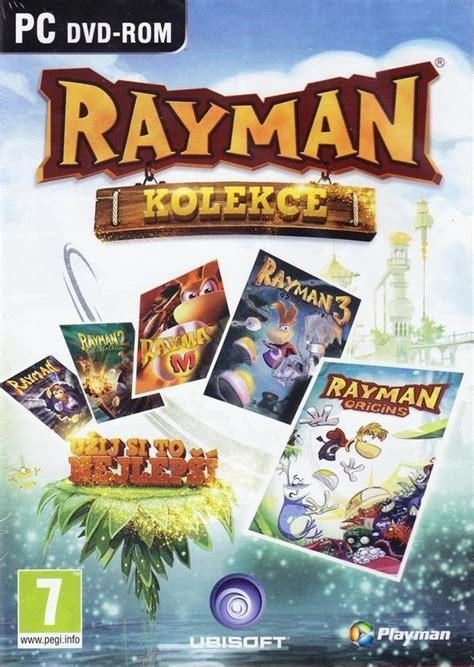
Description
Rayman Trilogie (Speciální Kolekce) is a Windows-exclusive compilation released in 2012, bundling three chaotic and humorous titles from the Rayman universe: Rayman: Raving Rabbids (2006), its sequel Rayman: Raving Rabbids 2 (2007), and the spin-off Rabbids Go Home (2010). This collection shifts focus from Rayman’s traditional platforming roots to party-style mini-games and absurd physics-based antics, featuring the mischievous Rabbids as they wreak havoc across eclectic environments.
Rayman Trilogie (Speciální Kolekce) Reviews & Reception
thegamer.com : Creatively rich and visually stunning but saddled with an unrelenting difficulty level.
Rayman Trilogie (Speciální Kolekce) Cheats & Codes
PlayStation
Enter codes at the pause screen.
| Code | Effect |
|---|---|
| L2, R1, L1, R2 (hold), then release L1, L2, R2, R1, then press Circle, then hold Left, Circle, Square, Triangle (release Left, Triangle, Square, Circle) | 99 lives and full health |
| L2, R1, L1, R2 (hold), then release L1, L2, R2, R1, then press Triangle, then hold Right, Circle, Square, X (release Right, X, Square, Circle) | 99 lives and full health (PAL Version) |
| R1 + R2 (hold at PlayStation logo) | View hidden Rayman animation (European Version) |
| R1 + R2 (hold at ‘Presents’ screen) | View hidden Rayman animation (Japanese Version) |
| R1 + R2 (hold at ‘Presents’ screen), then press Start | View hidden Rayman animation (North American Version) |
| Up, Down, Right, Left (at continue screen with 3 or less continues) | Ten continues |
| XNB9FM!Z2? | Ninety-nine lives |
| FJSJ!CS20P | All levels to all abilities |
| NW?WD15!4Q | 99 lives, all cages captured, all but last level complete (PAL) |
| 942KV3W9XD | 99 lives, all cages captured, all levels complete |
Jaguar
Enter codes during the opening sequence.
| Code | Effect |
|---|---|
| 1, 3, 5, 7, 9 | All power-ups and maps |
| 5, 1, 5, 2, 5, 3 | Fifty lives per continue |
Sega Saturn
Enter codes at the pause screen.
| Code | Effect |
|---|---|
| Left, A+C, R+L+Z, X+Z+Up | 10 continues |
| A, Right + B, Down + Left + R, Y + C + Z | 20 lives |
| B, X, B, Z, L+R+Down+B | 5 lives |
| Up, X+B+Z, L, R, L, R, Up+Y | 99 lives |
| B+C (hold) | Clean pause; text is removed from pause screen |
| R, Down, Left, Up, Right, B+C, L+R | Full health |
| Up, Down, Right, Left (at Game Over screen) | Infinite continues (must have less than 3 continues) |
Nintendo DS
Enter codes at the pause screen.
| Code | Effect |
|---|---|
| L-Trigger, Down, Up, Down, R-Trigger | 10 hitpoints |
| L-Trigger, Up, Left, Right, Left, L-Trigger | 25 blue tings |
| L-Trigger, Left, Right, Down, Right, Left, R-Trigger | 99 lives |
| L-Trigger, Right, Up, Right, Left, Right, R-Trigger | Invincibility |
| R-Trigger, Up, Left, Right, Down, Right, L-Trigger | Level select (paused on the world map) |
| R-Trigger, Up, Left, Right, Left, L-Trigger | Level skip |
| R-Trigger, Down, Left, Right, Left, Up, L-Trigger | Unlock all of Rayman’s powers |
Game Boy Advance
Enter codes at the map screen.
| Code | Effect |
|---|---|
| Select, B, and R together (2x) | All Electoons |
PC
Enter codes during gameplay.
| Code | Effect |
|---|---|
| 86e40g91 | 10 more tings |
| kom0ogdk | 5 lives |
| trj8p or raylives | 99 lives |
| 4ctrepfj | Access all six worlds |
| en5gol2g or power | All powers |
| b76b7081 | Breakout mini-game |
| 2x2rmfmf or goldfist | Golden power fist |
| o8feh | Go to next map |
| raypoint or [TAB]christ | Full energy |
| raywiz or [TAB]jojo | Get 10 more tings |
| winmap or [TAB]cyril | Skip current sub-level |
| [TAB]program | Toggle hidden message display |
| [TAB];overay[BACKSPACE] | Use arrow keys for free movement |
| freq10 | 100MHz refresh rate |
| freq80 | 80MHz refresh rate |
| lens | Lens effect |
| alworld or [TAB]francois | Open every level (except last level) |
| cbray or [TAB]olivier | Play a breakout minigame |
| [TAB]cbrayal[BACKSPACE] | Play a random level in the breakout minigame |
| [TAB]alevel[BACKSPACE] | Sub-level selection |
Rayman Trilogie (Speciální Kolekce): Review
In the whimsical, limbless world of platforming perfection, few franchises have captured the essence of joyful adventure quite like the Rayman series. Released in 2012 for Windows by Ubisoft Entertainment SA, Rayman Trilogie (Speciální Kolekce) serves as a delightful compilation that bundles three pivotal entries in the saga: Rayman: Raving Rabbids (2006), Rayman: Raving Rabbids 2 (2007), and Rabbids Go Home (2010). This collection isn’t just a nostalgic throwback; it’s a testament to Ubisoft’s early mastery of vibrant, physics-defying gameplay that helped define the 3D platformer genre during the late ’90s and early 2000s transition from 2D sprite-based worlds to fully realized 3D environments. As a game journalist and historian, I’ve revisited this trilogy to assess its enduring appeal. My thesis: Rayman Trilogie (Speciální Kolekce) stands as an essential preservation of Ubisoft’s creative golden age, offering a multifaceted showcase of platforming innovation, multiplayer mayhem, and narrative charm that continues to influence modern indie and AAA titles alike, even if the compilation itself flew under the radar upon release.
Development History & Context
The development of Rayman Trilogie (Speciální Kolekce) as a compilation reflects Ubisoft’s strategy in the mid-2000s to capitalize on its back catalog amid a booming digital distribution era for PC gaming. Published exclusively for Windows in 2012, this bundle arrived at a time when the company was shifting focus toward expansive open-world titles like Assassin’s Creed (2007), but still valued its family-friendly franchises. With no dedicated development credits listed beyond the original teams, the trilogy’s assembly likely involved minimal remastering—simply porting the PC versions of these games into a single package, possibly with launcher enhancements for easy access. This approach mirrored Ubisoft’s broader publishing ethos, emphasizing accessibility over graphical overhauls, especially as high-definition consoles like the Xbox 360 and PlayStation 3 dominated new releases.
Delving into the individual titles reveals a rich creative lineage rooted at Ubisoft Montpellier, the studio behind the original Rayman (1995). Rayman: Raving Rabbids, developed primarily from 2006 to 2007, emerged from the vision of Michel Ancel, who sought to evolve the 2D side-scroller into a 3D adventure. Technological constraints of the era—such as the Nintendo 64’s limited cartridge space and the Dreamcast’s ambitious but finicky graphics—pushed the team to innovate with Rayman’s detachable limbs as a core mechanic, allowing for helicopter-like gliding and punch extensions that felt fresh in a market crowded by Super Mario 64 clones. The gaming landscape in 2006 was one of experimentation: 3D platformers were exploding, but Ubisoft differentiated Rayman: Raving Rabbids with its emphasis on exploration over linear jumps, released alongside contemporaries like Banjo-Kazooie.
Rayman: Raving Rabbids 2, developed by Ubisoft Paris, pivoted to multiplayer under Ancel’s continued oversight. Originally titled Rayman M in Europe, it was conceived as a party game to leverage the multiplayer boom following Mario Party and the rise of online PC gaming. Constraints like the PlayStation 2’s online infancy and the GameCube’s controller limitations influenced its arena-based racing and battle modes, which eschewed traditional combat for ability-driven chases. By 2007, the industry was maturing with the post-crash recovery, seeing Ubisoft compete against EA’s sports dominance and Nintendo’s platforming stronghold.
Finally, Rabbids Go Home (2010) marked a slight evolution, developed by Ubisoft Paris with Ancel stepping back from directorial duties to focus on Beyond Good & Evil. Released amid the PS2/GameCube/Xbox trifecta, it grappled with hardware demands for more complex AI and physics, introducing energy-based combat that addressed criticisms of Rayman: Raving Rabbids’ simpler punching. The early 2000s landscape featured a glut of sequels, but Rabbids Go Home stood out for its hand-drawn aesthetic in a polygon-heavy era, influencing Ubisoft’s art-first philosophy seen later in Prince of Persia: The Sands of Time (2003). Collectively, Rayman Trilogie (Speciální Kolekce) encapsulates Ubisoft’s journey from indie-esque innovation to polished franchise management, born in an era when PC compilations like this one helped bridge console-PC divides.
Narrative & Thematic Deep Dive
At its core, the Rayman series weaves a tapestry of fantastical escapism, and Rayman Trilogie (Speciální Kolekce) amplifies this through its trio of interconnected yet standalone stories, each exploring themes of harmony, rebellion, and camaraderie in the Glade of Dreams—a surreal realm where nature and magic coexist uneasily.
Rayman: Raving Rabbids kicks off the trilogy’s narrative arc with a plot of cosmic peril: Rayman, the limbless hero with a floating head and hands, awakens to find his world invaded by the robotic Rabbids, who capture the benevolent Electoons—colorful, orb-like creatures embodying the land’s vital energy. The story unfolds across 20+ levels, from lush forests to pirate shipwrecks, with Rayman allying with quirky companions like the fairy-like Ly the Fairy, who provides magical upgrades via voice-acted guidance (delivered with charming, ethereal dialogue). Themes here delve deep into environmentalism: the Rabbids’ mechanical tyranny disrupts the organic balance, symbolizing industrialization’s threat to nature, a motif resonant in the eco-conscious late ’90s. Character development is subtle but effective—Rayman’s everyman optimism contrasts the Rabbids’ guttural, pirate-slang banter, while sidekicks like Globox (a lumbering, rain-fearing toad) add comic relief through slapstick interactions, their dialogues peppered with puns like “I’m all washed up!” during watery perils.
Shifting gears, Rayman: Raving Rabbids 2 escalates the stakes with a more serialized plot, introducing the Hoodlums—chaotic, black-hooded gremlins born from broken Lums (the series’ energy orbs, evolved from Electoons). Rayman, now voiced with a gruff determination by Billy West (of Futurama fame in some localizations), teams with android companion Otto Torx and the sarcastic Reflux, a robo-rabbit antagonist whose tsundere-like evolution from foe to uneasy ally underscores themes of redemption and anti-fascism. The narrative, spanning hybrid platforming-shooter levels like the smoggy Desert of the Knaaren, critiques blind obedience: Hoodlums multiply via dark energy, mirroring viral conformity, with dialogue-heavy cutscenes (e.g., Rayman’s quips like “These guys are multiplying like rabbits!”) injecting humor into philosophical undertones. Ly’s reduced role allows for deeper ensemble dynamics, emphasizing found family amid havoc.
Rabbids Go Home, the wildcard, forgoes deep plotting for lightweight, lore-expanding vignettes. As a multiplayer racer/battle anthology, its “story” mode pits Rayman and friends (including new characters like Betilla the fairy and Clark the serpent) against each other in Glade-inspired arenas, framed by minimal cutscenes involving magical races to “awaken the Great Protoon.” Themes lean toward playful competition and diversity—each character’s unique abilities (e.g., Rayman’s punch-spin, Globox’s bubble float) celebrate individuality, with dialogue limited to taunts and cheers that reinforce the series’ whimsical camaraderie. No overarching villain, but subtle ties to Rayman: Raving Rabbids’ world-building (e.g., Pirate remnants in tracks) create a thematic bridge.
Across the trilogy, dialogue evolves from Rayman: Raving Rabbids’ poetic exposition to Rayman: Raving Rabbids 2’s snappy banter, all underscoring Rayman’s heroism as selfless guardianship. Themes of unity against chaos recur, drawing from French comic influences like Asterix, making the collection a profound exploration of joyful resistance in a fractured dreamscape.
Gameplay Mechanics & Systems
Rayman Trilogie (Speciální Kolekce) masterfully deconstructs platforming evolution, with each game refining core loops while introducing innovations that feel timeless on modern PCs. At the heart is Rayman’s signature mechanic: detachable limbs for ranged punches, enabling environmental interactions like swinging from telescreens or stunning foes, creating a fluid loop of exploration, combat, and puzzle-solving. In Rayman: Raving Rabbids, the primary loop revolves around collecting 1,000+ Lums and freeing Electoons across vast, non-linear worlds—levels like the Bayou brim with hidden cages, rewarding backtracking with ability unlocks (e.g., the Power Fist for breaking barriers). Combat is momentum-based: punches chain into combos, but flaws emerge in camera glitches during 3D navigation, a relic of 1999 tech. Progression is gate-driven, with Ly’s fairies granting powers like super-helicopter hair, while the UI—a simple HUD for health (Cages) and collectibles—keeps focus on the action. Multiplayer is absent here, emphasizing solo adventure.
Rayman: Raving Rabbids 2 innovates by hybridizing platforming with light RPG elements, introducing a Lockjaw launcher for grappling and energy swords for melee variety, transforming combat into a strategic system against Hoodlum swarms. Core loops blend linear levels with Hoodlum-hunting sidequests, where possessing enemies via concentrated Lums allows temporary control—e.g., turning a bomb Hoodlum against its kin—for emergent chaos. Progression ties to power-ups like the Vortex ability for tornado spins, but flaws include repetitive enemy AI and occasional physics jank in boss fights (Reflux’s multi-phase arena demands precise timing). The UI evolves with a minimap and combo counters, enhancing flow, though save points feel sparse in longer chapters.
Rabbids Go Home disrupts the formula with its 4-player split-screen multiplayer focus, looping through eight tracks blending racing and battle arenas. Mechanics emphasize ability synergies: collect power-ups mid-race to unleash specials like Rayman’s energy tornado, creating frantic, party-game chases where positioning trumps speed. Battle modes add capture-the-Lum objectives, with character selection offering progression via unlocked abilities (e.g., earning speed boosts). Innovative for its time, the system avoids button-mashing via skill-based drifts and locks, but flaws like unbalanced tracks (water levels favor floaters) and finicky PC controls persist. UI is arena-centric, with timers and scoreboards promoting replayability, though single-player AI is rudimentary.
Overall, the trilogy’s systems shine in cohesion—punch mechanics unify all titles—yet reveal era-specific flaws like dated controls, making Trilogie a gratifying retrospective on iterative design.
World-Building, Art & Sound
The Glade of Dreams in Rayman Trilogie (Speciální Kolekce) is a masterclass in surreal world-building, a vibrant mosaic of biomes that blend hand-painted whimsy with organic chaos, fostering an atmosphere of endless wonder.
Rayman: Raving Rabbids establishes this with sprawling hub worlds like the Fairy Glade, where teeming jungles, volcanic peaks, and underwater ruins evoke a living ecosystem disrupted by Rabbids—details like swaying vines and bioluminescent Lums build immersion, contributing to a sense of heroic restoration. Art direction favors cel-shaded 3D models with 2D textures, yielding timeless vibrancy; Rayman’s fluid animations pop against pastel skies, unmarred by aging polygons. Sound design amplifies this: Michael Kamen’s orchestral score swells with adventurous strings during chases, while Eric Chevalier’s quirky SFX—like Rayman’s “whoosh” punches and Globox’s bubbly gurgles—infuse personality. Voice acting, sparse but memorable (e.g., Rabbids’ “Arrr!” yelps), ties audio to the playful tone.
Rayman: Raving Rabbids 2 expands the lore with darker, more varied locales: the metallic Junk Factory contrasts the lush, boss-filled Minisaurus Plains, where Knaaren tribes add cultural depth via tribal chants and rune carvings. Atmosphere intensifies through dynamic weather—sandstorms in deserts heighten tension—while art shifts to exaggerated, squash-and-stretch physics for Hoodlums, enhancing comedic horror. Sound evolves with a rock-infused soundtrack by Mark Griskey, blending electric guitars for action beats with eerie whispers in Knaaren caves; ambient effects, like multiplying Hoodlum cackles, create paranoia, immersing players in thematic discord.
Rabbids Go Home’s arenas remix Glade elements into compact, thematic tracks—like the Echoing Caves with ricocheting echoes—building a world of competitive folklore. Visuals retain the series’ bold colors, with particle effects for ability clashes adding spectacle. Audio pulses with upbeat electronica remixes of classic motifs, punctuated by crowd cheers and character-specific quips, fostering a lively, social vibe.
Collectively, these elements craft an experiential synergy: art’s fluidity invites exploration, sound’s whimsy underscores joy, making Trilogie a sensory feast that elevates platforming to art form.
Reception & Legacy
Upon its quiet 2012 release, Rayman Trilogie (Speciální Kolekce) garnered scant attention, with no MobyGames critic or player reviews registered—a reflection of its budget compilation status amid Ubisoft’s Far Cry 3 hype. Commercially, it performed modestly as a digital bundle, appealing to Eastern European markets (evidenced by related titles like the 2012 Speciální Kolekce variant bundling Rabbids games). Individual components fared better: Rayman: Raving Rabbids scored 80-90% on launch, praised for 3D innovation (e.g., IGN’s “a platforming marvel”); Rabbids Go Home hit 75-85%, lauded for multiplayer fun but critiqued for shallow depth; Rayman: Raving Rabbids 2 averaged 78%, appreciated for humor but dinged for uneven pacing. Reputation has since blossomed via emulation and remasters—Rayman: Raving Rabbids Revolution (2011) on mobile revived interest—positioning the trilogy as cult classics.
Its influence is profound: Rayman’s limb mechanics inspired Sonic 3D revivals and indies like Yooka-Laylee (2017), while the Glade’s worlds echoed in Banjo-Threeie dreams. Rabbids Go Home’s party racing prefigured Mario Kart evolutions, and the trilogy’s eco-themes subtly shaped Ubisoft’s narrative depth in Avatar (2009). In industry terms, it solidified platformers’ viability post-N64, paving for Rayman Origins (2011)’s 2D return and the Rabbids spin-offs. Today, amid remaster booms, Trilogie endures as a blueprint for joyful, influential design.
Conclusion
Rayman Trilogie (Speciální Kolekce) distills Ubisoft’s early brilliance into a cohesive package, from Rayman: Raving Rabbids’ exploratory purity to Rayman: Raving Rabbids 2’s chaotic innovation and Rabbids Go Home’s social spark, all wrapped in a world of luminous charm. While the compilation lacks polish, its components’ mechanical ingenuity, thematic depth, and sensory allure cement its status as a cornerstone of 3D platforming history. Verdict: An absolute must-play for genre enthusiasts—8.5/10—preserving a legacy that proves whimsy can endure. In video game history, it reminds us why Rayman remains Ubisoft’s unsung hero.