
- Release Year: 2003
- Platforms: Android, iPad, iPhone, Macintosh, tvOS, Windows Apps, Windows Phone, Windows, Xbox 360
- Publisher: Fabricated Reality Software
- Developer: Fabricated Reality Software
- Genre: Simulation
- Perspective: First-person
- Game Mode: Single-player
- Gameplay: Aerial Maneuvers, Flight Simulation, RC Flying
- Setting: Real-world
Description
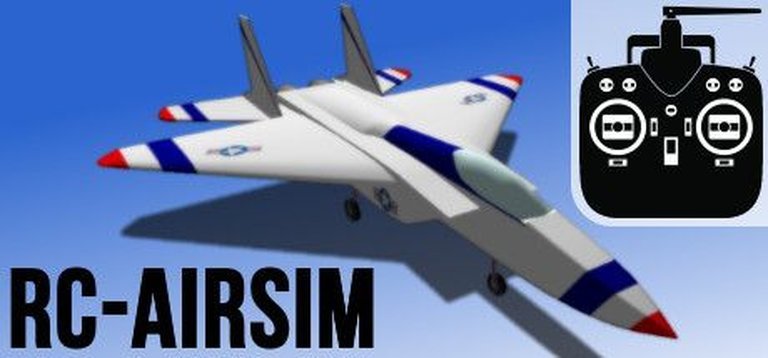
RC-AirSim: RC Model Airplane Flight Simulator is a realistic simulation game that replicates the experience of piloting remote-controlled model airplanes. It emphasizes authentic physics and flight dynamics, capturing both the thrill and the challenges of real-world RC flying, and is designed primarily for aviation enthusiasts and hobbyists seeking a practice tool. Developed by Fabricated Reality Software, it features a first-person perspective and direct control interfaces across multiple platforms, from Windows to mobile devices.
Where to Buy RC-AirSim: RC Model Airplane Flight Simulator
PC
RC-AirSim: RC Model Airplane Flight Simulator Reviews & Reception
steamcommunity.com : It’s very basic and a port of an Xbox360 game from 10 years ago. I would say that it is handy for when the model is flying at you and you need to reverse control inputs. A lot of people new to the hobby struggle with that. Otherwise it’s very basic, it’s not a learn to fly model aircraft simulator.
RC-AirSim: RC Model Airplane Flight Simulator: A Definitive Review
Introduction: The Unlikely Nostalgist
In the vast, often impersonal landscape of simulation games, where blockbuster titles promise photorealistic global sceneries and thousands of operational systems, RC-AirSim: RC Model Airplane Flight Simulator stands as a quiet, defiant anachronism. It is a game that did not seek to replicate the grandeur of commercial aviation or the dogfight-drenched legacy of combat flight sims. Instead, it carved out a hyper-specific, deeply technical niche: the tactile, frustrating, and profoundly rewarding experience of piloting a miniature aircraft from the ground. Released initially in 2003 by the one-man (or very small team) studio Fabricated Reality Software, and later finding a massive second life on mobile platforms and Steam, RC-AirSim is less a narrative-driven game and more a digital dojo. Its “story” is not one of heroes and villains, but of gravity, aerodynamics, and the humbling journey from inevitable crash to controlled flight. This review will argue that RC-AirSim’s historical significance lies not in its graphics or scope, but in its fierce, uncompromising commitment to a singular simulation principle. It is a masterclass in doing one thing—realistic RC flight dynamics—extremely well, and its legacy is written in the successful maiden flights of countless hobbyists who first learned the language of rudder, aileron, and elevator within its humble digital skies.
Development History & Context: From XBLIG Indie Darling to Mobile Mainstay
The Studio & The Vision:
Fabricated Reality Software is, for all intents and purposes, Tim Eichor. The developer’s own statements and the game’s consistent marketing identify him as an aerospace engineer, a credential that is the absolute cornerstone of RC-AirSim’s authenticity. This was not a project born of game design students or portfolio-building artists; it was an application of professional aeronautical knowledge to a personal computing problem: how to practice RC flying without a field, good weather, or a tolerance for expensive crash repairs. The vision was explicitly pedagogical and vocational, not entertainment-first.
Technological Constraints & The Engine:
The game’s longevity and cross-platform success are a testament to its lightweight, physics-first architecture. Built on the Unity engine with Bullet Physics middleware and FMOD for sound, it was designed for efficiency. The original 2003 Windows release was a modest download (around 200MB), and this lean philosophy carried into its mobile iterations. This technical minimalism allowed it to run on everything from early Xbox Live Indie Games (XBLIG) hardware to the first-generation iPad and Android tablets. The choice of Unity was prescient; it became the perfect vessel for a simulator whose complexity resided in its mathematical flight models, not in polygon counts or texture resolutions.
The Gaming Landscape & Release Timeline:
The 2003 release was a quiet, direct-sales download product, a common path for hardcore sims before Steam’s dominance. Its true breakthrough came with the Xbox Live Indie Games (XBLIG) service around 2009-2010. Here, in a marketplace hungry for unique, affordable experiences, RC-AirSim found its audience. Its claim to have “held the #1 ranking position for many weeks” on XBLIG is crucial—it speaks to a pent-up demand for a real RC sim in a sea of arcadey, toy-like flight games. This indie success provided the feedback andRevenue to fuel its aggressive expansion to iOS (2012), Android (2014), Windows Phone/Tablet, Mac, tvOS, and a full Steam release (2017). The Steam version, listed as a 2017 release, is best understood as a modern repackaging and continued support of a decade-old codebase, updated with features like enhanced controller remapping (v1.2) and high-resolution scenery.
A Critical Note on Discrepancy: MobyGames lists the original Windows release as June 15, 2003, while the Steam storefront and modern portals cite a 2017 date. This reflects the gap between its initial, niche launch and its modern, platform-agnostic availability. The “game” is effectively from 2003, but its cultural footprint was built post-2010.
Narrative & Thematic Deep Dive: The Pedagogy of Crash and Recovery
RC-AirSim possesses no conventional plot, characters, or dialogue. Its “narrative” is an emergent, player-driven tutorial of failure. The thematic core is the dignity of manual skill and the physics-bound reality of flight. Every session begins with a blank field (often with a solitary shed to fly behind, as updates humorously note) and an aircraft selected from the roster. The implicit story is:
- The Thesis (Takeoff): You believe you understand flight. You push the throttle, the plane accelerates, and you捏着 (nǐ zhe – clutching) the transmitter sticks, attempting a graceful climb.
- The Antithesis (The Crash): Gravity, momentum, and your own misinterpretation of control inputs betray you. A wing dips, you over-correct, the ground rushes up. The “Awesome crashes! Planes break apart in a realistic physics-based manner” feature is not morbid spectacle; it is the primary feedback mechanism. The violent disintegration is a brutal, visceral lesson in what not to do.
- The Synthesis (The Next Attempt): You reset. You internalize the lesson—perhaps the rudder needs more input in the turn, or you must hold off on pulling back until airspeed builds. The cycle repeats, each crash a costly (in time, not money) data point.
The themes are pure simulationist: mastery through repetition, respect for systems, and the translation of 2D screen input into a 3D spatial understanding of an object you cannot see from the cockpit (the “R/C view”). The optional “Onboard camera (FPV)” view changes this dynamic entirely, creating a new narrative of first-person navigation. The game’s most profound thematic statement is its rejection of hand-holding. There are no checklists to magically complete, no “mission accomplished” banners after a simple circuit. Success is the smooth, sustained, controlled flight. The only “victory condition” is self-imposed.
Gameplay Mechanics & Systems: The Razor’s Edge of Realism
Core Gameplay Loop:
1. Selection: Choose an aircraft (from the 9 available) and a control mode (Mode 2, Mode 1, or 3-Channel).
2. Calibration: Map your controller (a process heavily emphasized in v1.2 updates, supporting everything from gamepads to dedicated RC USB interfaces).
3. Flight: Pilot from one of three views: the quintessential R/C (Line-of-Sight) view, a cinematic Following (Chase cam), or the immersive Onboard (FPV) view.
4. Crash & Reset: Breathe, learn, and try again.
Flight Dynamics & The NASA Claim:
This is the game’s soul. The marketing consistently states it uses “Realistic r/c model airplane flight aerodynamics based on NASA flight simulation technology.” While likely referring to general aerodynamic principles and simulation methodologies (like lifting line theory or computational fluid dynamics approximations) used in research, not proprietary code, the claim holds water in practice. Each aircraft model handles with a distinct, believable personality:
* Back 40 Trainer: Tolerant, stable, with high-wing dihedral that self-corrects. The quintessential first plane.
* F-15 Regal Eagle / Madster EDF: Jets with high wing-loading, faster response, and severe consequences for slow-speed Handling (i.e., stalling).
* WWI Flying Ace: The biplane’s large surface area and lower speed create a majestic, floaty feel, with pronounced adverse yaw.
* Emerald Glider: A pure thermaling challenge, using the ‘throttle’ channel as a drag/flap control for altitude management without power.
The flight model accurately simulates stall characteristics, knife-edge flight, and torque effects from propellers (on the electric and gas planes). As one Steam user review critically notes, you cannot tip-stall or spin in the same dramatic, unrecoverable way as in some higher-fidelity sims like RealFlight. This is a calculated design choice: RC-AirSim prioritizes controllability and training utility over absolute, punishing realism. It simulates the feel and response of an RC plane, not always the catastrophic failure modes. This makes it accessible but, as the reviewer warns, can foster bad habits if used as a sole training tool.
Control System & Accessibility:
The support for 3 control modes is a direct nod to RC transmitter conventions:
* Mode 2 (Default): Left Stick: Throttle/Rudder; Right Stick: Elevator/Aileron. (Most common for North American hobbyists).
* Mode 1: Left Stick: Elevator/Rudder; Right Stick: Throttle/Aileron.
* 3-Channel Mode: For simpler planes (like the Slowmowatt or Glider), eliminates ailerons, mapping rudder/elevator to one stick for extreme beginner-friendliness.
The inclusion of an optional on-screen Transmitter Sticks HUD is a brilliant piece of UI design for mobile and mouse players, visually bridging the gap between a game controller and a real transmitter’s stick positions.
Crashes & Damage:
The “realistic physics-based manner” of break-up is not just for show. It provides instant, unambiguous feedback. A wing shears off after a hard, wing-first landing. It’s satisfying in a way a simple “CRASH” text could never be, reinforcing the physicality of the model.
Missing Systems & “The Arcade Feeling”:
The criticism that it “flies far too slowly” and “is very basic” is valid when compared to the cutting edge. The environment is a single, static field with basic objects (the shed, trees). There is no wind simulation, no thermals for the glider (beyond the basic ‘throttle-as-drag’ mechanic), no changing weather, no battery or fuel management mechanics beyond a simple timer, and no multiplayer or racing modes. This austere approach is its greatest strength and weakness. It isolates the pure act of flying but offers none of the systemic depth or emergent challenges of a full hobbyist sandbox like RealFlight.
World-Building, Art & Sound: Function Over Form
Visuals:
The art direction is proudly utilitarian and clear. The low-poly 3D models (especially noticeable in the 2003 version) prioritize readability at a distance—the “R/C view”—over visual fidelity. Textures are simple and sometimes stretched. The environments are minimal: a grassy field, a few trees, a shed. The 2015+ versions added higher-resolution “sheds” and engine smoke trails for certain aircraft, a small but meaningful upgrade that adds visceral feedback to power management. The visual goal is never to awe, but to provide a clear, low-latency canvas for the flight model to operate on. The focus is on the plane, not the world.
Sound Design:
The Doppler-correct sound is a standout, sophisticated feature. The pitch and volume of the engine/propeller noise correctly shift as the plane flies past the pilot’s position, a critical auditory cue for orientation and distance in the R/C view. The different aircraft—from the high-pitched whine of an electric ducted fan to the deeper buzz of a “gas” (glow-plug) engine—are distinctly rendered. The addition of menu music in v1.2 is a charming, character-filled touch, underscoring the developer’s pride in the product.
Atmosphere:
The atmosphere is one of quiet intimacy. There is no dramatic soundtrack during flight, no voice-over instructor, no ambient wind. The sounds are the plane, the (non-existent) breeze, and your own thoughts. This emptiness forces focus onto the machine and its behavior, perfectly suiting the meditative, skill-based experience.
Reception & Legacy: The Indie Success Story
Critical & Commercial Reception:
Formal critical reception is almost non-existent—MobyGames records a single critic score of 73% from All About Windows Phone. This review perfectly encapsulates the divide: it praises the “wildly” successful replication of real-world RC behavior but immediately caveats that “all the frustrations of the real world come over as well.” It is a niche-positive review.
The user reception tells the real story. On Steam, it holds a “Mostly Positive” (76%) rating across 56 reviews. The positivity comes overwhelmingly from actual RC hobbyists. Reviews like “I have been flying R/C’s for years. This app has extremely realistic flight characteristics. Tried several other r/c apps and none compare. As close to flying the real thing as you can get on a small device” are common. The negativity often stems from expectations mismatch. Players expecting an arcade game, a combat sim, or a graphically impressive open-world experience are baffled and disappointed. The complaint “no dog fighting” from a Steam discussion user is telling—it reveals a fundamental category error.
Legacy & Influence:
RC-AirSim’s legacy is twofold:
- The Gold Standard for Accessible RC Training: For over a decade, it has been the go-to recommendation for newcomers to the RC hobby looking for a safe, cheap first step. Its success on XBLIG proved there was a massive market for realistic, low-cost simulations of niche hobbies. It directly competed with, and for many users surpassed, more expensive PC options in terms of “feel.”
- A Case Study in Sustainable Indie Sim Development: Fabricated RealitySoftware’s strategy—develop a tight, core-accurate simulation, then port it relentlessly to every new platform (mobile, tablets, Steam, Mac, Apple TV)—is a masterclass in maximizing the return on a single, well-executed idea. It remained relevant by simply being the most portable, consistent RC sim on the market. Its influence is less about mechanics copied by AAA studios and more about proving a viable business model for hyper-focused simulation.
It occupies a specific place in the simulation genre hierarchy: the essential training tool. Where Microsoft Flight Simulator is a global tourism and systems simulator, and DCS World is a hyper-detailed combat systems simulator, RC-AirSim is the maiden flight simulator. Its influence is in the hangars and starter fields of the real world.
Conclusion: A Niche Masterpiece
RC-AirSim: RC Model Airplane Flight Simulator is not for everyone. It will not dazzle you with a story, challenge you with intricate mission design, or impress you with next-gen visuals. What it does, it does with aerospace-engineer precision: it provides a believable, responsive, and consequentially honest translator between a human’s two-dimensional stick inputs and the three-dimensional, physics-dictated dance of a miniature aircraft.
Its place in video game history is that of a quietly revolutionary tool. It democratized the initial, terrifying step into the RC hobby, saving countless beginners from the financial and emotional wreckage of a day-one total loss. It demonstrated that profound simulation depth could exist in a 200MB package, years before ” indie sim boom.” It succeeded because it refused to be an arcade game, embracing the very frustrations that define its subject matter.
Final Verdict: For the curious hobbyist or the sim enthusiast seeking a brutally authentic taste of a specific, hands-on skill, RC-AirSim remains a essential, timeless classic. Its score reflects not its graphical fidelity (which is dated) but its unwavering success in its core mission: making the complex, delicate art of flying a model airplane understandable, practiceable, and profoundly engaging from your living room chair. It is a 9/10 for its intended audience and a 4/10 for anyone else—a perfect encapsulation of its specialized, indispensable legacy.