
- Release Year: 2001
- Platforms: Windows
- Publisher: Kool Dog Entertainment
- Developer: Daniel Smith (‘Knuckles’), George Bray (‘Sheepman’), Steve Harrison (‘Fash’), Steve Smith (‘Xmystik)
- Genre: Action
- Perspective: Top-down
- Game Mode: Single-player
- Gameplay: Arcade, Level editor
- Setting: Futuristic, Sci-fi
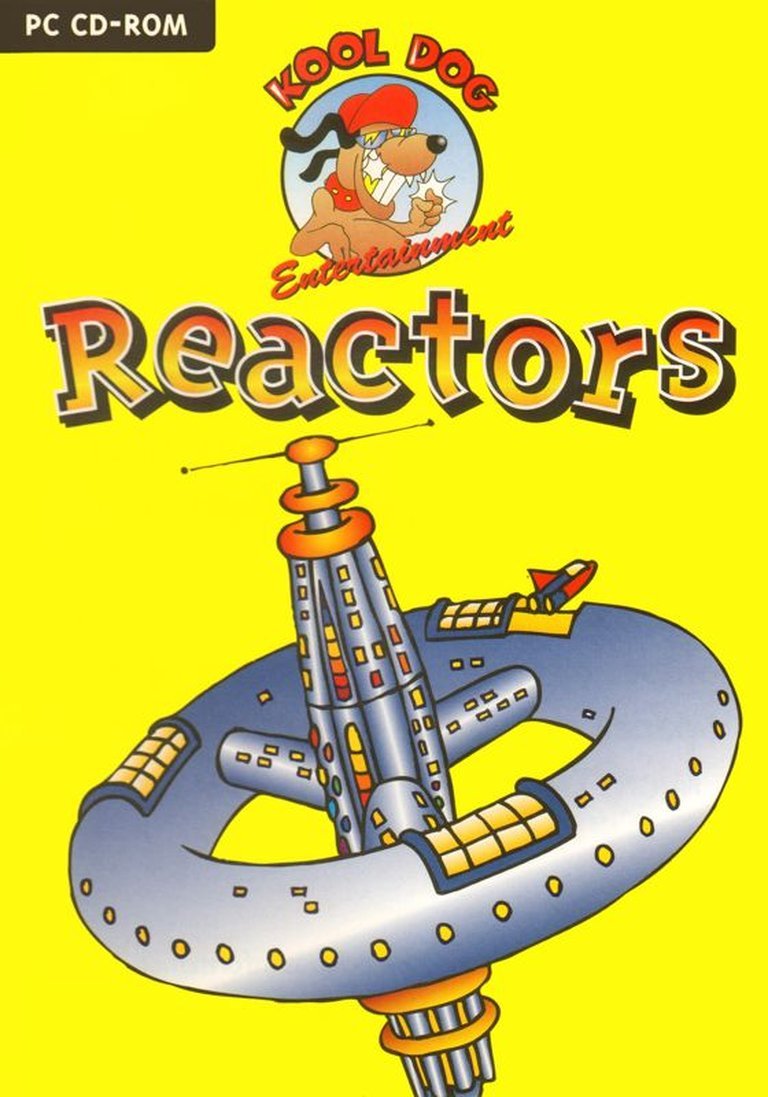
Description
Reactors is a sci-fi arcade game where players control a slowly spinning stick, navigating it through tight spaces inside space stations without hitting the walls. The goal is to destroy reactors and enemies by touching them with the stick’s ends, while avoiding contact with the center, which results in losing a life. The game features 25 levels, various obstacles, power-ups, and includes a level editor for custom content.
Where to Buy Reactors
PC
Reactors Reviews & Reception
hagensalley.wordpress.com : Overall, Reactor is a fun single screen arcade game that I found myself really enjoying.
Reactors: A Forgotten Gem of the Early 2000s Puzzle Genre
Introduction
In the vast ocean of video game history, some titles shine brightly, while others fade into obscurity, waiting to be rediscovered. Reactors, a 2001 puzzle game developed by Office X and published by Kool Dog Entertainment, is one such hidden gem. Released during a golden era of gaming that saw the birth of franchises like Halo, Grand Theft Auto III, and Metal Gear Solid 2, Reactors carved out its own niche with a unique blend of strategic gameplay, intricate mechanics, and a striking visual style. This review aims to resurrect Reactors from the annals of gaming history, exploring its development, gameplay, and legacy, while arguing that it deserves recognition as an innovative and engaging title that pushed the boundaries of the puzzle genre.
Development History & Context
The Studio and Creators
Reactors was developed by Office X, a studio that, despite its obscurity, demonstrated a keen understanding of puzzle game design. The game was published by Kool Dog Entertainment, a publisher known for its eclectic catalog of titles. The development team, led by Steve Smith (also known as ‘Xmystik’), was small but talented, with credits in programming, graphics, music, and game design. Notably, the game was built using Blitz Basic, a programming language created by Mark Sibly, who is credited in the game. This choice of engine highlights the indie spirit of the project, as Blitz Basic was a popular tool among small developers for its accessibility and efficiency.
Technological Constraints and the Gaming Landscape
The early 2000s were a period of rapid technological advancement in gaming. The PlayStation 2, released in 2000, had already begun to dominate the console market, while the Xbox and GameCube were on the horizon. Reactors, however, was a PC-exclusive title, released on Windows in 2001. The game’s 2D scrolling, top-down perspective, and arcade-style gameplay were somewhat anachronistic in an era increasingly dominated by 3D graphics and open-world designs. Yet, this retro aesthetic was part of its charm, offering a refreshing contrast to the more complex and visually demanding titles of the time.
The gaming landscape of 2001 was marked by a shift toward more mature and cinematic storytelling, as seen in games like Metal Gear Solid 2 and Silent Hill 2. Reactors, with its sci-fi setting and strategic gameplay, fit neatly into this trend, even if it lacked the narrative depth of its contemporaries. The game’s focus on puzzle-solving and strategy over action set it apart, appealing to a niche audience of puzzle enthusiasts.
The Vision Behind Reactors
The core vision of Reactors was to create a puzzle game that combined the precision of Tetris with the strategic depth of Lemmings. The game’s premise—manipulating components within a reactor to create chain reactions—was both innovative and challenging. The developers aimed to create a game that was easy to learn but difficult to master, with a steep learning curve that rewarded patience and strategic thinking. The inclusion of a level editor further emphasized the game’s focus on creativity and experimentation, allowing players to design their own challenges and share them with others.
Narrative & Thematic Deep Dive
Plot and Setting
Reactors is set in a futuristic world where players take on the role of a reactor technician tasked with managing the delicate balance of nuclear energy generation. The game’s narrative is minimal, focusing instead on the gameplay mechanics and the challenge of solving increasingly complex puzzles. The sci-fi setting is more atmospheric than story-driven, with the game’s visuals and sound design creating an immersive environment that evokes the tension and precision of managing a nuclear reactor.
Characters and Dialogue
Unlike many games of its era, Reactors does not feature a cast of characters or extensive dialogue. The player’s avatar is an unseen technician, and the game’s focus is squarely on the puzzles themselves. This lack of narrative depth is not a flaw but a deliberate design choice, allowing the gameplay to take center stage. The absence of characters and dialogue shifts the player’s attention to the strategic and cognitive challenges of the game, making Reactors a pure puzzle experience.
Themes
The primary theme of Reactors is the delicate balance between control and chaos. The game’s mechanics revolve around managing chain reactions within a confined space, where a single misstep can lead to catastrophic failure. This theme is reflected in the game’s visual design, which emphasizes the precision and complexity of nuclear energy management. The game also explores themes of creativity and experimentation, as players are encouraged to design their own levels and share them with the community.
Gameplay Mechanics & Systems
Core Gameplay Loop
At its core, Reactors is a puzzle game that challenges players to manipulate components within a reactor to create chain reactions. Each level presents a new configuration of obstacles and components, requiring players to strategically place and time their actions to ensure a seamless flow of energy. The game’s physics engine adds an additional layer of complexity, allowing for both trial-and-error experimentation and strategic planning.
The gameplay loop is straightforward but deeply engaging. Players must:
- Analyze the Level: Understand the layout of the reactor and the placement of components.
- Plan the Chain Reaction: Determine the optimal sequence of actions to create a successful chain reaction.
- Execute the Plan: Use precision and timing to manipulate components and avoid catastrophic failures.
- Iterate and Improve: Learn from mistakes and refine strategies to achieve a flawless reaction.
This loop is repeated across 25 levels, each with increasing complexity and challenge.
Combat and Character Progression
Reactors does not feature traditional combat or character progression systems. Instead, the game’s challenge lies in the puzzles themselves, with each level presenting a unique set of obstacles and components to manipulate. The absence of combat and progression systems allows the game to focus entirely on the puzzle-solving experience, making it a pure and unadulterated test of strategic thinking and precision.
UI and Controls
The game’s user interface is simple and intuitive, with a top-down perspective that provides a clear view of the reactor and its components. The controls are direct and responsive, allowing players to manipulate components with precision. The game’s minimalist UI ensures that the focus remains on the puzzles, with no unnecessary distractions or clutter.
Innovative and Flawed Systems
One of the most innovative aspects of Reactors is its level editor, which allows players to design their own puzzles and share them with the community. This feature adds a layer of creativity and experimentation to the game, extending its replayability and encouraging community engagement. However, the level editor is somewhat limited in scope, with a finite set of components and obstacles to work with. This limitation can restrict the creativity of more ambitious players, preventing them from designing truly unique and complex puzzles.
Another notable feature is the game’s physics engine, which adds a layer of realism and complexity to the puzzles. The engine allows for both trial-and-error experimentation and strategic planning, making each level a dynamic and engaging challenge. However, the physics engine can also be a source of frustration, as the unpredictable behavior of components can lead to unexpected failures and setbacks.
World-Building, Art & Sound
Setting and Atmosphere
Reactors is set in a futuristic world where nuclear energy generation is a delicate and precise science. The game’s visual design emphasizes the complexity and tension of managing a nuclear reactor, with intricate mechanical designs and vibrant colors creating an immersive and engaging environment. The sci-fi setting is more atmospheric than story-driven, with the game’s visuals and sound design working together to create a sense of urgency and precision.
Visual Direction
The game’s visual style is a blend of technical realism and artistic creativity. The reactor components are rendered with intricate detail, emphasizing their mechanical complexity and precision. The use of vibrant colors and geometric shapes adds a layer of artistic flair, making the game visually striking and engaging. The top-down perspective provides a clear and unobstructed view of the reactor, allowing players to focus on the puzzles without unnecessary distractions.
Sound Design
The sound design of Reactors is minimal but effective, with subtle beeps and escalating tones providing feedback on the player’s performance. The game’s soundtrack is soothing and motivating, creating an atmosphere of curiosity and excitement. The sound effects and music work together to enhance the immersive experience, drawing players into the world of nuclear energy management.
Reception & Legacy
Critical and Commercial Reception
Reactors was released in 2001 to little fanfare, overshadowed by the more high-profile titles of the era. The game received no critical reviews on MobyGames, and its commercial performance was likely modest. Despite its obscurity, Reactors has developed a small but dedicated following among puzzle enthusiasts, who appreciate its unique blend of strategic gameplay and intricate mechanics.
Influence on Subsequent Games
While Reactors did not spawn a franchise or directly influence major titles, its innovative gameplay mechanics and level editor have left a lasting impact on the puzzle genre. The game’s focus on precision, strategy, and creativity has inspired subsequent puzzle games, particularly those that emphasize chain reactions and strategic planning. The inclusion of a level editor also set a precedent for community-driven content creation, a feature that has become increasingly common in modern puzzle games.
Evolution of Reputation
Over the years, Reactors has gained a cult following among retro gaming enthusiasts and puzzle aficionados. The game’s unique blend of strategic gameplay and intricate mechanics has earned it a place in the annals of gaming history as an innovative and engaging title. While it may not be as well-known as its contemporaries, Reactors deserves recognition for its contributions to the puzzle genre and its enduring appeal to a niche audience.
Conclusion
Reactors is a hidden gem of the early 2000s puzzle genre, offering a unique blend of strategic gameplay, intricate mechanics, and a striking visual style. While it may have been overshadowed by the more high-profile titles of its era, Reactors deserves recognition for its innovative approach to puzzle-solving and its enduring appeal to a niche audience. The game’s focus on precision, strategy, and creativity, combined with its immersive sci-fi setting and engaging sound design, makes it a standout title in the puzzle genre.
In the grand tapestry of video game history, Reactors may not be a household name, but it is a testament to the creativity and innovation of small development teams. Its legacy lies in its unique gameplay mechanics, its emphasis on community-driven content creation, and its enduring appeal to puzzle enthusiasts. For those willing to delve into the annals of gaming history, Reactors offers a rewarding and engaging experience that stands the test of time.
Final Verdict: Reactors is a forgotten gem that deserves a place in the pantheon of classic puzzle games. Its innovative gameplay, striking visuals, and immersive sound design make it a standout title that continues to captivate and challenge players to this day. While it may not have achieved the commercial success or critical acclaim of its contemporaries, Reactors is a testament to the enduring appeal of well-crafted puzzle games. For fans of the genre, it is a must-play title that offers a unique and rewarding experience.