
- Release Year: 1997
- Platforms: Macintosh, Windows 16-bit, Windows
- Publisher: Learning Company, Inc., The
- Developer: Learning Company, Inc., The
- Genre: Educational
- Perspective: 3rd-person (Other)
- Game Mode: Single-player
- Gameplay: Mini-games, Reading, writing
- Setting: Fantasy
- Average Score: 100/100
Description
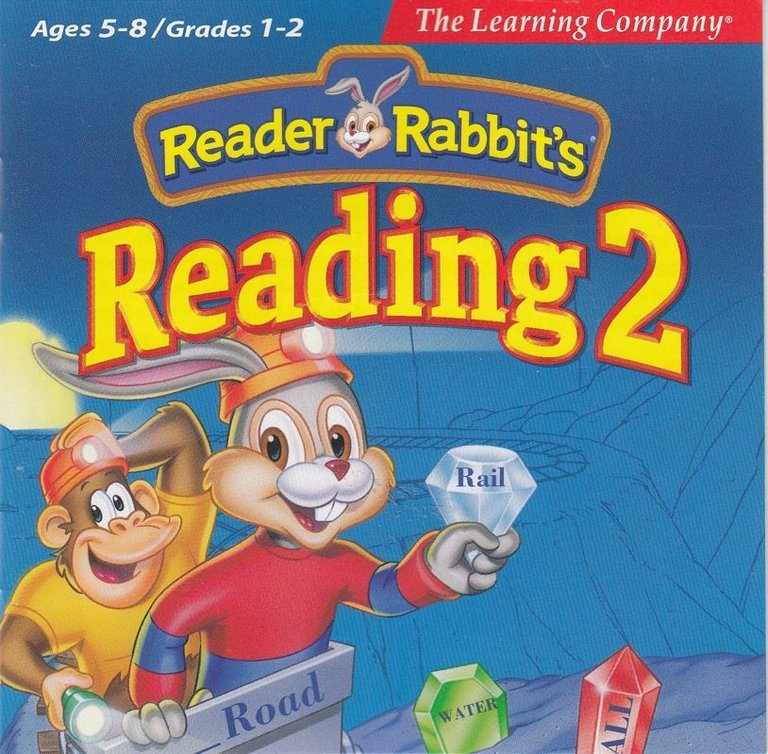
Reader Rabbit’s Reading 2 is an educational game designed for children aged five to eight or in the first and second grade, set in the fantasy world of Wordville where words are disappearing. Players join Reader Rabbit, Ernest the Train, and Mat the Mouse on a mission to collect and replenish words through four engaging mini-games: Alphabet Dance, Match Patch, Vowel Pond, and Word Mine. Each activity focuses on developing essential reading skills such as alphabetical order, rhyming, vowel sounds, and compound word formation, with a graphical overhaul from its predecessors to enhance the learning experience.
Gameplay Videos
Reader Rabbit’s Reading 2 Free Download
Reader Rabbit’s Reading 2 Reviews & Reception
en.wikipedia.org (100/100): A solid choice for young players at school and home.
Reader Rabbit’s Reading 2: A Timeless Educational Gem
Introduction
In the pantheon of educational video games, few titles have left as indelible a mark as Reader Rabbit’s Reading 2. Released in 1997 by The Learning Company, this game is a testament to the power of blending fun with education. Targeted at children aged five to eight, Reader Rabbit’s Reading 2 is a reimagining of the original Reader Rabbit 2 (1991) and its Deluxe iteration (1996). It stands as a pivotal entry in the Reader Rabbit series, which has been a cornerstone of early childhood education for decades. This review delves into the game’s development history, narrative depth, gameplay mechanics, and its enduring legacy, arguing that Reader Rabbit’s Reading 2 is not just an educational tool but a cultural artifact that shaped a generation of young readers.
Development History & Context
The Studio and Its Vision
The Learning Company, founded in 1980, was a pioneer in educational software. By the mid-1990s, the company had established itself as a leader in the edutainment genre, with the Reader Rabbit series being one of its flagship products. The series was conceived by Leslie Grimm and initially focused on teaching reading skills through engaging, interactive experiences. Reader Rabbit’s Reading 2 was developed as part of a broader strategy to update and re-release older titles with modernized graphics and gameplay mechanics.
Technological Constraints and Innovations
Released in 1997, Reader Rabbit’s Reading 2 was a product of its time, leveraging the capabilities of mid-1990s personal computers. The game was designed to run on Windows 95/98 and Macintosh systems, utilizing the then-cutting-edge technology of CD-ROMs for high-quality graphics and sound. The transition from floppy disks to CD-ROMs allowed for richer visuals and more complex animations, which were crucial for maintaining the attention of young learners.
The game’s development team, led by Producer Kate Lilienthal and Executive Producer Kevin A. Richardson, included a diverse group of animators, software engineers, and sound designers. Notable contributors included Lead Animator Doug Gray and Background Artist Shaowei Liu, whose work brought the vibrant world of Wordville to life. The game’s sound design, led by Alan Nu, featured additional music by Brian Burge, creating an immersive auditory experience that complemented the visuals.
The Gaming Landscape
The late 1990s was a transformative period for educational gaming. The rise of CD-ROM technology allowed for more sophisticated educational software, and Reader Rabbit’s Reading 2 was part of a wave of titles that sought to make learning more engaging through interactive and visually appealing content. The game competed with other educational titles like The ClueFinders series, also by The Learning Company, and JumpStart games, which were popular among young learners.
Narrative & Thematic Deep Dive
Plot and Characters
The narrative of Reader Rabbit’s Reading 2 is straightforward but effective. The game is set in Wordville, a whimsical town where words are the currency of daily life. The town is facing a crisis: it is running out of words, and without them, communication and daily activities grind to a halt. Reader Rabbit, accompanied by his friends Mat the Mouse and Ernest the Train, embarks on a mission to collect words and restore balance to Wordville.
The game’s characters are designed to be relatable and engaging for young children. Reader Rabbit, the titular protagonist, is a friendly and adventurous rabbit who serves as the player’s guide. Mat the Mouse is his loyal companion, adding a touch of humor and camaraderie. Ernest the Train is a reliable mode of transportation, while other characters like Holey Mole and Sylvia Skunk populate the world, providing additional interactions and challenges.
Dialogue and Themes
The dialogue in Reader Rabbit’s Reading 2 is simple and clear, designed to be easily understood by young children. The game’s narrative emphasizes the importance of words and language, reinforcing the idea that reading is a fundamental skill. Themes of teamwork, problem-solving, and perseverance are woven into the gameplay, as players must complete various activities to help Wordville.
The game’s setting, Wordville, is a fantastical world where words are tangible objects. This creative approach to language learning helps children visualize abstract concepts, making the learning process more concrete and engaging. The game’s whimsical art style and cheerful music create a positive and encouraging environment, which is crucial for young learners.
Gameplay Mechanics & Systems
Core Gameplay Loop
Reader Rabbit’s Reading 2 is structured around four main activities: Alphabet Dance, Match Patch, Vowel Pond, and Word Mine. Each activity is designed to teach specific reading skills, such as letter recognition, vowel sounds, and word construction. Players progress through these activities, earning rewards and unlocking new levels as they master each skill.
Alphabet Dance
In Alphabet Dance, players are presented with four dancers, each with a name that starts with a different letter. The objective is to arrange the dancers in alphabetical order based on the first letter of their names. This activity helps children learn the alphabet and develop sequencing skills. The game features four levels of difficulty, allowing for progressive learning.
Match Patch
Match Patch is a matching game where players create pairs based on opposites, homonyms, or rhyming words. This activity enhances vocabulary and phonemic awareness, as players must recognize and match words that share similar sounds or meanings. The game’s colorful and interactive interface makes the learning process enjoyable.
Vowel Pond
Vowel Pond is a fishing game where players catch fish that have words matching the sound of a target word displayed at the top of the screen. This activity focuses on vowel sounds and phonics, helping children understand the relationship between letters and sounds. The game’s serene pond setting and gentle music create a calming environment conducive to learning.
Word Mine
Word Mine is a word construction game where players form compound words by selecting the correct word from a selection and adding it to a word on a mine cart. This activity teaches children how to build words and understand word structure. The game’s mining theme adds a fun and adventurous element to the learning process.
User Interface and Progression
The game’s user interface is intuitive and child-friendly, with large, colorful buttons and clear instructions. Players can create multiple profiles, allowing for personalized learning experiences. The game tracks progress and provides feedback, encouraging children to improve their skills over time.
World-Building, Art & Sound
Setting and Atmosphere
Wordville is a vibrant and imaginative world where words come to life. The town is filled with whimsical characters and locations, each designed to be visually appealing and engaging for young children. The game’s art style is colorful and cartoonish, with exaggerated features and bright colors that capture the attention of young learners.
Visual Direction
The game’s visuals are a significant improvement over its predecessors, leveraging the power of CD-ROM technology to deliver high-quality graphics. Backgrounds are detailed and immersive, while character animations are smooth and expressive. The game’s use of color and movement creates a dynamic and engaging environment that keeps children interested in the learning process.
Sound Design
The sound design in Reader Rabbit’s Reading 2 is equally impressive. The game features a catchy soundtrack that complements the visuals and enhances the overall learning experience. Sound effects are used strategically to provide feedback and reinforce learning. For example, a cheerful jingle plays when a player successfully completes an activity, while a gentle chime indicates a correct answer.
Reception & Legacy
Critical and Commercial Reception
Reader Rabbit’s Reading 2 received widespread acclaim upon its release. Critics praised the game’s engaging gameplay, educational value, and high-quality production values. The game won numerous awards, including the Parents’ Choice Gold Award and the Software Publishers Association’s Award for Best Elementary Education Product. Its commercial success further cemented the Reader Rabbit series as a leader in educational gaming.
Influence on Subsequent Games
The game’s success influenced the development of future educational titles, both within The Learning Company and across the industry. Its innovative approach to blending fun and learning set a new standard for edutainment games. The Reader Rabbit series continued to evolve, with new titles and re-releases that incorporated updated technology and educational methods.
Cultural Impact
Reader Rabbit’s Reading 2 had a profound impact on a generation of young learners. Many children who grew up with the game credit it with helping them develop essential reading skills. The game’s enduring popularity is a testament to its timeless appeal and educational effectiveness. It remains a beloved classic, often remembered fondly by those who played it in their childhood.
Conclusion
Reader Rabbit’s Reading 2 is a masterclass in educational game design. Its engaging narrative, innovative gameplay mechanics, and high-quality production values make it a standout title in the Reader Rabbit series. The game’s ability to make learning fun and accessible has left a lasting legacy, influencing both the educational gaming industry and the lives of countless young learners. As we look back on the game’s achievements, it is clear that Reader Rabbit’s Reading 2 is not just an educational tool but a cultural touchstone that continues to inspire and educate new generations of readers. Its place in video game history is secure, and its impact on the field of educational gaming is undeniable.