
- Release Year: 2003
- Platforms: Windows
- Publisher: media Verlagsgesellschaft mbH
- Developer: Blimb Entertainment GmbH
- Genre: Action, Aviation, Flight, Shooter
- Perspective: 1st-person, 3rd-person (Other)
- Game Mode: LAN, Online PVP, Single-player
- Gameplay: Aviation, Flight, Shooter
- Setting: Cold War, Geopolitical, Modern
- Average Score: 83/100
Description
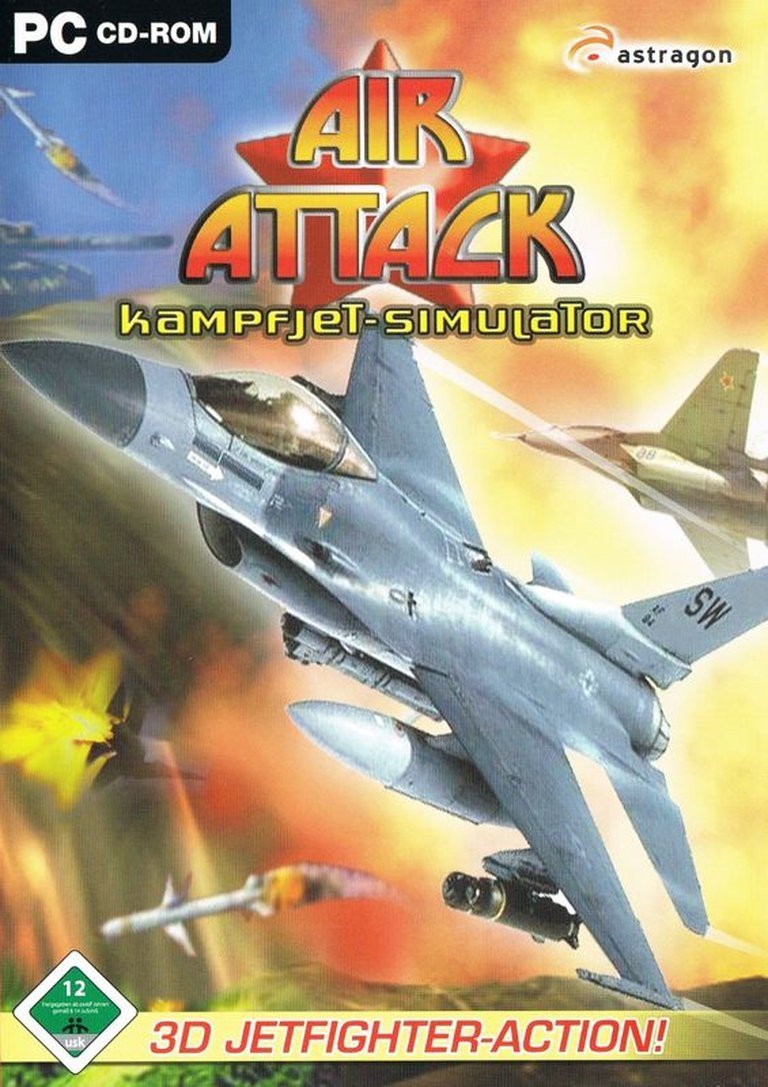
Set in a fictional 1993 conflict, Red Clash ’93 tasks players with piloting NATO fighter jets to counter ultra-nationalist Russian generals attempting to reclaim Baltic states. The campaign features 20 diverse missions across coastal, aerial, and naval environments, where players choose from three specialized aircraft (F-14 Tomcat, Panavia Tornado, F-16 Fighting Falcon) to conduct reconnaissance, escorts, bombing runs, and dogfights. Gameplay includes landing at airfields for repairs and supports LAN/internet multiplayer battles for up to 8 pilots.
Red Clash ’93 Cracks & Fixes
Red Clash ’93 Patches & Updates
Red Clash ’93: Review
Introduction
In the shadowed landscape of early 2000s flight combat games, Red Clash ’93 emerges as a forgotten relic—a German-developed, geopolitically charged aerial combat simulator that dared to tackle the volatile tensions of a post-Soviet world. Released in 2003 by Blimb Entertainment GmbH and published by media Verlagsgesellschaft mbH, this niche Windows title arrived amidst titans like ACE Combat and the burgeoning IL-2 Sturmovik series. Yet, its premise—a NATO response to ultra-nationalist Russian generals attempting to reclaim Baltic states—felt ripped from fever-dream headlines of the era. While never achieving mainstream acclaim, Red Clash ’93 carved out a cult following for its accessibility, Cold War paranoia, and arcade-like intensity. This review dissects its historical context, gameplay mechanics, and enduring legacy, arguing it remains a poignant artifact of early 2000s gaming—a flawed but fascinating time capsule of geopolitical anxieties and technical ambition.
Development History & Context
Studio and Vision
Blimb Entertainment GmbH, a relatively obscure German developer, crafted Red Clash ’93 with a clear vision: distill complex geopolitical tensions into digestible, action-oriented flight combat. The game’s premise—ultra-nationalist Russian generals rebelling to reclaim Estonia, Latvia, and Lithuania, prompting NATO intervention—reflected real-world anxieties about post-Soviet instability and resurgent Russian nationalism. This was a bold move for a small studio, blending arcade accessibility with narrative grounded in contemporary (if fictionalized) political crises.
Technological Constraints
As a 2003 Windows title, Red Clash ’93 operated within DirectX 8’s limitations. Its engine prioritized rapid-fire action over realism, resulting in simplified flight physics and explosive, albeit rudimentary, visual effects. The game’s reliance on CD-ROM media and modest system requirements (Pentium 350 MHz, 64MB RAM, DirectX 8) underscored its budget origins. Notably, its development predated widespread modern GPU support, leading to compatibility headaches on later OSes like Windows 7—a legacy issue still debated in forums today.
Gaming Landscape
The early 2000s flight-combat genre was bifurcated: hardcore sims (Jane’s Combat Simulations) and arcade shooters (ACE Combat). Red Clash ’93 straddled this divide, offering tactical depth (e.g., mission variety, aircraft selection) while retaining pick-up-and-play appeal. Its 2003 release also coincided with the Iraq War, heightening interest in military games, but it was overshadowed by higher-profile titles. Its inclusion in budget compilations like 10 Spiele-Hits Vol. 3 (2003) and 2 in 1 Games: Helicopter & Jetfighter (2006) cemented its status as a mid-tier value proposition.
Narrative & Thematic Deep Dive
Plot and Characters
The narrative unfolds as a textbook Cold War thriller: ultra-nationalists oust Russia’s government, threaten Baltic sovereignty, and force the president into exile. NATO dispatches a small reconnaissance unit to neutralize the threat—a role the player assumes. Missions escalate from reconnaissance (photographing enemy facilities) to direct combat, but character development remains virtually nonexistent. The player is a faceless NATO pilot, and dialogue is limited to terse mission briefings, emphasizing the game’s focus on action over storytelling.
Dialogue and World-Building
Dialogue is sparse and utilitarian, e.g., “Eliminate SAM installations” or “Escort supply convoy.” This minimalism reinforces the game’s arcade ethos but sacrifices emotional depth. The world, however, is rich with thematic resonance. The Baltic setting evokes historical tensions, while the ultra-nationalist antagonists echo real-world fears of resurgent imperialism. The narrative’s greatest strength lies in its “what-if” scenario—a playable manifestation of geopolitical anxieties prevalent in early 2000s Europe.
Underlying Themes
Red Clash ’93 explores Cold War paranoia through a modern lens. The game’s title—”93″—hints at a near-future alternate history where Soviet-style revolts destabilize Europe. Themes of interventionism, national sovereignty, and technological warfare permeate missions, such as bombing runs on industrial zones or sea-based skirmishes. While unsubtle, these elements resonate with its target audience: players seeking catharsis through virtual counter-aggression. The absence of moral ambiguity aligns with its arcade roots, framing the conflict as a clear-cut battle between democracy and authoritarianism.
Gameplay Mechanics & Systems
Core Gameplay Loop
The game revolves around 20 varied missions spanning coastal industrial zones, high-altitude dogfights, and naval engagements. Objectives include reconnaissance, escort duty, bombing runs, and direct enemy engagement. Each mission offers tactical choices: players select from three aircraft, each specializing in distinct roles:
– F-14 Tomcat: Superior for ground strikes with heavy armament.
– Panavia Tornado: Bomber-focused, carrying 20 bombs for precision strikes.
– F-16 Fighting Falcon: Agile dogfighter optimized for aerial combat.
This variety encourages replayability, though mission design occasionally devolves into repetitive “destroy all enemies” scenarios.
Combat and Progression
Combat emphasizes arcade accessibility over realism. Players engage in thrilling, if simplistic, dogfights and bombing sequences, with explosions lauded in reviews as “shikarnye” (gorgeous). A unique mechanic allows landings at allied airfields for refueling, repairs, and rearming—a nod to tactical depth. However, flight physics feel floaty, and enemy AI is predictable, relying on swarm tactics rather than strategic maneuvers.
UI and Multiplayer
The interface is functional but dated, with a HUD displaying health, ammunition, and mission objectives. Multiplayer supports 2-8 players via LAN or internet, enabling deathmatches and cooperative missions—a forward-thinking feature for 2003. Yet, netplay was hampered by peer-to-peer connections, limiting its longevity.
Innovative Systems and Flaws
The game’s strongest innovation is its mission flexibility: players approach objectives using aircraft tailored to their playstyle. Conversely, flaws include repetitive textures, a limited arsenal, and occasional bugs (e.g., collision detection issues). The absence of a persistent progression system beyond mission completion further undermines engagement.
World-Building, Art & Sound
Setting and Atmosphere
Red Clash ’93’s environments—Baltic coastlines, cloud-swept skies, and industrial complexes—are rendered in serviceable 3D. The game excels in atmospheric transitions, with dynamic day/night cycles altering visibility and enemy tactics. Coastal missions evoke the tension of NATO’s Baltic Sea presence, while high-altitude engagements emphasize the isolation of modern warfare. The absence of civilian life or detailed ground units, however, keeps the world feeling sterile.
Visual Direction
Art direction balances realism with arcade flair. Aircraft models are recognizable but lack detail, while explosions and weapon effects provide satisfying spectacle. Critics noted the “quick graphics with shikarnye explosions” (7Wolf Magazine, 2004), praising their impact despite polygonal limitations. The industrial zones’ drab palette contrasts effectively with the vibrant skyboxes, reinforcing the game’s gritty, utilitarian tone.
Sound Design
Sound is functional but unremarkable. Engine roars and weapon effects are crisp but repetitive, with no dynamic audio to reflect combat intensity. The absence of a cohesive musical score—likely due to budget constraints—leaves missions feeling sonically flat. Still, the occasional radio chatter and missile warnings ground the action in a semblance of realism.
Reception & Legacy
Launch Reception
Upon release, Red Clash ’93 received muted but positive reviews. German magazine 7Wolf awarded it 75%, praising its arcade accessibility and explosive effects but criticizing its depth. The Russian review (translated) lauded its “five-minute readiness” approach, noting it was “far from advanced simulators” but ideal for casual players. Player reviews were less kind, with a 3.1/5 average citing technical issues and repetition. Its inclusion in budget compilations ensured steady, if niche, sales.
Evolution of Reputation
Over time, the game’s reputation shifted from mediocre cult classic to retro curiosity. Forums like RuTracker highlight its problematic Windows 7 compatibility, with users sharing workarounds (e.g., compatibility modes, executable fixes). Conversely, some remember it fondly as a “fun arcade flight game” (Edomaru, 2025), valuing its Cold War themes and frenetic pace. Its Russian title, Красный Торнадо (“Red Tornado”), underscores its regional appeal.
Influence and Legacy
Red Clash ’93’s influence is limited, but it occupies a niche in flight-combat history as a budget Cold War-era entry. Its focus on geopolitical storytelling predates titles like Tom Clancy’s H.A.W.X. by years, though with less polish. The game’s greatest legacy may be its preservation of early 2000s technical ambition—flawed but earnest. Abandonware communities keep it alive, with MyAbandonware noting its “arcade and divertido” (fun) spirit despite age.
Conclusion
Red Clash ’93 is a product of its time and place—a German-developed flight combat game that blended Cold War paranoia with arcade thrills. Its narrative, while unsubtle, resonates as a snapshot of early 2000s geopolitical fears, while its gameplay offers accessible, if repetitive, action. Visually, the game’s explosions and dynamic environments impress despite technical limitations, though sound design and UI feel dated. Its legacy is one of cult appreciation: a flawed relic fondly remembered by niche communities for its intensity and historical context.
For modern players, Red Clash ’93 demands patience—compatibility patches and temper expectations—but rewards with a unique glimpse into an era when smaller studios dared to tackle big ideas. It stands not as a masterpiece, but as a testament to gaming’s capacity to document cultural anxieties. In an age of hyper-realistic military sims, its arcade simplicity and Cold War fervor feel refreshingly audacious. Verdict: A flawed time capsule worth exploring for flight-combat enthusiasts and Cold War historians alike.