
- Release Year: 2017
- Platforms: Linux, Macintosh, Windows
- Publisher: Klabater SA
- Developer: Pixelated Milk sp. z o.o.
- Genre: Role-playing (RPG)
- Perspective: Diagonal-down
- Game Mode: Single-player
- Gameplay: Tactical RPG
- Setting: Fantasy
- Average Score: 73/100
Description
Regalia: Of Men and Monarchs is a fantasy tactical RPG with diagonal-down isometric visuals and anime/manga art style, where players engage in grid-based strategic battles in a humorous world of monarchs and regalia, blending role-playing elements with challenging gameplay that offers over 30 hours of content.
Gameplay Videos
Where to Buy Regalia: Of Men and Monarchs
Regalia: Of Men and Monarchs Free Download
Regalia: Of Men and Monarchs Cracks & Fixes
Regalia: Of Men and Monarchs Guides & Walkthroughs
Regalia: Of Men and Monarchs Reviews & Reception
metacritic.com (73/100): I had a blast playing Regalia: Of Men and Monarchs despite some of its shortcomings.
opencritic.com (74/100): Although Regalia: Of Men and Monarchs does not tread much new ground, its cast of charming characters and relaxed atmosphere make it an interesting tactical RPG.
cgmagonline.com (70/100): Regalia: Of Men and Monarchs tries to be a lot of things, but, at its core, it is a strategic role playing game that emphasizes its somewhat archetypical characters in its storytelling.
Regalia: Of Men and Monarchs: Review
Introduction
Imagine inheriting not a gleaming throne, but a crumbling ruin buried under a mountain of debt so colossal it requires its own scroll—welcome to Regalia: Of Men and Monarchs, where the weight of monarchy feels less like epic destiny and more like a bad family business deal. Released in 2017 by Polish indie studio Pixelated Milk, this tactical RPG emerged from a successful Kickstarter campaign as a love letter to classics like Final Fantasy Tactics and Disgaea, blending grid-based combat, kingdom rebuilding, and Persona-esque social bonds in a fantasy world brimming with absurdity and charm. Its legacy endures as a cult favorite among tactical RPG enthusiasts, proving that even in an era dominated by AAA open-world behemoths, a quirky indie can carve out a niche with humor, heart, and strategic depth. My thesis: Regalia is a triumphant underdog that masterfully fuses lighthearted storytelling with punishing tactics and management sim elements, cementing its place as an essential, if imperfect, modern homage to the SRPG genre—flawed by repetition but elevated by its vibrant personality.
Development History & Context
Pixelated Milk, a small Warsaw-based studio founded by Bartosz Łojewski (project lead) and a tight-knit team including lead engineer Patryk Wąsiewicz, lead writer Jędrzej Łojewski, and lead artist Lucjan Pakulski, entered the scene with Regalia as their debut title. Powered by Unity—a choice reflecting the era’s indie reliance on accessible engines for cross-platform potential—the game launched on PC (Windows, Mac, Linux) on May 18, 2017, published by Klabater SA. Its Kickstarter success in 2015 tapped into a growing demand for tactical RPGs amid a post-Fire Emblem: Awakening renaissance and the indie boom fueled by Darkest Dungeon and Banner Saga.
The 2010s gaming landscape was a tactical paradise starved for innovation: SRPGs were niche, overshadowed by action-RPGs like The Witcher 3 and MOBAs, but indies filled the void with grid-based gems. Pixelated Milk’s vision—explicitly a “Final Fantasy Tactics with Persona social links and Disgaea humor,” per previews like CD-Action—aimed to revitalize the genre with kingdom management and no-healing combat, constrained by a modest budget (evident in 154 credits, many multi-hatted). Technological limits shone through in hand-drawn 2D assets and orchestral scores by Game Audio Factory (Furi, Endless Legend), prioritizing polish over scope. Post-launch, the 2018 Royal Edition (PS4, Xbox One, Switch by Crunching Koalas) bundled DLCs The Unending Grimoire and Paragons and Pajamas, adding recruits and areas, extending replayability amid patches fixing UI bugs and balance. This evolution mirrors indies like Divinity: Original Sin, thriving via community feedback in a Steam-dominated ecosystem.
Narrative & Thematic Deep Dive
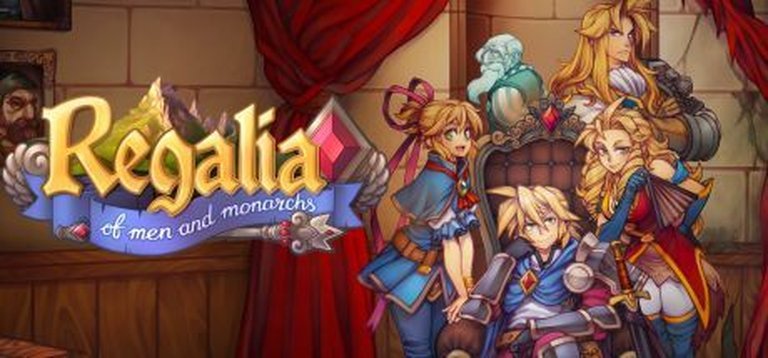
At its core, Regalia‘s plot subverts RPG tropes with a “shockingly expensive bill”: protagonist Kay Loren—dorky, reluctant heir with blonde ruffles and green eyes matching sisters Elaine and Gwendolyn—discovers ancestral seat Ascalia in the Rashytil Expanse is a Crusades-ravaged debt pit. Accompanied by stoic bodyguard Griffith and the urn-released ghost of wise grandfather Desideratus (voicing leadership wisdom like “true wealth lies in the hearts of your people”), Kay must rebuild via expeditions, hitting milestones every 56 in-game days to appease collector Crucey.
The narrative unfolds in seven chapters of kingdom quests (4-7 per chapter on easier modes), blending humor (Kay mistaking ashes for tea, Medieval Moron peasants in the “Unity” union wielding torches over petty gripes) with twists: Kay’s family are unwitting pawns, impersonators shielding real heir Carran, who schemes to reclaim a revitalized Ascalia (Worthless Treasure Twist: the vault’s “hoard” is bottlecaps). Themes probe leadership’s burdens—debt as metaphor for inherited failures, rebuilding as communal respect over tyranny—and fantasy satire (samurai dwarves, Viking-esque blue-skinned elves in a Mind Hive, Pallid King as looming Villain of Another Story).
Characters shine via 20+ recruitables: Griffith (Expecting Someone Taller from Des), Aliss (foreshadowing via family tree oddities), mutually exclusive faction reps (Elves vs. Dwarves diplomacy), and DLC adds like grenadiers. Dialogue crackles with Disgaea wit—Leaning on the Fourth Wall (party mocking solo deployments), No Hugging No Kissing despite bonds unlocking skills. Voice acting elevates: professional English delivery sells absurdity, from Unity’s Pythonesque rants to epic wham episodes. Yet pacing falters; repetitive quests dilute stakes, story often backseat to checklists, echoing critiques of “tedious” progression.
Gameplay Mechanics & Systems
Regalia‘s loop is a masterful hybrid: tactical combat funds kingdom management, bonds enhance parties, all timed against chapter deadlines. Core: explore 6 regions via simplified dungeon maps (battles, choose-your-own-adventures like fake toll booths or cat faction wars), craft gear, fish (mini-game for loot, reputation-boosted by Shichiroji), diplomacy (faction reps at rep 3, locking rivals).
Combat is grid-based turn-based brilliance: 4-6 party (Kay mandatory, Can’t Drop the Hero) vs. foes, no HP healing—instead, restorable shields demand positioning (cover via furniture, elevation, AoE directionality). Turns flex movement/actions/Command Points (party-wide extras, cooldowns on skills, 2CP finishers). Arbitrary Headcount Limit frustrates late-game (Final Boss with full recruits?). Adjustable difficulty (sliders for damage/dodges, Story Mode skips) balances casuals vs. hardcore; Hard demands perfection, Rat Stomp tutorial escalates to slogs. Flaws: repetitive maps (same layouts, enemy cries loop), pacing drags (10-15min fights), UI clunk (skill select awkward on controllers, small fonts).
Progression: Party-wide levels unlock passive slots (stats/resists/skills); bonds (talking/events) power attacks, no romance. Management: build/upgrade (smith for crafts, pier for fishing), solo missions, New Game+ carryover. Innovations: shield trade-offs, vignette dungeons (puzzles, negotiation chains). Replayability soars (mutual exclusives, 30+ hours, DLC). UI saves frustrate (campfires/home only), but depth rewards mastery.
World-Building, Art & Sound
Ascalia’s ruins—smoldering post-Crusades in Rashytil Expanse—pulse with lived-in fantasy: Alfheimr elves (giant, blue, pillaging), Dwarven samurai, Fomorian bosses, zombie archives. Atmosphere thrives on whimsy: DreamWorks Face Kay slouches deviously on the title screen, belying dorkiness; regions vary (wilderness bosses, vampire hairdressers as Zero-Effort Bosses).
Visuals dazzle: anime/manga art (vibrant hand-drawn 2D scrolling isometric, fluid animations), Unity-polished despite indie constraints. Sound immerses: Game Audio Factory’s orchestral OST swells epically, voice acting charms (cheesy yet heartfelt), though battle cries grate. Elements synergize—humor punctuates ruins, music underscores bonds—crafting cozy yet tense vibes, a “breath of fresh air” per reviewers.
Reception & Legacy
Launch reception was solid: MobyGames 7.6/10 (78% critics, highs 90% Hey Poor Player for “finesse and charm,” lows 60% Cubed3 for “slog”), Steam Mostly Positive (76% of 384), Metacritic 73 “Mixed/Average.” Praises: humor, characters (“diverse cast elevates,” Hooked Gamers 85%), combat (“challenging,” WCCFtech 80%), value (20-40+ hours, $2.99 sales). Critiques: repetition (“battles tiresome,” RPGamer), UI (“foibles,” patches helped), story (“turn off some,” CGMagazine 70%).
Commercially modest (Kickstarter-funded, budget success), reputation grew via Royal Edition/DLCs, console ports boosting accessibility. Influence: niche but pivotal for Polish indies (pre-The Riftbreaker), inspiring SRPG hybrids with management/humor (Triangle Strategy echoes bonds). No industry shaker, yet enduring for fans craving Disgaea-lite tactics amid 2020s slogs.
Conclusion
Regalia: Of Men and Monarchs weaves tactical rigor, managerial crunch, and comedic fantasy into a delightful indie tapestry—its debt-ridden rebuild saga, bond-forged misfits, and shield-centric skirmishes a heartfelt nod to SRPG golden eras. Imperfections like repetitive loops and UI quirks temper its shine, but overwhelming charm, depth (30+ hours, replayability), and post-launch support make it a steal. In video game history, it claims a worthy spot as the plucky Kickstarter that proved small studios can monarch-ize the genre: not flawless royalty, but a people’s king worth restoring. Verdict: 8.5/10 – Essential for tactical RPG aficionados.