
- Release Year: 2020
- Platforms: Nintendo Switch, PlayStation 4, Stadia, Windows, Xbox One
- Publisher: Koch Media GmbH (Austria)
- Developer: Mighty Polygon SL
- Genre: Puzzle
- Perspective: First-person
- Game Mode: Single-player
- Gameplay: Gravity, Magnetism, Puzzle-solving
- Setting: Earth’s Moon, Futuristic, Sci-fi
- Average Score: 74/100
Description
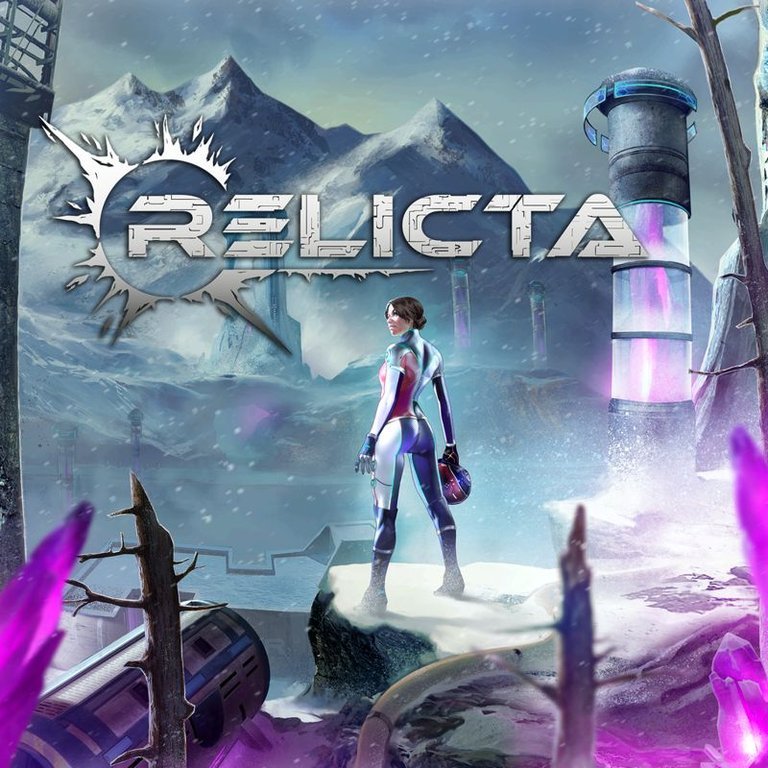
Relicta is a first-person puzzle game set in a sci-fi lunar space station on Earth’s Moon. Players manipulate gravity and magnetism to solve challenging environmental puzzles within a highly polished, futuristic setting, uncovering a narrative with multiple endings as their every move is observed.
Gameplay Videos
Where to Buy Relicta
Relicta Free Download
Relicta Mods
Relicta Guides & Walkthroughs
Relicta Reviews & Reception
metacritic.com (74/100): a highly polished environmental puzzler
opencritic.com (75/100): great puzzle game, which reminded us of Portal or QUBE 2
waytoomany.games : clever and thought-provoking puzzles, but it overstays its welcome
adventuregamers.com : challenging, highly polished, visually attractive experience
Relicta: A Moonlit Masterpiece of Intricate Puzzles and Unfulfilled Ambition
1. Introduction: The引力 of a Dark Moon
In the crowded pantheon of first-person puzzle games that emerged in the wake of Portal’s seminal success, few titles have strives as ambitiously—or as chaotically—as Mighty Polygon’s Relicta. Released in August 2020, this Spanish indie debut arrived not with the quiet confidence of a The Talos Principle or the meticulous polish of a The Witness, but with the raucous, contradictory energy of a game straining against its own constraints. Its premise—a physicist wielding magneto-gravitic gloves on a terraformed lunar base—promised a fresh cerebral challenge grounded in tangible physics. Yet, from its first moments, Relicta announces itself as a game of profound dualities: stunningly beautiful yet clumsily narrated, mechanically inventive yet brutally repetitive, a narrative of cosmic stakes often told through the grating filter of perpetual swearing. To play Relicta is to engage with a game perpetually at war with itself, a fascinating yet frustrating artifact that represents both the vibrant potential and the glaring pitfalls of the indie puzzle genre in the 2020s. This review will argue that while Relicta ultimately fails to achieve the sustained brilliance of its inspirations, its sheer mechanical audacity, immersive world-building, and uncompromising difficulty carve out a unique, if flawed, niche in puzzle game history.
2. Development History & Context: Small Studio, Big Moon
The Visionaries at Mighty Polygon
Relicta is the debut project of Mighty Polygon SL, a small development studio based in Barcelona, Spain. The studio’s leadership, including Game Director Santi Alex Mañas and Creative Designers Francisco Javier Sanz García and Jorge Oliva Palacios, wore many hats, with Mañas personally handling programming alongside Luis Solé Honrubia. This small-team ethos is evident in the game’s scope—ambitious in narrative and setting but visibly constrained in execution. According to narrative designer Víctor Ojuel’s portfolio, a significant challenge was crafting a story around pre-existing, immovable level geometry: “When I was brought into the development, most of the levels were already set. We couldn’t even change the order of the puzzles, so I had to craft a plot around what was already there.” This constraint forced a narrative approach that was reactive and atmospheric rather than tightly integrated, shaping the game’s reliance on audio logs and radio chatter.
Technological Canvas & Era
Built in Unreal Engine 4, Relicta leverages the engine’s capabilities for robust lighting, detailed volumetric effects, and the rendering of multiple distinct biomes within a single, connected lunar base. The technology served the dual purpose of showcasing environmental artistry and facilitating the clear visual communication necessary for complex physics puzzles. In the 2020 release landscape, the game entered a thriving subgenre. The “Portal-inspired” puzzle genre was well-established, with titles like Q.U.B.E., The Talos Principle, and The Witness having set high bars for narrative integration and mechanical elegance. Relicta’s positioning was as a “hardcore” alternative: less concerned with philosophical narrative and more focused on pure, unadulterated puzzle complexity. Its contemporaneous release with other indie darlings meant it had to compete for attention on the strength of its core mechanic alone.
Publishing and Platform Strategy
Published by Ravenscourt (a Plaion/Koch Media label), Relicta received a multi-platform launch on PC (Steam, Epic), PlayStation 4, Xbox One, and Google Stadia, with a Nintendo Switch port following in April 2021. This wide release, especially the later Switch port, indicated a publisher confident in the game’s portable appeal as a cerebral, pick-up-and-play experience, despite its demanding puzzles.
3. Narrative & Thematic Deep Dive: A Story Told in Fragments
Plot Architecture: A Twisted Timeline
The narrative of Relicta is a tale of revelation structured around a central, traumatic event. The game opens with a panicked Dr. Angelica Patel rushing to the Relicta Chamber as the Chandra Base suffers a catastrophic systems failure, only to be seemingly absorbed by the alien artifact. The plot then flashes back “two hours” to a normal day of research, before leaping forward “two years” after an equipment upgrade—a deliberate, disorienting time skip that immediately establishes a mystery. The player then embarks on a linear series of “experiment tracks,” solving puzzles to restore power and communications across the base’s biodomes.
The story unfolds in two starkly contrasting halves:
1. The Investigation (First Half): Patel communicates with her estranged ex-lover, the security officer Ragnar Nguyen, and her colleague and former lover, Dr. Laia Alami. Through radio dialogue and collected PDA logs (emails, diaries, news clippings), the backstory emerges: Chandra Base was built by the pre-war megacorp Aegir Labs on the Moon (Luna). After the apocalyptic “Seventy-Two Minute War,” the base was repurposed by the United Habitats Alliance (UHA) as a joint scientific expedition to study the “Relicta”—an alien artifact Aegir had discovered. The player learns of corporate intrigue, political tensions between UHA member states (like the Republic of High Samarkand and the Federación de Nueva Metzli), and the suspicion that Aegir’s advanced technology was derived from the Relicta.
2. The Infection & Crisis (Second Half): After a mid-game twist where Patel spends five months unknowingly inside the Relicta (the “time skip” revealed), she returns to find the base in disarray, her teammates missing or dead, and a parasitic alien intelligence now fused with her nervous system. This “parasite” (dubbed “Kwarizmi” by the team’s AI “Sys”) communicates through her, initially as disjointed curses (“Fuck you, patel”) that evolve into a Sesquipedalian, manipulative voice. The narrative shifts from political thriller to body-horror psychological drama. The final choice—wait for Ragnar’s rescue team or flee with her daughter Kira and the parasite in a ship called the Solidaridad—presents a classic “Last-Second Ending Choice” with canonical weight, as confirmed by the “Ice Queen” DLC.
Character & Dialogue: A Love-Hate Relationship
The cast is small and predominantly heard, not seen, emphasizing the isolation.
* Dr. Angelica Patel: The protagonist is a brilliant, driven physicist, but her defining trait for many players is her near-constant vulgarity. As noted by Adventure Gamers, “everyone in the expedition” swears excessively, a creative choice that aims for a “running gag” but often lands as grating and tonally mismatched with her scientific demeanor. Her maternal love for her daughter Kira is her primary motivator, the emotional core that grounds the cosmic stakes.
* Dr. Laia Alami: Patel’s archaeological colleague and ex-lover. Her voice, provided by Lara Sawalha, is frequently praised in reviews for its emotional weight. Her fate—freezing to death in a glacier level while Patel is in the Relicta—is a major emotional Beat. The “Ice Queen” DLC explores her story further, revealing she was potentially a plant for anarcho-selenite squatters.
* Ragnar Nguyen: The smug, mission-control security officer (voiced by Boris Hiestand). He is revealed as “The Chessmaster,” having known about the Relicta and manipulated the team into finding it. His arrogance and ultimate betrayal are central to the political conspiracy plot.
* The Parasite/Kwarizmi: A standout narrative element. Its evolution from a cryptic, swearing entity into a conversant, manipulative hive mind (potentially seeking to assimilate humanity) is a highlight. Its vocal performance, shifting from disjointed interjections to articulate threats, effectively convey an alien intelligence struggling with human language and morality.
Themes: Science, Paranoia, and Consequences
Relicta explores several intertwined themes:
* Unethical Science & Reed Richards Is Useless: The Relicta’s technology enables gravity and magnetism manipulation, yet the team uses it solely for trivial “test tracks” and puzzles. This is explicitly noted as a form of cognitive hijacking by the artifact—the researchers are compulsively studying it, ignoring its dangers and wider applications.
* The Price of Knowledge: Patel’s obsession with the Relicta directly endangers her daughter and herself. The narrative asks whether the pursuit of understanding justifies such personal and global risk.
* Political Fragmentation: The backdrop of the Seventy-Two Minute War and the fragile UHA alliance adds a layer of realpolitik. The game critiques corporate power (Aegir) and state opportunism (Ragnar’s faction).
* Body Horror & Alien Assimilation: The parasite’s physical manifestation—glowing cracks and spikes in Patel’s hands when viewed without its “mental filter”—is a potent, underutilized image. It raises questions of identity loss and symbiosis.
The narrative’s greatest strength is its atmosphere of pervasive paranoia and isolation, achieved despite the first-person perspective and lack of visible characters. Its greatest weakness is its delivery. The piecemeal, puzzle-driven structure means long stretches (30-50 minutes between meaningful dialogue) of pure, demanding gameplay, which can fracture narrative tension. Furthermore, as WayTooManyGames critiqued, the supporting cast dynamics are largely discarded post-mid-game twist, diminishing emotional investment.
4. Gameplay Mechanics & Systems: The Elegant Grind
Core Loop and the Glove
At its heart, Relicta is a sequence of “experiment tracks”—self-contained puzzle chambers. The player, as Dr. Patel, uses “gravitoelectromagnetic gloves” (left-click for blue negative charge, right-click for red positive charge) to manipulate special cubes (roughly 2×2 feet) and magnetic plates.
* Magnetism: Opposite charges attract, like charges repel. This is the primary tool for moving cubes remotely.
* Gravity Nullification: Holding a cube with the glove and pressing a button (default ‘G’) disables its gravity, allowing it to float and be pushed magnetically over long distances or through narrow passages.
* Mass Preservation: Crucially, a gravity-nullified cube retains its mass. This allows it to be used as a stable platform to stand on or to fall through gaps that a player cannot, as the cube’s mass will drop it through while the player can jump over.
Puzzle Progression & Mechanics Layering
The game’s genius lies in how it layers mechanics over its ~20-hour campaign. The complexity curve is steep but generally fair.
1. Early Game (Basic Manipulation): Simple “place cube on button” puzzles. Introduction of force fields: purple (blocks cubes, lets player through), green (blocks player, lets cubes through), gold (blocks both).
2. Mid Game (Transportation & Color): Introduction of teleporters. Cubes must be given a specific color (blue or red) by entering a teleporter first, then activated by the matching teleporter elsewhere. This creates “lock and key” puzzles where a specific colored cube must reach a matching colored pressure plate.
3. Mid-Late Game (Dynamics & Obstacles): Moving platforms that traverse different force fields require swapping places with a crate. The introduction of drones—orange-bubbled flying devices that nullify magnetism/gravity effects in an area—adds timing and spatial avoidance challenges. Later, drones can be hijacked to carry crates.
4. Late Game (Complex Synthesis): The most celebrated puzzles combine all elements: riding a magnetically-bounced crate across a chasm while avoiding a drone’s cancellation bubble, all to place a specific colored cube on a timed switch to open a path, all within a multi-stage “hub” puzzle.
The level design, for the vast majority of chambers, is superb. It provides necessary visual cues—color-coded elements, strategic use of the biodome themes—without hand-holding. The “Aha!” moments, as Hooked Gamers notes, are potent and earned.
Notable Flaws in the Machine
* Checkpoint System: Universally panned. The game employs a single auto-save per level, with no manual saves or intermediate checkpoints. As Adventure Gamers sharply criticized, this is “deplorable.” Quitting mid-puzzle erases all progress. The hub areas (Chandra Base) have unreliable saves that don’t always preserve player position, causing frustration.
* Repetition & Padding: This is the most significant gameplay criticism. While the core mechanic is deep, the game’s length (~15-20 hours) is achieved through multi-stage puzzles and hub puzzles that require solving 3-4 sub-puzzles in sequence to unlock a final door. WayTooManyGames argues this creates “increasingly long puzzles” that feel like “grind” rather than novel challenges. The mechanics do not significantly evolve after the mid-game introduction of drone control; players solve the same fundamental problems repeatedly at larger scales.
* Environmental Clutter & “Fiddly” Physics: A small but recurring issue, highlighted by Adventure Gamers and TheGamingReview, occurs when levels are visually dense, making it hard to discern interactable elements. Furthermore, the physics of launching a repelling crate can feel imprecise, leading to trial-and-error that feels like a failure of the game’s rules rather than the player’s logic.
* “Excuse Plot” & Design Logic: As pointed out by TV Tropes, the entire game’s premise—that emergency systems are behind puzzle tracks with no bypass—is an “Excuse Plot.” The narrative lampshades this (in the DLC, a character notes he’s being set up for death because the tests are nonsensical), but it remains a core immersion-breaking flaw. Why are life-saving overrides behind fiendish magnetism puzzles?
5. World-Building, Art & Sound: The Moon’s eerie Beauty
Setting: Chandra Base and the Terraformed Moon
The world of Relicta is its most universally acclaimed aspect. The year is 2120. The “Chandra Base” is a colossal, abandoned Aegir Labs mining and research facility, repurposed by the UHA. Its genius lies in its biodomes—separate, sealed environments simulating Earth biomes on the lunar surface. This allows for a stunning visual and auditory variety rarely seen in a single location:
* The Redwood Forest Dome: Towering trees, dappled sunlight, ambient bird calls.
* The Winter Tundra Dome: Snow-covered pines, ice caves, howling wind.
* The Desert Dome: Red sands, cacti, dry heat haze.
* The Rainforest Dome: Lush vegetation, roaring waterfalls, dense humidity.
This “anachronism stew” (as TV Tropes calls it, noting pop-culture references are occasionally anachronistic) creates a disquieting contrast between the familiar Earth-like beauty and the alien, claustrophobic lunar setting. The base itself is a blend of pristine, futuristic corridors and the grim, industrial decay of the older Aegir sectors. The Relicta artifact itself—a stony meteorite with purple crystals—is a compelling visual focal point.
Art Direction & Technical Execution
The Unreal Engine 4 visuals are a high point. Environmental storytelling is rich: every corner of the biodomes feels lived-in (or recently abandoned), with research equipment, personal belongings, and signs of the “Seventy-Two Minute War” aftermath (propaganda, decay). The lighting is exceptional, from the soft glow of the force fields to the dramatic shadows in the ice caves. The character models (seen only in PDA images or the stinger) are less impressive but unimportant. The “body horror” of the parasite’s effect on hands is a simple but effective shader effect.
Sound Design & Voice Acting
The soundscape is a masterclass in environmental audio. There is no traditional musical score. Instead, the game relies on immersive ambient sounds: the chirping of birds, the drip of water in caves, the hum of machinery, and the unsettling silence of the vacuum outside. This creates a constant, tense atmosphere.
The voice acting is a point of division. Generally credited as “excellent” (PlayStation Universe) and well-performed, it is also the primary vector for the excessive swearing. Joseph Balderrama (Kwarizmi), Maya Sondhi (Patel), and Lara Sawalha (Laia) deliver committed performances that sell the thriller drama, even when the script lets them down. The parasite’s voice, in particular, is a standout creation—a slow, creeping, vulgar intelligence.
6. Reception & Legacy: Cult Potential or Cautionary Tale?
Critical Reception: A Mixed Bag
Relicta holds a Metascore of 74 on PC (based on 16 critic reviews) and a MobyScore of 7.1 (12 critic ratings). The spread is telling:
* Praise (80-90%): Adventure Gamers (4.5/5), Hooked Gamers (8.5/10), PC Games Germany (8/10). These reviews celebrate the “fiendishly challenging” puzzles, “gorgeous” environments, and the satisfying “Ah-ha!” moments. They see it as a top-tier entry in the genre.
* Moderate Reviews (70-78%): The majority. Reviews from MKAU Gaming, PlayStation Universe, Jeuxvideo.com, and Gameplay (Benelux) acknowledge the solid puzzle design but cite “frustratingly complex” late-game puzzles, a “linear” structure, an “uninteresting story,” and the atrocious save system as major detractors.
* Negative Reviews (50-60%): Hey Poor Player (2.5/5), Phenixx Gaming (6/10), and several user reviews on Metacritic attack the “cringe writing,” excessive swearing, “shallow” narrative, and “repetitive” gameplay. Some user reviews descend into problematic critiques of its alleged “feminist propaganda,” revealing a toxic undercurrent that marred its reception in some circles.
Common Criticisms Consensus:
1. Puzzle Repetition: The largest point of agreement. The game’s length is achieved through scale, not novelty. Mechanics are introduced early and then reused in longer, more convoluted setups.
2. Save System: A design flaw that significantly impacts accessibility and patience.
3. Narrative Disconnect: The story is seen as either simple to a fault or delivered in a frustrating, piecemeal way that loses momentum.
4. Tonal Inconsistency: The graphic language clashes with the sci-fi thriller aesthetic for many.
Player Reception & Commercial Performance
Steam user reviews are “Mostly Positive” (77% of 221 reviews), but with a lower User Score on Metacritic (5.8). This gap suggests players more forgiving of the puzzle core are more numerous, but a vocal minority finds the package deeply flawed. Commercial sales are not public, but the steep discounting on platforms like GOG ($1.99) suggests a classic “long-tail” strategy aimed at puzzle enthusiasts rather than a blockbuster hit.
Legacy & Influence
Relicta is unlikely to be remembered as a genre-defining classic like Portal or The Witness. Its legacy will be more nuanced:
1. The “Hardcore Puzzle” Benchmark: It serves as a reference point for extremely challenging first-person puzzlers. Speedrun communities have embraced it for its complexity and sequence-breaking potential.
2. A Cautionary Tale on Pacing & Repetition: It demonstrates how a strong core mechanic can be diluted by a lack of systemic evolution over a long campaign. Future indie puzzle designers will study its mid-to-late game for pitfalls to avoid.
3. Proof of Concept for Small Teams: Mighty Polygon proved that a small Spanish studio could produce a visually stunning, multi-platform puzzle game with a complex narrative. Their work on Iron Harvest and Wasteland 3 post-Relicta shows the studio’s talent was recognized by larger partners.
4. The Power of DLC: The free “Aegir Gig” and “Ice Queen” DLC are widely considered to improve the narrative by exploring side characters and providing crucial context. They demonstrate how post-launch support can partially repair a flawed narrative structure.
7. Conclusion: A Flawed Gem in the Lunar Dust
Relicta is not a perfect game. It is, in many ways, a deeply problematic one. Its save system is punitive, its narrative delivery is often clumsy, and its late-game puzzles can devolve into wearying, large-scale chores rather than elegant challenges. The pervasive vulgarity is a creative decision that alienates as much as it attempts to define character. For these reasons, it cannot stand shoulder-to-shoulder with the pantheon’s elite.
And yet, to dismiss Relicta would be to ignore its considerable, hard-won virtues. The moment-to-moment puzzle design, for the first two-thirds of the game, is exceptional. The feeling of manipulating magnetism and gravity to solve a spatial problem—of riding a repelling crate along a curved magnetic rail, of color-matching a cube through teleporters to hold a pressure plate, of outsmarting a drone’s nullification field—is a unique and potent thrill rarely replicated. The world of Chandra Base is a breathtaking achievement of environmental storytelling and visual diversity, making each new biodome a reward in itself. The narrative, while flawed, has a compelling core of cosmic horror and political paranoia that lingers, and the parasite’s voice is a genuinely creepy antagonist.
Ultimately, Relicta is a game for the dedicated, the masochistic, and the mechanically curious. It is a game that demands you surrender to its rhythm of intense focus, frustrating stall, and eventual, euphoric breakthrough. It is a game that values your brainpower above your comfort. Its place in history is not as a masterpiece, but as a significant, ambitious, and instructive artifact—a bold experiment that showcases how far a simple physics concept can be stretched, and a stark lesson in how not to pad a campaign. For those patient enough to endure its flaws, Relicta offers a lunar trek through some of the most ingeniously designed, if occasionally exhausting, environmental puzzles of the last decade. It is a flawed gem, certainly, but a gem nonetheless, buried not in the regolith of the moon, but in the dense, demanding, and ultimately rewarding landscape of modern puzzle design.