
- Release Year: 2008
- Platforms: Macintosh, Windows
- Publisher: Intenium GmbH, Skunk Studios, LLC.
- Developer: Skunk Studios, LLC.
- Genre: Puzzle
- Perspective: Fixed / flip-screen
- Game Mode: Single-player
- Gameplay: Point and select, Tile matching puzzle
Description
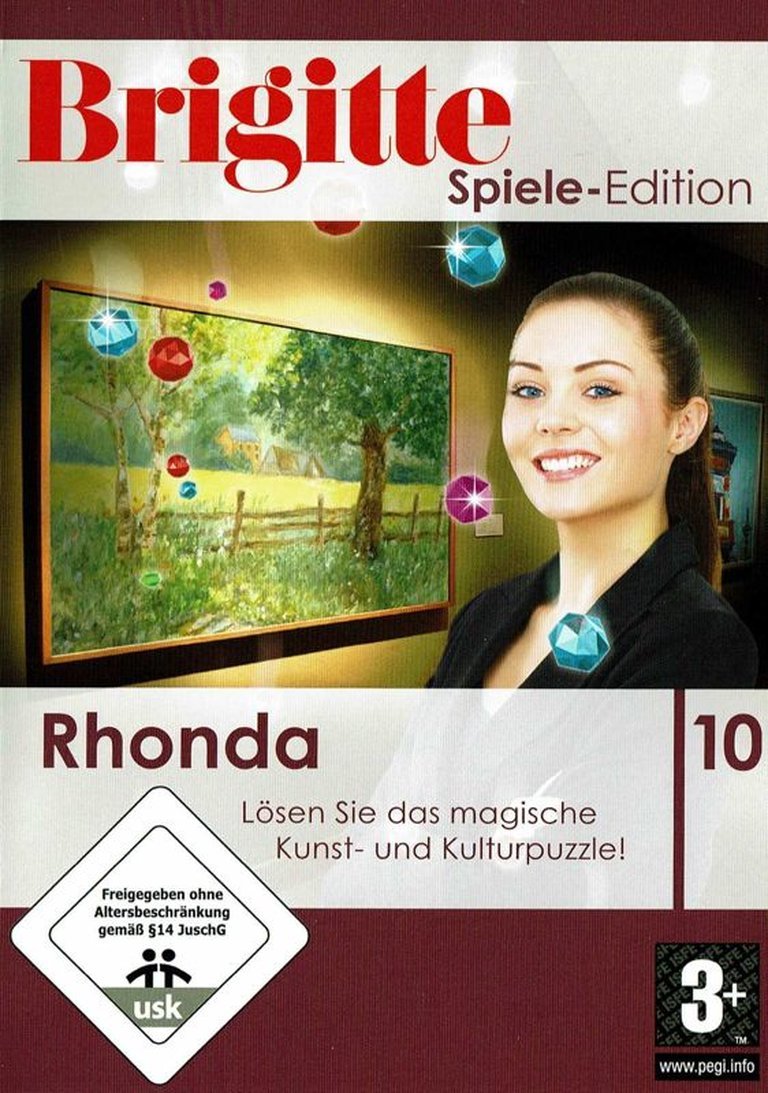
Restoring Rhonda is a match-3 puzzle game where players help the titular art conservator, Rhonda, regain her career after a costly mistake. By solving tile-matching puzzles, Rhonda unlocks magical contracts that allow her to restore artwork and rebuild her professional reputation. The game features a fixed/flip-screen visual style and point-and-select gameplay, blending classic puzzle mechanics with a light narrative about redemption and perseverance.
Restoring Rhonda Free Download
Restoring Rhonda Cracks & Fixes
Restoring Rhonda Reviews & Reception
gamezebo.com : Want to resuscitate somebody’s shattered life, match-three style?
Restoring Rhonda: A Match-Three Masterpiece or a Forgotten Gem?
Introduction: The Unlikely Heroine of the Puzzle Genre
In the vast ocean of match-three puzzlers that flooded the late 2000s, Restoring Rhonda (2008) emerges as a curious artifact—a game that dared to blend the mechanical familiarity of tile-matching with the tactile satisfaction of art restoration. Developed by the obscure Skunk Studios, LLC. and published by Intenium GmbH (with a later Windows release via Big Fish Games), Restoring Rhonda is a title that slipped through the cracks of gaming history, yet its premise remains uniquely compelling. At its core, it is a game about redemption, both for its protagonist and, arguably, for the match-three genre itself, which was (and still is) often dismissed as repetitive or shallow.
This review will dissect Restoring Rhonda with the precision of Rhonda’s own restoration tools, examining its development context, narrative ambitions, gameplay mechanics, and artistic identity. We will explore why it stands out—and where it stumbles—in a genre dominated by Bejeweled clones and Puzzle Quest wannabes. By the end, we will determine whether Restoring Rhonda is a hidden gem worthy of preservation or a well-intentioned but flawed experiment.
Development History & Context: A Game Born from Obscurity
The Studio Behind the Scenes: Skunk Studios, LLC.
Skunk Studios, the developer behind Restoring Rhonda, remains an enigma in the gaming industry. Little is known about the team’s background, but their choice of the Torque 2D engine—a versatile, indie-friendly tool—suggests a small, resource-conscious studio aiming for accessibility. The Torque engine, originally developed by GarageGames, was a popular choice for indie developers in the mid-to-late 2000s, offering a balance between flexibility and ease of use. Games like Marble Blast Ultra and Think Tanks also utilized Torque, though Restoring Rhonda’s use of it for a match-three puzzle game is less common.
The studio’s obscurity raises questions: Was Restoring Rhonda a passion project? A contractual obligation? A testbed for larger ambitions? Without interviews or postmortems, we can only speculate. What is clear, however, is that the game was designed with a specific vision in mind—one that sought to elevate the match-three formula by tying it to a tangible, almost therapeutic secondary mechanic.
The Gaming Landscape of 2008: A Puzzle Renaissance
2008 was a pivotal year for puzzle games. The genre was experiencing a renaissance, thanks in part to:
– The explosive success of Puzzle Quest: Challenge of the Warlords (2007), which fused match-three mechanics with RPG elements.
– The continued dominance of Bejeweled and its sequels, which set the standard for casual puzzle design.
– The rise of digital distribution platforms like Big Fish Games, which provided a marketplace for niche, story-driven puzzlers.
Restoring Rhonda arrived in this competitive ecosystem, offering a narrative hook that most match-three games lacked. While titles like Zuma and Peggle relied on pure gameplay loops, Restoring Rhonda attempted to weave a personal story into its mechanics, making it one of the few puzzlers of its time to prioritize character development alongside tile-swapping.
Technological Constraints & Design Philosophy
Given its modest system requirements (a 600 MHz CPU and 256 MB of RAM for Windows), Restoring Rhonda was clearly designed for broad accessibility. The fixed/flip-screen visual style and point-and-select interface reflect the technical limitations of the era, but also a deliberate choice to keep the game approachable for casual players.
The decision to include two distinct gameplay modes—classic swap (adjacent tiles only) and free swap (any tile on the board)—hints at an awareness of player preference. This flexibility was rare in 2008, where most match-three games adhered strictly to one mechanic. It suggests that Skunk Studios was experimenting with ways to make the genre more inclusive, even if the execution wasn’t flawless.
Narrative & Thematic Deep Dive: The Tragedy and Triumph of Rhonda
Plot Summary: From Ruin to Restoration
Restoring Rhonda opens with a protagonist at her lowest point. Rhonda, a once-respected art conservator, has just destroyed a priceless painting after 36 hours of sleep-deprived work and a disastrous encounter with decaffeinated coffee. Fired, humiliated, and retreat to her late uncle’s studio, she stumbles upon Azuba, a mystical board game that promises to fulfill her deepest desires.
The premise is simple: by playing Azuba (the match-three component), Rhonda earns contracts to restore paintings, gradually rebuilding her reputation and self-worth. The game’s narrative is linear but effective, using a map screen to track progress as Rhonda meets eccentric clients and tackles increasingly damaged artworks.
Characterization: Rhonda as the Everyman Heroine
Rhonda is a refreshing protagonist in a genre that often lacks personality. Unlike the faceless avatars of Bejeweled or the fantasy archetypes of Puzzle Quest, Rhonda is relatable and flawed. Her backstory—overwork, burnout, and public failure—resonates with anyone who has ever faced professional setbacks. The game’s dialogue, while not groundbreaking, is sprinkled with self-deprecating humor and witty exchanges that humanize her.
The supporting cast, though underdeveloped, adds charm. Clients range from pretentious art snobs to earnest collectors, each with their own quirks. The writing doesn’t reach the heights of Portal or The Stanley Parable, but it elevates Restoring Rhonda above the average casual puzzler.
Themes: Redemption, Labor, and the Value of Art
At its heart, Restoring Rhonda is a game about redemption through labor. The act of restoring paintings mirrors Rhonda’s own journey—each brushstroke, each repaired tear, is a step toward healing her fractured career. The game subtly critiques the exploitative nature of creative work, as Rhonda’s initial downfall stems from overwork and systemic pressure.
The inclusion of real, albeit obscure, artworks (e.g., Sunflower by Graham Andrew) adds a layer of authenticity. Players aren’t just matching tiles; they’re participating in the preservation of culture. This thematic depth is rare in match-three games, which typically prioritize abstract scoring over narrative weight.
Dialogue & Tone: Lighthearted with a Touch of Melancholy
The game’s tone balances whimsy and melancholy. Rhonda’s internal monologue oscillates between self-pity and determination, while the clients provide comic relief. Lines like:
“After 36 straight hours of work and a mishap involving decaffeinated coffee, she stumbled into the painting and destroyed it!”
…capture the game’s blend of absurdity and pathos.
The humor isn’t laugh-out-loud, but it’s consistent and endearing, making Rhonda’s journey feel personal rather than perfunctory.
Gameplay Mechanics & Systems: The Duality of Matching and Mending
Core Gameplay Loop: Match-Three Meets Art Restoration
Restoring Rhonda’s genius lies in its dual-phase structure:
1. Phase 1: Azuba (Match-Three Puzzles)
– Players clear gray stone tiles by matching three or more adjacent symbols.
– Coins are earned based on combo size (bronze for 3, silver for 4, gold for 5+).
– Power-ups (tweezers, brushes, sprays) aid in clearing tiles and earning coins.
- Phase 2: Painting Restoration
- Using tools earned in Phase 1, players repair damaged artworks via mini-games:
- Brushing (removing dust)
- Tweezing (pulling out debris)
- Spraying (fixing scratches)
- Needlework (repairing tears)
- Using tools earned in Phase 1, players repair damaged artworks via mini-games:
This two-part loop ensures that the game never feels monotonous. The match-three segments are the “work,” while the restoration phases are the “reward,” creating a satisfying rhythm.
Match-Three Mechanics: Familiar Yet Flexible
The match-three gameplay is competent but unremarkable. It follows the Bejeweled formula closely, with a few twists:
– Classic Swap vs. Free Swap: The ability to toggle between adjacent swaps and free-form swaps is a standout feature, catering to both purists and players who prefer strategic freedom.
– Obstacles: Flipped tokens, ice blocks, and double-break slots add minor complexity, though they’re hardly innovative.
– Coin System: The emphasis on earning coins only over stone tiles forces players to strategize rather than mindlessly combo.
The lack of a true pause function (the timer continues even on the map screen) is a glaring oversight, but the short round lengths mitigate frustration.
Restoration Mini-Games: The Heart of the Experience
The restoration segments are where Restoring Rhonda shines. Each repair task is tactile and satisfying:
– Brush Mini-Game: Hold and drag to remove dust—simple but oddly therapeutic.
– Tweezer Mini-Game: Click and pull to extract debris, requiring precision.
– Spray Mini-Game: Cover scratches while shaking the mouse to “recharge,” a clever use of motion.
– Needle Mini-Game: The most complex, involving stitching tears with careful mouse movements.
These mini-games are easy to learn but rewarding to master, and the grading system (Expert, Professional, Amateur) adds replay incentive. The fact that gold tools make repairs easier ties the two phases together elegantly—better match-three performance leads to smoother restoration work.
Progression & Replayability: A Short but Sweet Journey
Restoring Rhonda is a five-hour experience with minimal replay value. The linear progression (10 clients, 10 paintings) means that once you’ve restored everything, there’s little reason to return. The lack of:
– Randomized levels
– Unlockable artworks
– A sandbox mode
…limits its longevity. However, the free swap mode and the challenge of achieving Expert rankings on all restorations provide some incentive for completionists.
UI & Accessibility: Functional but Flawed
The UI is clean but dated, with a hand-drawn aesthetic that feels cozy but occasionally cluttered. The lack of a proper pause feature is the most egregious flaw, especially for a casual game. The timer continuing on the map screen is a baffling design choice that disrupts the flow.
World-Building, Art & Sound: Crafting a Cozy Atmosphere
Visual Design: Hand-Drawn Charm
Restoring Rhonda’s art style is its most distinctive feature. The hand-drawn graphics have a storybook quality, evoking early 2000s flash games but with a polish that sets it apart. The character designs are expressive, and the paintings—though obscure—are rendered with care.
The match-three board is functional but uninspired, relying on generic gem-like tiles. However, the restoration segments are where the art truly shines, with detailed depictions of wear and tear that make the repairs feel meaningful.
Sound Design & Music: Unobtrusive but Forgettable
The soundtrack is elevator-music-esque—pleasant but unmemorable. It fades into the background, which is fine for a casual game but does little to enhance the atmosphere. The sound effects (tile swaps, coin clinks, brush strokes) are crisp and satisfying, though the mysterious music dropouts (as noted in reviews) suggest technical hiccups.
Atmosphere: A Comforting Escape
Despite its flaws, Restoring Rhonda cultivates a cozy, therapeutic atmosphere. The act of restoring paintings, combined with Rhonda’s underdog story, creates a low-stakes but engaging world. It’s the kind of game you play with a cup of tea, not an energy drink.
Reception & Legacy: The Game That Time (Mostly) Forgot
Critical Reception: A Mixed Bag
Restoring Rhonda received little critical attention upon release. Metacritic lists no critic reviews, and MobyGames has no scored reviews. The sole in-depth review, from Gamezebo, awarded it a 60/100, praising its story and restoration mechanics while criticizing its repetitive match-three gameplay and lack of replayability.
Player reception was similarly lukewarm. While some appreciated its unique premise, others found it too short and shallow compared to contemporaries like Puzzle Quest.
Commercial Performance: A Niche Success?
Given its distribution through Big Fish Games and other casual platforms, Restoring Rhonda likely found a small but dedicated audience. Its modest system requirements and female protagonist (a rarity in 2008 puzzlers) may have helped it stand out in the casual market.
Legacy: A Footnote in Puzzle History
Restoring Rhonda didn’t spawn sequels or imitators, but its dual-phase design (puzzle + crafting) can be seen as a precursor to later hybrid games like:
– Garden Paws (farming + puzzles)
– Littlewood (town-building + mini-games)
– Unpacking (organization + narrative)
Its narrative-driven approach to match-three gameplay also foreshadowed titles like The Battle of Polytopia (which blends strategy with storytelling) and Dorfromantik (which ties progression to environmental themes).
Why It Faded into Obscurity
Several factors contributed to Restoring Rhonda’s obscurity:
1. Lack of Marketing: Skunk Studios had no major publisher backing.
2. Oversaturated Genre: It competed with Bejeweled, Puzzle Quest, and Zuma.
3. Limited Replay Value: Once completed, there was little reason to return.
4. Technical Quirks: The pause issue and music bugs likely frustrated players.
Conclusion: A Flawed Gem Worth Preserving
Restoring Rhonda is not a masterpiece, but it is a bold experiment—a match-three game that dared to ask: What if the tiles meant something? By tying its mechanics to a tangible, emotional narrative, it elevated a tired genre and offered players a rare sense of purpose in their puzzling.
The Good:
✅ Unique premise blending match-three with art restoration.
✅ Charming protagonist with a relatable redemption arc.
✅ Satisfying restoration mini-games that feel tactile and rewarding.
✅ Flexible gameplay modes (classic vs. free swap).
✅ Hand-drawn art style with a cozy, storybook aesthetic.
The Bad:
❌ Repetitive match-three gameplay with few innovations.
❌ No pause function, a critical oversight.
❌ Short length (5 hours) with minimal replayability.
❌ Forgettable music and occasional technical hiccups.
❌ Underdeveloped side characters and world-building.
Final Verdict: 7/10 – A Cult Classic in the Making
Restoring Rhonda is the kind of game that deserves a cult following. It’s not perfect, but its heart, creativity, and willingness to experiment make it a standout in the match-three genre. If you’re a fan of narrative-driven puzzlers or therapeutic gameplay, it’s worth tracking down.
In the grand tapestry of video game history, Restoring Rhonda is a small but vibrant thread—one that proves even the most formulaic genres can be reinvigorated with a little story, soul, and restoration.
Should you play it? If you enjoy games like Unpacking, A Little to the Left, or Puzzle Quest but wish they had more emotional weight, then yes. Just don’t expect a 100-hour epic.
Should it be preserved? Absolutely. As a time capsule of 2008’s indie puzzle scene and a rare example of narrative-driven match-three design, Restoring Rhonda deserves its place in the annals of gaming history.
Now, if only someone would remaster it with a pause button…