
- Release Year: 1995
- Platforms: 3DO, PlayStation, Windows
- Publisher: Prolific Publishing, Inc., The 3DO Company, Time Warner Interactive Inc., Warner Interactive Entertainment Ltd., Williams Entertainment, Inc.
- Developer: Silent Software Incorporated
- Genre: Action, Strategy
- Perspective: Diagonal-down
- Game Mode: Hotseat, Single-player
- Gameplay: Capture the Flag, Shooter, Vehicular combat
- Average Score: 68/100
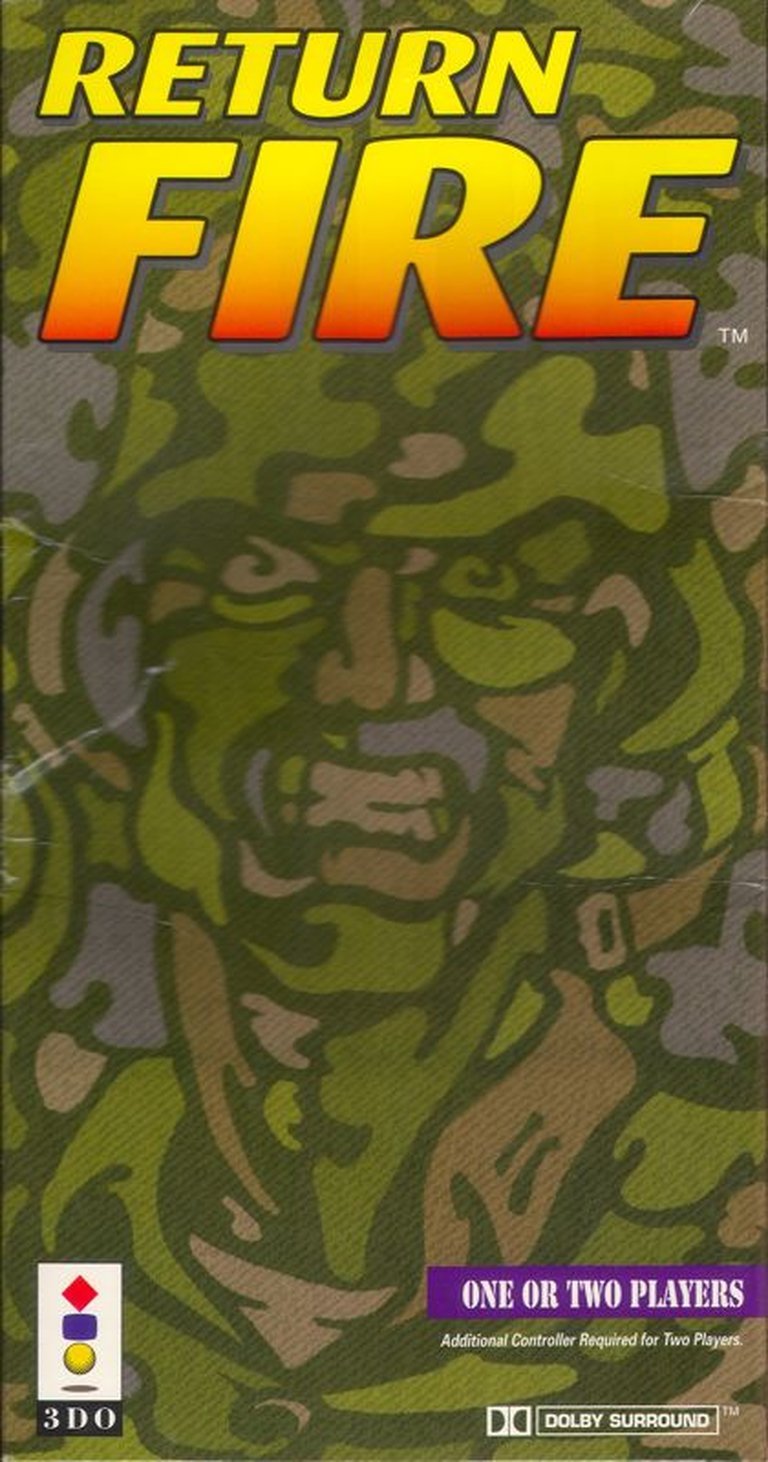
Description
Return Fire is a high-octane vehicular combat game set in a 2D scrolling battlefield, where players command one of four vehicles—a fragile jeep, agile helicopter, heavily armored tank, or missile-armed Armored Support Vehicle (ASV)—to outmaneuver and destroy opponents. The core objective is to capture the enemy’s flag with the jeep and deliver it to your bunker, or alternatively annihilate all enemy forces, delivering intense action-shooter gameplay with strategy elements in head-to-head multiplayer matches.
Gameplay Videos
Return Fire Free Download
Return Fire Guides & Walkthroughs
Return Fire Reviews & Reception
gamespot.com (47/100): Return Fire may have wowed the button-pushers who bought 3D0 machines, but for PC gamers it’s much too little, way too late.
mobygames.com (72/100): Simple concept, brilliant execution: designers take note.
gamesreviews2010.com (85/100): Return Fire is a classic strategy and action game that is still enjoyed by gamers today.
Return Fire Cheats & Codes
PlayStation
Symbol passwords are entered at the password entry screen (accessible at level/map select by moving up). GameShark codes require a GameShark device. Button sequences are performed at specified screens or during gameplay.
| Code | Effect |
|---|---|
| Umbrella, Bird, Butterfly, Flower | One-player level 2 |
| Face, Teapot, Bunny, Umbrella | One-player level 3 |
| Bunny, Umbrella, Bird, Bird | One-player level 4 |
| Flower, Umbrella, Bunny, Teapot | One-player level 5 |
| Bird, Teapot, Butterfly, Butterfly | One-player level 6 |
| Bear, Bear, Clover, Bird | One-player level 7 |
| Bunny, Teapot, Umbrella, Heart | One-player level 8 |
| Clover, Butterfly, Bird, Heart | One-player level 9 |
| Heart, Butterfly, Teapot, Heart | One-player level 10 |
| Umbrella, Umbrella, Bird, Flower | One-player level 11 |
| Flower, Teapot, Clover, Butterfly | One-player level 12 |
| Heart, Umbrella, Clover, Heart | One-player level 13 |
| Bunny, Face, Flower, Clover | One-player level 14 |
| Bunny, Face, Bear, Bird | One-player level 15 |
| Flower, Umbrella, Bird, Bunny | One-player level 16 |
| Flower, Bear, Heart, Umbrella | One-player level 17 |
| Face, Bird, Heart, Clover | One-player level 18 |
| Butterfly, Umbrella, Bear, Heart | Two-player level 2 |
| Bear, Bunny, Flower, Clover | Two-player level 3 |
| Umbrella, Heart, Clover, Flower | Two-player level 4 |
| Umbrella, Bear, Bunny, Heart | Two-player level 5 |
| Teapot, Bird, Butterfly, Flower | Two-player level 6 |
| Heart, Flower, Clover, Butterfly | Two-player level 7 |
| Heart, Bear, Bunny, Heart | Two-player level 8 |
| Bear, Bunny, Clover, Flower | Two-player level 9 |
| Butterfly, Face, Umbrella, Clover | Two-player level 10 |
| Bear, Flower, Face, Flower | Two-player level 11 |
| Teapot, Bear, Flower, Umbrella | Two-player level 12 |
| Heart, Bird, Flower, Clover | Two-player level 13 |
| Face, Bird, Clover, Teapot | Two-player level 14 |
| Teapot, Bird, Clover, Bear | Two-player level 15 |
| Umbrella, Teapot, Bird, Flower | Two-player level 16 |
| Face, Bear, Bunny, Flower | Two-player level 17 |
| Bunny, Heart, Flower, Bird | Two-player level 18 |
| 80082016 013F 800EC21A 002C |
Infinite Fuel |
| 80082030 0095 800EC236 0026 80082040 0032 |
Infinite Ammo |
| 80082022 8000 | Infinite Energy |
| 800A3CDC 0303 800A3CDE 0303 |
Infinite Lives |
| 80082044 67DC | Drive in Water |
| Square + X + Circle + Triangle | Self-destruct (while vehicle out of hangar) |
| L1 + L2 + R1 + R2 | Player handicap / Destroy vehicle in row (at vehicle selection screen) |
| Rapidly press L1 + L2 + R1 + R2 | Goofy symbols (at password entry screen) |
3DO
Passwords are entered at the password menu (access by pressing Up at map-selection screen). Button sequences are performed at vehicle/fuel screens or during gameplay.
| Code | Effect |
|---|---|
| WOLF | Stage select / Unlock all levels / Enable debug menu access |
| ZZZZ | Lock all levels |
| TITL | Play opening sequence |
| TNOD | Single-player level 1 |
| YALP | Single-player level 2 |
| HTIW | Single-player level 3 |
| LAER | Single-player level 4 |
| SNUG | Single-player level 5 |
| TSUJ | Single-player level 6 |
| SIHT | Single-player level 7 |
| EMAG | Single-player level 8 |
| POTS | Multiplayer level 1 |
| SRAW | Multiplayer level 2 |
| THAT | Multiplayer level 3 |
| LLIK | Multiplayer level 4 |
| EVAS | Multiplayer level 5 |
| HCAE | Multiplayer level 6 |
| EFIL | Multiplayer level 7 |
| MROF | Multiplayer level 8 |
| L + R + P | Debug menu (after entering WOLF password, during gameplay) |
| RS + LS + B + C then X, then Down + A (details: at vehicle select press C for fuel screen, hold RS+LS+B+C press X to exit menu, at ‘Do Not Exit’ hold those except C? press Down+A) | Invincibility (repeat per vehicle) |
| LS + RS + A + C then Down then Right (at fuel screen after pressing C) | Unlimited vehicles (three shadows appear) |
| A + B + C | Self-destruct |
| A + B | Zoom out (when fully zoomed in) |
| P (as ramp rises with vehicle) | Remove control window (press P again to resume) |
Return Fire: Review
Introduction
Imagine hurtling a fragile jeep across a mine-riddled battlefield, tires inflated to ford treacherous waters, enemy turrets swiveling in pursuit, all while Flight of the Bumblebee blares in manic symphony—only for a laughing skull to mock your explosive demise moments later. This is Return Fire, the 1995 vehicular combat gem that distilled the thrill of capture-the-flag into pixelated pandemonium. As a spiritual successor to the 1987 Amiga cult hit Fire Power, it arrived on the ill-fated 3DO amid a console war, yet carved a legacy as one of that platform’s crown jewels. Ports to PlayStation and Windows followed, but the original’s split-screen savagery shone brightest. My thesis: Return Fire masterfully blends rock-paper-scissors vehicular tactics with destructible chaos, proving that simple concepts, executed with humor and orchestral bombast, can outlast graphical flash—cementing its place as a multiplayer blueprint for genres from battle royales to modern arena shooters.
Development History & Context
Silent Software Incorporated, a fledgling studio helmed by the enigmatic “Baron” Reichart Kurt von Wolfsheild (director, designer, and concept visionary), birthed Return Fire as a bold evolution of Fire Power. Von Wolfsheild’s team— including producer/music maestro Alexis C. Kasperavičius, programmer/writer William A. Ware, and artist Van Arno—leveraged 3DO’s vaunted hardware for pseudo-3D scaling and Dolby surround, pushing 32-bit boundaries on a console priced at $700 (a steal from its $1,200 launch). With just 17 credits (13 developers, 4 thanks to Amiga pioneers like Robert J. Mical), it was a lean operation amid 1995’s technological constraints: limited RAM meant repetitive terrains, but innovative tools from James J. Host and Edgar C. Tolentino enabled smooth scrolling and dynamic zooms.
The era’s gaming landscape was brutal—3DO vied against Sony’s impending PlayStation juggernaut, Sega Saturn’s arcade ports, and PC’s rising RTS titans like Command & Conquer. Publishers like Prolific Publishing and The 3DO Company bet on it as a “killer app,” echoing Road Rash or The Need for Speed. Von Wolfsheild’s vision fused strategy (Herzog Zwei vibes) with arcade action, prioritizing split-screen multiplayer over solo depth. An expansion, Return Fire: Maps O’ Death (1995, 3DO-exclusive), added 100+ brutal maps. Unreleased ports (Sega Saturn by Prolific, canned due to Hi-Saturn compatibility woes; Atari Jaguar CD by Alexandria Inc.) highlight its cross-platform ambition, thwarted by market shifts. In a pre-online multiplayer world, its local chaos was revolutionary.
Narrative & Thematic Deep Dive
Return Fire eschews traditional storytelling for abstracted warfare, a deliberate choice amplifying its arcade purity. No protagonists or cutscenes dominate; instead, you’re an anonymous commander spawning vehicles from a bunker to assault a faceless foe’s base. The “plot” unfolds across 100+ islands (maps divided by difficulty), escalating from grassy fields to fortified archipelagos, culminating in flag hunts amid turrets, drones, and submarines. Victory montages—vintage B&W clips like Lou Gehrig’s “Luckiest Man” speech or Handel’s Hallelujah Chorus—inject surreal humor, underscoring war’s absurdity.
Themes revolve around destruction’s catharsis and vehicular hierarchy. Infantry flees burning buildings, crushed under treads in gory splatters (earning potential indization in Germany), while a cackling army-helmeted skull taunts defeats. Dialogue is sparse—beeps, explosions, a jeep’s flag-detection bell—but the pause screen’s US Army poster satirizes militarism. Classical score deepens irony: Wagner’s Ride of the Valkyries (Apocalypse Now nod) for helicopters evokes cinematic bravado; Grieg’s In the Hall of the Mountain King for the lumbering ASV builds dread; Rimsky-Korsakov’s Flight of the Bumblebee mirrors jeep fragility. Characters? Vehicles personified—jeep as suicidal scout, tank as all-rounder, ASV as siege beast—forming a rock-paper-scissors dialectic. Underlying motifs of resource scarcity (fuel/ammo tents) and environmental sabotage (bridge-blasting) critique endless war, yet revel in its joy, prefiguring Worms‘ slapstick violence.
Gameplay Mechanics & Systems
At its core, Return Fire loops around capture-the-flag vehicular rock-paper-scissors, demanding vehicle mastery amid destructible terrain. Spawn from your bunker (unlimited respawns, but finite slots), scout with tank/helicopter/ASV, then jeep-grab the flag for delivery. Secondary win: annihilate all four enemy vehicles. Fuel/ammo deplete realistically—land units halt on empty (driver flees, vehicle invulnerable); helicopter demands base returns.
Core Loops & Combat
- Jeep (M151 MUTT/HMMWV): Fragile (1-hit kill), fastest lander, sole flag carrier. Grenades (short-range shells), water-fording tires. UI dash bell pings flags. Innovation: Strategic kingmaker, flaw: Sitting duck.
- Helicopter: Agile strafer, mine/bridge destroyer. Shells/rockets, but ammo-only at base. Flaw: Fragile, fuel-guzzler.
- Tank (M60): 360° turret, balanced range/mobility. 150 shells max. Versatile scout/brawler.
- ASV (M270 MLRS): Tankiest, slowest; rockets/mines (non-resupplyable, heli-detonable). Area denial king.
Combat shines in interplay: Mines trap jeeps, helis clear paths, tanks duel. Turrets (5 shells/2 rockets/3 ASV shots to fell) auto-target; drones punish idling; boundary subs fire heat-seekers. UI? Clean isometric view with scaling zoom (speed pans out, action zooms in), split-screen multiplayer flawless on 3DO/PS1. Progression: 9 difficulty tiers, 100+ maps (expansive Maps O’ Death). Flaws: Repetitive AI (predictable patrols), no progression unlocks, solo wears thin sans friends. Brilliance: Destructible everything—trees splinter, bridges crumble—for emergent sabotage.
World-Building, Art & Sound
Settings evoke generic warzones: Island chains with bunkers, tents, forests, water. No lore-deep biomes (grass, snow hints in expansions), but full destructibility crafts dynamic arenas—cratered hellscapes post-barrage. Atmosphere? Tense paranoia: Scout fog-of-war edges, mine-choked chokepoints, infantry panic. Visuals: 2D sprites in pseudo-3D engine—dithered but crisp scaling, satisfying explosions, fleeing troops. Bland palettes (greens/browns) suit top-down, ports add minor PS1 tweaks (jeep redesign).
Sound elevates to masterpiece. Kasperavičius’ public-domain classical curation: Dies Irae intro flames, Holst’s Mars tank thumps, Rossini’s William Tell Overture flag rushes. Dolby surround booms impacts; skull’s maniacal laugh haunts. Paired with vintage clips (Verdi/Handel rewards), it forges operatic warfare—humor undercutting gore, atmosphere immersive beyond visuals.
Reception & Legacy
Launched to 3DO acclaim (MobyScore 7.9/10, #11 of 106), Return Fire scored 76-100% critics: EGM’s “Game of the Month” (9/10 avg, #63 all-time), GamePro 4.5-5/5 (“killer app”), CVG/GameFan 90-100% for multiplayer. PS1 held strong (7.4/10, 79-100%), Windows dipped (6.8/10, 68%)—shoddy CD reliance, no netplay. Players adored duo chaos (3.3/5 Moby, “endless fun while drinking”), lamenting solo boredom/map editor absence. Commercial? Boosted 3DO sales modestly; Maps O’ Death extended life.
Legacy endures: Pioneered vehicular CTF pre-Unreal Tournament, influencing Twisted Metal, battle royales’ vehicle meta. 3DO’s top game (GamesMaster #1), 1001 Video Games You Must Play, Home of the Underdogs staple. Cameo in In the Army Now; unreleased ports leaked (Saturn ROM 2007). Sequels (Return Fire 2, 1998 PC) added editors/netplay, but original’s purity reigns. Modern emulators revive split-screen nostalgia.
Conclusion
Return Fire distills warfare to exquisite frenzy: Fragile jeeps darting under Bumblebee‘s frenzy, ASVs mining doom amid Grieg’s creep, all in destructible splendor. Flaws—repetitive solo, limited variety—pale against multiplayer genius and soundtrack sorcery. In 3DO’s graveyard, it endures as a testament to focused design triumphing era’s excess. Verdict: Essential 9/10 multiplayer relic, a Historian’s Pick for CTF origins—dust off controllers, cue the orchestra, and let bridges burn.