
- Release Year: 2004
- Platforms: iPad, iPhone, Macintosh, Symbian, Windows Mobile, Windows
- Publisher: Anuman Interactive SA, Big Fish Games, Inc, Chillingo Ltd, Coladia Games, DreamCatcher Interactive Inc., Russobit-M, Tetraedge S.A.
- Developer: Kheops Studio
- Genre: Adventure
- Perspective: 1st-person
- Game Mode: Single-player
- Gameplay: Inventory management, Multiple solutions, Puzzle elements, Survival
- Setting: Steampunk
- Average Score: 79/100
Description
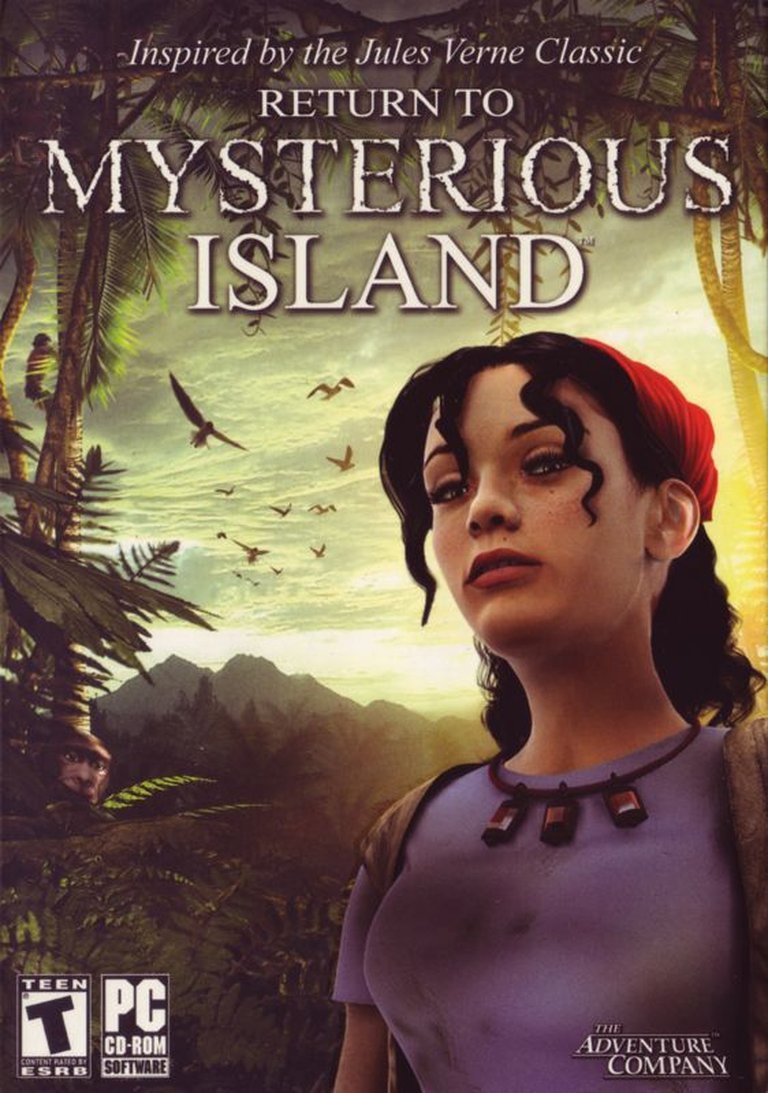
In ‘Return to Mysterious Island’, players take on the role of Mina, a young woman stranded on an uncharted island after a storm. Inspired by Jules Verne’s classic novel, the game combines survival elements with exploration as Mina seeks food, shelter, and a way off the island. Along the way, she discovers Captain Nemo’s submarine, the Nautilus, and navigates a steampunk-themed world filled with puzzles and multiple solutions. The non-linear storyline and unique inventory management system make for an engaging adventure.
Gameplay Videos
Where to Buy Return to Mysterious Island
Return to Mysterious Island Free Download
Return to Mysterious Island Cracks & Fixes
Return to Mysterious Island Guides & Walkthroughs
Return to Mysterious Island Reviews & Reception
metacritic.com (79/100): A great way to rediscover a Jules Verne classic. If the idea of overcoming nature’s challenges, surviving in a forgotten land, and unlocking the mysteries of an exotic island interest you, do not miss this game.
mobygames.com (76/100): Return to Mysterious Island is one of the best adventure games I’ve played this year.
steambase.io (84/100): Return to Mysterious Island has earned a Player Score of 84 / 100, giving it a rating of Very Positive.
Return to Mysterious Island: A Survivor’s Odyssey Through Jules Verne’s Legacy
Introduction
In 2004, Return to Mysterious Island emerged as a love letter to classic adventure gaming and Jules Verne’s literary genius. Developed by Kheops Studio and published by The Adventure Company, this first-person puzzle-adventure reimagined Verne’s The Mysterious Island with a modern twist: a female protagonist, inventive survival mechanics, and a non-linear world begging to be unraveled. Despite its modest commercial success, the game has endured as a cult favorite, celebrated for its inventive design and reverence for its source material. This review explores how Return to Mysterious Island balances nostalgia with innovation, cementing its place in the pantheon of narrative-driven adventures.
Development History & Context
Studio Vision & Technological Constraints
Kheops Studio, known for titles like The Egyptian Prophecy and Voyage, sought to capitalize on the resurgence of point-and-click adventures in the early 2000s. With Return to Mysterious Island, they aimed to marry Verne’s steampunk aesthetics with interactive storytelling. The game’s development was influenced by the success of Mystery of the Nautilus (2002), which proved the commercial viability of Verne-inspired narratives.
Limited by the era’s technology, Kheops opted for pre-rendered 3D environments and a fixed-camera perspective—common hallmarks of early-2000s adventures like Syberia (2002). While this constrained visual dynamism, it allowed for richly detailed backdrops that evoked the island’s isolation. The team prioritized puzzle design and inventory systems over cinematic flair, resulting in a game that felt both retro and refreshingly experimental.
The 2004 Gaming Landscape
Released alongside heavyweights like Half-Life 2 and World of Warcraft, Return to Mysterious Island carved a niche among adventure enthusiasts. Its $20 price point and accessible gameplay catered to casual players, while its depth appealed to veterans. The game’s multiplatform release—from Windows to Symbian phones—reflected a transitional era in gaming, bridging PC-centric design with mobile’s burgeoning potential.
Narrative & Thematic Deep Dive
Plot & Characters
Players assume the role of Mina, a resourceful sailor stranded on a tropical island after a storm disrupts her solo circumnavigation attempt. Her journey shifts from survival to discovery as she uncovers remnants of Captain Nemo’s Nautilus and grapples with his spectral presence. Unlike Verne’s male-centric cast, Mina’s agency and wit subvert expectations, offering a rare feminist lens in adventure gaming.
Themes & Symbolism
The game explores isolation and ingenuity, echoing themes from Robinson Crusoe and Lord of the Flies. Survival mechanics—foraging food, crafting tools—serve as metaphors for human resilience. Nemo’s ghostly interventions add a layer of existential inquiry: Is Mina truly alone, or is she part of a legacy? The island itself becomes a character, its secrets buried in volcanic caves and decaying machinery.
Dialogue & Pacing
Critics praised Mina’s voiced narration (courtesy of David Gasman) for its charm, though some found the story’s pacing uneven. The narrative takes a backseat to puzzles, with key plot beats revealed through journals and environmental clues. This “show, don’t tell” approach rewards observant players but risks alienating those seeking a more cinematic experience.
Gameplay Mechanics & Systems
Core Loop & Puzzles
The game’s brilliance lies in its multi-solution puzzles, which demand creativity and logical experimentation. For example, players can:
– Create fire using a lens, flint, or chemical reactions.
– Scare monkeys by crafting a slingshot or offering food bribes.
The inventory system is both praised and criticized. Combining items like seaweed and sulfur to make gunpowder feels satisfying, but the sheer volume of objects (over 100) can overwhelm. As GameBoomers noted, “The puzzles overshadow the story—in a good way.”
Jep the Monkey: Innovation & Frustration
Mina’s simian companion, Jep, acts as a dynamic tool. Players heal him early on, then use him to retrieve out-of-reach items or trigger mechanisms. This mechanic echoes The Legend of Zelda: The Wind Waker’s companion system but suffers from occasional AI hiccups, such as Jep getting stuck on geometry.
UI & Progression
The point-and-click interface is intuitive, with a context-sensitive cursor and a journal tracking objectives. A Sierra-inspired scoring system incentivizes replayability, though the 10–15 hour runtime feels brief by modern standards.
World-Building, Art & Sound
Visual Design
Pre-rendered environments brim with Verne’s steampunk aesthetic: rusted submarines, windmill-powered labs, and granite-walled hideouts. The island’s biomes—from sulfurous hot springs to dense jungles—are meticulously crafted, though static cameras limit exploration.
Soundscape & Music
Ambient sounds—crashing waves, chirping insects—immerse players in the island’s rhythms. The score, blending orchestral motifs with electronic undertones, mirrors Nemo’s fusion of nature and technology. Critics like Adventure Gamers lauded the audio as “lovely to listen to,” though some tracks loop repetitively.
Reception & Legacy
Critical & Commercial Performance
The game earned a 76% average critic score (Metacritic) and a cult following. Praise centered on its puzzles and atmosphere, while detractors cited its short length and minimal narrative. Financially, it sold 21,700 PC copies by mid-2005, per NPD Group, but found new life on iOS, moving 100,000 units by 2009.
Influence on the Genre
Return to Mysterious Island inspired a wave of survival-focused adventures, including The Forest (2014) and Subnautica (2018). Its sequel, Mina’s Fate (2009), expanded the lore but lacked the original’s spark. Today, the game is remembered for proving that Verne’s 19th-century vision could feel fresh in a digital age.
Conclusion
Return to Mysterious Island is a paradox: a game that feels both dated and timeless. Its pixel-hunting and static visuals betray its era, but its inventive puzzles and reverence for Verne’s spirit remain compelling. While not without flaws—chiefly its abrupt ending and underdeveloped story—it stands as a testament to Kheops Studio’s ambition. For adventure fans, it’s a charming relic; for historians, a bridge between classic literature and interactive storytelling. In the pantheon of Verne adaptations, few capture his sense of wonder so authentically.
Final Verdict: A flawed gem that rewards patience, Return to Mysterious Island deserves its place alongside Myst and Syberia as a benchmark of thoughtful adventure design.