
- Release Year: 2015
- Platforms: Linux, Macintosh, Windows
- Publisher: Lazy Monday Ltd
- Developer: Lazy Monday Ltd
- Genre: Adventure
- Perspective: Side view
- Game Mode: Single-player
- Gameplay: 2D scrolling, Graphic adventure, Puzzle elements
- Average Score: 70/100
Description
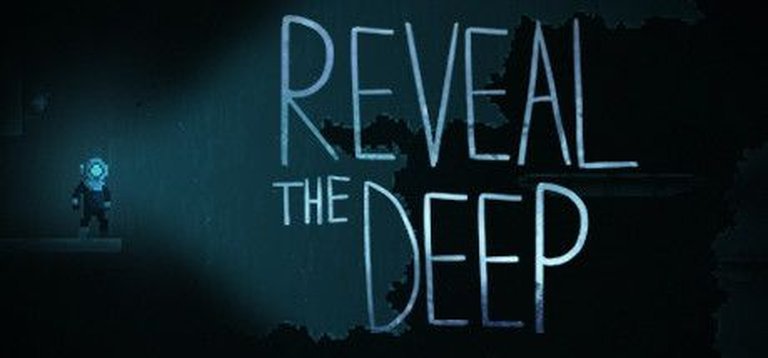
Reveal the Deep is an indie adventure game where players explore the wreck of a 19th century steamship in a side-view 2D scrolling format. The experience focuses on piecing together the ship’s mysterious past through notes and clues, with puzzle-solving and horror narrative elements driving the exploration.
Gameplay Videos
Reveal the Deep Guides & Walkthroughs
Reveal the Deep Reviews & Reception
metacritic.com (50/100): We’ve already seen every element of this game somewhere else and usually executed better.
goldplatedgames.com : This is what sets apart Reveal The Deep from other indie horror attempts, the incredibly effective atmosphere built upon a very basic pixel art foundation.
howlongtobeat.com (90/100): A really great experience. The graphics are awesome, the story is interesting. The atmosphere is really dark and make this game really immersive.
Reveal the Deep: A Cult Classic of Minimalist Horror and Atmospheric Dread
In the vast, often-overlooked archives of indie gaming, certain titles emerge not through blockbuster sales or critical unanimity, but via a persistent, whispered reputation among a dedicated niche. Reveal the Deep (2015) is one such game. A side-scrolling, pixel-art horror adventure from the two-person studio Lazy Monday Ltd, it eschews combat and complex systems for a quiet, methodical descent into a sunken steamship’s cursed history. Its legacy is a study in contrasts: critically dismissed by some as derivative, yet passionately revered by others as a masterclass in atmospheric tension. This review will argue that Reveal the Deep’s true significance lies in its profound understanding of economy—how a handful of mechanics, a stark visual language, and a fragmented narrative can converge to create an experience of haunting isolation that many larger-budget horror titles fail to achieve. It is not a game about what you do, but about what you feel and discover in the silent, pressing dark.
2. Development History & Context: Ambition in a Two-Pixel Team
Reveal the Deep was developed and published by Lazy Monday Ltd, a micro-studio consisting of just two credited individuals: Andrew Baxter (Art, Story) and Mitchell Baxter (Code, Sound). This duo, who also collaborated on other projects like Final Directive and Golf Gang, represents a specific strand of 2010s indie development: hyper-focused, personal projects created with minimal resources but a clear, singular vision.
The game emerged in December 2015, a period of prolific output for atmospheric indie horror. Titles like The Vanishing of Ethan Carter (2014), Neverending Nightmares (2014), and the Amnesia series had established that first-person horror could thrive on PC. Meanwhile, the 2D side-scroller was experiencing a revival through games like Limbo (2010) and Inside (2016), which used minimalist presentation to amplify dread. Reveal the Deep sits at this intersection, adopting the 2D platformer framework but applying it to a “graphic adventure” with heavy puzzle elements and a narrative horror core.
Technologically, the game was built for Windows, Macintosh, and Linux, utilizing a deliberately retro, low-fidelity pixel art style. This was less a technical limitation and more a stylistic and practical choice. For a two-person team, a 2D side-view with limited animations and a constrained color palette was manageable, allowing focus to shift from graphical fidelity to lighting, sound design, and environmental storytelling. The Steam description’s emphasis on “piecing together the story… through a variety of notes and clues” reveals a design philosophy centered on environmental narrative—a cost-effective method to build depth without needing complex dialogue systems or voice acting.
The gaming landscape of 2015 was also one where “walking simulators” and exploration-focused games were gaining critical acceptance, though they remained a divisive subset. Reveal the Deep, with its slow pace and puzzle-light approach, risked being lumped into this category. Its pricing at $0.99 on Steam signaled a confidence in its niche appeal—it was not priced as a full game, but as a concentrated, affordable experience. This positioning would shape its reception and eventual cult status.
3. Narrative & Thematic Deep Dive: A Tragedy of Hubris and Curse
The story of Reveal the Deep, pieced together from scattered notes, environmental clues, and player discussions (notably the detailed Russian Steam forum post which serves as the most comprehensive plot summary), is a tightly wound tale of colonial arrogance, supernatural contagion, and tragic sacrifice.
The Prologue: The Island Discovery
In 1901, an expedition led by Professor Kruk discovers a previously unknown island chain in the Indian Ocean. There, they find ruins of an ancient, extinct civilization—temples adorned with strange hieroglyphs and artifacts. Most critically, they recover several sealed crates containing pieces of a massive totem and other relics marked with solar and lunar symbols. The hieroglyphs reportedly warn, “Do not intrude—it kills,” a warning the scientists dismiss as primitive superstition. Their hubris is the first and fatal sin.
The Voyage & The Curse Unfolds
The artifacts are loaded onto the passenger steamship Eurydice for transport to England. Also aboard are three key passengers: Tom, Beatrice, and Isaac—the latter serving as the game’s silent protagonist. As the ship sails, a malady begins. Crew and passengers suffer headaches, irrational behavior, and spatial disorientation. The ship itself seems to warp; a journey to the deck leads to the hold, a trip to the lavatory ends in the kitchen. This ” haunted house in a ship” effect is localized to the lower decks where the crates are stored.
The curse manifests as a black, viscous ooze—the physical form of the island’s ancient power. It infects and petrifies those who come near the opened crates. The process appears to be: human → petrification (stone statue) → mutation into a monstrous, агрессивная форма. The source of the outbreak is heavily implied to be Tom, who, curious about the strange headaches near the crates, broke one open, found only ordinary stones, and left—unwittingly releasing the curse.
The Fates of the Cursed
The narrative details the downfalls of each infected character:
* Professor Kruk: His physical form degrades into the black ooze itself, which eventually rots into a putrid mixture of mold and fake honey—a grotesque inversion of the promised land’s bounty.
* Beatrice: She suffers a prolonged, agonizing transformation, ultimately dying while praying for her children, her final moments filled with maternal dread.
* Tom: Overcome with guilt, he attempts to contain the disaster but fails, transforming into a gigantic, infected statue—a monstrous monument to his mistake.
Isaac’s Journey & The Sacrifice
Isaac, the player character, initially tries to sink the ship by destroying its engineering generators. He dons a diving suit, writes a final, unsent letter to his wife, and loses his memory—likely from a concussion or psychological shock— collapsing on the deck. Upon waking submerged, he explores the wreck, collecting the four separated pieces of the totem from the infected former humans (including the giant Tom). The climax involves a ritualistic reassembly of the totem. Isaac then sacrifices himself, completing the artifact and purifying the curse. The petrified victims crumble into dust, finally at peace, and the monstrous forms vanish. Isaac’s spirit or essence becomes the new guardian of the wreck, a final, tragic piece of the totem itself. The lore leaves an open, chilling question: were the totem’s original four pieces also once people?
Themes: The narrative is a potent cocktail of Lovecraftian cosmic horror (ancient, incomprehensible power that drives men mad), colonial critique (the “savage” land cursing the “civilized” invaders), and personal tragedy. It’s a story about how curiosity and the desire for possession (of knowledge, of artifacts) lead to annihilation. The ship, Eurydice, becomes a metaphor for Victorian confidence—a technological marvel become a prison and tomb.
4. Gameplay Mechanics & Systems: Austere, Effective, Repetitive
Reveal the Deep‘s gameplay is its most polarizing element. It is deliberately simple, bordering on skeletal, which serves its atmosphere buttests player patience.
Core Loop & Movement
The game is a 2D side-scroller with a single, continuous level divided into three distinct sections (deck, mid-ship, deep holds). The player controls Isaac with left/right movement, jumping, and crouching. The diving suit is not a constraint; movement is surprisingly responsive, even “floaty,” which some critics noted as unintentionally comical against the grim tone. The primary interaction is pushing crates to create platforms or bridges—a puzzle staple executed competently but leading to significant repetition. Long, samey corridors are frequently broken by crate-pushing segments, which many players found tedious.
The Signature Mechanic: The Lamp
The game’s one brilliant innovation is the helmet lamp toggle, activated with a keypress that produces a satisfying, physical “GONK” sound. The lamp serves two purposes:
1. Navigation & Atmosphere: In the perpetual deep-sea gloom, the single, moving cone of light creates long, dancing shadows through gratings and pipes. The limited visibility is the primary source of tension.
2. Puzzle & Narrative Mechanic: In specific areas, turning the lamp OFF reveals hidden spectral outlines—ghostly notes on walls, invisible walkways, or fleeting glimpses of the past. This mechanic encourages players to actively engage with the darkness, making the act of exploration a conscious, tense choice. It’s a simple idea that perfectly reinforces the game’s themes of hidden truths and the unseen.
Progression & UI
There is no character progression, inventory, or traditional UI. Notes are collected automatically and viewed in a simple menu. The “puzzles” are almost exclusively environmental: using crate positions, timing movements with steam vents, or employing the light-toggling to reveal paths. There are no enemies to fight; the “horror” comes from the environmental storytelling, audio cues (creaking metal, skittering creatures), and sudden visual reveals (a face in a porthole, a statue’s twitch). The lack of a save system (noted in Steam forum requests) is a significant flaw, forcing complete sessions in one sitting and adding frustration to the repetition.
Assessment
The gameplay is flawed but purposeful. The crate-pushing is monotonous, and the platforming is rudimentary. Yet, this simplicity focuses the player entirely on atmosphere and discovery. The game is not a challenge but an experience. The lamp mechanic is a masterstroke of players-as-active-participants-in-dread, making the darkness an interactive character. Its systems are not innovative in a broad sense, but they are perfectly calibrated for the game’s intimate,恐怖の小説-like goals.
5. World-Building, Art & Sound: The Triumph of Economy
Where Reveal the Deep achieves legendary status is in its world-building through audiovisual design. With minimal assets, it creates one of the most oppressive, believable settings in indie horror.
Visual Design: Pixel-Perfect Dread
The game uses a limited, desaturated 2D pixel art palette. Dominated by murky blues, browns, and greys, with the warm, sickly yellow of the lamp providing the only vibrant contrast. The art direction is impeccable:
* The Ship: Every corridor, boiler room, cabin, and deck is rendered with textural detail—rust, seaweed, broken glass, and the omnipresent black ooze. Despite the pixelation, the sense of a lived-in, ruined world is palpable.
* Lighting & Shadow: The dynamic light from the helmet is not just a gameplay tool but the core artistic statement. It sculpts the environment in real-time, revealing only fragments. What’s in the unlit periphery? The mind fills in terrors more frightening than any sprite. This technique, praised by Gold-Plated Games as creating “long shadows… revealing just enough of the deep to leave you questioning,” is the game’s greatest strength.
* The Infected: The petrified and mutated forms are chillingly simple designs. A statue with a cracked face, a bloated, amorphous pile of ooze—their lack of hyper-detailed建模 makes them feel more like natural, horrific growths than designed monsters.
Sound Design: The Unseen Terror
The sound design is, if anything, even more critical than the visuals. Mitchell Baxter’s work is a lesson in ambient unease:
* Ambience: A constant, low subaquatic rumble (pressure, distant waves), the creaking and groaning of the stressed ship’s hull, the drip of water, and the skittering of unseen creatures in the walls. This soundscape never lets you forget your environment—you are in a metal tomb deep under the ocean.
* Dynamic Audio: Sounds change based on location. Near the infected areas, the audio may distort, incorporate heartbeat-like thumps, or the ooze’s suction sounds. The “GONK” of the lamp is a perfect, tactile sound that reinforces the helmet’s physicality.
* Silence: The game uses strategic silence masterfully, making sudden audio cues (a gasp, a crash) feel devastating. This is psychological horror via audio at its most efficient, directly comparable to the best of Silent Hill or Frictional Games‘ work, but achieved with far less technical complexity.
Synthesis
Together, the art and sound create a cohesive, suffocating atmosphere. You don’t just see the wreck—you feel the cold, the pressure, the weight of the water. The pixel art, often seen as a limitation, becomes an advantage; its abstract nature allows the player’s imagination to supercharge the horror. The game understands that what is suggested is always scarier than what is shown, and it uses its minimalist toolkit to suggestion perfection.
6. Reception & Legacy: The Tale of Two Score
Reveal the Deep’s reception is a snapshot of the indie horror divide.
Critical Reception
Professional critic coverage was minimal. The one noted critic review from CD-Action (Polish, Feb 2016) was scathing, awarding a 50/100 and stating: “We’ve already seen every element of this game somewhere else and usually executed better.” This critique highlights the game’s biggest weakness: its mechanics are derivative (crate-pushing from countless platformers, light-toggling seen in games like Donkey Kong Country: Tropical Freeze). For critics focused on innovation, it offered little new.
User & Community Reception
In stark contrast, player reception is overwhelmingly positive on aggregate platforms:
* Steam: As of real-time data from Steambase, it holds a “Very Positive” rating with a Player Score of 83/100 from approximately 1,450 reviews. This indicates sustained, long-term appreciation.
* Metacritic (User): A 6.5/10 “Mixed or Average” score based on 8 ratings, though this is a tiny sample. The written user reviews (e.g., SilverOrlov’s 9/10 on Metacritic, calling it “a simple ‘java toy’… with an oppressive atmosphere”) consistently praise the atmosphere, story, and effectiveness despite simple gameplay.
* Itch.io & Specialized Press: On Itch.io, it holds a 4.4/5 star rating. Crucially, it received a rave review from Eurogamer’s Christian Donlan (quoted on the developer’s page): “This isn’t really about the puzzles, of course. It’s about the economy: the ease with which a simple graphical style… can take you somewhere odd and frightening.” This alignment with a respected critic’s taste helped cement its cult credentials.
Evolution of Reputation
Initially, it was a cheap, obscure curiosity. Over time, word-of-mouth among horror enthusiasts and “atmospheric horror” streamers elevated it. Its short length (~1.5 hours) and low price make it an accessible, risk-free recommendation for fans of slow-burn horror. It is now frequently mentioned in “best horror games under $5” and “best indie horror” lists, often alongside games like DreadOut or Anna. Its reputation has evolved from “derivative” to “a masterclass in doing a lot with very little.”
Influence & Industry Position
In the vast industry, Reveal the Deep is not an influential landmark in terms of mechanics or sales. However, it is a touchstone for a specific design philosophy: environmental horror through minimalist interactivity. It prefigured and complements the rise of “horror tourism” games where the goal is exploration and story-discovery over conflict. Its effective use of light as both tool and narrative device can be seen in later games like Mundaun (2020) or Silent Hill: The Short Message (2024). It stands as a proof-of-concept that a compelling horror experience can be built by a tiny team with a clear focus on audio-visual storytelling and mood over mechanical complexity.
7. Conclusion: A Flawed Gem of the Deep
Reveal the Deep is not for everyone. Its repetitive crate-pushing, lack of save functionality, and short runtime will frustrate players seeking deeper gameplay. Critically, it arrived with mechanics that felt familiar and a premise that could be dismissed as another Aquanox or Bioshock lite.
Yet, to judge it on those bases is to miss its point. It is not a game about doing, but about being there. In an era where horror often relies on jump scares and visceral violence, Reveal the Deep achieves its chills through relentless atmosphere, patient environmental storytelling, and the primal fear of the dark, pressurized deep. The totem narrative, while not groundbreaking, is delivered with a sad, inevitable weight through the notes and scenes of petrification. The final, melancholic sacrifice of Isaac lands because the game made you feel the ship’s despair.
It is a textbook example of “economy” in game design: every asset, every sound effect, every pixel serves the singular goal of creating unease. For $0.99, it offers a concentrated, memorable horror vignette that lingers long after the credits roll—specifically, the image of the player, alone in the dark, using a beam of light to peel back another layer of a tragic, sunken mystery.
Final Verdict: Reveal the Deep is a cult classic and a minor masterpiece of atmospheric horror. Its gameplay flaws are real, but they are secondary to its profound success as an interactive ghost story. It earns its place in video game history not as a trendsetter, but as a shining example of indie ingenuity—a game that proves the deepest terrors are often found not in what you see, but in the shadows just beyond the reach of your light. For those willing to take the plunge, it reveals a haunting, unforgettable depth.