
- Release Year: 2013
- Platforms: Windows
- Publisher: Orz Laboratory
- Developer: Orz Laboratory
- Genre: Action
- Perspective: Side view
- Game Mode: Single-player
- Gameplay: Platform
- Setting: Contemporary, Futuristic, Sci-fi
Description
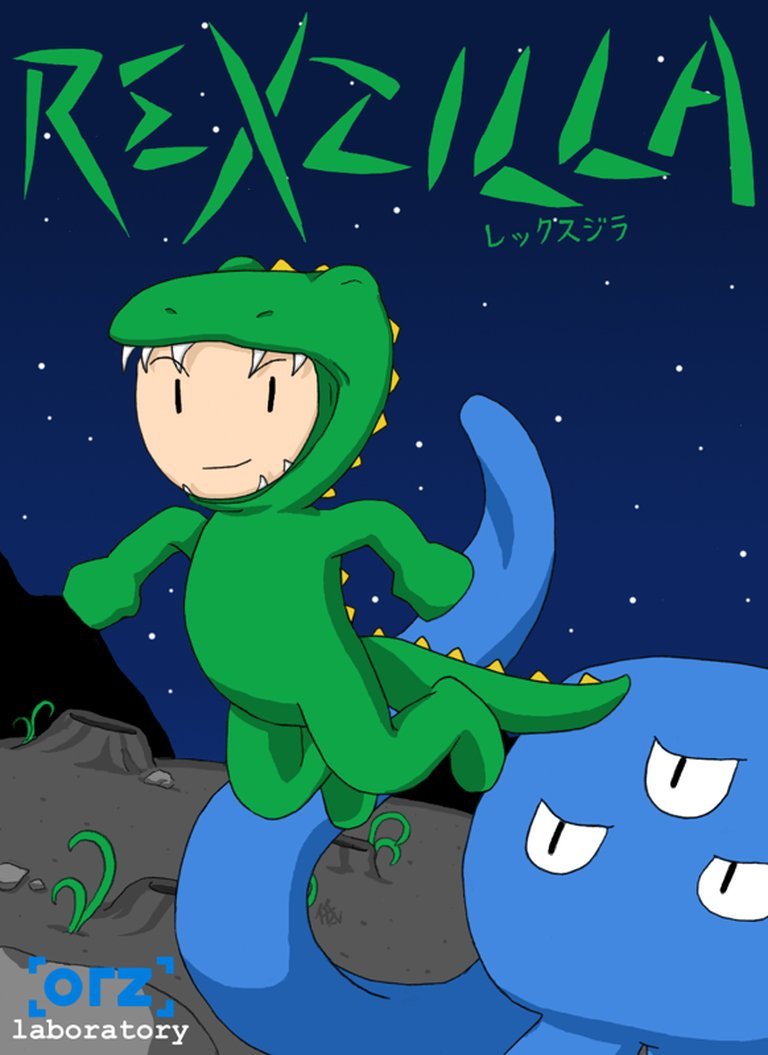
In Rexzilla, a charming retro platformer, young Rex Zillerman dons his trusty dinosaur costume from past Halloweens to become the superhero Rexzilla after devious aliens steal his prized gumball collection. Set in a sci-fi universe blending contemporary Earth with futuristic alien worlds across five diverse realms, players run, jump, breathe fire, and squash enemies through over 50 mind-bending levels, facing epic boss battles to reclaim the gumballs and restore cosmic peace, with the game reworked in 2018 for an enhanced experience.
Guides & Walkthroughs
Reviews & Reception
orzlaboratory.com : Very pristine and retro-feeling … with an above average level of challenge and an above average level of charm.
Rexzilla: Review
Introduction
In an era where indie developers often chase hyper-realistic graphics or sprawling open worlds, Rexzilla stands as a delightful throwback to the golden age of 2D platformers, reminding us that simple, joyous gameplay and whimsical storytelling can still roar with life. Released in 2013 by the one-person studio Orz Laboratory, this pixelated adventure follows young Rex Zillerman, who transforms into the dino-suited superhero Rexzilla to reclaim his stolen gumball collection from a horde of mischievous aliens. What begins as a lighthearted quest for candy evolves into a testament to childhood imagination, blending high-jumping action with fire-breathing fury across over 50 levels. As a game historian, I’ve seen countless titles fade into obscurity, but Rexzilla‘s 2018 overhaul breathes new life into its retro charm, making it a hidden gem worth unearthing. My thesis: Rexzilla exemplifies the indie spirit’s power to revitalize classic platforming tropes, offering an accessible yet challenging experience that punches above its weight in creativity and nostalgia, securing its niche as a cult favorite in the collectathon genre.
Development History & Context
Orz Laboratory, founded in 2012 in Calgary, Canada, by designer and developer Brandon Low, emerged from the vibrant indie scene of the early 2010s—a time when tools like GameMaker and custom engines democratized game creation for solo creators. Rexzilla marked the studio’s debut full release, developed over a grueling six-month sprint from October 2012 to March 2013. Low handled design, development, and graphics single-handedly, drawing from personal childhood memories of reusing a dinosaur Halloween costume and hoarding gumballs on the way to school. This intimate origin story infuses the game with authenticity; Low’s vision was to craft a “collect-em-up” platformer that empowered players through a child’s unbridled imagination, pitting a pint-sized hero against cosmic foes without the bloat of modern AAA excess.
The era’s technological constraints played a pivotal role. Built on a custom engine for Windows XP or later, Rexzilla targeted modest hardware: a Pentium 4 CPU, 512 MB RAM, and DirectX 9.0c support, reflecting the indie landscape where accessibility trumped spectacle. This was post-Super Meat Boy (2010) and amid the rise of Braid (2008) and Fez (2012), where pixel art and precise controls defined indie innovation. Low’s process, chronicled in IndieDB devlogs, reveals a bootstrapped journey: early prototypes focused on core jumping mechanics, with iterative polishing for levels, sound effects, and bilingual (English/Japanese) support to broaden appeal. Patches like version 1.1 (March 2013) fixed bugs such as hitbox issues and audio glitches, while the 2018 1.3 overhaul refined controls, visuals, and difficulty, addressing feedback from initial sales on platforms like Desura and Indievania. Commercially, it was a digital download title priced around $9.99 USD, DRM-free on itch.io, embodying the era’s shift toward direct-to-consumer indie distribution. In a market dominated by mobile free-to-play and console blockbusters, Rexzilla carved a space for nostalgic, family-friendly platformers, influencing Orz Lab’s later works like Bullet Cat (2015) and Overcome (2017).
Narrative & Thematic Deep Dive
At its core, Rexzilla‘s narrative is a sugary paean to childhood innocence clashing with absurd villainy, unfolding through environmental storytelling rather than verbose cutscenes. The plot kicks off in Rex’s mundane contemporary world, where his “prized gumball collection”—a hoard of colorful spheres symbolizing youthful treasures—is pilfered by an “evil alien army” of octopus-like invaders. Donning his well-worn dinosaur costume (reused for “the past two Halloweens and counting”), Rex morphs into Rexzilla: “50% boy, 50% dinosaur, and 100% AWESOME” (a cheeky math joke that underscores the game’s playful tone). This transformation isn’t just cosmetic; it’s a metaphor for empowerment, turning a ordinary kid’s fantasy into intergalactic heroism.
The story progresses across five worlds—from Earthly suburbs invaded by aliens to futuristic cosmic lairs—spanning over 50 levels and culminating in five boss battles. Characters are archetypal yet endearing: Rexzilla as the plucky protagonist, his gumballs as MacGuffins representing lost joy, and the aliens as comically devious foes with no deeper motive than theft (echoing Low’s devlog musing: “why do villains do anything, anyway?”). Dialogue is sparse but punchy, delivered via pixelated text bubbles and an instruction manual that breaks down gameplay with humor, like explaining fire-breathing as “Rexzilla’s way of saying ‘back off, squid-face!'” Japanese localization adds cultural flair, with spellings like “レックスジラ” enhancing its bilingual charm.
Thematically, Rexzilla delves into imagination’s triumph over adversity. The gumball quest critiques petty villainy while celebrating resourcefulness—Rexzilla’s powers (jumping, stomping, fire-breathing) stem from costume-fueled pretend play, a nod to how kids weaponize fantasy against real-world “monsters” like bullies or boredom. Two endings—one standard, one hidden—reward exploration, with the secret path tying back to Rex’s personal growth, emphasizing persistence. Subtle themes of consumerism (gumball obsession) and nostalgia (retro aesthetics) weave in, but never overwhelm; it’s a narrative that invites players to relive their own dino-roaring youth, making emotional beats land through triumphant level clears rather than exposition dumps. In an industry often criticized for grimdark tales, Rexzilla‘s lighthearted arc feels refreshingly pure, a thematic deep dive into joy as the ultimate superpower.
Gameplay Mechanics & Systems
Rexzilla masterfully deconstructs the platformer formula into a tight “jumpathon collect-em-up,” where core loops revolve around traversal, combat, and collection, balanced for both casual hops and hardcore precision. The side-view 2D scrolling perspective employs direct controls via keyboard (arrow keys for movement, Z for jump, X for fire/stomp) or customizable gamepad, supporting single-player offline sessions. At its heart is the high-jump mechanic: Rexzilla’s dino legs enable variable-height leaps, essential for navigating multi-layered levels filled with platforms, spikes, and moving hazards. This feeds into a collectathon system—gumballs are primary pickups, scattered as 100% completion goals, unlocking 12 challenge awards (e.g., “speedrunner” for timed clears or “pacifist” for no-damage runs).
Combat is straightforward yet satisfying: fire-breathing zaps distant enemies, while ground pounds squish foes below, encouraging rhythmic button-mashing amid alien swarms. Bugs, sentries, and sentinels (octopus-inspired grunts) demand pattern recognition—dodge tentacles, time stomps—escalating to boss fights where patterns grow complex, like evading projectile barrages while targeting weak points. Progression is linear across worlds but nonlinear within levels, with secrets like hidden passages rewarding backtracking. The UI is minimalist: a heads-up display shows health (three hearts), collected gumballs, and world counters, with F4 toggling fullscreen and esc menus for saves. Flaws emerge in the “possibly-too-challenging difficulty curve,” as Low self-admitted; later levels spike in precision (e.g., pixel-perfect jumps over abysses), potentially frustrating newcomers, though the 2018 update smoothed hitboxes and added prompts.
Innovations shine in puzzle elements—minor but integrated, like using fire to melt ice blocks or stomps to trigger switches—blending action with light environmental interaction. Replayability comes from awards and dual endings, plus demo save imports for continuity. Overall, the systems form a cohesive loop: explore, collect, conquer, repeat. It’s not revolutionary like Celeste‘s dash mechanics, but its purity evokes Mega Man precision with Donkey Kong Country charm, flaws notwithstanding, delivering addictive “one more try” sessions.
World-Building, Art & Sound
Rexzilla‘s universe is a vibrant cosmos born from childlike whimsy, where suburban Earth bleeds into sci-fi alien hives, fostering an atmosphere of playful invasion. Settings span five worlds: the first grounds players in Rex’s backyard turned battlefield, evolving to zero-gravity space stations and boss arenas like a massive alien mothership. World-building is implicit—gumball dispensers litter levels as lore nods to Rex’s obsession, while alien lairs pulse with bioluminescent goo, hinting at a candy-craving empire. This cohesive escalation builds tension without lore dumps, immersing players in a galaxy where everyday joys collide with extraterrestrial chaos.
Visually, the pixel art direction is a nostalgic triumph, crafted by Low with “minimalism and unified colour cohesion” to evoke crayon-scribbled dreams. Sprites are crisp 2D animations—Rexzilla’s wobbly dino tail sways during runs, aliens flop comically when squished—rendered in a 800×600 native resolution that scales well on modern displays. Color palettes pop: neon greens for aliens contrast candy-bright gumballs against starry backdrops, creating timeless simplicity praised as “pristine and retro-feeling.” The 2018 rework enhanced animations and mapping (e.g., fixing “spongy” blocks), amplifying atmosphere without losing 16-bit vibes akin to Shovel Knight.
Sound design elevates the experience, with Dallin Jimmy Low (as Dallinsaurus) composing an original soundtrack of chiptune-inspired tracks—bouncy space themes for exploration, tense synths for bosses—that recall Sonic the Hedgehog‘s zippy energy. SFX are punchy: fiery whooshes, squishy stomps, and triumphant jingles reinforce feedback loops. Volume tweaks in patches ensure balance, while bilingual text adds immersive flair. Collectively, these elements craft an atmosphere of empowering fun, where art and sound transform procedural levels into a lived-in, imaginative playground, contributing to the game’s above-average charm.
Reception & Legacy
Upon its 2013 launch, Rexzilla garnered modest but positive reception in the indie circuit, with no Metacritic aggregate but glowing user feedback on Desura (6.7/10 average from 15 votes) and IndieDB. Jay Is Games lauded it as “very pristine and retro-feeling… with an above average level of challenge and an above average level of charm,” highlighting its appeal to retro fans. YouTube playthroughs like JordanUnderneath’s exclaimed “OCTOPUS!” in delight at alien designs, while forums noted its family-friendly vibe. Commercially, it sold steadily via itch.io and early digital stores, bolstered by a free demo showcasing seven levels (including a boss). Patches addressed launch bugs, fostering community goodwill, though its niche release limited mainstream buzz amid 2013 heavyweights like The Last of Us.
Over time, reputation evolved positively; the 2018 overhaul revived interest, with MobyGames adding it in 2025 (still n/a score due to sparse reviews) and itch.io sales persisting at $9.99. No player reviews on MobyGames yet, but devlogs and Low’s portfolio reflect enduring pride. Legacy-wise, Rexzilla influenced Orz Lab’s portfolio, paving for titles like Bullet Cat with shared pixel mechanics. In the broader industry, it contributes to the hop-and-bop platformer revival, echoing Rayman Legends (2013) in joyful collection while prefiguring Shovel Knight‘s Kickstarter success. As indie history unfolds, it symbolizes solo-dev resilience, inspiring micro-studios to blend nostalgia with polish— a quiet influencer in the collectathon lineage, from Banjo-Kazooie to modern indies like Iconoclasts.
Conclusion
Rexzilla distills the essence of indie platforming into a pixel-perfect package: a gumball-fueled odyssey of jumps, flames, and alien-squishing that captures childhood’s boundless wonder amid retro rigor. From Brandon Low’s heartfelt development to its thematic embrace of imagination, the game’s mechanics deliver tight, replayable fun, bolstered by evocative art, sound, and worlds that linger like a favorite candy. Though its challenging curve and modest reach tempered initial impact, the 2018 updates and enduring charm affirm its value. In video game history, Rexzilla claims a worthy spot as an underdog triumph—a 200% awesome reminder that small studios can roar loudest. Verdict: Essential for platformer enthusiasts; 8.5/10, with a dino-sized recommendation to play.