
- Release Year: 2014
- Platforms: iPad, Macintosh, Windows
- Publisher: Big Fish Games, Inc
- Developer: Elephant Games AR LLC
- Genre: Adventure
- Perspective: 1st-person
- Game Mode: Single-player
- Gameplay: Hidden object, Mini-games, Point and select, Puzzle elements
- Setting: Detective, Fantasy, Horror, Mystery
- Average Score: 90/100
Description
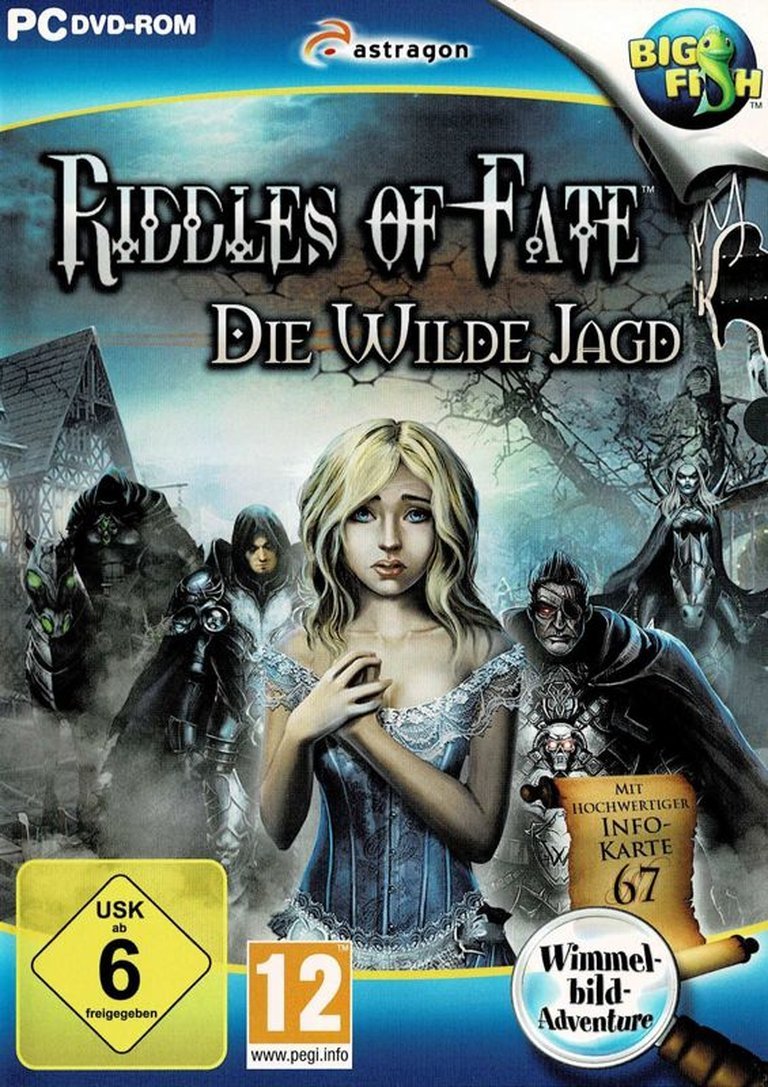
In ‘Riddles of Fate: Wild Hunt’, players take on the role of a detective delving into supernatural mysteries. The game is set in a fantasy world where the Horsemen of the Apocalypse are the main antagonists. The story revolves around Death, who falls in love with a mortal and has a daughter, leading to a complex web of supernatural intrigue. The detective must solve puzzles and uncover hidden objects to bring justice to those who have cheated death and caused harm.
Gameplay Videos
Where to Buy Riddles of Fate: Wild Hunt
PC
Riddles of Fate: Wild Hunt Free Download
Riddles of Fate: Wild Hunt Guides & Walkthroughs
Riddles of Fate: Wild Hunt Reviews & Reception
gamezebo.com (80/100): Riddles of Fate: Wild Hunt is a bit light on challenge, but it’s fine to look at it, and it tells a good story.
steambase.io (100/100): Riddles of Fate: Wild Hunt Collector’s Edition has earned a Player Score of 100 / 100.
Riddles of Fate: Wild Hunt – A Supernatural Hidden Object Odyssey
Introduction
In the crowded landscape of mid-2010s hidden object games, Riddles of Fate: Wild Hunt stands out as a darkly enchanting tale that marries Gothic fantasy with apocalyptic stakes. Developed by Elephant Games and published by Big Fish Games in 2014, this entry in the Riddles of Fate trilogy tasks players with unraveling a mythic struggle against the Four Horsemen of the Apocalypse while exploring themes of love, betrayal, and cosmic justice. While its mechanics adhere to genre conventions, the game distinguishes itself through atmospheric world-building and a narrative bold enough to cast Death as a tragic romantic lead. This review argues that Wild Hunt is a polished, if formulaic, gem that exemplifies the strengths and limitations of the hidden object adventure genre during its peak.
Development History & Context
Elephant Games, a studio renowned for its prolific output of narrative-driven hidden object games, leveraged Big Fish Games’ distribution network to carve a niche in the casual gaming market. Released during a 2013–2014 glut of supernatural-themed adventures (Mystery Case Files, Dark Parables), Wild Hunt leaned into the genre’s fascination with folklore and horror. The game’s development was constrained by the era’s technological expectations: fixed-screen environments, 2D puzzles, and a focus on accessibility over mechanical complexity. Yet, these limitations became strengths, as the studio channeled resources into lavish hand-drawn art and a voice-acted storyline—features that elevated it above budget-tier competitors.
Narrative & Thematic Deep Dive
Plot & Characters
The game casts players as a detective summoned to the cursed town of Osville, where spectral forces hunt for Angelica, the half-mortal daughter of Death. The story delves into forbidden love: Death’s romance with a human woman, which defies cosmic order and triggers the Horsemen’s wrath. This melodramatic premise is elevated by nuanced characterizations—Death is neither villain nor hero but a conflicted father, while Angelica embodies the trope of the “Chosen One” with tragic vulnerability.
Themes & Symbolism
- Moral Ambiguity: The Horsemen represent distorted justice, punishing Death’s “transgression” while slaughtering innocents.
- Redemption: Angelica’s survival hinges on reconciling her dual heritage, symbolizing the integration of life and death.
- Sacrifice: Death’s alliance with the player carries echoes of Orpheus and Eurydice, with the detective mediating between realms.
The narrative’s emotional core lies in its exploration of parenthood and legacy, framed through Gothic archetypes like the “Death and the Maiden” trope.
Gameplay Mechanics & Systems
Core Loop
Wild Hunt follows a classic adventure template:
1. Hidden Object Puzzles (HOPs): Scenes require combining items (e.g., repairing a statue’s wings) rather than mere list-checking.
2. Mini-Games: Tile-matching, sliding puzzles, and symbol-sequencing challenges vary in difficulty but skew toward casual accessibility.
3. Inventory Puzzles: Players collect tools like a “Potion of Cold” to freeze a dragon, emphasizing logical item combinations.
Innovations & Flaws
- Louis the Bat: This companion fetches out-of-reach items, adding light puzzle-solving layers.
- Repetition: Later chapters recycle mechanics (e.g., collecting zodiac symbols feels padded).
- UI/UX: The journal auto-tracks objectives, but pixel-hunting in cluttered scenes frustrates.
While devoid of genre-redefining ideas, the systems are polished and intuitive, catering to fans seeking comfort food over innovation.
World-Building, Art & Sound
Visual Design
Osville’s decaying Gothic architecture and ethereal realms (e.g., the “Underground Lake”) are rendered in lush, painterly detail. The art direction balances gloom with whimsy—Death’s tower brims with cobwebbed grandeur, while the Chapel’s stained glass bathes scenes in eerie crimson light.
Atmosphere & Sound
- Music: Ominous strings and choral motifs heighten tension, though tracks loop excessively.
- Environmental Storytelling: Ghostly apparitions and shifting objects (e.g., falling books) suggest a world alive with supernatural energy.
- Voice Acting: Death’s gravelly baritone and Angelica’s tremulous delivery lend emotional weight to otherwise functional dialogue.
The Collector’s Edition enhances immersion with bonus content, including concept art that showcases the game’s unused ideas.
Reception & Legacy
Initial Reception
Despite a lack of major critic reviews at launch, Wild Hunt garnered praise for its storytelling and art. Gamezebo’s 80/100 review highlighted its “gorgeously-illustrated” scenes and “solid story,” while Steam users celebrated its “old-school charm.” However, some criticized its predictable puzzles and reliance on genre tropes.
Lasting Influence
While not revolutionary, the game solidified Elephant Games’ reputation for narrative-driven hidden object titles. Its integration of companion characters (e.g., Louis) inspired later games like Grim Tales: The Bride. The Riddles of Fate trilogy’s success also demonstrated the commercial viability of serialized storytelling in casual gaming.
Conclusion
Riddles of Fate: Wild Hunt is a testament to the hidden object genre’s ability to weave compelling tales within constrained mechanics. Its strengths—lush visuals, emotional narrative, and atmospheric sound—offset its reliance on familiar gameplay loops. While it doesn’t transcend its genre, it perfects it, offering a satisfying experience for fans of Gothic mystery. A decade later, it remains a worthy time capsule of mid-2010s casual gaming—a beautifully crafted, if comfortingly conventional, journey into the heart of darkness.