
- Release Year: 2015
- Platforms: PlayStation 3, Windows
- Publisher: H2 Interactive Co., Ltd.
- Developer: Arc System Works Co., Ltd.
- Genre: Action, Driving, Racing, Sports
- Perspective: Side view
- Game Mode: Co-op, Single-player
- Gameplay: Fighting, Platform
- Setting: Contemporary
- Average Score: 68/100
Description
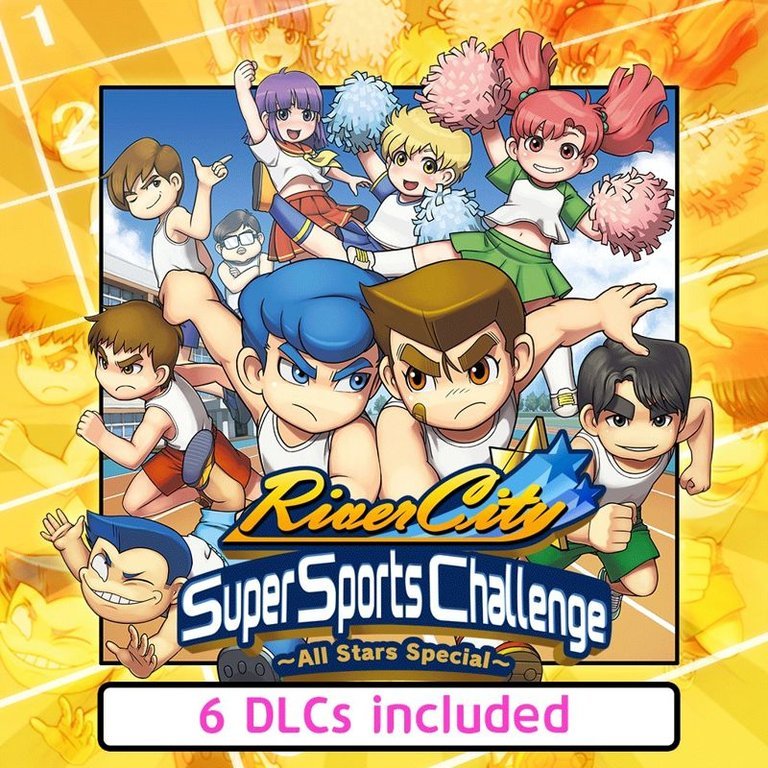
River City Super Sports Challenge: All Stars Special is a lively, comedic sports-action game set in the contemporary world of the Kunio-kun series. Players engage in a variety of competitive events, from races to combat sports, with up to four players in chaotic local multiplayer matches. Developed by Arc System Works, this 2015 remake of the 1990 classic combines retro 2D side-scrolling gameplay with modern enhancements, featuring fan-favorite characters and a lighthearted narrative centered around a high-energy athletic festival.
Gameplay Videos
Where to Buy River City Super Sports Challenge: All Stars Special
PC
River City Super Sports Challenge: All Stars Special Guides & Walkthroughs
River City Super Sports Challenge: All Stars Special Reviews & Reception
cgmagonline.com (70/100): Humour and originality can only go so far.
metacritic.com (70/100): There’s definitely some fun, entertaining stuff here, but to be frank, there are better, cheaper games out there, with more to do and more to see.
River City Super Sports Challenge: All Stars Special: Review
Introduction
Beneath the pixelated chaos of River City Super Sports Challenge: All Stars Special lies the beating heart of a legacy. Emerging from the ashes of Technōs Japan’s Kunio-kun series—a franchise that birthed River City Ransom and defined the beat-‘em-up genre—this 2015 remake by Arc System Works resurrects the anarchic spirit of 1990’s Downtown Nekketsu Kōshinkyoku: Soreyuke Daiundōkai. This is not a mere nostalgia trip; it’s a meticulously curated museum exhibit wrapped in a multiplayer riot. Yet, behind its reverence for the past, All Stars Special grapples with modernity. Thesis: While a loving homage to its Famicom roots, the game’s repetitive design and archaic AI underscore the tension between preservation and progress, cementing its status as a cult relic rather than a genre revival.
Development History & Context
Studio & Vision
Arc System Works, stewards of franchises like Guilty Gear, inherited the Kunio-kun mantle after Technōs’ dissolution. Their mission? To honor the series’ DNA—over-the-top brawling, sports mayhem, and irreverent humor—while injecting contemporary sensibilities. Director Ritsu Yamaguchi’s team expanded the original’s framework, adding 26 teams, online play, and a robust creation suite, aiming to bridge generational divides.
Technological Constraints & Era
Built for PlayStation 3 and PC, All Stars Special leveraged 2D sprite-based art with minor enhancements—fluid animations, widescreen support—but avoided reinventing the wheel. The decision preserved the series’ iconic aesthetic but risked alienating players accustomed to HD realism. Released in 2015 amid a retro renaissance (Shovel Knight, Axiom Verge), it capitalized on nostalgia yet faced stiff competition from indie darlings reimagining classic formulas.
Narrative & Thematic Deep Dive
Plot & Characters
The premise is vintage Kunio-kun: Reihō Academy’s Mamoru Tōdō (a silver-tongued schemer) disguises a power grab as a sports tournament, forcing Kunio and Riki to rally Nekketsu High against nefarious odds. The narrative serves as scaffolding for chaos, punctuated by absurd cutscenes where rivals trade insults like “Barf!” The 86-character roster spans the series’ history—from dodgeball star Johnny (Super Dodge Ball) to crossover guests like Super Sonico—each dripping with personality via exaggerated animations and quirks (e.g., Hattori Twins’ “Dragon Tail Kick”).
Themes & Tone
Beneath the cartoon violence lies a thematic core of camaraderie vs. ambition. Teams like the outlaw squad Sabu Gang and heroic Nekketsu High embody contrasting ideals, while events like “Camphor Ball” (a team-based smash-a-thon) satirize sportsmanship. Dialogue veers into meta-humor, mocking its own absurdity—a nod to fans who cherish the series’ B-movie charm.
Gameplay Mechanics & Systems
Core Loop & Events
The game orbits four events:
1. Yumemicho Cross Country: A race through urban sprawl, where punching rivals off rooftops is encouraged.
2. Obstacle Relay: Platforming meets sabotage, with ice floors and conveyor belts amplifying chaos.
3. Camphor Ball: Teams scramble to destroy a giant ball atop poles—a test of coordination and uppercuts.
4. Battle Royal: A last-man-standing brawl where weapons (bats, bombs) spawn dynamically.
Each event scores points based on aggression, speed, and flair. Win to boost stats for custom characters—a progression system rewarding mastery but tarnished by grindy repetition.
Combat & Systems
Combat merges River City Ransom’s combo-driven brawling with sport mechanics. Special moves—like Kunio’s “Mach Kick” or Riki’s “Tornado Punch”—require precise inputs, yet feel weightless compared to modern fighters. The Create mode (30-character slots, team customization) impresses, but unlocking parts through Single Play feels punitive.
Flaws & UI
AI opponents oscillate between braindead and psychic, undermining challenge. The UI, while functional, buries options under cluttered menus—a holdover from the Famicom era’s simplicity. Online lobbies (a 2015-era addition) remain sparsely populated, emphasizing local multiplayer.
World-Building, Art & Sound
Visual Design
Pixel art pays homage to Technōs’ 8-bit legacy while refining edges for HD. Stages burst with Easter eggs: Akiba College’s neon streets, Reihō Academy’s gothic arches. Characters animate with Street Fighter III-esque fluency—especially in super moves—though recycled sprites from older games hint at budget constraints.
Soundscape
Composer Kazuo Sawa remixes Famicom chiptunes into jazzy, high-energy tracks. Standouts include “Nekketsu March” and the melancholic “Bad Ending,” blending nostalgia with orchestral depth. Sound effects—bone crunches, sprinting footsteps—are punchy but lack spatial depth, a missed opportunity for immersion.
Reception & Legacy
Critical & Commercial Reception
Launch reviews averaged 72% (MobyGames), praising its faithfulness but critiquing repetition. Hey Poor Player (80%) lauded its “retro charm,” while Video Chums (64%) blasted “lackluster AI.” Sales were modest—befitting a niche title—yet it found footing among Kunio-kun diehards.
Cultural Impact
All Stars Special solidified Arc System Works as worthy inheritors of Technōs’ legacy, inspiring later entries like River City Girls. Its DNA surfaces in indie hybrids (Retro City Rampage), yet it remains a curiosity—a time capsule of when sports and brawlers collided without apology.
Conclusion
River City Super Sports Challenge: All Stars Special is a paradox: a lavish ode to simplicity. Its exuberant chaos and customization options earn it a place among the Kunio-kun pantheon, while dated design and uneven AI confine it to the past. For fans, it’s an essential love letter. For newcomers, a baffling artifact. In the annals of gaming history, it stands not as a revolution, but as a riotous footnote—proof that some legends thrive in amber. Final Verdict: A flawed gem, best enjoyed with three friends and zero expectations.