
- Release Year: 2000
- Platforms: Windows
- Publisher: Environment Agency
- Developer: Forma Communication, The Advisory Unit: Computers In Education
- Genre: Educational, Simulation
- Perspective: 1st-person
- Game Mode: Single-player
- Gameplay: Multiple Choice, Survey
- Setting: Europe
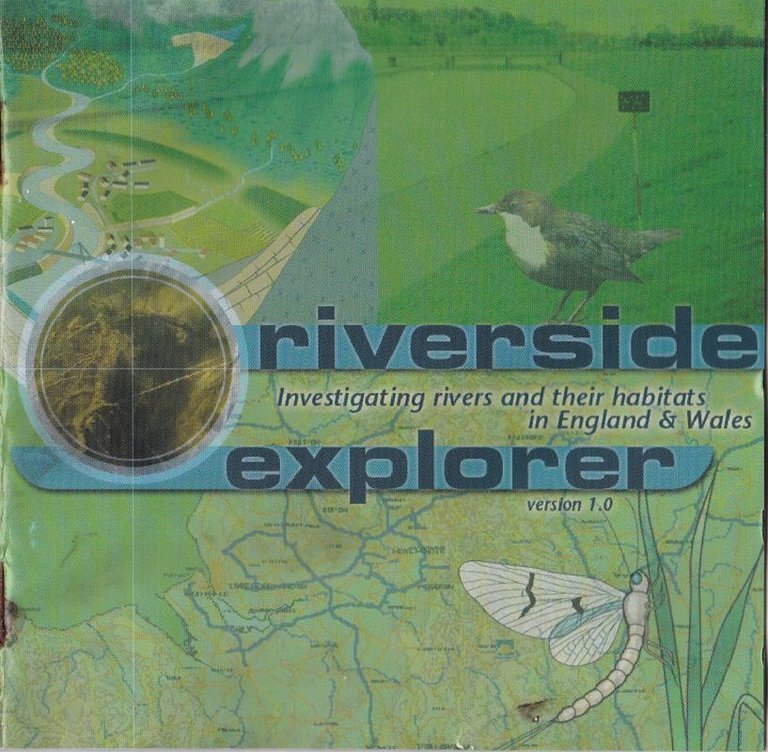
Description
Riverside Explorer: version 1.0 is an educational simulation game published by the UK’s Environment Agency and distributed free to schools, designed to align with the UK National Curriculum for Key Stages 2 & 3. It incorporates real survey data from over 4,500 river sites in England and Wales, allowing students to conduct virtual riverside habitat surveys in five典型 locations, compare their multiple-choice answers with professional surveyors, and receive environmental scores to enhance learning about ecology and geography.
Riverside Explorer: version 1.0: A Definitive Review of a Foundational Educational Simulator
Introduction: The Unseen Curriculum
In the year 2000, as the gaming world was mesmerized by the photorealistic aliens of Unreal and the narrative revolution of Half-Life, a quiet, unassuming CD-ROM was landing in UK school computer labs. Riverside Explorer: version 1.0 was not designed for entertainment sections or store shelves. It was a commissioned tool, a digital fieldwork assistant published by the UK’s Environment Agency and developed by The Advisory Unit: Computers In Education and Forma Communication. To judge it by the standards of its commercial contemporaries is a profound error. Its legacy is not in pixels sold, but in lessons learned; not in player counts, but in curriculum integration. This review argues that Riverside Explorer is a pivotal, if forgotten, artifact of serious game design—a prototype for data-driven educational software that leveraged the interactivity of the medium to move beyond textbook learning into simulated scientific inquiry. Its significance lies in its successful, if modest, fusion of authentic national environmental data with a structured, feedback-rich learning loop, establishing a template for future nature and ecology simulations.
Development History & Context: A Government-Backed Pedagogical Project
Riverside Explorer exists in a unique developmental context, far removed from the venture-capital-driven studios of Epic Games or Valve. Its publisher, the Environment Agency, was (and is) a UK government body responsible for environmental protection. The project’s genesis was not a market opportunity but a civic mandate: to create an engaging resource that aligned with the UK National Curriculum for Key Stages 2 (ages 7-11) and Key Stages 3 (ages 11-14).
The development was a collaboration between two specialized entities:
1. The Advisory Unit: Computers In Education (Hatfield, Herts.): An organization focused on integrating technology into pedagogy. Their involvement ensured the core activities were directly mapped to educational outcomes and teaching standards.
2. Forma Communication (London): The technical arm, handling Macromedia® Director® programming and interface design. This choice of engine—Director, a powerhouse for interactive multimedia and early CD-ROMs—was pragmatic, allowing for the fixed/flip-screen visuals, point-and-select interface, and integration of still images, text, and simple audio.
Technological Constraints & Era: The game was built for Windows at the dawn of the new millennium. Its “Fixed / flip-screen” perspective and “Point and select” interface were not artistic choices but reflections of the era’s common design patterns for educational titles and interactive encyclopedias. The “1st-person” label on MobyGames is somewhat misleading; this is not a navigable 3D world like Unreal, but rather a first-person perspective on static, panoramic images of river locations. The technological constraint was the need to present high-quality photographic reference material (from sources like the RSPB Image Library) on modest hardware, leading to a slide-show-like progression.
The Gaming Landscape: While blockbuster FPS games were pushing real-time 3D graphics and online multiplayer, the educational software market was largely stagnant, dominated by simplistic “drill-and-practice” programs or glossy but passive encyclopedias. Riverside Explorer aimed for a middle ground: authentic data with an active, quiz-based methodology. Its competition was the textbook and the field trip, not Quake.
Narrative & Thematic Deep Dive: The Story of the River
Riverside Explorer possesses a narrative, but it is an implied, procedural one of scientific discovery. The “plot” is the player’s journey from novice to competent amateur ecologist. There is no protagonist, no dialogue, no scripted cutscene. The narrative is the process of observation, hypothesis (via multiple-choice answers), and validation.
-
Characters: The central figures are the anonymous “player/pupil” and the unseen “professional surveyor”—a proxy for expert scientific authority. The true “characters” are the river ecosystems themselves, represented through the five distinct, real-world locations (e.g., a description mentions locations from Somerset to Devon, North Yorks to Cumbria). These are not fantasy realms but British landscapes, grounding the experience in local reality.
-
Dialogue & Text: All communication is delivered through the interface. The “helpful notes” before questions are the game’s expository text, providing definitions of terms like “riparian,” “in-stream vegetation,” or “bank structure.” The professional surveyor’s feedback after each question is the critical narrative device—a terse, authoritative judgment that drives the player’s learning. This creates a quiet, Socratic dialogue between the student and the data.
-
Underlying Themes: The themes are explicitly ecological:
- Empirical Observation: The game champions careful, methodical observation over assumption. The value is in what you see, not what you think you should see.
- Conservation Ethos: By scoring the player against a professional standard, it implicitly promotes best practices for riverbank management and habitat preservation. The high score is the ecologically sound assessment.
- Democratization of Science: It frames field surveying as a learnable skill, not an arcane profession. The player is given the same data (the panoramic image) and the same questions as a professional, encouraging the idea that citizen science is valuable.
- Place-Based Learning: Using real English and Welsh river sites ties national curriculum objectives to the student’s own geographic context, a powerful pedagogical tool.
Gameplay Mechanics & Systems: The Survey Loop
The core gameplay is a tightly looped system of Observe -> Question -> Answer -> Feedback. This is its genius and its limitation.
-
Core Loop: The player selects a location (e.g., “River Test, Hampshire” – implied from the data source). They are presented with a fixed, flip-screen image of that riverside. They then proceed through a series of 10 (Starter) or 11 (Intermediate) multiple-choice questions. The critical innovation is the mandatory feedback step: after every single answer, the player must compare their choice to the professional surveyor’s answer before continuing. This prevents mindless guessing and forces reflection.
-
Combat & Progression: There is no combat. “Progression” is purely cognitive and metric-based. It is the movement from incorrect to correct answers within a survey, and the comparison of the final “environmental score” for a location against the professional benchmark. The “character progression” is the player’s own improving ecological literacy.
-
UI & Systems: The interface is functional and clear, befitting its Director-based heritage. Key elements:
- Location Image: Dominates the screen.
- Question Text & Multiple-Choice Options.
- “Help” Button: Access to definitions, crucial for scaffolding learning.
- “Check Answer” Mechanism: The heart of the pedagogical system. It’s not a passive reveal; it’s an active step requiring engagement.
- Scoring & Reporting: A final summary screen shows the player’s score vs. the surveyor’s. The ability to print results is a key feature, bridging the digital activity to the physical classroom and teacher assessment.
-
Innovative & Flawed Systems:
- Innovation: The immediate, per-question feedback is exceptional for educational software. It corrects misconceptions in real-time. The use of real, aggregated national survey data (over 4,500 sites) gave the game unparalleled authenticity for its time and purpose.
- Flaws/Limitations: The system is rigid. The multiple-choice format, especially with “more than one answer is correct” scenarios, can lead to guesswork even with feedback. The “fixed / flip-screen” format means no exploration—the player cannot look around the scene freely, limiting the development of true observational scanning skills. The “point and select” interaction is minimal, reducing motor skill engagement.
World-Building, Art & Sound: Authenticity Over Atmosphere
Riverside Explorer builds its world not through fictional lore, but through documentary realism.
-
Setting & Atmosphere: The setting is unequivocally early 21st-century England and Wales, post-industrial but pre-mass-urbanization, focusing on managed and wild river corridors. The atmosphere is one of curated naturalism. These are typical, accessible riversides—not pristine wilderness but working landscapes. The “atmosphere” is the quiet focus of fieldwork.
-
Visual Direction: The visuals are high-quality still photography, likely sourced from the RSPB Image Library and other credited photographic partners (AirFotos, Oxford Scientific Films, etc.). This was a smart, cost-effective, and authentic choice. Instead of rendering low-poly 3D models (which would have looked terrible compared to Unreal), it used the best available reference imagery. The “flip-screen” mechanic transitions between these curated views, simulating a walk along a river. The art direction’s goal is clarity and accuracy, not awe. Its contribution to the experience is one of credibility; you are looking at real places.
-
Sound Design: The credits list dedicated sound recording (Richard Yeoman-Clarke) and production (Mike Howarth at West Herts College), with narration by Anna Grayson. The sound design is therefore likely diegetic and minimal: recordings of river ambient noise (flowing water, bird calls), perhaps a gentle interface click. There is no dynamic soundtrack. The goal is ambient verisimilitude—to place the student in the soundscape of a riverside. The narration for notes and feedback would be clear, calm, and authoritative, reinforcing the educational tone.
Reception & Legacy: The Quiet Giant
Riverside Explorer exists outside traditional critical and commercial frameworks. There are no critic reviews on MobyGames. It has been collected by only 2 players in the site’s entire history. This is not a failure for its intended purpose; it is a marker of its niche. It was not a consumer product.
-
Critical & Commercial Reception at Launch: Within its target market—UK schools—it was almost certainly a success. Being distributed free to any school that requested it via the Environment Agency guaranteed widespread adoption. Its alignment with the National Curriculum was its primary selling point. There are no academy award lists or “Game of the Year” accolades for Riverside Explorer. Its “reviews” were teacher feedback forms and curriculum audit reports.
-
Evolution of Reputation: The game is now a digital relic. It is a perfect snapshot of late-90s/early-00s educational software design. Its reputation among historians of serious games is that of a competent, well-intentioned, and effective tool of its time. It is cited in discussions about environmental education software and government-sponsored digital learning projects, but rarely as a groundbreaking title. Its obscurity in general gaming discourse is total, which is precisely what its creators would have expected.
-
Influence on the Industry: Its influence is indirect but significant:
- Data-Driven Design: It demonstrated that a game could be built primarily around authentic, non-fictional datasets. This is a lineage that leads to modern citizen science platforms and complex simulation games.
- Curriculum-Embedded Design: It showed how a game’s mechanics could be directly, transparently mapped to specific learning objectives. This is a cornerstone of modern “serious games” and “edutainment” philosophy.
- Low-Tech Efficacy: In an era obsessed with 3D acceleration, it proved that a simple interface with high-quality reference material and strong pedagogical scaffolding could be powerfully effective for a specific purpose. It prioritized content and feedback over spectacle.
Conclusion: A Stepping Stone in the Marsh
Riverside Explorer: version 1.0 is not a classic. It is not a masterpiece. It will never appear on a “Top 100 Games of All Time” list. To judge it by those criteria is to fundamentally misunderstand its existence. It is, instead, a pragmatic, successful, and historically informative artifact.
Its strengths are its unwavering focus on a single, clear educational goal, its use of genuine scientific data, and its robust feedback loop that places learning before entertainment. Its weaknesses are those of its era and genre: a passive observational model, a lack of deeper simulation (you don’t manage the river, you just assess it), and a technical approach that feels archaic even for 2000.
In the canon of video game history, its place is not in the narrative of technological one-upmanship between Unreal and Half-Life. Its place is in the quieter, essential history of interactive learning. It represents a moment when government bodies and educational specialists engaged with the CD-ROM medium not to gamify learning, but to simulate professional practice. It is a direct ancestor to apps like iNaturalist and structured online fieldwork courses. For that reason, while Riverside Explorer may be Riverside Explorer, it is also a vital explorer of pathways—pathways that would eventually lead to a much broader and more sophisticated integration of games into formal and informal science education. Its final score, if we must give one, is not out of 5 stars, but out of a successful implementation of its curriculum: Pass with Merit.