
- Release Year: 2004
- Platforms: Windows
- Publisher: White Elephant Games
- Developer: White Elephant Games
- Genre: Action
- Perspective: Top-down
- Game Mode: Single-player
- Gameplay: Avoiding obstacles, Collecting bonuses, Fuel management
- Setting: Automobile, Road
- Average Score: 96/100
Description
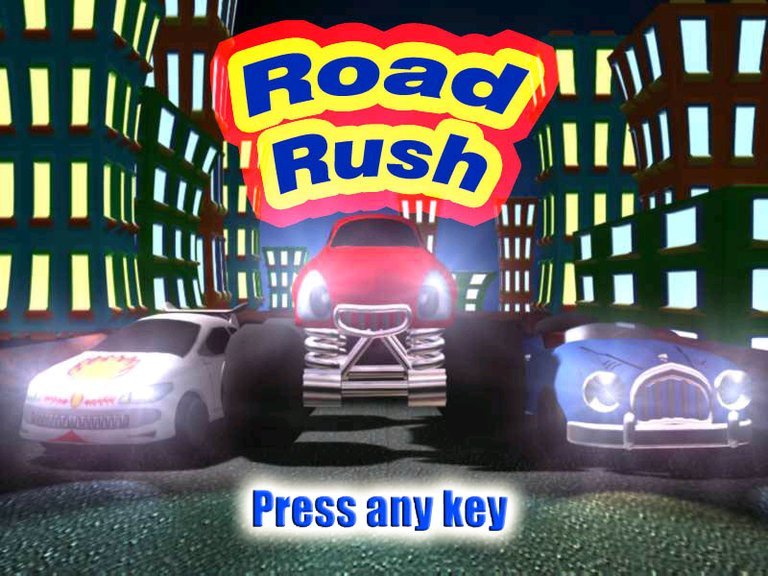
In Road Rush, players navigate a top-down, 2D scrolling world as an animated car racing toward the legendary Anarchy City. The journey is fraught with obstacles, including reckless road hogs and treacherous road edges, all while fuel steadily depletes. To survive, players must collect fuel refills and power-ups like monster-truck tires to crush enemies or protective ‘carmour’ to shield against collisions. The goal is to reach the end of each level before running out of fuel, balancing speed and strategy in a chaotic, high-stakes dash.
Where to Buy Road Rush
PC
Road Rush Patches & Updates
Road Rush Reviews & Reception
metacritic.com (96/100): A triumphant return to form for the series.
Road Rush Cheats & Codes
PC
Type ‘xyzzy’ during gameplay to enable cheat mode. Then, enter one of the following codes during gameplay.
| Code | Effect |
|---|---|
| plugh | Disable cheats |
| thwack! | Get chain |
| k’thunk! | Get club |
| overkill | Killing mode |
| drip!drip! | Oil |
| spoon! | Refill nitros |
| bribe | No police |
| yes, officer | No police |
| pioneer | High speed |
| klave | Get a gun |
| xyzzxyspoonshift+1 | Nitro boost |
| CHAIN | Bike runs at top speed |
| xyzyxspoon | Nitro boost (press shift + 1) |
Road Rush: A Forgotten Relic of the Early 2000s Shareware Scene
Introduction: The Road Less Traveled
In the vast, winding highway of video game history, some titles speed into legend, while others sputter out in obscurity. Road Rush (2004), developed by White Elephant Games, is one such forgotten relic—a quirky, top-down racing game that emerged during the twilight of the shareware era. While it lacks the cultural impact of its spiritual predecessor, Road Rash, this little-known title offers a fascinating glimpse into the indie development scene of the mid-2000s. This review will dissect Road Rush in exhaustive detail, exploring its development, mechanics, and legacy—or lack thereof.
Development History & Context: The Shareware Struggle
The Studio Behind the Wheel
White Elephant Games, the Russian studio behind Road Rush, was a small but prolific developer in the early 2000s. The team, led by director Dmitry Kuclin and project manager Andrey Pahmutov, specialized in budget-friendly, downloadable games. Their portfolio included titles like Jungle Heart and RIP: Strike Back, but Road Rush stands out as one of their few vehicular combat experiments.
Technological Constraints of the Era
Released in December 2004, Road Rush was a product of its time. The game was built for low-spec PCs, featuring 2D scrolling visuals and simple top-down mechanics. Unlike the polygon-pushing racing games of the era (Need for Speed: Underground, Burnout 3), Road Rush embraced a retro aesthetic, likely due to budgetary and technical limitations.
The Gaming Landscape in 2004
The mid-2000s were a transitional period for racing games. The Road Rash series had long since faded (with its last entry, Road Rash: Jailbreak, releasing in 2000), leaving a void in the combat-racing genre. Meanwhile, digital distribution was still in its infancy—Steam had launched in 2003, but shareware and direct downloads remained dominant. Road Rush attempted to carve a niche in this crowded market, but its lack of innovation and polish doomed it to obscurity.
Narrative & Thematic Deep Dive: A Thin Premise
Plot: The Journey to Anarchy City
Road Rush’s story is minimalist even by shareware standards. The player controls an animated car (one of several “four-wheeled fellows”) on a quest to reach the legendary Anarchy City. The roads are littered with “irresponsible road hogs,” and the player must navigate this chaos before running out of fuel.
Themes: Chaos and Survival
The game’s title and premise evoke the anarchic spirit of Road Rash, but Road Rush lacks its predecessor’s rebellious edge. Instead of outlaw bikers, players control cartoonish cars in a sterile, top-down world. The theme of survival—managing fuel, avoiding collisions—is present but underdeveloped.
Characters and Dialogue: Nonexistent
Unlike Road Rash, which featured colorful racers and police antagonists, Road Rush has no characters, dialogue, or personality. The player’s car is a faceless avatar, and the “road hogs” are mere obstacles. This absence of narrative depth makes the game feel hollow compared to its inspirations.
Gameplay Mechanics & Systems: A Barebones Experience
Core Gameplay Loop
Road Rush is a straightforward endurance race:
1. Fuel Management: The player’s fuel depletes constantly, requiring pickups to replenish.
2. Obstacle Avoidance: Colliding with other cars or road edges slows the player down.
3. Power-Ups: Temporary upgrades like “monster-truck tires” (for crushing enemies) and “carmour” (for defense) add minor strategic depth.
Combat and Progression
Unlike Road Rash, combat is secondary. The player can bump into enemies, but there’s no melee or weapon system. Progression is linear—each level is a race against the clock (or fuel gauge), with no upgrades or persistent unlocks.
UI and Controls
The game’s UI is functional but uninspired. The top-down perspective and keyboard/mouse controls are serviceable, but the lack of feedback (e.g., speed indicators, damage alerts) makes gameplay feel disjointed.
Innovations and Flaws
Road Rush’s only “innovation” is its fuel mechanic, which forces players to balance speed and resource management. However, the execution is flawed:
– Repetitive Levels: The randomly generated roads lack variety.
– Shallow Combat: Bumping into cars is the only interaction.
– No Multiplayer: A missed opportunity for local or online races.
World-Building, Art & Sound: A Retro Aesthetic
Setting and Atmosphere
The game’s world is a generic highway system, devoid of personality. The “Anarchy City” premise suggests a lawless wasteland, but the visuals fail to convey this. The top-down perspective and 2D sprites evoke Grand Theft Auto’s early entries, but without the charm.
Visual Design
The art style is functional but unremarkable. The cars are simple sprites, and the environments are repetitive. The “monster-truck tires” and “carmour” power-ups add visual flair, but the overall presentation is forgettable.
Sound and Music
The audio design is equally sparse. The soundtrack consists of generic electronic tunes, and the sound effects (engine revs, collisions) are basic. Unlike Road Rash, which featured a punk-rock edge, Road Rush’s audio is forgettable.
Reception & Legacy: A Game Lost to Time
Critical and Commercial Reception
Road Rush received almost no critical attention. On MobyGames, it holds a dismal 2.0/5 user score (based on a single rating). The game’s shareware model and lack of marketing ensured it faded into obscurity.
Influence on Subsequent Games
Road Rush had no discernible impact on the racing genre. Its fuel mechanic and top-down perspective were already staples of earlier games (Spy Hunter, R.C. Pro-Am). The title remains a footnote in gaming history, overshadowed by its spiritual predecessor.
Conclusion: A Forgotten Detour
Road Rush is a curiosity—a game that tried to recapture the magic of Road Rash but lacked the ambition, polish, and personality to succeed. Its barebones mechanics, repetitive design, and forgettable presentation relegate it to the dustbin of gaming history. Yet, as a relic of the shareware era, it offers a glimpse into the challenges faced by indie developers in the mid-2000s.
Final Verdict: Road Rush is a mediocre racing game with no lasting legacy. It’s worth a brief look for retro enthusiasts, but it pales in comparison to the classics it attempts to emulate.
Score: 3/10 – A forgettable detour on the highway of gaming history.