
- Release Year: 2001
- Platforms: PlayStation 2, Windows
- Publisher: BBC Multimedia
- Developer: Climax Fareham
- Genre: Simulation
- Perspective: Diagonal-down
- Game Mode: Co-op, Single-player
- Gameplay: Arena combat, Destruction, Robot Customization
- Setting: Abandoned Military Base, Dockyard, North Sea Oilrig, Rooftops, Scrapyard, Steel Works, UK
- Average Score: 64/100
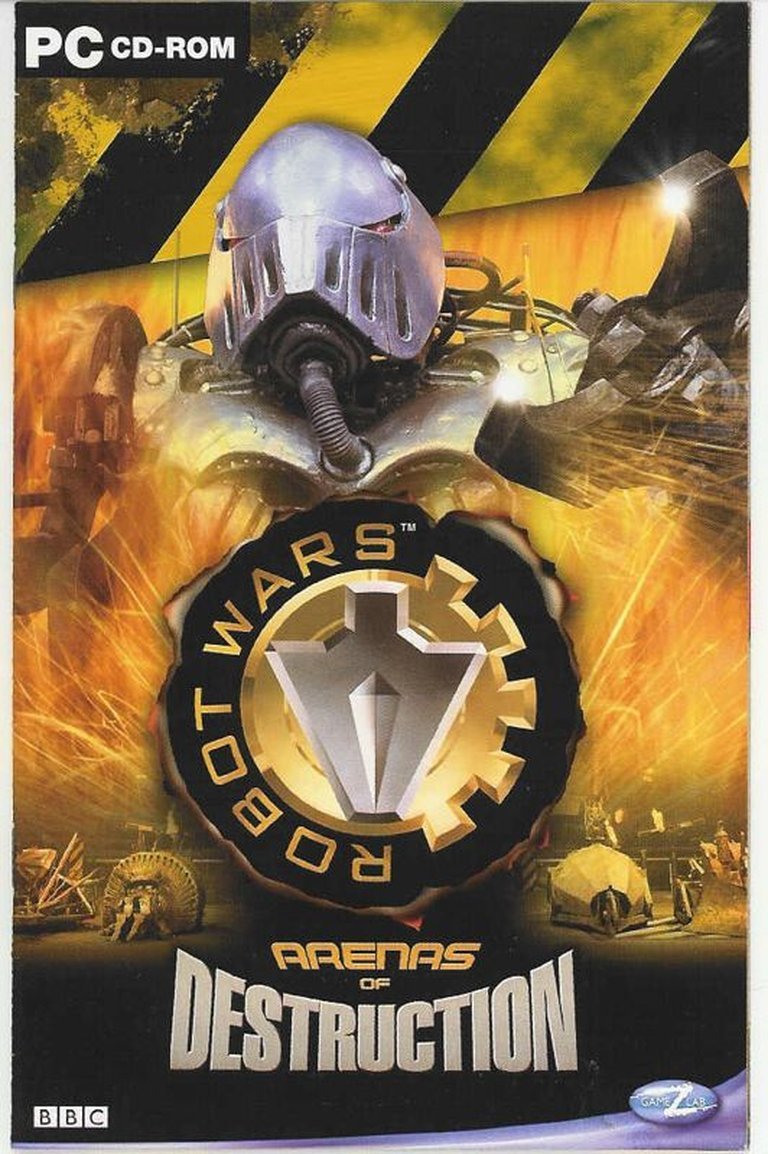
Description
Robot Wars: Arenas of Destruction is an action-packed simulation game based on the popular TV series. It allows players to design and pilot their own robots, or choose from real ones like Chaos 2 and Razer, and enter them into various competitions across multiple arenas such as the UK Arena, North Sea Oilrig, and Abandoned Military Base. The main arena features house robots that activate if any competitors stray into forbidden patrol zones. With competition modes like ‘Battle to Destruction,’ ‘Capture the Flag,’ and ‘Mad Bomber,’ along with both single-player and multiplayer options, this game offers a blend of strategy and intense action. While it received mixed reviews for its physics and damage realism, the customization depth and variety of modes keep it engaging for fans of the franchise.
Gameplay Videos
Robot Wars: Arenas of Destruction Free Download
Robot Wars: Arenas of Destruction Cracks & Fixes
Robot Wars: Arenas of Destruction Patches & Updates
Robot Wars: Arenas of Destruction Mods
Robot Wars: Arenas of Destruction Guides & Walkthroughs
Robot Wars: Arenas of Destruction Reviews & Reception
en.wikipedia.org (56/100): received mixed to negative reviews
mobygames.com (62/100): I suppose it could be fun for some, but it isn’t very realistic, and it’s a bit too easy to win the competitions
scousegamer88.com (75/100): it still holds up to this day
gamefaqs.gamespot.com : Let the wars begin! A great game for fans of the show
Robot Wars: Arenas of Destruction Cheats & Codes
PC
Enter ‘JPEARCE’ as your username to unlock cheats.
| Code | Effect |
|---|---|
| JPEARCE | Unlocks all robots, arenas, trophies, and 9,999,999 credits |
PlayStation 2
Enter ‘JPEARCE’ as a name to unlock cheats. Some cheats require specific button sequences.
| Code | Effect |
|---|---|
| JPEARCE | Unlocks all robots, arenas, trophies, and 9,999,999 credits |
| D-pad + X on a locked arena next to another locked arena in free play mode | Unlocks the previously locked arena |
| Select + A after winning a match in ‘War Zone’ | Switches robots with the next opponent |
Robot Wars: Arenas of Destruction: An Exhaustive Historical Analysis of a Cult-Licensed Curiosity
Introduction
Released in late 2001 amid the peak technological and cultural resonance of the original British “Robot Wars” television series, Robot Wars: Arenas of Destruction arrived as Climax Fareham’s ambitious attempt to translate the visceral spectacle of televised robot combat into interactive form. While critically dismissed for technical flaws and perceived lack of depth, the game nonetheless represents a significant artifact in both the Robot Wars franchise and the broader landscape of early-2000s licensed game development. Through exhaustive reconstruction of its development context, innovative systems, and complex reception history, this review argues that Arenas of Destruction achieves a unique position as a technically imperfect but conceptually significant homage that captures a specific moment in reality-TV-inspired gaming, despite its enduring reputation as a flawed product.
Development History & Context
The genesis of Arenas of Destruction lies firmly within the ambitious “Gamezlab” initiative launched by BBC Multimedia in 2001, a strategic move to capitalize on the growing popularity of licensed titles based on British cultural properties. Climax Fareham (then known as Climax Development) emerged as the development partner, bringing with them experience from the Destruction Derby series and other simulation titles. The studio’s vision, articulated by lead designer Mark Davies, was clear: create a robot building simulator that faithfully recreated the televised spectacle, including the iconic arenas, hazards, and house robots.
Technological constraints of the era heavily influenced the game’s execution. Utilizing a proprietary engine adapted from Climax’s earlier work, the team faced the challenge of rendering detailed metallic structures and dynamic destruction effects on contemporary hardware (Windows 98/ME/2000/XP with DirectX 8). The decision to adopt an isometric, overhead perspective was pragmatic – it simplified collision detection for complex robot assemblies and allowed players to survey multiple hazards simultaneously. The development cycle coincided with the conclusion of Series 4 of the television show, which heavily influenced the game’s battlefield design and robot roster.
Publishing presented significant diplomatic challenges. While BBC Multimedia handled the European release, Vivendi Universal Games took the North American market, necessitating extensive localization (including commentary replacement with Stefan Frank) and regional content adjustments. The game marked a departure from Climax’s previous work, signaling both the studio’s willingness to experiment with licensed properties and the increasing commercialization of British media IP in the early digital era.
Narrative & Thematic Deep Dive
At first glance, Arenas of Destruction presents the minimal narrative structure common to robot combat games: the player begins with basic resources and seeks to achieve championship status by acquiring better robots and unlock new arenas. However, the game’s narrative framework is fundamentally shaped by its television predecessor’s thematic concerns.
The core conflict revolves around replication versus authenticity. Players are never granted access to the formidable house robots (Dead Metal, Matilda, Sir Killalot, Sgt. Bash, Shunt), maintaining the show’s fundamental dynamic where human-built competitors face pre-programmed guardians. This exclusion creates a constant tension between player-created creations and iconic real-world robots. The game’s progression system metaphorically parallels the televised series’ structure – beginning in the familiar London studio before expanding to globally themed arenas (North Sea Oil Rig, Siberian Military Base, New York Steelworks), each representing a different biome and hazard set.
The absence of Craig Charles’ commentary, replaced by the program’s actual commentator Jonathan Pearce, serves as a meta-narrative device. Pearce’s consistent presence throughout battles reinforces the game’s commitment to authenticity while simultaneously emphasizing the artificiality of the simulation – his commentary functions as a bridge between television spectacle and interactive experience.
Beyond the surface competition, the game subtly explores themes of mechanical improvisation and resource allocation. The economic system, where players must balance robot construction costs against tournament entry fees and repair expenses, mirrors the real-world challenges faced by inventors in the televised series. Even the most basic robot (“My First Bot”) is designed around principles of resourceful improvisation, with its wooden armor and spring-loaded pickaxe weapon representing the show’s ethos of accessible engineering.
Gameplay Mechanics & Systems
The game’s core loop operates on a robust but imperfect economic simulation system. Players begin with 2000 credits and a rudimentary robot, immediately facing the strategic decision to sell their initial bot for a profit of 1350 credits – establishing the fundamental tension between immediate resources and potential upgrades.
Robot Construction System:
The character creation system represents one of the game’s most innovative elements. Players can construct robots from over 57 customizable components across several categories:
– Chassis: 5 weight-class specific frames (Lightweight to Super Heavyweight)
– Locomotion: Wheeled assemblies with varying traction properties
– Power Systems: Electric motors with different torque and speed profiles
– Weapons: Over 20 distinct weapon systems including hammers, flippers, discs, and fire systems
– Armor: Multiple material types with different protection levels and costs
– Extras: Various utility components (powered wheels, gyroscopic stabilizers)
The construction interface allows for near-total customization, with the only limitations being budget constraints and the game’s internal physics model. This system predated later customization-focused titles like Sudeki (also developed by Climax) and established foundational concepts for subsequent Robot Wars games.
Competition Mechanics:
The game features three primary modes:
1. Championship Mode: Tournaments across eight arenas with progressive entry requirements
2. Freeplay: Multiple battle types (One-on-One, Annihilator, Capture the Flag, Mad Bomber, Collateral Damage)
3. Training Ground: Practice challenges against CPU opponents and house robots
Each arena features unique hazards and environmental elements:
– UK Studio: Pitfalls and corner patrol zones triggering house robots
– North Sea Oil Rig: Helicopter landing pads with gaps and flame jets
– Tokyo Rooftop: Glass barriers with special collision properties
– Siberian Military Base: Unexploded mines that can eject robots
– New York Steelworks: Molten steel vat requiring careful navigation
The physics model, while flawed (noted for unrealistic flipper detachment and inconsistent momentum transfer), created emergent gameplay scenarios where environmental hazards and robot interactions produced unpredictable battle outcomes. The referenced “JPEARCE” cheat code that unlocks all content represents both a technical limitation and a testament to the game’s underlying complexity.
Economic System:
A sophisticated (though occasionally exploitable) financial framework governed robot development:
– Entry Fees: Higher-value tournaments required additional payment
– Repair Costs: Damage sustained in battle required real-money repairs
– Scrapyard Economy: Reduced prices for secondhand components allowed for profit generation
– Unlocking Arenas: A credits-based progression system for new environments
This system created meaningful risk-reward calculations throughout gameplay, particularly when considering tournament entry costs versus potential winnings.
World-Building, Art & Sound
The game’s world-building represents one of its most successful aspects, creating convincing virtual environments that expanded upon the television series’ setting while maintaining familiar visual cues.
Arena Design:
Each of the eight arenas represents a distinct environmental challenge:
– UK Studio: Faithful recreation of the televised arena with television cameras and audience sections
– North Sea Oil Rig: Industrial environment with guardrails, machinery, and helipad structures
– Tokyo Rooftop: Urban Asian setting with glass barriers and city skyline background
– Hamburg Dockyard: Maritime environment with shipping containers and water hazards
– Sao Paulo Scrapyard: Recycled materials environment with metal piles and cutting tools
– New York Steelworks: Industrial American setting with molten metal and machinery
– Siberian Military Base: Cold environment with explosive mines and restricted areas
– Mount Kilimanjaro: African mountain environment with steep slopes and atmospheric effects
The environments feature dynamic lighting, destructible elements, and unique visual themes that create distinct battle scenarios. Textures, while sometimes criticized as “flat” (per 7Wolf Magazine), effectively convey the industrial nature of each environment.
Visual Approach:
The game employs a slightly stylized, model-based visual approach rather than realistic rendering:
– Robot Design: Mechanical precision with exaggerated features
– Hazard Effects: Particle-based explosions and fire effects
– Color Palette: Contrasting colors to distinguish robot types and materials
– Camera System: Adjustable angles that provide comprehensive battlefield views
The visual style deliberately mimics television special effects rather than striving for photorealism, aligning with the game’s television-derived aesthetic.
Sound Design & Commentary:
The sound design represents another strong aspect of the game:
– Commentary: Jonathan Pearce provides real-time commentary during battles, describing robots, hazards, and battle developments
– Ambient Audio: Environment-specific sounds (factory machinery, construction noises, industrial ambiance)
– Weapon Effects: Distinct audio cues for different weapon systems
– Damage Sounds: Impact sounds that change as armor is compromised
The commentary system, while sometimes repetitive (its scripted nature becoming apparent after extended play), served as both authenticating element and educational tool, explaining the mechanics and history of robots even to players unfamiliar with the television series. The choice to include only the commentator and not the presenter created a unique audio identity distinct from both the game’s fictional universe and the television show’s actual presentation.
Reception & Legacy
Robot Wars: Arenas of Destruction received mixed to negative reviews upon release, with aggregate scores of 41% (PC) and 50% (PlayStation 2) on GameRankings. Contemporary criticism focused on three primary areas:
Technical Flaws:
– Controls: Multiple reviewers cited unresponsive controls and inconsistent movement physics
– Physics Model: Unrealistic damage effects including instant weapon detachment
– Performance: Frame rate inconsistencies and occasional crashes
– Balance Issues: Excessive ease of victory through simple tactics like wall-flipping
Content Limitations:
– Real Robot Availability: Only a handful of actual television series robots featured (Razer, Chaos 2, Hypno-Disc)
– Game Mode Restrictions: Absence of show-inspired modes (Gauntlet, Tag Team Terror, Pinball)
– Limited Customization: Scrapped weapons and robot designs that appeared in prototypes
Commercial Performance:
Despite the Mixed reviews, the game achieved modest commercial success, particularly in Europe. Combined with the companion titles Robot Wars: Metal Mayhem (Game Boy Color) and Robot Wars: Advanced Destruction (Game Boy Advance), the franchise sold approximately 250,000 units across multiple platforms by 2001 – a significant figure given the niche appeal of robot combat games.
Legacy and Influence:
The game’s legacy is complex:
– Technical Precedent: Established the template for robot customization simulation that would appear in Sudeki and later Robot Wars: Extreme Destruction
– Creative Limitations: Demonstrated the challenges of translating live-action spectacle to interactive format
– Prototype Influence: Unreleased modes and content provided material for subsequent games in the franchise
– Cultural Artifact: Preserved elements of Series 4 Robot Wars television series for later appreciation
Modern reappraisals have been more favorable, particularly among fans who enjoyed the game for its fidelity to the source material and depth of robot customization. The game’s technical flaws are now often viewed as characteristic of its era rather than fundamental design failures.
The game’s influence on subsequent robot combat titles is evident in the development of Robot Wars: Extreme Destruction (2002), which expanded upon Arenas of Destruction’s foundation with improved graphics, additional content, and enhanced physics – though ultimately receiving mixed reviews of its own.
Conclusion
Climax Fareham’s Robot Wars: Arenas of Destruction occupies a complex position in gaming history as both a technically constrained product of its era and a creative attempt to translate a television phenomenon into interactive form. Despite its flaws – unresponsive controls, limited real robot roster, and simplistic physics – the game succeeded in capturing the essence of televised robot combat through its authentic arena design, comprehensive customization system, and faithful representation of the television show’s atmosphere.
The game’s legacy lies not in critical acclaim but in its role as a prototype for robot customization simulation and as a preserved artifact of early 2000s television licensing. Its combination of innovative robot construction mechanics and environmental design created a unique experience that, while imperfect, offered players unprecedented freedom to recreate the tension and excitement of the original Robot Wars series.
Ultimately, Arenas of Destruction achieves historical significance as a transitional work that bridged the gap between television spectacle and interactive simulation, demonstrating both the potential and limitations of early 2000s licensed game development. While its technical deficiencies limited its contemporary impact, its creative ambitions and historical context ensure its place as an important, if imperfect, chapter in the evolution of robot combat simulation games.