
- Release Year: 2005
- Platforms: Windows
- Publisher: PPA Entertainment
- Developer: PPA Entertainment
- Genre: Adventure
- Perspective: 3rd-person (Other)
- Game Mode: Single-player
- Gameplay: Graphic adventure, Puzzle elements
- Setting: Futuristic, Sci-fi
Description
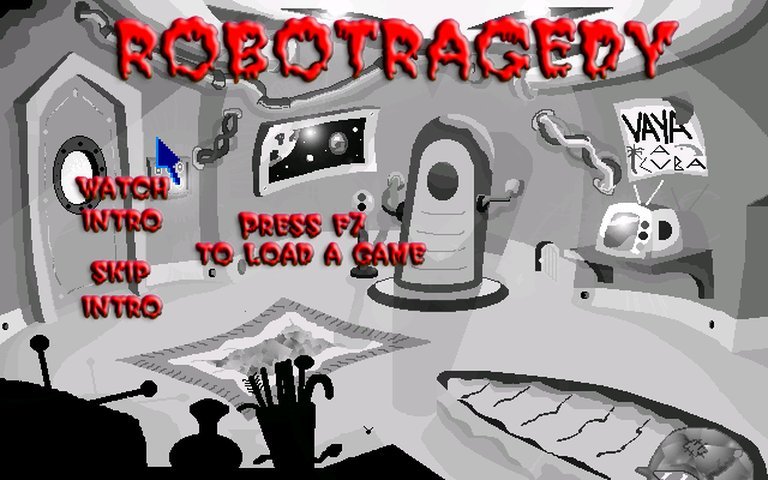
Robotragedy is a free, 2D point-and-click adventure game set in a futuristic sci-fi world. Players control Toby X, a robot who adores the robotic singer Robotinna. Initially trapped without access to his masters’ TV, Toby discovers Robotinna has been kidnapped and embarks on a rescue mission, solving puzzles with tools like a tractor ray, extendable hands, and teleporter stations.
Where to Buy Robotragedy
PC
Robotragedy Free Download
PC
Robotragedy Guides & Walkthroughs
Robotragedy Reviews & Reception
adventuregamestudio.co.uk : I loved the graphix, music, sound, but the puzzles just didn’t make any sense and that ruined a otherwise perfectly done game immensly..
Robotragedy: Review
Introduction
In the annals of freeware adventure gaming, few titles capture the spirit of grassroots creativity as endearingly as Robotragedy. Released in 2005 by PPA Entertainment, this 2D point-and-click gem follows Toby X, a humble domestic robot whose universe upends when his beloved robotic pop idol, Robotinna, is kidnapped. What begins as a domestic grievance—Toby’s inability to access his masters’ living room to watch Robotinna’s TV show—morphs into a cosmic rescue mission. Despite its humble origins and technical constraints, Robotragedy stands as a testament to the power of AGS (Adventure Game Studio) and the unyielding passion of solo developers. This review argues that while the game suffers from narrative localization quirks and inventory design flaws, it remains a charming, ambitious adventure that exemplifies the indie renaissance of the mid-2000s—a hidden gem worthy of historical reconsideration.
Development History & Context
The Studio and Vision
Robotragedy emerged from PPA Entertainment, a one-person studio helmed by Pijin Pastrana. Pastrana served as writer, artist, programmer, and designer, crafting the entire experience in Windows Paint—a testament to both ambition and resourcefulness. His vision was explicitly nostalgic: to recreate the spirit of LucasArts and Sierra classics within the AGS engine. AGS, a free development toolkit, democratized adventure game creation in the early 2000s, enabling solo developers like Pastrana to bypass commercial constraints. This DIY ethos is central to Robotragedy’s identity, as Pastrana prioritized creative expression over polish, resulting in a game that feels both earnest and idiosyncratic.
Technological Constraints
Built on AGS, Robotragedy adheres to the engine’s technical limitations: 640×400 resolution with 16-bit color, mouse-driven controls, and a point-and-click interface. The inventory system, a critical gameplay component, was notably restrictive, displaying only four items at a time and requiring scrolling—a design choice criticized by players for its awkwardness. Sound design was handled collaboratively, with Gregjazz contributing music and sound effects, though the modest scope reflected AGS’s audio capabilities. These constraints, however, fostered ingenuity: Pastrana’s hand-pixel art and minimalist puzzle mechanics became strengths in a genre often defined by extravagance.
The Gaming Landscape (2005)
Robotragedy debuted during a pivotal moment for adventure games. Mainstream studios had abandoned the genre, favoring action-oriented titles, but the indie scene thrived via AGS and digital distribution. Freeware platforms like AGS’s official site became hubs for experimental projects, allowing developers like Pastrana to bypass traditional publishing. This context explains Robotragedy’s niche appeal: it catered to a dedicated audience seeking narrative depth over graphical spectacle. Its release coincided with other AGS darlings (e.g., Ben There, Dan That!), cementing a subculture of purist adventure gamers who valued creativity over commercial viability.
Narrative & Thematic Deep Dive
Plot and Characters
The narrative deceptively simple: Toby X, a cleaning robot, idolizes Robotinna, a robotic singer. His masters’ absence leaves him stranded without an access card, preventing him from watching her TV broadcast—a crisis he dubs a “robotragedy.” Upon finally entering the living room, Toby learns Robotinna has been kidnapped, prompting a quest to track down her captors. The plot unfolds across sci-fi locales like Quoid, Trimm Moon, and Werth, blending domesticity with interstellar adventure. Toby’s characterization is the game’s emotional core: his unrequited love for Robotinna and unwavering perseverance make him an unlikely yet relatable hero. Pastrana’s writing balances whimsy and pathos, though dialogue often suffers from awkward phrasing (“to see the show of Robotinna, a robotic singer our little buddy loves”), reflecting the developer’s non-native English proficiency.
Themes and Subtext
At its heart, Robotragedy explores heroism through humility. Toby, a lowly domestic robot, transcends his limitations to save a celebrity—a subversion of typical adventure game tropes where grandeur defines heroism. The game also satirizes fandom culture, framing Toby’s obsession with Robotinna as both a motivation and a vulnerability. Localization quirks unintentionally amplify themes of communication barriers; Toby’s misadventures in a multilingual universe underscore isolation and the struggle to be understood. These elements, combined with the game’s comedic tone (e.g., Toby dressing as a ghost to infiltrate a theatre), create a poignant commentary on identity and aspiration.
Gameplay Mechanics & Systems
Core Loop and Tools
Robotragedy adheres to classic adventure game mechanics: exploration, inventory management, and puzzle-solving. Players guide Toby through static backgrounds, interacting with objects via mouse clicks. Unique tools define gameplay:
– Tractor Ray: Exchanges items between Toby and the environment, enabling creative solutions (e.g., swapping a broken key for a functional one).
– Extendable Hands: Manipulates buttons or levers, emphasizing environmental interaction over combat.
– Teleporter Stations: Facilitates travel between planets, minimizing backtracking but creating disjointed pacing.
These tools reinforce Toby’s identity as a non-combatant, forcing players to think laterally rather than reflexively.
Puzzle Design and Inventory
Puzzles are the game’s most divisive element. They often require obscure item combinations (e.g., using chewing gum to seal a crack), rewarding persistence but punishing experimentation. Inventory management exacerbates this friction: the four-item display forces players to scroll constantly, disrupting immersion. Player feedback reflects this tension—some praised puzzles for their ingenuity (“clever game”), while others derided them as illogical (“silly puzzles”). The tractor ray and teleporters mitigate frustration by introducing spatial logic, but the inventory’s clumsiness remains a persistent flaw.
UI and Controls
The interface is functional but dated. Point-and-click controls are intuitive, but the inventory’s scrolling and lack of hotspots for key items hinder efficiency. Dialogue trees are extensive yet hampered by translation issues, with confusing phrasing obscuring puzzle clues. Despite these drawbacks, the UI’s simplicity aligns with the game’s retro aesthetic, prioritizing accessibility over innovation.
World-Building, Art & Sound
Setting and Atmosphere
Robotragedy’s universe is a vibrant mishmash of sci-fi tropes and surrealism. Planets like Quoid (a bustling theatre world) and Trimm Moon (a pastoral moon) blend futuristic tech with mundane details (e.g., a hotel, a record studio). This juxtaposition creates a lived-in world, where teleporters coexist with domestic chores. The setting evolves from Toby’s cramped home to interstellar locales, mirroring his growth from a household appliance to a cosmic hero. Though lore is minimal, environmental storytelling—like a poster for Robotinna’s concert—adds depth.
Visual Design
Artistically, Robotragedy excels despite its simplicity. Pastrana’s hand-pixelated backgrounds are rich with detail: neon-lit cityscapes, alien landscapes, and quirky character designs (e.g., Toby’s rounded, expressive frame). The 640×400 resolution allows for intricate environments, like the theatre on Quoid, which drips with personality. Character sprites are charmingly exaggerated, emphasizing Toby’s childlike wonder. While not technically groundbreaking, the art’s warmth and consistency make the world feel cohesive.
Sound and Music
Sound design is modest but effective. Gregjazz’s chiptune soundtrack evokes 16-bit nostalgia, with melodies that underscore each planet’s mood (e.g., upbeat tracks for bustling areas, somber tones for perilous zones). Sound effects are sparse—beeps for buttons, clicks for interactions—but sufficient to ground the experience. Voice acting is absent, a deliberate choice that highlights the game’s text-driven roots. The audio, while unremarkable, complements the visuals without overshadowing them.
Reception & Legacy
Launch Reception
As freeware, Robotragedy bypassed mainstream critics but resonated in indie circles. On AGS forums, it earned praise for its artistry and ambition (“great graphics”) but faced criticism for puzzles (“way too difficult”) and localization (“puzzles just didn’t make any sense”). The game’s itch.io page notes a cult following, with players requesting French translations, underscoring its niche appeal. Commercially, it achieved moderate success with 10,000+ downloads on AGS, a respectable figure for a non-commercial title.
Evolution of Reputation
Over time, Robotragedy has been reevaluated as a cult classic. Preservation efforts by the Internet Archive and MobyGames ensure its accessibility, while retrospectives on AGS history highlight its role in fostering indie creativity. The 2006 sequel, Robotragedy 2: Countdown to Doomsday, refined mechanics (e.g., a larger inventory) but retained the original’s charm, cementing the series’ legacy. Modern players appreciate its unpretentious storytelling in an era of AAA homogenization, citing it as a precursor to narrative-driven indie games like What Remains of Edith Finch.
Industry Influence
Robotragedy exemplifies how AGS empowered solo developers to experiment. Its success—however modest—proved that commercially viable adventures could thrive outside traditional publishing. The game’s emphasis on character-driven narratives over spectacle influenced later AGS titles, including The Blackwell Legacy. Its flaws, particularly inventory design, became cautionary tales for indie developers, emphasizing usability in retro-inspired games.
Conclusion
Robotragedy is a flawed, fascinating artifact of mid-2000s indie gaming. Pastrana’s labor of love delivers a heartfelt adventure through its charming protagonist, inventive puzzles, and vivid world-building. While awkward English and inventory limitations hinder the experience, they are overshadowed by the game’s creative ambition. As a historical document, Robotragedy captures the unbridled passion of the AGS community—a testament to how constraints breed innovation. Its legacy endures in the resurgence of point-and-click adventures and the preservation of digital ephemera. For historians and genre enthusiasts, it is more than a game; it is a love letter to a forgotten era of grassroots creativity.
Final Verdict: 7.5/10 – A charming, idiosyncratic adventure that triumphs in spirit despite its technical imperfections. Essential for connoisseurs of freeware and AGS history.