
- Release Year: 2013
- Platforms: Linux, Macintosh, Nintendo Switch, PlayStation 3, PlayStation 4, PS Vita, Windows, Xbox One
- Publisher: Cellar Door Games, Inc., IndieBox, Inc.
- Developer: Cellar Door Games, Inc.
- Genre: Action, RPG
- Perspective: Side view
- Game Mode: Single-player
- Gameplay: Character progression, Heir system, Permadeath, Platform, Randomly generated levels, Resource Management, Rogue-like
- Setting: Fantasy
- Average Score: 86/100
Description
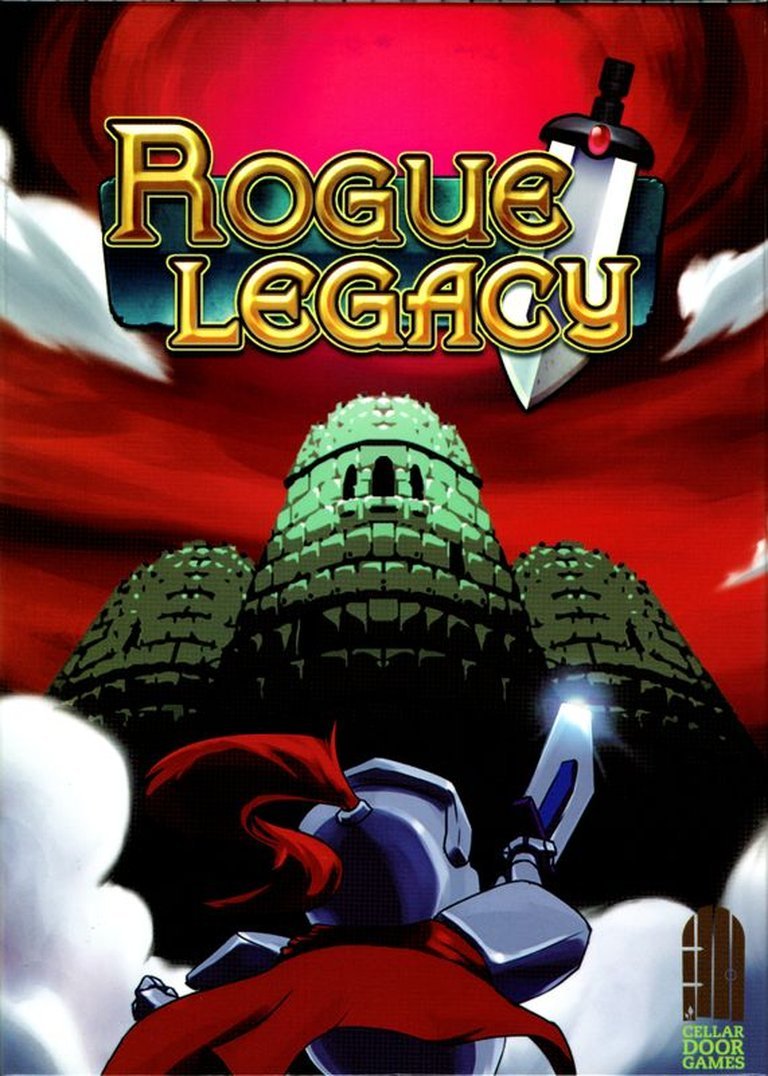
Rogue Legacy is a 2D action platformer with RPG elements, set in a fantasy world where the player takes on the role of heirs to the throne, each with unique abilities and weaknesses. The game features randomly generated rooms and permadeath, with the twist that upon each heir’s death, the player chooses a new heir to continue the quest to cure the wounded king. Gold collected can be used to build a manor, unlocking beneficial features.
Gameplay Videos
Where to Buy Rogue Legacy
Rogue Legacy Free Download
Rogue Legacy Cracks & Fixes
Rogue Legacy Mods
Rogue Legacy Guides & Walkthroughs
Rogue Legacy Reviews & Reception
opencritic.com (84/100): A wildly inventive 2D Roguelike with a 30-second gameplay loop that lasts for 20 odd hours.
metacritic.com (85/100): Rogue Legacy is simply too engaging and fun to be missed. The brilliant adaptation of the unforgiving roguelike formula makes it accessible to a wider audience too.
monstercritic.com (85/100): Rogue Legacy on Xbox One is quite amazing and addicting. If you’re looking for a one-of-a-kind Roguelike game for Xbox One this is the game to buy.
ign.com (90/100): Rogue Legacy is wonderful to control provided you have a good gamepad – but to make true progress you’ll need to boost your stats, get better equipment and activate perks.
polygon.com (90/100): Rogue Legacy avoids the easy play for nostalgia, instead finding something unique.
Rogue Legacy: A Definitive Review of the Indie Roguelike That Redefined Generational Gameplay
Introduction
In the pantheon of indie gaming, few titles have left as indelible a mark as Rogue Legacy (2013). A fusion of punishing roguelike mechanics, Metroidvania exploration, and generational storytelling, this 2D action-platformer transformed the “permadeath” trope into a narrative device. Developed by Cellar Door Games, Rogue Legacy marries relentless difficulty with a groundbreaking progression system, allowing players to build a dynasty of heroes—each flawed, each expendable—to conquer a cursed castle. This review argues that Rogue Legacy is not merely a game but a masterclass in iterative design, blending procedural generation with permanent upgrades to create a cycle of failure and growth that feels both rewarding and deeply personal.
Development History & Context
The Vision of Cellar Door Games
Founded by brothers Teddy and Kenny Lee, Cellar Door Games sought to create a title that respected the brutal honesty of classic roguelikes while softening their steep barriers to entry. Inspired by Spelunky’s procedural challenges and Dark Souls’ unyielding fairness, the Lees aimed to craft a game where death was not an endpoint but a catalyst for growth.
Technological Constraints
Built on Microsoft’s XNA framework, Rogue Legacy faced limitations in scope, yet these constraints bred creativity. The team opted for 2D pixel art to prioritize fluid gameplay over graphical fidelity, while the procedural dungeon generator ensured near-infinite replayability. The game’s modest $15,000 budget—recouped within an hour of launch—underscored the viability of indie development in an era dominated by AAA studios.
The 2013 Indie Landscape
Released during the indie renaissance of the early 2010s, Rogue Legacy stood alongside titans like Fez and Binding of Isaac. Its success (100,000+ sales in its first week) signaled a shift toward games that prioritized mechanical depth over cinematic spectacle, cementing its place in the “roguelite” subgenre.
Narrative & Thematic Deep Dive
The Tale of Castle Hamson
The game’s narrative is deceptively simple: a wounded king tasks his descendants with retrieving a cure from the cursed Castle Hamson. Yet, as players uncover journal entries scattered throughout the castle, a darker truth emerges. The king, it turns out, fabricated his illness to lure heirs into securing the Fountain of Youth for his immortality, culminating in the betrayal of his son Johannes, who becomes the game’s tragic antagonist.
Characters and Dialogue
Characters are defined not by traditional arcs but by traits—quirks like IBS, colorblindness, or vertigo that dynamically alter gameplay. These traits, paired with humorous epitaphs upon death (“Sir Lee the Feeble, slain by spikes—last words: ‘I blame my parents’”), infuse personality into what could have been disposable avatars.
Themes of Legacy and Futility
The game juxtaposes the nobility of sacrifice with the futility of obsession. Each heir’s death reinforces the cycle of generational trauma, mirroring Johannes’ own downfall. The final revelation—that the king’s quest was a lie—transforms the player’s struggle into a poignant critique of blind ambition.
Gameplay Mechanics & Systems
Core Loop: Live, Die, Upgrade
At its heart, Rogue Legacy is a loop of three phases:
1. Exploration: Navigate a procedurally generated castle, battling enemies and collecting gold.
2. Death: Choose an heir with randomized classes (Knight, Mage, Miner) and traits.
3. Progression: Spend gold on manor upgrades, runes, and equipment to empower future heirs.
Combat and Class Diversity
Combat is crisp and responsive, with swordplay and spells requiring precision. Classes like the fragile Shinobi (high damage, no crits) and the vampiric Lich (gains HP per kill) encourage experimentation, while runes grant abilities like double jumps and dashes that subtly reshape exploration.
Innovations and Flaws
The “roguelite” twist—carrying progress across deaths—was revolutionary, but not all systems shine. Traits like Vertigo (flips the screen) can frustrate, while late-game grinding for stat upgrades feels at odds with the otherwise tight pacing.
World-Building, Art & Sound
A Gothic Playground
Artist Glauber Kotaki’s pixel art blends gothic architecture with whimsical absurdity, from flaming skull fairies to giant slime bosses. Each of the castle’s four biomes—Forest Abkhazia’s moonlit trees, the Maya’s molten chambers—feels distinct, aided by procedural room variations.
Sound Design and Music
Gordon McGladdery’s soundtrack oscillates between eerie ambience and bombastic orchestration. Tracks like The King’s Comings and Goings evoke melancholy grandeur, while the screech of spike traps and the thunk of axe throws ground the player in the castle’s danger.
Reception & Legacy
Critical and Commercial Success
With an 84% average critic score (per MobyGames) and over 1 million copies sold, Rogue Legacy was a sleeper hit. Critics praised its “just one more run” addictiveness, though some noted repetitive enemy designs.
Industry Influence
The game popularized the “roguelite” label, inspiring successors like Dead Cells and Hades. Its DNA is evident in modern indie darlings that blend permadeath with persistent progression.
The Legacy Continues
The 2022 sequel, Rogue Legacy 2, expanded on the original’s formula, but the first game remains a touchstone—a testament to the power of marrying challenge with accessibility.
Conclusion
Rogue Legacy is a paradox: a game about dying repeatedly that feels perpetually alive. Its genius lies in transforming failure into progress, weaving a narrative where each death enriches the player’s understanding of the castle and its tragic inhabitants. While not without flaws—occasional repetition, uneven traits—its impact on the indie landscape is undeniable. A decade later, Rogue Legacy stands as a pillar of procedural storytelling, proving that even in death, a legacy can endure.
Final Verdict: A seminal work that redefined roguelike design, Rogue Legacy is essential for fans of challenging, rewarding gameplay—and a timeless case study in indie innovation.