
- Release Year: 1999
- Platforms: Windows
- Publisher: Acer TWP Corp, Hasbro Interactive, Inc., MicroProse Software, Inc., Novitas GmbH
- Developer: Chris Sawyer Productions
- Genre: Simulation
- Perspective: Diagonal-down
- Game Mode: Single-player
- Gameplay: Business simulation, City building, construction simulation, Managerial
- Setting: Amusement park
- Average Score: 83/100
Description
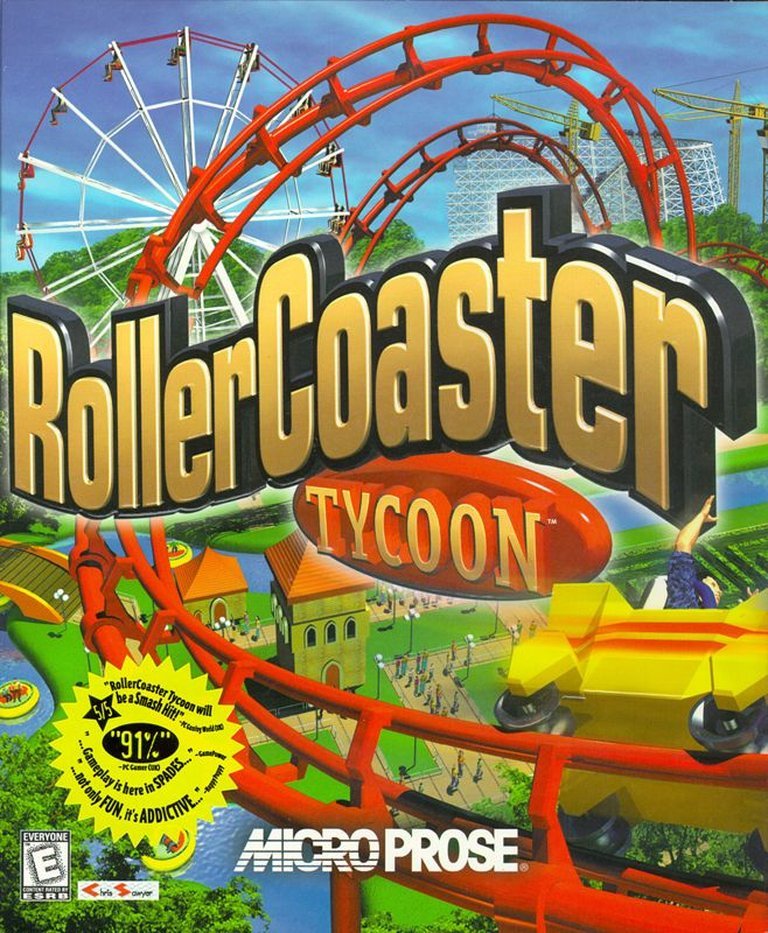
RollerCoaster Tycoon is a real-time isometric amusement park simulation where players take on the role of a theme park manager. The game involves creating rides and attractions to entertain guests, managing shops and stalls for their needs, and maintaining the park’s cleanliness and safety. Players must balance financial constraints, guest satisfaction, and park maintenance to ensure the park’s success and profitability.
Gameplay Videos
Where to Buy RollerCoaster Tycoon
RollerCoaster Tycoon Free Download
RollerCoaster Tycoon Cracks & Fixes
RollerCoaster Tycoon Patches & Updates
RollerCoaster Tycoon Mods
RollerCoaster Tycoon Guides & Walkthroughs
RollerCoaster Tycoon Reviews & Reception
gamespot.com : RollerCoaster Tycoon has the potential to capture a pretty good niche market – and for the most part, it succeeds.
ign.com (85/100): This game provides you with rides, features and game play that make running the ultimate amusement park, a treat for everyone.
imdb.com (80/100): Rollercoaster Tycoon 1 is fun play and create but gets very tedious at times.
mobygames.com (84/100): RollerCoaster Tycoon is a real-time isometric amusement park simulation, in which the player takes the role of a theme park manager, creating rides and attractions to amuse his guests.
RollerCoaster Tycoon Cheats & Codes
PC
Rename a guest to the following names.
| Code | Effect |
|---|---|
| Chris Sawyer | Guest takes pictures of the park |
| Simon Foster | Guest paints pictures of rides |
| Melanie Warn | Maximizes guest happiness and energy |
| Katie Brayshaw | Guest waves at others |
| John Wardley | Guest thinks ‘Wow!’ frequently |
| Damon Hill | Go-Karts drive twice as fast |
| Michael Schumacher | Go-Karts drive four times as fast |
| Jacques Villeneuve | Go-Karts drive three times as fast |
| Mr Bean | Go-Karts drive very slowly |
| Tony Day | Guest becomes very hungry |
| Richard Branson | Makes other guests rich |
| Richard Tan | Guest steals from others |
| John Mace | Pays double for rides |
| Felicity Anderson | Causes nearby guests to vomit |
| Emma Garrell | Changes nearby guests’ shirts to purple |
| David Ellis | Thinks ‘…and here we are on [ride name]!’ |
| Andy Hine | Comments ‘Nice ride! But not as good as the Phoenix…’ |
| Katie Smith | Jumps occasionally |
| Lisa Stirling | Continuously drops litter |
PC (RollerCoaster Tycoon Classic)
Rename a guest to the following names.
| Code | Effect |
|---|---|
| Elissa White | Thinks ‘I’m so excited – It’s an Intamin ride!’ when queuing for Giga/Impulse Coasters |
| Eilidh Bell | Decreases guest happiness |
| Donald Macrae | Thinks ‘I’m lost!’ frequently |
| Mia Sheridan | Increases guest nausea |
| Katie Rodger | Heads directly to park exit |
iOS (RollerCoaster Tycoon Classic)
Rename a guest to the following names.
| Code | Effect |
|---|---|
| Chris Sawyer | Guest takes pictures of rides |
| Simon Foster | Guest paints pictures of rides |
| Melanie Warn | Instantly maxes guest happiness |
| Emma Garrell | Changes shirt colors of passing guests to purple |
RollerCoaster Tycoon 3 (PC)
Rename a guest to the following names.
| Code | Effect |
|---|---|
| Andrew Gillett | Sets track friction to zero (no speed loss) |
| David Braben | Allows extreme chain/launch speeds (up to 1000 m/s) |
| Frontier | Disables ride breakdowns |
| A Hitchcock | Creates flying ducks |
RollerCoaster Tycoon: A Monument to Creative Management and Technical Wizardry
Introduction
In the pantheon of simulation games, RollerCoaster Tycoon (1999) stands as a masterclass in balancing creativity, strategy, and sheer addictive fun. Developed by Scottish programmer Chris Sawyer and published by Hasbro Interactive, this isometric theme park management simulator transcended its niche origins to become a cultural touchstone. Its legacy lies not just in its commercial success—selling over four million copies by 2002—but in its ability to empower players as both meticulous managers and imaginative architects. This review dissects how RollerCoaster Tycoon became a genre-defining titan, blending ruthless business logistics with childlike wonder.
Development History & Context
Chris Sawyer’s Vision
Sawyer, fresh off the success of Transport Tycoon (1994), initially envisioned a sequel to that game. However, inspiration struck during his travels across Europe and the U.S., where he developed a fascination with roller coasters—a stark contrast to his earlier aversion to thrill rides. This passion, combined with his knack for economic simulations, birthed RollerCoaster Tycoon, codenamed White Knuckle during development.
Technological Constraints and Triumphs
In an era dominated by C++ programming, Sawyer’s decision to write RollerCoaster Tycoon in x86 assembly language was audacious. This choice allowed unparalleled optimization, enabling the game to run smoothly on modest late-’90s hardware. Only the Windows interface relied on C, while artist Simon Foster’s pixel-perfect isometric sprites and Allister Brimble’s chirpy soundtrack completed the package.
The 1999 Gaming Landscape
The late ’90s saw the rise of management sims like SimCity 2000 and Bullfrog’s Theme Park, but RCT carved its niche by offering deeper customization—particularly in coaster design—and a more tactile sense of control. Released in March 1999, it arrived at a time when PC gaming was embracing complexity without sacrificing accessibility.
Narrative & Thematic Deep Dive
The Illusion of Story
RollerCoaster Tycoon eschews traditional narrative for emergent storytelling. Each scenario—from rehabilitating derelict parks to hitting profit targets—becomes a micro-drama. The game’s charm lies in its tiny, bumbling park guests, whose thoughts (“I’m hungry,” “This ride is too intense!”) create a living world. Players aren’t just managers; they’re auteurs crafting joy (or chaos).
Themes of Control and Creativity
Beneath its cheerful exterior lies a surprisingly sharp commentary on capitalist imperatives. Balancing guest satisfaction with profit margins—charging for bathrooms, manipulating ride prices—mirrors real-world business ethics. Yet, the game also celebrates creativity, rewarding players who design elaborate coasters or whimsical landscapes.
Gameplay Mechanics & Systems
Core Loop
The gameplay revolves around three pillars:
1. Construction: Build rides, shops, and scenery.
2. Management: Hire staff, set prices, and manage finances.
3. Optimization: Fine-tune ride excitement ratings and park layouts.
Innovations
- Physics-Based Coasters: Sawyer’s realistic physics model ensured that poorly designed coasters would crash, adding stakes to creativity.
- Guest AI: Each guest had unique tolerance levels for intensity and nausea, impacting ride popularity.
- Research System: Unlocking new attractions over time kept progression fresh.
Flaws
- Pathfinding Issues: Guests often got lost, and staff AI was notoriously inefficient.
- Limited Speed Controls: Only two time speeds (paused and normal) tested players’ patience during long scenarios.
World-Building, Art & Sound
Visual Style
The game’s isometric pixel art remains timeless. Vibrant colors, whimsical rides, and tiny animations—like guests vomiting after a rough coaster ride—infused the world with personality. Though limited to 256 colors, the art direction prioritized clarity and charm over realism.
Atmosphere and Sound Design
Brimble’s soundtrack oscillated between merry-go-round melodies and suspenseful thrills. Positional audio made screams fade as players scrolled away from rides, enhancing immersion. Sound effects, recorded at England’s Lightwater Valley park, added authenticity.
Interactive Details
- Clicking on floating balloons popped them.
- Ducks in ponds quacked when clicked—a delightful Easter egg.
Reception & Legacy
Critical Acclaim
The game earned an 84% average critic score (via MobyGames) and widespread praise for its depth. IGN called it “a lot of fun,” while GameSpot lauded its “pure entertainment value.” Criticism focused on the lack of a sandbox mode (initially locked behind completing all scenarios) and AI quirks.
Commercial Dominance
RollerCoaster Tycoon was the best-selling PC game of 1999, grossing $19.6 million in the U.S. alone. Its expansions—Corkscrew Follies (1999) and Loopy Landscapes (2000)—extended its lifespan, while ports like the 2003 Xbox version broadened its audience.
Cultural Impact
- Memetic Longevity: The infamous “Mr. Bones’ Wild Ride” meme, referencing an endless in-game coaster, became a viral staple.
- Industry Influence: Titles like Planet Coaster and Parkitect owe their existence to RCT’s blueprint.
- Career Inspiration: Real-world coaster engineers credit the game for sparking their passion.
Conclusion
RollerCoaster Tycoon is more than a game—it’s a testament to the genius of Chris Sawyer’s technical prowess and design philosophy. Its blend of micro-management depth, creative freedom, and whimsical charm has yet to be replicated. While later entries in the series faltered, the original remains a cornerstone of simulation gaming, proving that assembly code and pixel art can birth timeless magic. For its unparalleled balance of strategy and joy, RollerCoaster Tycoon earns its place among the greatest PC games ever made.
Final Verdict: A landmark title that transcends its genre, RollerCoaster Tycoon is essential playing for anyone who’s ever dreamed of ruling a kingdom of steel and screams.