
- Release Year: 2022
- Platforms: Android, iPad, iPhone, Nintendo Switch, PlayStation 4, PlayStation 5, Windows
- Publisher: Square Enix Co., Ltd., Square Enix, Inc., Square Enix Limited
- Developer: Bullets Co., Ltd., Square Enix Co., Ltd.
- Genre: Role-playing, RPG
- Perspective: Third-person
- Game Mode: Single-player
- Gameplay: Event Rank, Non-linear, Turn-based
- Setting: Fantasy
- Average Score: 74/100
Description
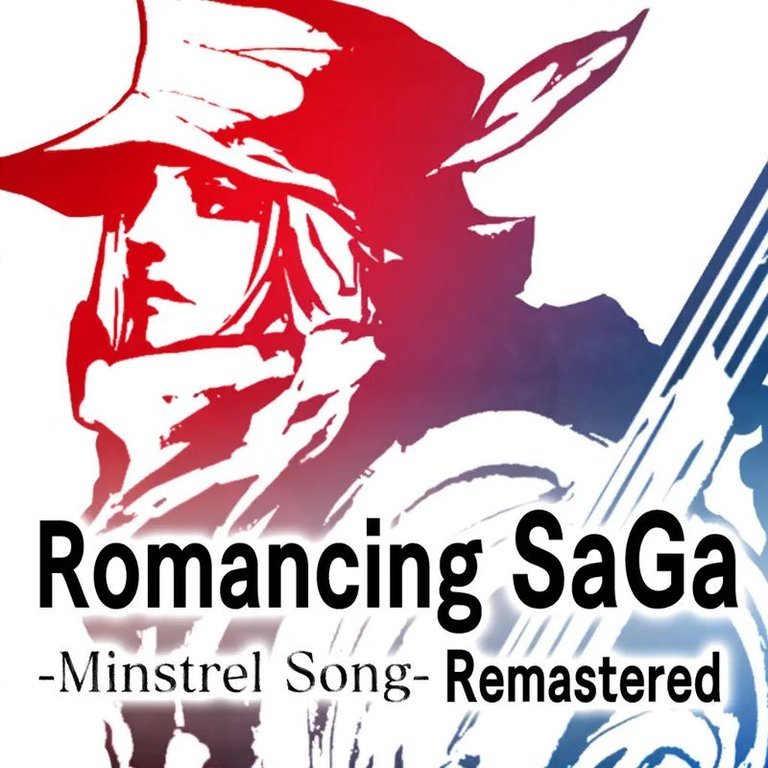
Romancing SaGa: -Minstrel Song- Remastered is a turn-based Japanese role-playing game set in a vibrant fantasy world, offering players unparalleled freedom to explore its dynamic universe. As a remastered version of the 2005 classic, it features anime-inspired visuals, an optional female protagonist, and a revolutionary Event Rank system that alters the game world and quests based on player actions, ensuring high replayability across its multiple platforms including PlayStation, Nintendo Switch, PC, and mobile devices.
Where to Buy Romancing SaGa: -Minstrel Song- Remastered
PC
Romancing SaGa: -Minstrel Song- Remastered Mods
Romancing SaGa: -Minstrel Song- Remastered Reviews & Reception
metacritic.com (74/100): Romancing SaGa 3 is certainly worth a shot, but it’s best enjoyed by those who come prepared.
Romancing SaGa: -Minstrel Song- Remastered Cheats & Codes
PC (Steam)
Run the trainer and then press the specified NumPad key during gameplay.
| Code | Effect |
|---|---|
| NumPad 1 | Unlimited Health Player Party |
| NumPad 2 | Unlimited LP Player Party |
| NumPad 3 | Unlimited JP Player Party |
| NumPad 4 | Unlimited Jewels |
| NumPad 5 | Unlimited Money |
| NumPad 6 | Unlimited Battle Rank Point |
| NumPad 7 | Game Speed |
Romancing SaGa: -Minstrel Song- Remastered: A Masterclass in Experimental RPG Design
Introduction
In the ever-evolving landscape of JRPGs, few franchises embody artistic ambition and mechanical experimentation as fiercely as Square Enix’s SaGa series. Conceived by visionary designer Akitoshi Kawazu, Romancing SaGa: -Minstrel Song- Remastered stands as a landmark achievement—a reimagining of the 2005 PlayStation 2 remake that translates Kawazu’s signature philosophy of “freedom through challenge” into a modern, multiplatform masterpiece. This exhaustive review delves into the game’s legacy, dissecting its narrative complexity, revolutionary gameplay systems, and enduring impact. More than a simple remaster, Minstrel Song is a time capsule of design courage, offering a stark contrast to today’s hand-holding RPGs while proving that true innovation thrives in the spaces between convention and chaos. As we embark on this journey through the fractured world of Mardias, we’ll explore why this divisive title remains a touchstone for JRPG purists and a cautionary tale for accessibility advocates alike.
Development History & Context
The roots of Romancing SaGa: -Minstrel Song- Remastered trace back to Square’s golden era of experimental design, spearheaded by Akitoshi Kawazu following the 1992 Super Famicom original. Kawazu, rejecting the rigid narratives of contemporary RPGs, envisioned a world where player agency dictated the story’s trajectory—a radical concept in the early ’90s. The 2005 PlayStation 2 remake expanded this vision with enhanced visuals, dual protagonists, and deeper systems, yet it remained a Japan-exclusive cult classic.
This 2022 remaster, developed by Bullets Co., Ltd. in collaboration with Square Enix, faced a dual mandate: preserve the PS2 version’s idiosyncratic soul while modernizing its execution. Platforms like Unity enabled cross-play releases (Switch, PS4/5, Windows, iOS/Android), addressing Kawazu’s historical concern that aging game assets would degrade. Key innovations included:
– New storylines and recruitable characters (e.g., the enigmatic “Young Boy” and the divine creature Robin).
– Quality-of-life improvements like adjustable UI speed, auto-save, and enhanced visuals.
– Phantom Maze, a new dungeon testing player mastery.
– New Game+ with persistent inheritance, rewarding multiple playthroughs.
The project reflected Square Enix’s ongoing commitment to reviving the SaGa series, following SaGa Frontier Remastered (2021) and preceding Romancing SaGa 2: Revenge of the Seven (2024). Yet, as Kawazu noted in interviews, Minstrel Song’s complexity made it the hardest to “localize”—a challenge the remaster embraced by retaining its obtuse design philosophy while adding just enough guidance to prevent outright frustration. The result is a title that feels both nostalgic and refreshingly unapologetic—a defiant statement against RPG homogenization.
Narrative & Thematic Deep Dive
At its core, Minstrel Song is a tapestry of eight intertwined destinies, all converging on Mardias—a world under siege by the Abyss and its Sinistral overlords. Each protagonist (Julian, Ellen, Sarah, Thomas, Monika, Mikhail, Katarina, and Khalid) begins with unique motivations: Julian’s quest for justice, Mikhail’s imperial ambitions, Sarah’s search for identity. Yet, their stories merge through shared events, revealing the game’s central theme: destiny as a collaborative construct.
The narrative’s brilliance lies in its non-chronological structure. Unlike linear RPGs, Minstrel Song’s “Event Rank” system dynamically alters encounters, story branches, and character alliances based on player choices. Recruiting the mercenary Khalid might lock out Ellen’s storyline, while delaying the Matriarch’s awakening could trigger the apocalypse prematurely. This creates a meta-commentary on fate: the more players fight control, the more the world reacts to their rebellion.
Thematically, the game explores sacrifice versus free will. The Child of Destiny prophecy forces characters to confront predetermined roles, yet the Abyss Gates mechanic—requiring coordinated party actions—highlights unity as the true path to salvation. Dialogue is sparse but potent, with NPCs like the bard at Saloom Inn offering cryptic advice that foreshadows major events. While some critics note “underdeveloped” side quests (RPGamer), the brevity encourages players to fill narrative gaps with their own interpretations—a hallmark of emergent storytelling.
Gameplay Mechanics & Systems
Kawazu’s design philosophy rejects traditional RPG conventions, creating a systems-driven sandbox where emergent moments define the experience.
Combat: The Glimmer & Formation Symphony
Combat is a dynamic ballet of risk and reward. Turn-based yet fluid, it eschews experience points for stat bumps earned through weapon usage and participation. Characters “spark” new abilities mid-battle—a mechanic rewarding aggressive playstyles. The “Glimmer” system, returning from earlier SaGa titles, allows players to gamble on learning techniques by attacking with specific weapons, turning routine battles into high-stakes gambles.
Formations add strategic depth, with party arrangements granting tactical advantages (e.g., “Vanguard” boosts offense but increases vulnerability). Commander mode enables multi-character combos, though its utility is niche. The remaster’s “Combo” system further rewards synergy, chaining attacks for devastating damage.
Character Progression: The LP System
Life Points (LP) replace traditional HP as a persistent resource. Characters lose LP when KO’d or hit while down; reaching zero removes them permanently—a brutal mechanic balanced by recruitment options. This forces players to strategize defensively, turning healing items into strategic assets rather than consumables.
Freedom and Frustration
The game’s greatest strength—unparalleled freedom—is also its greatest weakness. With no quest markers or mandatory objectives, players must piece together narratives through rumors and exploration. Event flags (e.g., freeing the imprisoned Golden Dragon) are invisible, creating moments of euphoria when discovered or despair when missed. The remaster’s additions (e.g., “Rumor” logs) mitigate but don’t eliminate this obtuseness.
UI & Quality-of-Life
The Unity engine streamlines menus, though fixed cameras and chibi models retain PS2-era quirks. Auto-save and adjustable speed are godsend, but the lack of a world map remains baffling. As Jogando Casualmente notes, the game’s “strength and weakness is its freedom,” demanding patience but rewarding dedication with unparalleled replayability.
World-Building, Art & Sound
Mardias: A Fractured Tapestry
Mardias is a world of contradictions—lush forests juxtaposed with decaying ruins, bustling cities beside haunted wastelands. Its non-linear design encourages serendipitous discovery: stumbling upon the Sunken City of Elore or the floating Sky Continent of Avalon. Key locations like the Abyss Gates symbolize the game’s theme of chaos versus order—players must close these rifts through coordinated party actions, linking exploration to narrative climax.
Art: Chibi Aesthetics and Timeless Illustrations
Tomomi Kobayashi’s character designs blend elegance with whimsy, using chibi models to maintain PS2-era charm. The remaster enhances backgrounds with HD textures, but the fixed camera limits immersion. Battle effects remain vibrant, with Kenji Ito’s soundtrack elevating every encounter—from the ominous “Menuett” to the triumphant “Battle of the Emperor.”
Sound: Ito’s Emotional Alchemy
Kenji Ito’s compositions are the game’s soul. Using the PS2’s sound palette, he crafts melodies that shift from melancholic (Sarah’s theme) to triumphant (Julian’s theme). The remaster’s re-recorded tracks retain the original’s warmth, while new arrangements for Phantom Maze inject fresh energy. Sound effects—sword clashes and magic casts—feel weighty, though voice acting is limited to key scenes.
Reception & Legacy
Critical Divide: Love It or Hate It
At launch, Minstrel Song polarized critics. Aggregators like Metacritic (73%) reflect this dichotomy:
– Praise: RPG Site (90%) called it a “tremendous adventure,” while Touch Arcade (80%) lauded its “impeccable art direction.”
– Criticism: Nintendo Life (60%) bemoaned “control issues,” and Video Chums (67%) found it “more annoyed than fulfilled.”
Players echoed this split. Steam reviews praise the “sheer depth” but warn of a “steep learning curve.” The mobile port scored 80% on Touch Arcade for its accessibility, yet retained the core design that deters casual players.
Enduring Influence
Kawazu’s systems left an indelible mark on modern RPGs. The “Event Rank” system prefigures Octopath Traveler’s multi-character narratives, while the Glimmer mechanic inspires Bravely Default’s risk/reward battles. Romancing SaGa 3’s remaster (2019) adopted similar non-linear structures, proving Minstrel Song’s foresight.
Legacy-wise, it stands as the definitive Romancing SaGa entry for newcomers, bridging the gap between Kawazu’s experimental roots and modern sensibilities. As Nintendo Insider notes, its PS2 design sensibilities “stick with you for life,” cementing its status as a cult classic.
Conclusion
Romancing SaGa: -Minstrel Song- Remastered is a paradox: an obtuse, mechanically dense RPG that rewards patience with unparalleled freedom. Its narrative fragmentation, while divisive, creates a collaborative storytelling experience unmatched in the genre. The remaster succeeds by embracing Kawazu’s vision—adding quality-of-life tweaks without diluting the core challenge.
For veterans, it’s a nostalgic masterpiece; for newcomers, it’s a demanding initiation into the SaGa ethos. As Common Sense Media aptly states, “the thrill of figuring out what to do next is well worth the cost.” In an era of RPGs drowning in hand-holding, Minstrel Song stands as a defiant testament to player agency. It may not be for everyone, but for those who surrender to its rhythm, it offers a symphony of discovery—a reminder that the greatest RPGs aren’t played, they’re lived.
Verdict: An essential, if challenging, masterpiece that redefines freedom in RPGs.