
- Release Year: 2008
- Platforms: Windows, Xbox 360
- Publisher: SouthPeak Interactive LLC
- Developer: SpiderMonk Entertainment LLC
- Genre: Puzzle
- Perspective: Third-person
- Game Mode: Co-op, Online PVP, Single-player
- Gameplay: Falling block puzzle, Real-time
- Setting: Fantasy
- Average Score: 77/100
Description
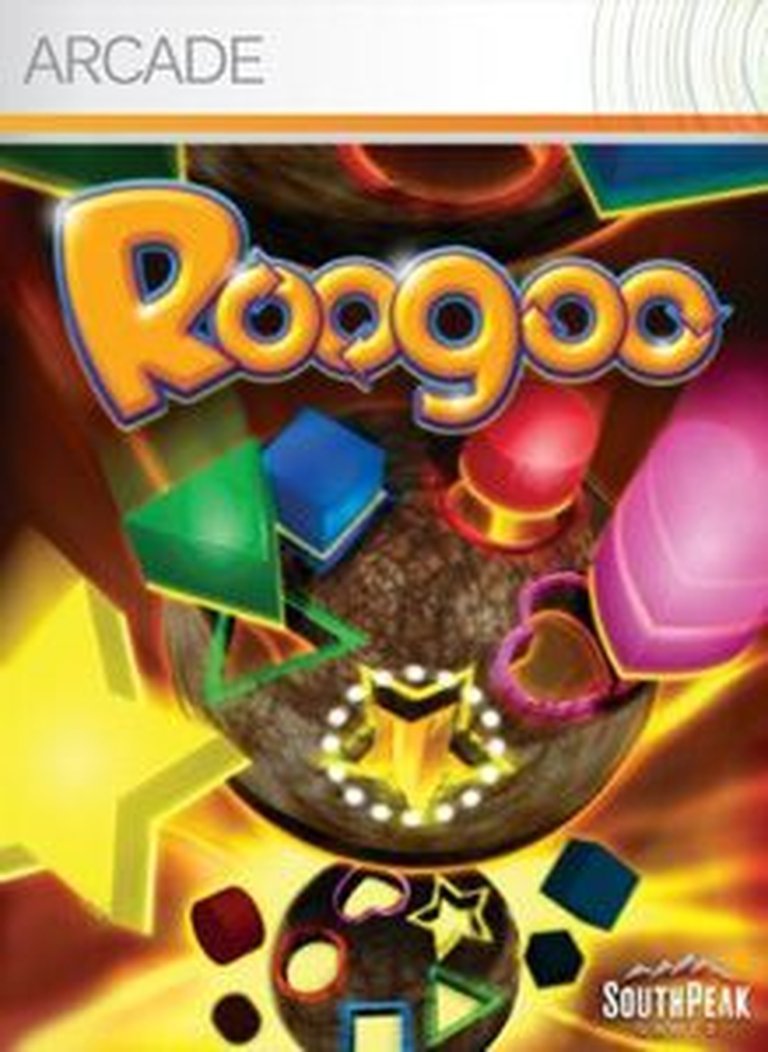
Roogoo is a three-dimensional falling block puzzle game set on Planet Roo, where players must spin floating platforms to guide shaped blocks through matching holes to reach the bottom. The game’s premise revolves around thwarting the evil King Goo, who corrupts the planet’s inhabitants by stealing meteors, turning them into wicked Meemoos. With 45 levels of increasing difficulty, players face challenges like butterflies disrupting blocks and creatures blocking holes. The game also features multiplayer modes, including co-op for up to four players and competitive play for two, where players can hinder each other with attacks.
Gameplay Videos
Where to Buy Roogoo
PC
Roogoo Free Download
Roogoo Guides & Walkthroughs
Roogoo Reviews & Reception
metacritic.com (78/100): Roogoo is simply delightful. Its bright and cheery art style, adorably cute characters, and challenging play make this one of my favorite XBLA titles to date.
gamepressure.com (79/100): Roogoo is an innovative and unusual 3D puzzle game that has players guide and stack different shaped blocks through various platforms to not only save planet Roo, but the entire Roogoo race.
steambase.io (79/100): Roogoo has earned a Player Score of 79 / 100. This score is calculated from 335 total reviews which give it a rating of Mostly Positive.
vgtimes.com (75/100): Roogoo is an innovative and unusual 3D puzzle game that has players guide and stack different shaped blocks through various platforms to not only save planet Roo, but the entire Roogoo race.
Roogoo: A Deceptively Simple Masterpiece of Puzzle Design
Introduction
In the crowded landscape of digital puzzle games, Roogoo (2008) stands as a quiet revolution—a title that redefined the falling-block genre by introducing a three-dimensional twist to a familiar formula. Developed by SpiderMonk Entertainment and published by SouthPeak Interactive, Roogoo emerged during the golden age of Xbox Live Arcade, a platform that thrived on innovative, bite-sized experiences. At first glance, its vibrant aesthetics and cuddly characters might suggest a casual, child-friendly romp. Yet beneath its pastel exterior lies a game of remarkable depth, one that challenges reflexes, spatial reasoning, and strategic foresight in equal measure.
This review seeks to unpack Roogoo’s enduring appeal, examining its development, narrative charm, mechanical ingenuity, and cultural impact. Far from being merely “another Tetris clone,” Roogoo carved its own niche by blending accessibility with punishing difficulty, all while wrapping its core mechanics in a whimsical, environmentally conscious narrative. Through an analysis of its critical reception, legacy, and design philosophy, we will argue that Roogoo is not just a relic of its era but a timeless puzzle experience that deserves reevaluation in the modern gaming canon.
Development History & Context
The Birth of SpiderMonk Entertainment
Roogoo was the brainchild of SpiderMonk Entertainment, a small but ambitious studio based in the United States. Founded by industry veterans with backgrounds in both game design and animation, SpiderMonk sought to create titles that balanced innovation with accessibility. The studio’s president and creative director, Scott March, played a pivotal role in shaping Roogoo’s identity, overseeing everything from game design to 3D character modeling. This hands-on approach ensured a cohesive vision, where every element—from the rotational mechanics to the art style—served the game’s core philosophy.
The development team was lean but multidisciplinary, with Jeffrey Wilkinson serving as VP of Development and lead programmer, and Marty Seefeldt leading the art direction. Their collaboration resulted in a game that felt polished despite its modest budget, a testament to the efficiency of small-team development during the mid-2000s.
Technological Constraints and the Xbox Live Arcade Ecosystem
Roogoo launched on June 4, 2008, for Xbox 360 via Xbox Live Arcade (XBLA), followed shortly by a Windows release. The XBLA platform was in its prime, offering indie developers a direct pipeline to a hungry audience. However, the platform’s constraints—particularly the 50MB file size limit for most titles—posed significant challenges. Roogoo circumvented this by focusing on procedural generation and reusable assets, ensuring that its 45 levels felt distinct without bloating the download size.
The game’s three-dimensional puzzle design was a technical marvel for its time. Unlike traditional 2D falling-block puzzlers, Roogoo required players to manipulate rotating platforms in real-time, demanding precise input handling and smooth animations. The team leveraged the Xbox 360’s processing power to maintain a consistent 60 FPS, crucial for a game where split-second decisions could mean the difference between success and failure.
The Gaming Landscape of 2008
The late 2000s were a renaissance for puzzle games. Titles like Peggle (2007), World of Goo (2008), and Braid (2008) redefined what the genre could achieve, blending mechanics with narrative and artistic ambition. Roogoo entered this competitive space with a unique selling point: its fusion of Tetris-like block matching with Jenga-inspired physics. While games like Meteos (2005) had experimented with verticality, Roogoo’s rotating disks introduced a spatial puzzle element that felt fresh.
Critically, Roogoo also arrived at a time when multiplayer puzzle games were rare. Its inclusion of local co-op and competitive modes (supporting up to four players) was a standout feature, offering a social experience that few XBLA titles could match. This focus on shared play would later influence games like Keep Talking and Nobody Explodes (2015), proving that Roogoo was ahead of its time in recognizing the appeal of collaborative puzzle-solving.
Narrative & Thematic Deep Dive
The Tale of Planet Roo
Roogoo’s narrative is deceptively simple yet thematically rich. The game is set on Planet Roo, a once-peaceful world inhabited by the cheerful Roogoos—small, round creatures who live in harmony with their environment. Their idyllic existence is disrupted by King Goo, a tyrannical figure who steals meteors from the sky to fuel his insatiable greed. As he hoards these celestial resources, the planet’s inhabitants begin to transform into Meemoos, corrupted versions of the Roogoos who serve King Goo’s malevolent agenda.
The player assumes the role of one of the few remaining uncorrupted Roogoos, tasked with guiding falling meteors through a series of rotating disks to restore balance to Planet Roo. Each successfully delivered meteor weakens King Goo’s influence, gradually reverting the Meemoos back to their original forms. The narrative unfolds through brief, wordless cutscenes, relying on visual storytelling to convey its environmentalist message.
Themes: Environmentalism and Corruption
At its core, Roogoo is an allegory for environmental exploitation and redemption. King Goo’s hoarding of meteors mirrors real-world resource depletion, while the transformation of Roogoos into Meemoos symbolizes the corrupting influence of greed. The game’s resolution—restoring the planet by returning the meteors—offers a hopeful counterpoint, suggesting that harm can be undone through collective effort.
This thematic depth is subtle but effective, avoiding heavy-handed moralizing in favor of a playful, optimistic tone. The absence of dialogue or text reinforces the game’s universal appeal, allowing players of all ages and backgrounds to interpret its message. In this sense, Roogoo aligns with classics like Yoshi’s Island (1995) or Ori and the Blind Forest (2015), where narrative and gameplay intertwine to create an emotionally resonant experience.
Characters and World-Building
While Roogoo’s characters are minimalist, their designs are expressive and memorable:
– Roogoos: Round, colorful, and endearing, they embody innocence and resilience.
– Meemoos: Darker, angular versions of Roogoos, their jagged edges reflecting their corrupted state.
– King Goo: A towering, blob-like antagonist whose design evokes both comedy and menace.
The world of Planet Roo is rendered in soft, pastel hues, with floating platforms and lush backgrounds that evoke a dreamlike quality. This aesthetic choice serves a dual purpose: it masks the game’s underlying difficulty while reinforcing its themes of harmony and restoration. The contrast between the serene environments and the chaotic gameplay creates a compelling tension, much like the juxtaposition of Katamari Damacy’s cheerful visuals with its absurdly challenging later levels.
Gameplay Mechanics & Systems
Core Gameplay Loop: A 3D Twist on Falling Blocks
Roogoo’s central mechanic is elegantly simple: guide shaped meteors through a series of rotating disks to reach the bottom platform. Each disk has a uniquely shaped hole (e.g., circles, squares, stars), and players must rotate the disks to align these holes with the falling blocks. When a stack of blocks grows heavy enough, it descends to the next disk, where the process repeats.
This mechanic draws obvious comparisons to Tetris, but Roogoo distinguishes itself through:
1. Three-Dimensional Rotation: Unlike Tetris’s 2D grid, Roogoo’s disks rotate in 3D space, requiring players to consider depth and perspective.
2. Physics-Based Stacking: Blocks don’t simply disappear when matched; they accumulate weight, affecting how subsequent blocks fall. This introduces a Jenga-like tension, where poor placement can cause entire stacks to collapse.
3. Dynamic Obstacles: Later levels introduce Meemoos (who block holes), butterflies (who lift blocks to higher disks), and color-coded blocks (requiring precise shade matching).
Progression and Difficulty Curve
Roogoo’s 45 levels are meticulously designed to introduce mechanics gradually, ensuring that players are constantly challenged but never overwhelmed. The difficulty curve can be divided into three phases:
1. Tutorial Phase (Levels 1–15): Players learn basic rotation and block-matching. Obstacles are minimal, allowing for experimentation.
2. Intermediate Phase (Levels 16–30): Introduces Meemoos and butterflies, requiring quicker reflexes and adaptive strategies.
3. Advanced Phase (Levels 31–45): Combines all mechanics, with multi-layered disks, color-matching, and rapid block falls. These levels demand near-perfect execution, rewarding precision and foresight.
The game’s scoring system incentivizes efficiency, awarding bonuses for combos, quick drops, and flawless level completions. This encourages replayability, as players strive to optimize their performance.
Multiplayer: Cooperative and Competitive Modes
Roogoo’s multiplayer is one of its most innovative features, offering:
– Cooperative Mode (1–4 Players): Players work together to guide blocks through shared disks, fostering teamwork and communication.
– Competitive Mode (2 Players): Players race to complete the same puzzle, with the ability to sabotage each other by sending obstacles (e.g., extra Meemoos) to their opponent’s screen.
The competitive mode, in particular, is a masterclass in asymmetrical gameplay. Unlike traditional puzzle battles (e.g., Puyo Puyo), Roogoo’s sabotage mechanics are subtle but devastating, forcing players to adapt mid-game. This mode was praised for its depth, though its reliance on local or Xbox Live play limited its longevity in an era before widespread online multiplayer adoption.
Innovations and Flaws
Innovations:
– 3D Puzzle Design: Roogoo’s rotational mechanics were a breath of fresh air in a genre dominated by 2D grids.
– Physics Integration: The weight-based stacking system added a layer of strategy absent in most puzzlers.
– Accessible Yet Deep: The game’s simple controls (initially just two buttons) belied its complex later levels, making it approachable for casual players while offering depth for hardcore fans.
Flaws:
– Steep Late-Game Difficulty: Some players found the final levels frustratingly punishing, with little margin for error.
– Limited Multiplayer Longevity: The lack of a robust online community (outside of Xbox Live) meant that competitive modes faded in popularity.
– Repetitive Aesthetics: While charming, the game’s visual style could feel monotonous over extended play sessions.
World-Building, Art & Sound
Visual Design: A Feast for the Eyes
Roogoo’s art direction is a masterclass in minimalist charm. The game employs:
– Soft, Rounded Geometry: Every object, from the Roogoos to the floating disks, is designed with smooth, inviting curves.
– Vibrant Color Palette: Pastel blues, greens, and pinks dominate, creating a calming yet engaging atmosphere.
– Expressive Animations: The Roogoos’ bouncy movements and the Meemoos’ erratic behavior add personality to the world.
The decision to avoid realistic textures or complex shading was deliberate, ensuring that the game remained timeless rather than tied to the graphical trends of 2008. This approach has aged remarkably well, with Roogoo’s visuals still feeling fresh over a decade later.
Sound Design and Music
The auditory experience in Roogoo is subtle but effective:
– Ambient Soundtrack: Composed of light, airy melodies, the music reinforces the game’s whimsical tone without becoming intrusive.
– Sound Effects: Each block placement, disk rotation, and Meemoo defeat is accompanied by satisfying, tactile sounds, enhancing the game’s feedback loop.
– Dynamic Audio: The soundtrack subtly intensifies during high-pressure moments, heightening tension without overwhelming the player.
While not as memorable as the scores of Peggle or World of Goo, Roogoo’s audio design serves its purpose admirably, complementing the gameplay without drawing attention to itself.
Atmosphere and Immersion
Roogoo’s world is cohesive and immersive, with every element working in harmony:
– Environmental Storytelling: The gradual restoration of Planet Roo is reflected in the backgrounds, which grow lusher as players progress.
– Haptic Feedback: The Xbox 360 controller’s vibration feature is used sparingly but effectively, particularly during block collisions or Meemoo defeats.
– Minimalist UI: The game avoids cluttered screens, with only essential information (e.g., score, remaining blocks) displayed. This ensures that the focus remains on the puzzle itself.
Reception & Legacy
Critical Reception: A Puzzle Gem
Roogoo was met with near-universal acclaim, particularly for its Xbox 360 release. Aggregated scores reflect its strong reception:
– Metacritic (Xbox 360): 78/100 (“Generally Favorable”)
– Metacritic (PC): 72/100 (“Mixed or Average”)
– MobyGames: 7.7/10 (Ranked #402 on Xbox 360)
Key Praise:
– Innovative Gameplay: Critics lauded the game’s 3D twist on the falling-block genre, with IGN calling it “a worthy addition to any puzzle fan’s library.”
– Charming Aesthetics: 1UP praised its “bright and cheery art style,” while Eurogamer highlighted its “beautifully presented” world.
– Addictive Difficulty: GamePro noted that the game’s lack of repetitive patterns kept it fresh, though some found it frustrating.
Criticisms:
– PC Port Issues: The Windows version was criticized for lacking features present in the Xbox 360 release, such as online multiplayer.
– Price Point: Some reviewers felt that 800 Microsoft Points ($10 USD) was steep for a puzzle game, though most agreed it was justified by the content.
Commercial Performance and Player Reception
While Roogoo did not achieve blockbuster sales, it developed a cult following among puzzle enthusiasts. Its Xbox Live Arcade placement ensured steady visibility, and its demo version (a rarity for XBLA titles at the time) helped attract players. The game’s Steam release in 2009 further extended its reach, though it remained overshadowed by heavier hitters like World of Goo.
Player reviews on platforms like Steam (where it holds a “Mostly Positive” rating) highlight its addictive gameplay and replayability, with many noting that it aged better than expected. However, some players expressed frustration with the late-game difficulty spike, a common critique of puzzle games that prioritize challenge over accessibility.
Legacy and Influence
Roogoo’s influence can be seen in several subsequent titles:
1. Multiplayer Puzzle Games: Its cooperative and competitive modes paved the way for games like Keep Talking and Nobody Explodes and Overcooked, which emphasize teamwork and communication.
2. 3D Puzzle Mechanics: Later games, such as Patrick’s Parabox (2022), experimented with rotational puzzles, building on Roogoo’s foundation.
3. Indie Puzzle Renaissance: Roogoo proved that small teams could create mechanically rich puzzle games, inspiring a wave of indie developers to explore the genre.
The game also spawned two sequels:
– Roogoo Twisted Towers (Wii, 2009)
– Roogoo Attack! (Nintendo DS, 2009)
While neither sequel achieved the critical acclaim of the original, they demonstrated the enduring appeal of Roogoo’s core mechanics.
Conclusion: A Timeless Puzzle Classic
Roogoo is a game of deceptive simplicity and remarkable depth. Its blend of 3D puzzle mechanics, charming aesthetics, and environmental storytelling creates an experience that is both accessible and challenging. While its late-game difficulty and limited multiplayer longevity may deter some players, its innovative design and timeless appeal secure its place as a standout title in the puzzle genre.
In the pantheon of Xbox Live Arcade classics, Roogoo deserves recognition alongside Braid and Castle Crashers. It is a game that rewards patience, punishes hesitation, and delights with its whimsy. For puzzle enthusiasts, it remains a must-play, while for historians of indie gaming, it serves as a testament to the creativity that flourished in the late 2000s.
Final Verdict: 8.5/10 – A brilliant, underrated puzzle game that transcends its era.
Roogoo is more than a falling-block puzzler—it is a love letter to the joy of problem-solving, wrapped in a world that feels as warm as it is challenging. Over a decade later, it still shines.