
- Release Year: 2009
- Platforms: Windows
- Publisher: Singapore-MIT GAMBIT Game Lab
- Developer: Singapore-MIT GAMBIT Game Lab
- Genre: Adventure
- Perspective: Third-person
- Game Mode: Single-player
- Gameplay: Point-and-click, Puzzle elements
- Setting: Modern, Town
- Average Score: 80/100
Description
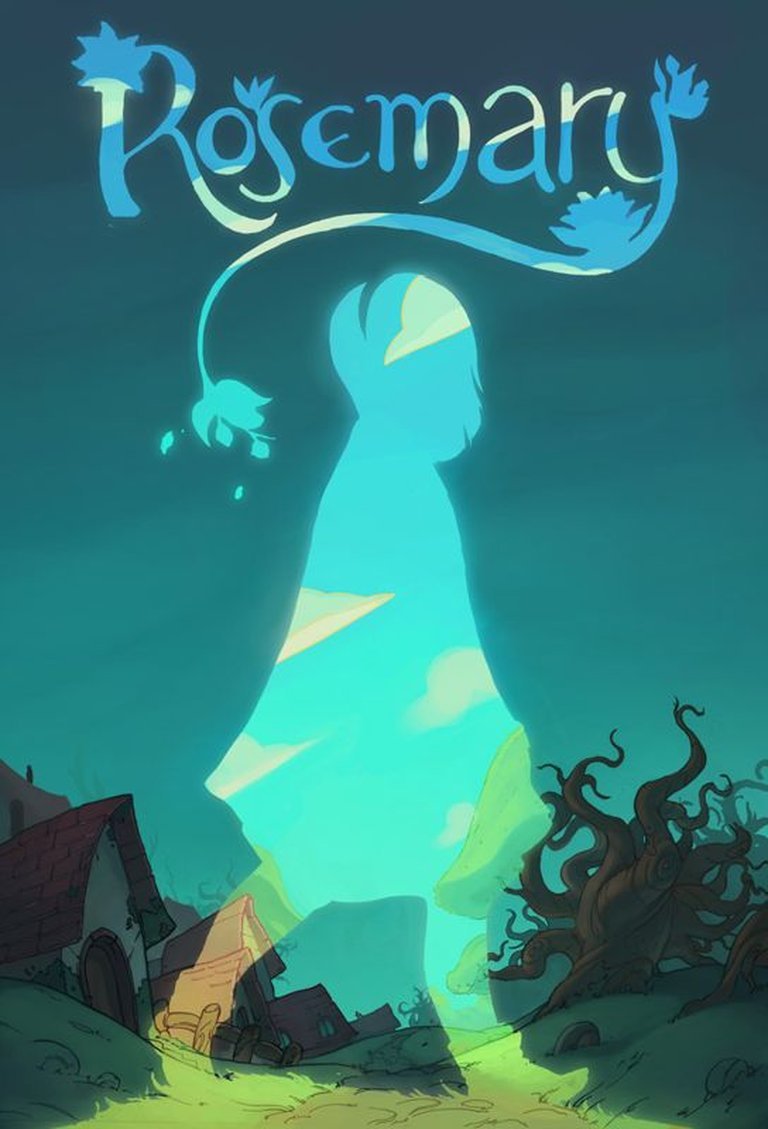
Rosemary is a poignant short point-and-click adventure game that explores the theme of childhood memories, where the protagonist, upon discovering a photograph of a forgotten friend, returns to the deserted town of New Rye to piece together her past. By examining environments and collecting photographic recollections to place in a diary, players switch between the bleak modern-day setting and vivid flashbacks of her youth, solving subtle puzzles that reveal hidden events and unlock new areas in this freeware title developed by the Singapore-MIT GAMBIT Game Lab.
Where to Get Rosemary
PC
Guides & Walkthroughs
Reviews & Reception
rockpapershotgun.com : Bursting with great ideas. It comes quite close to delivering on them.
Rosemary: Review
Introduction
Imagine sifting through a dusty box of old photographs, only to uncover a face from your childhood that stirs a fog of half-remembered joys and sorrows—suddenly, the past isn’t buried; it’s alive, demanding to be pieced together. This is the evocative hook of Rosemary, a 2009 point-and-click adventure game that transforms the act of reminiscing into a core mechanic, inviting players to revisit a faded hometown and reconstruct a personal mystery. Developed as a student project at MIT’s GAMBIT Game Lab, Rosemary may be brief—clocking in at under 30 minutes—but its legacy endures as a heartfelt tribute to the adventure genre’s golden age, blending nostalgia with innovative storytelling. In an era when sprawling RPGs dominated, this freeware gem reminds us that sometimes the smallest tales leave the deepest imprints. My thesis: Rosemary excels as a compact emotional journey, using memory as both narrative engine and puzzle device to deliver a touching exploration of loss and remembrance that punches above its weight, influencing indie design while highlighting the untapped potential of sensory-driven interactions in games.
Development History & Context
The origins of Rosemary trace back to the Singapore-MIT GAMBIT Game Lab, a collaborative initiative between MIT’s Comparative Media Studies program and Singapore’s media ecosystem, founded in 2006 to foster experimental game development through academic research. Under the guidance of producer Clara Fernández-Vara, a PhD candidate exploring story-driven games, a team of talented students assembled in Spring 2009 to create this prototype. Key contributors included game designer and writer Sarah Sperry, who shaped the narrative and puzzles; programmers Katie Sievert and Alec Thomson, handling code on the Wintermute engine; UI designer Marleigh Norton; artists Brandon Cebenka, Fabiola Garza, and Nicholas Kole; sound designer Jonathon Georgievski; and composer Shota Nakama. With quality assurance from Alexis Brownell, Jose Soto, and Ruben Perez, plus special thanks to mentors like Philip Tan Boon Yew and Matthew Weise, the project embodied GAMBIT’s ethos of interdisciplinary learning—blending art, code, and narrative in a 10-hour-per-week student schedule.
The vision was ambitious yet constrained: revive the point-and-click adventure genre, which had peaked in the 1990s with titles like The Secret of Monkey Island and Myst but waned amid rising 3D action games. Fernández-Vara drew from Quintilian’s ancient “memory palaces”—mental architectures for organizing recollections—to innovate on amnesia tropes, focusing instead on selective, sensory-triggered memories. Technological limits were evident; built on the lightweight Wintermute engine for 2D adventures, it ran on modest hardware (Windows XP/Vista, 128MB RAM, DirectX 8-compatible graphics), prioritizing accessibility over spectacle. The 2009 gaming landscape was shifting toward digital distribution and indies—Steam was booming, and freeware experiments like World of Goo proved small teams could captivate—but adventure games were niche, overshadowed by MMOs and shooters. Rosemary emerged as a deliberate counterpoint, a free download emphasizing emotional depth over length, developed amid challenges like fragmented team schedules and evolving story documents. Playtesting revealed UI rough edges and genre unfamiliarity among younger players, yet it underscored the project’s research value: tools for story-tracking in collaborative dev, and insights into interaction design’s role in narrative innovation.
Narrative & Thematic Deep Dive
At its heart, Rosemary is a intimate mystery wrapped in the haze of childhood recollection. The protagonist, an adult Rosemary, stumbles upon a faded photograph of her childhood friend Tom, whom her parents dismissed as imaginary. Compelled by this tangible proof, she returns to New Rye, her seaside hometown now a desolate shell, to unearth what became of him. The plot unfolds nonlinearly through fragmented memories: starting with three explorable locations (home neighborhood, schoolyard, and docks), players trigger recollections by interacting with the environment. These manifest as photographs slotted into a diary, completing handwritten text entries that reveal backstory—Tom’s playful hiding spots, shared secrets, and a tragic incident at “the well.” Without spoiling the poignant twist, the narrative questions the reliability of memory: Were Tom’s antics real, or a child’s fabrication? Dialogue is sparse but evocative, delivered through internal monologues and environmental cues rather than verbose cutscenes, emphasizing introspection over exposition.
Thematically, Rosemary delves into nostalgia as a double-edged sword—comforting yet distorting. Childhood innocence clashes with adult loss; the vibrant past symbolizes untainted joy, while the present’s decay mirrors emotional abandonment. Sensory triggers (smells of sea salt, sounds of waves) evoke how memories aren’t linear but associative, drawing from real psychology like Proust’s madeleine. Characters are archetypal yet relatable: young Rosemary as a curious explorer, Tom as an enigmatic companion whose fate probes themes of isolation and forgotten bonds. Parents appear peripherally as unreliable narrators, underscoring familial denial. The diary mechanic weaves these threads, filling blanks like a psychological puzzle, revealing how memory reconstructs reality—subtly changing environments (e.g., a hidden object materializes post-recollection). Dialogue, when present (e.g., overheard past conversations), is economical, laced with childlike wonder: “Remember when we hid treasures by the lighthouse?” This brevity amplifies impact, making Rosemary a meditation on remembrance as an active, imperfect process, far from the passive amnesiac plots of games like Syberia. Its emotional core—grief for lost friendships and the irreversibility of time—resonates deeply, proving that short narratives can evoke profound catharsis.
Gameplay Mechanics & Systems
Rosemary‘s core loop revolves around exploration, recollection, and reconstruction, eschewing combat for pure puzzle-solving in a point-and-click framework. Players navigate third-person scenes via mouse, with hotspots highlighted by tooltips on hover—a nod to classic adventures like King’s Quest. The interface features a bottom-screen verb bar: look at, walk to, talk to, listen, smell, take, open/close, dig, hit, and put, expanding beyond SCUMM’s basics to emphasize sensory immersion. Memory toggling via a “two-faced tree” button shifts between present (dark, interactive but sparse) and past (colorful, observational), unlocking paths: e.g., recalling a past rope bridge reveals its decayed present counterpart.
Progression hinges on piecing memories: examining objects triggers photos (e.g., smelling flowers recalls a picnic), collected in an inventory and placed in the diary. Correct placement completes text, alters the world (new hotspots emerge), and advances the story— a elegant loop blending inventory puzzles with narrative gating. Puzzles are straightforward yet clever: collect a lunchbox in the present after remembering Tom’s hiding habit; dig for buried items post-recollection; use a hook on a well only after sensory cues resurface it. No character leveling exists; “progression” is narrative-driven, opening locations organically. The UI, refined post-playtesting, ditches a forced tutorial for intuitive discovery, though early prototypes had clunky button feedback and non-greyed past verbs, leading to inconsistencies (e.g., manipulable memories later on).
Innovations shine in sensory verbs—listen to waves for audio triggers, smell seaweed for visual cues—making interactions multisensory and thematic. Flaws include logical inconsistencies (e.g., present objects appearing only after past memories, inverting intuitive flow) and brevity; puzzles feel uninvolving at times, solvable via trial-and-error rather than deep deduction. Inventory is simple (drag-and-drop), and no saving mid-scene, but mouse-only controls suit its accessibility. Overall, the systems foster a meditative pace, rewarding patient exploration over frustration, though genre veterans may breeze through while newcomers grapple with conventions like verb-clicking.
World-Building, Art & Sound
New Rye is a masterclass in dual-temporal world-building: the present is a moody, fog-shrouded ruin—boarded shops, overgrown lots, whispering winds—evoking abandonment and the passage of time. Toggle to the past, and it blooms into a sunlit idyll: bustling streets, laughing children, azure seas, capturing childhood’s idyllic filter. This contrast isn’t mere backdrop; it’s integral, with recollections dynamically reshaping scenes (e.g., a barren lot reveals picnic remnants). The seaside setting amplifies themes—rosemary herb’s real-world ties to memory and coastal growth add subtle symbolism—while locations like the schoolyard or lighthouse feel lived-in, pieced from universal childhood archetypes.
Visually, hand-drawn 2D art by Cebenka, Garza, and Kole radiates charm, reminiscent of Professor Layton‘s whimsy with soft watercolors and expressive poses. Present scenes use desaturated palettes for melancholy, past ones vibrant hues for warmth; photos in the diary are Polaroid-style snapshots, blending sepia nostalgia with illustrative flair. Subtle animations—like swaying grass or flickering memories—enhance immersion without taxing the Wintermute engine.
Sound design complements this beautifully: Georgievski’s effects capture sensory triggers (creaking doors, salty breezes, distant laughter), while Nakama’s minimalist score—gentle piano motifs and seaside ambiences—evokes wistful reverie, swelling emotionally during revelations. No voice acting keeps it intimate, focusing on environmental audio to “listen” or “smell” cues. Together, these elements craft an atmospheric cocoon, making New Rye feel like a personal memory palace—haunting yet healing, where every pixel and note reinforces the theme of rediscovery.
Reception & Legacy
Upon its 2009 freeware release via the GAMBIT site, Rosemary garnered modest but enthusiastic reception in indie circles. Critics averaged 80% (Softonic: 4/5, praising its “touching story” and adult themes of memory/loss; Adventure-Treff: 4/5, lauding its heartfelt brevity and diary innovation). Player scores hovered at 3.9/5 on MobyGames (four ratings, no reviews), with fans on forums like GAMBIT’s comments calling it “short but sweet,” “beautiful,” and a “refreshing adventure.” Dev.Mag highlighted its clever mechanics and presentation, while Rock Paper Shotgun noted its near-brilliance despite UI flaws. Commercially, as public domain freeware, it saw no sales but thousands of downloads, collected by few but cherished by adventure enthusiasts.
Over time, its reputation has solidified as a cult student project—preserved on MobyGames (added 2010) and Adventure Gamers—evolving from “promising prototype” to pedagogical touchstone. Fernández-Vara’s post-mortem emphasized lessons in story-tracking tools and player resilience (testers finished “broken” builds), influencing her DRS 2010 paper on genre innovation. Its legacy ripples in indies: memory mechanics inspired sensory narratives in Gone Home (2013) or What Remains of Edith Finch (2017), while expanded verbs prefigure interactive fiction like Device 6. In academia, GAMBIT’s model boosted student-led adventures (The Cat and the Coup), and Rosemary exemplifies freeware’s role in genre revival amid 2010s indie booms. Though not revolutionary, it influenced thoughtful, short-form storytelling, proving adventures needn’t be epic to endure.
Conclusion
Rosemary distills the essence of point-and-click adventures into a gem of emotional archaeology—its memory-driven narrative, sensory puzzles, and dual-world immersion create a lingering sense of wistful discovery, flaws like logical quirks and brevity notwithstanding. From GAMBIT’s collaborative crucible, it emerges as a testament to indie ingenuity, blending psychological depth with accessible design to honor a fading genre. In video game history, it claims a niche as a poignant prototype: not a landmark blockbuster, but a heartfelt reminder that games can evoke the quiet ache of remembrance as powerfully as any epic. Verdict: Essential for adventure fans; a 8/10 for its innovative heart, ideal for a rainy afternoon of reflection. Download it free and let the past resurface—it’s worth the trip down memory lane.