
- Release Year: 2000
- Platforms: Windows
- Developer: WickedWare, LLC
- Genre: Gambling, Strategy, Tactics
- Perspective: First-person
- Game Mode: Single-player
- Gameplay: Betting, Simulation
- Setting: Casino
Description
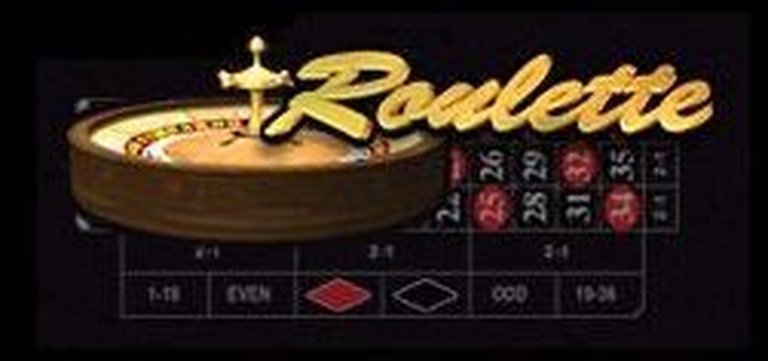
Roulette Fever is a single-player, mouse-controlled simulation of the classic casino game roulette, rendered from a first-person perspective with an American ‘double zero’ wheel layout. Players start with $50 in chips and place bets by clicking on the table, enjoying flexible wagering options like $1 minimums on outside bets, but face game over if they run out of money since winnings aren’t retained between sessions. Often bundled in eGames compilations such as Casino Jackpot 2, it lacks AI opponents, high scores, and persistent progress, focusing on straightforward casino gameplay.
Roulette Fever: A Clinical Autopsy of a Casino Compilation Staple
Introduction: The Ghost in the Machine
In the vast Necronomicon of video game history, certain titles exist not as celebrated classics or infamous failures, but as silent, functional specters. They are the software equivalent of a casino’s padding dealer—present, operational, and utterly forgettable. Roulette Fever, a 2000 Windows release from WickedWare, LLC, is precisely such a specter. Bundled into the eGames compilations that lined the bargain bins of the early 2000s (specifically Casino Jackpot 2), it represents a specific, now-distant moment in gaming: the era of the utilitarian simulation. Its legacy is not one of innovation or influence, but of sheer, unadulterated functionalism. This review argues that Roulette Fever is a fascinating historical artifact precisely because of its profound lack of identity—a minimalist digital table that serves only to mirror a physical one, offering no pretense of narrative, character, or mechanical depth. To analyze it is to dissect a void, to understand a game defined by what it is not, and to contrast its sterile functionality with the rich, horrifying tapestry of modern gambling-themed titles like Buckshot Roulette, a game that would not exist without the genre foundations laid by such barebones predecessors.
Development History & Context: The “Fever” as a Brand, Not a Vision
Studio & Creators: Roulette Fever was developed by WickedWare, LLC, a two-person studio comprising Ivan Novotny (Software Engineering) and Matt McDonald (Art & Design). MobyGames reveals that this duo were prolific purveyors of the “Fever” brand, also responsible for Blackjack Fever, Craps Deluxe, and Castle Slots. Their output suggests a specialized niche: producing competent, low-cost casino game simulations for the burgeoning compilations market. There is no evidence of a grand creative vision; instead, the “Fever” suffix appears to be a marketing identifier for a suite of straightforward betting games.
Technological & Market Context: The year 2000 was the twilight of the retail “greatest hits” and compilation era for PC gaming. Companies like eGames, Global Star, and Activision Value thrived by bundling simple, often repackaged, casual games into collections aimed at non-gamers, seniors, or as impulse purchases. These titles had to be:
1. Extremely cheap to produce: Simple 2D graphics, minimal sound, and recycled codebases across games in a “Fever” series.
2. Instantly comprehensible: No learning curve. The rules of roulette are the rules of the game.
3. Resource-light: Designed to run on the modest PCs of the day.
Roulette Fever fits this model perfectly. Its 1st-person perspective on the table, mouse-only input, and lack of any extraneous features (no music, no animated dealer, no other players) point to a design philosophy of absolute cost-cutting. It is a digital rendering of a felt layout and a spinning wheel, nothing more.
The Gaming Landscape: In 2000, the “serious” gaming world was consumed by 3D revolutions (Deus Ex, The Sims) and the rise of online multiplayer. Casino games existed in a separate, marginal category—often puzzle-adjacent or “edutainment.” Roulette Fever was not competing with Sims; it was competing with the physical roulette wheel in a neighbor’s basement and the free, ad-supported casino games appearing on early portals like Yahoo! Games. Its value was in convenience and the illusion of variety within a compilation disk.
Narrative & Thematic Deep Dive: The Elegance of Absence
To discuss the narrative of Roulette Fever is to engage in a form of digital archaeology of emptiness. There is no narrative. There are no characters. There is no plot. The “theme” is “a casino.” The player’s context is provided solely by the game’s box art and menu: a generic, slightly glossy depiction of a roulette wheel and chips. The game itself begins in medias res with $50 in chips already on the digital table.
Thematic Implications of the Void: This complete stripping away of context is itself a statement, albeit an unintentional one. It reflects the game’s primary purpose: to simulate an activity, not an experience. The player is not a “high roller” in a Vegas thriller or a desperate soul in an underground den. They are a disembodied cursor moving colored polygons. The thematic weight comes from what is absent:
* No Risk Beyond Chips: Running out of virtual chips triggers a stark “Game Over.” There is no depiction of debt, no loan shark, no personal consequence. The stakes are arbitrarily limited to the starting $50 and any winnings, which are not saved. It is a risk-free risk, a simulation of gambling without the visceral horror of real loss.
* The American “Double Zero” as Implicit Theme: The choice of the American roulette layout (with 0 and 00) over the European (single 0) is a subtle, likely economically motivated, nod to the slightly worse odds for the player. It subtly reinforces the house’s edge, the only constant “character” in the game. The casino always wins in the long run, and here, in the short run, it simply resets.
Contrast this with Buckshot Roulette (2023), where the narrative is everything. The sterile, anonymous interface of Roulette Fever is the antithesis of Buckshot Roulette‘s meticulously crafted hellscape. Where Roulette Fever offers a table, Buckshot offers a liability waiver signed by “GOD.” The former simulates a game; the latter weaponizes the concept of a game into an existential horror. Roulette Fever‘s lack of lore makes it a clean slate; Buckshot‘s dense, fragmented lore (the Dealer’s possible victory over God, the warped “Heaven”) turns the game itself into a mythological event.
Gameplay Mechanics & Systems: The Algebra of Chance
Core Loop: The loop is brutally simple: 1) Select chip denomination. 2) Click table to place bet. 3) Click “Spin” (or equivalent). 4) Watch ball determine winner. 5) Collect winnings or lose bet. 6) Repeat until bankrupt or bored. There is no progression. There is no unlockable content. The “game” is a single, endless session that terminates only on bankruptcy.
Betting Systems & Constraints: The game correctly implements the full array of American roulette bets:
* Inside: Straight up (single number), Split (two numbers), Street (three numbers), Corner (four numbers), Six Line (six numbers).
* Outside: Red/Black, Odd/Even, 1-18/19-36, Dozens (1-12, 13-24, 25-36), Columns.
A critical and player-friendly deviation from standard casino practice is the $1 minimum on all outside bets, not the typical $5. This lowers the barrier to experimentation but also slightly increases the player’s theoretical ability to grind (though the house edge remains a crushing 5.26% due to 0 and 00).
Innovations (and Their Flaws): Roulette Fever has none. Its only notable “feature” is its deliberate lack of features:
* No AI Players: The player is alone. This removes social dynamics, rivalries, or the psychology of other players’ bets. It turns roulette from a communal spectacle into a lonely, mathematical exercise against a static House.
* Persistent Winnings Disabled: Winnings do not carry over between sessions (even within the same compilation playthrough). This is a profound design choice that explicitly prevents the player from building a “bankroll” and experiencing the psychological shift from “playing with house money” to “protecting my fortune.” Each spin is isolated, resetting the player’s mental state to the initial $50. It reinforces the “demo” feel.
* No High Score Table: There is no record of achievement. The only metric is the transient number in the corner of the screen. Success is ephemeral and meaningless outside the immediate moment.
* “Game Over” is Final: No credit replenishment. This creates a hard, arbitrary stop. It’s not a “you lost” so much as a “the software has terminated.” There is no “try again” from a higher or lower stake; the session is dead.
UI & Interaction: The interface is functional. Chip selection is a click on a static stack. Bet placement is a click on the table layout. The wheel spin is a simple animation. The mouse-only control was standard for the era’s casual games. The help file is a basic rundown of bet types and payouts. The sound is optional, likely a simple beep/spin file. It is the definition of “good enough.”
World-Building, Art & Sound: The Texture of Nothing
Visual Direction & Atmosphere: The art, by Matt McDonald, is what one would expect: a competent, low-polygon (or sprite-based) 3D/2.5D model of a roulette table and wheel. The textures are basic—green felt, wood grain, metallic gold. The lighting is flat. The wheel spins with a simple animation. The ball’s movement is scripted. There is no attempt at atmosphere beyond verisimilitude. It looks like a diagram from a probability textbook given a faintly graphical upgrade. The “world” is a single, static room with no windows, no doors, no other people, no implied depth. It is a non-place.
Sound Design: The optional sound is presumably a looped casino ambiance or simple mechanical sounds for the spin and ball drop. Its optionality is key: the game does not care if you are immersed. Silence is the default state, reinforcing the clinical, mathematical nature of the act. There is no “pumping” track, no crowd murmur, no dealer voice (Buckshot Roulette‘s defining audio element). The sound design, if present, would be generic stock fare.
Contribution to Experience: The total lack of artistic flair or auditory engagement ensures the player’s focus is purely on the numbers. The experience is one of pure, unadorned calculation. This is its conceptual “strength”: it is a pure game of chance, stripped of all confounding sensory input. It is the roulette equivalent of a white room with a lightbulb. It does not build tension, excitement, or dread. It presents a mechanism.
This stands in stark, hilarious contrast to Buckshot Roulette, where every element is dripping with psychosexual horror. The Dealer’s floating, toothed head; the grimy, industrial bathroom; the muffled techno from the nightclub above; the sound of the pump-action shotgun; the visual distortion upon taking damage—all work to create a narrative and emotional experience where the mechanics of the shotgun duel are merely the vehicle for a story about desperation, deals with demons, and the aftermath of God’s defeat. Roulette Fever has no story to tell, so its art does not tell one.
Reception & Legacy: The Quiet Demise of the Compilation Era
Critical & Commercial Reception (2000): By its nature, Roulette Fever was almost universally ignored by “professional” critics. It was not reviewed by主流 outlets. Its “reception” was its inclusion in a budget compilation sold in Walmart or Best Buy. Commercial success would have been measured in units sold as part of a $9.99 Casino Jackpot pack. As a standalone entity, it was invisible. On MobyGames, it is “Collected By 1 players” and has a “Moby Score” of “n/a,” a perfect digital epitaph for a title with zero cultural footprint.
Evolution of Reputation: Its reputation has not evolved; it has fossilized. It is a datapoint in the history of casual PC gaming. Its legacy is purely archival: it is a perfectly preserved example of a “shovelware” casino sim from the turn of the millennium. Its only “influence” is as a member of the genre it represents—the simple, single-player casino simulation. It contributed no mechanics, no aesthetic, no innovations that were borrowed by later developers.
Influence on the Industry & Subsequent Titles: None. The lineage of casino video games did not spring from Roulette Fever. It springs from physical casino equipment, early mainframe and microcomputer simulations (like the 1970s-80s titles listed in Moby’s “Related Games”), and later, from the premium online casinos. Roulette Fever is a dead end. It represents an approach—sterile, single-player, UI-focused simulation—that was rendered obsolete not by better design, but by changing distribution models (the decline of retail compilations) and the rise of the online multiplayer casino (where social interaction and real-money stakes are the point).
The chasm between Roulette Fever and Buckshot Roulette is the chasm between a tool and a myth. Buckshot Roulette’s developer, Mike Klubnika, explicitly cites inspirations like Iron Lung and gritty industrial horror. He builds a world. His game’s “lore,” even if initially unintended by him, became a community-driven phenomenon (wikis, ARGs, theories about God and the Dealer) precisely because there was a texture, a mystery, a disturbing aesthetic to interpret. Roulette Fever offers nothing to interpret. It is the blank page upon which a narrative cannot be written.
Conclusion: A Perfectly Functional Ghost
Roulette Fever is not a bad game. It is not a good game. It is, in the purest sense, a non-game in terms of artistic intent or experiential design. It is a piece of functional software, a UI shell connected to a random number generator. Its “review” is a critique of its own profound lack of subject matter.
Its place in video game history is as a benchmark for minimalism and a relic of a specific, now-vanished market niche. It proves that a game can be technically complete—it simulates roulette accurately, it has a clear UI, it has a start and an end condition—and yet be utterly void of the qualities that define the medium as an art form: expression, theme, challenge beyond the basic rules, or any capacity for memorable experience.
It is the ghost of a genre that withered on the vine. While Buckshot Roulette demonstrates how a simple core mechanic (Russian Roulette) can be infused with immense narrative weight, thematic dread, and community-engaging mystery, Roulette Fever demonstrates the end of the line for the “simulation-only” approach. It simulates a game whose sole cultural meaning is external to it (the thrill of betting). Buckshot creates a game whose cultural meaning is internal, generated by its own rules, aesthetics, and the terrifying questions it implies.
Therefore, the definitive verdict is this: Roulette Fever is a perfectly functional and entirely forgotten artifact. It succeeds at the one task it sets for itself—emulating a roulette table—and fails at everything else a video game can be. It is not worth playing, but it is worth remembering as a cautionary tale about the limits of pure simulation, and as the silent, gray canvas upon which later, far more colorful and terrifying masterpieces were finally able to paint.