
- Release Year: 2008
- Platforms: PlayStation 2, Wii, Windows
- Publisher: ak tronic Software & Services GmbH, RTL Sports
- Developer: 49Games GmbH
- Genre: Simulation, Sports
- Perspective: 1st-person
- Game Mode: Hotseat, Single-player
- Gameplay: Shooting, Skiing, Stamina management, Stat upgrades, Super powers
- Setting: Winter
- Average Score: 70/100
Description
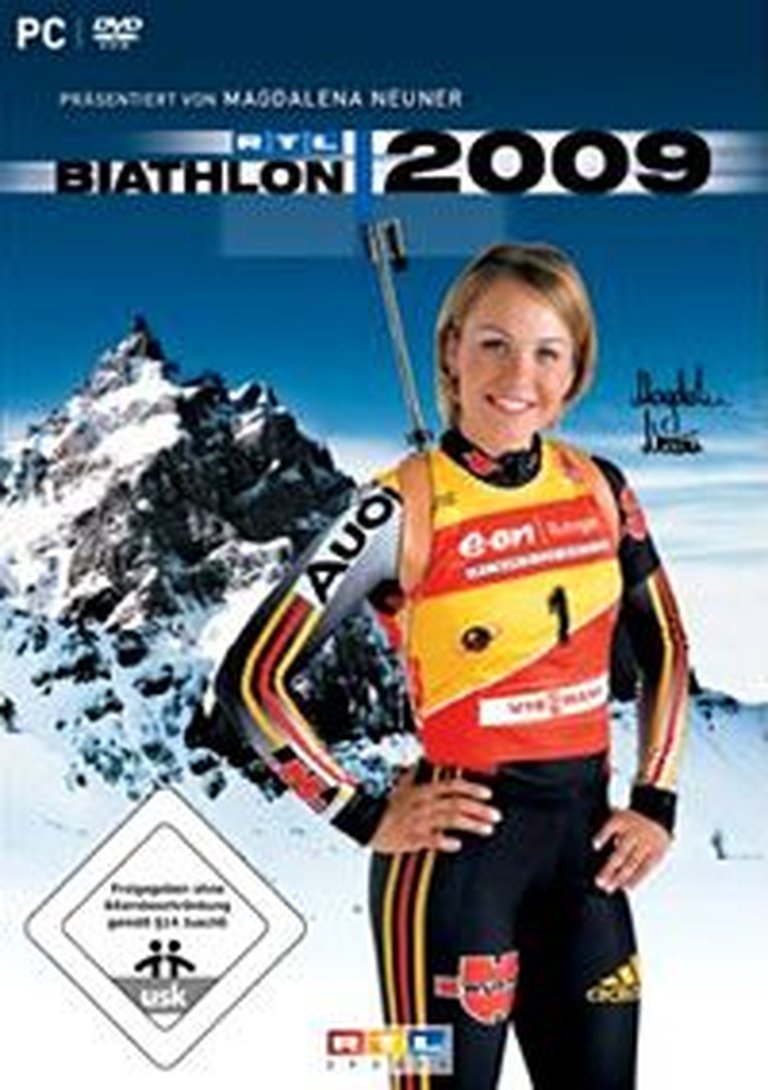
RTL Biathlon 2009 is a simulation of the winter sport biathlon, featuring cross-country skiing and rifle shooting across 15 partly licensed courses. Players manage stamina via a power bar during skiing by steady button pressing, steady their wobbling aim by holding breath in shooting phases, and progress through Career mode by upgrading stats like speed and stamina, unlocking super-powers for temporary boosts once per race.
Gameplay Videos
RTL Biathlon 2009 Free Download
RTL Biathlon 2009 Cracks & Fixes
RTL Biathlon 2009: Review
Introduction
Imagine hurtling down a snow-swept Norwegian trail on cross-country skis, heart pounding, only to skid to a halt at the range, rifle trembling in your grip as distant targets sway in the wind—that’s biathlon, the punishing hybrid of endurance skiing and precision shooting that captivates winter sports purists. Released in late 2008 across Windows, PlayStation 2, and Wii, RTL Biathlon 2009—the latest in a modest German biathlon series—aims to bottle this niche thrill for gamers. As the successor to Biathlon 2008, it builds on a legacy of licensed simulations tied to RTL broadcasts, targeting hardcore fans rather than mainstream audiences. Yet, in an era dominated by motion-controlled Wii party games and high-fidelity sports titles like FIFA 09, does this earnest sim carve a path worth following? My thesis: RTL Biathlon 2009 excels as a faithful, if rudimentary, tribute to its sport, delivering tense tactical depth for enthusiasts but stumbling under technical mediocrity and repetition that limit its broader appeal.
Development History & Context
Developed by 49Games GmbH, a small German studio specializing in licensed winter sports titles, RTL Biathlon 2009 emerged from a collaborative ecosystem orbiting RTL Sports, the broadcaster fueling the series since RTL Biathlon 2007. Key figures like Thomas Mahlke (project management, graphics lead, content lead, and concept co-creator alongside Lukas Kugler) and Managing Director Jan-Hendrik Ohl steered a team of 91 developers and 11 additional credits, many of whom overlapped with prior entries like Biathlon 2008 and broader “Ski and Shoot” projects. Publishers RTL Sports and ak tronic Software & Services GmbH ensured regional focus, with releases hitting Europe on November 27, 2008—timed for the real-world biathlon season.
The 2008 gaming landscape was bifurcated: Nintendo’s Wii revolutionized casual play with motion controls (Wii Sports sold 82 million units), while PS2 clung to budget longevity and PC sims targeted enthusiasts amid rising HD demands. 49Games operated under severe constraints—PS2/Wii hardware limited visuals to low-poly models and basic effects, with PC specs modest (Pentium 4 2.4 GHz, GeForce 6600). Vision-wise, the studio prioritized simulation fidelity over flash: licensed tracks from 15 countries (20 trails per some sources), real athletes like six-time world champion Magdalena Neuner, and official rules. Innovations like “super-powers” addressed prior criticisms of simplicity, but low-budget signs abound—sparse audio, janky animations, and Wii-specific Balance Board/Wii Zapper integrations that critics deemed half-baked. In a year of blockbusters like Grand Theft Auto IV, this was pure niche craftsmanship, echoing mid-2000s European sports sims like RTL Skispringen series.
Narrative & Thematic Deep Dive
RTL Biathlon 2009 eschews cinematic storytelling for the procedural drama of sports simulation, where “plot” unfolds through career mode progression: select a real-world athlete (e.g., Magdalena Neuner, Alexander Wolf, Michael Roesch) or customize one, then climb from Junior Cups to world championships via skill upgrades, sponsor negotiations, and equipment tweaks. No branching narratives or voiced protagonists exist; instead, “characters” are stat-driven avatars defined by four core attributes—speed, stamina, shooting accuracy, recovery—influenced by point allocation post-victories. Dialogue is minimal: terse menus, professional commentary (praised for authenticity in some reviews), and crowd cheers that swell near finishes, evoking real biathlon broadcasts.
Thematically, the game dives deep into biathlon’s essence—endurance versus precision, the mental grind of sustaining output amid fatigue, and tactical risk-reward. Career mode mirrors an athlete’s arc: early struggles build humility, mid-game super-powers (e.g., “mountain skiing” for uphill boosts) symbolize breakthroughs, while weather/wind variables underscore adaptability. Sponsors add capitalist undertones, trading wins for gear upgrades, critiquing pro sports’ machinery. No overt drama like rivalries emerges—opponents are AI ghosts with “improved intelligence” (per dev notes), behaving realistically but anonymously. This austerity amplifies themes of solitary discipline, much like real biathlon’s monk-like focus, but lacks emotional hooks; it’s a thematic meditation on repetition as virtue, rewarding patience over spectacle. For historians, it preserves 2008-09 season licensing, immortalizing Neuner’s dominance in pixels.
Gameplay Mechanics & Systems
At its core, RTL Biathlon 2009 distills biathlon into elegant loops: skiing demands directional steering (1st/3rd-person views) while babysitting a central power bar—hold a button to fill it without overflow (slowdown) or depletion (fatigue), yielding rhythmic mashing for optimal speed. Uphill/downhill terrain, stamina drain, and crashes into barriers test timing; AI rivals now “move realistically,” pressuring leads.
Shooting shifts to prone/standing ranges: a wobbling cursor demands breath-holding (steady aim burst) amid wind/weather, with misses incurring time penalties. Five prone + five standing shots per loop create high-stakes tension—perfect rounds propel you ahead, misses doom pursuits.
Career mode’s RPG-lite progression shines: allocate points to four stats post-race, unlocking super-powers (one-use per event, e.g., stamina surge or accuracy boost). Modes include Quick Race, Cups, Leagues, Training (three difficulties), and multiplayer (2-4 players via split-screen/hot-seat). UI is functional but cluttered—bars dominate screens, menus sparse. Wii variants add Balance Board (tilts for skiing, criticized as unresponsive) and Zapper (shooting), but controls falter: overly sensitive steering causes barrier smashes, recoil feels arcade-y not sim-like.
Innovations like super-powers and dynamic weather elevate tactics, but flaws abound—repetitive 15 licensed courses (e.g., Helsinki, Oberhof) wear thin, AI lacks personality, progression trivializes after initial mastery (“even steering noobs win post-first race,” per PC Action). Multiplayer sustains parties, yet no online mode limits replayability. Overall, precise yet punishing mechanics reward sim fans, but simplicity breeds boredom.
World-Building, Art & Sound
The “world” spans 15 real-world venues across 15+ countries—licensed tracks like snowy Norwegian loops or windy Italian ranges—fostering authenticity via elevation changes, crowd placements, and variable weather (blizzards skew aim, sunny days favor speed). Atmosphere nails biathlon’s stark isolation: vast whites, distant pines, firing range tension, amplified by audience reactions and commentary evoking RTL TV coverage.
Visually, it’s era-constrained budget work: PS2/Wii models are low-detail (flat faces, stiff animations ignoring terrain), environments refined but dated (pretty snow effects noted in GameStar). PC fares slightly better, yet all suffer jank—uncanny skier glides, poor collision detection. Sound design disappoints: sparse music, cheap effects (lifeless skis, extreme recoil bangs), repetitive commentary (“terrible, contextless,” per GameFabrique). Cheers and wind add immersion, but silence dominates skiing stretches. Collectively, these craft a focused, if austere, winter sim vibe—prioritizing mood over polish, like a digital training ground.
Reception & Legacy
Critically, RTL Biathlon 2009 earned a middling 64% MobyGames average (7 reviews), with Windows at 65-72% (PC Action/GameStar lauded precision upgrades, super-powers), Wii at 60% (#515/787), and PS2 dipping to 55%. German outlets praised fan service (“best RTL Biathlon yet,” GameStar) but slammed repetition (“too simplistic, wears thin,” 4Players), graphics (“outdated,” Gameswelt), Wii controls (“Balance Board a gimmick,” Looki/GBase), and accessibility (“for hardcore fans only,” multiple). Player scores hover at 3.3/5 (4 votes), with no deep reviews—niche appeal evident. Commercially obscure (collected by few, no sales data), it targeted RTL viewers, not charts.
Legacy endures as series peak: improvements over Biathlon 2008 (better controls, weather) influenced successors like RTL Winter Sports, but stalled momentum—49Games faded, biathlon sims rare post-2010s (RTL Freestyle Skiing 2014 aside). It pioneered super-powers in sports sims, prefiguring boosts in modern titles (Skiing Games), and preserves cultural artifact of 2000s European licensing. Reputation evolved to “solid for fans, skip otherwise,” bolstered by abandonware availability; no remakes, but emulates era’s earnest sim ethos amid Wii fad.
Conclusion
RTL Biathlon 2009 masterfully simulates biathlon’s tactical heartbeat—power-bar rhythm, wobbling shots, progression grind—within a licensed world of real tracks and stars, elevated by super-powers and multiplayer. Yet, repetition, technical datedness (stiff animations, sparse sound, finicky controls), and niche focus cap its scope, alienating casuals. In video game history, it occupies a quiet corner: not revolutionary like Wii Sports, but a diligent preserve of an obscure sport, best for winter purists seeking 2008 authenticity. Verdict: 6.5/10—Recommended for biathlon die-hards; a flawed gem in sim lineage, evoking loipe-bound grit amid digital snow.